Riojasaurus incertus Bonaparte, 1969
A heavy, quadrupedal Late Triassic sauropodomorph from Argentina with dense limb bones.

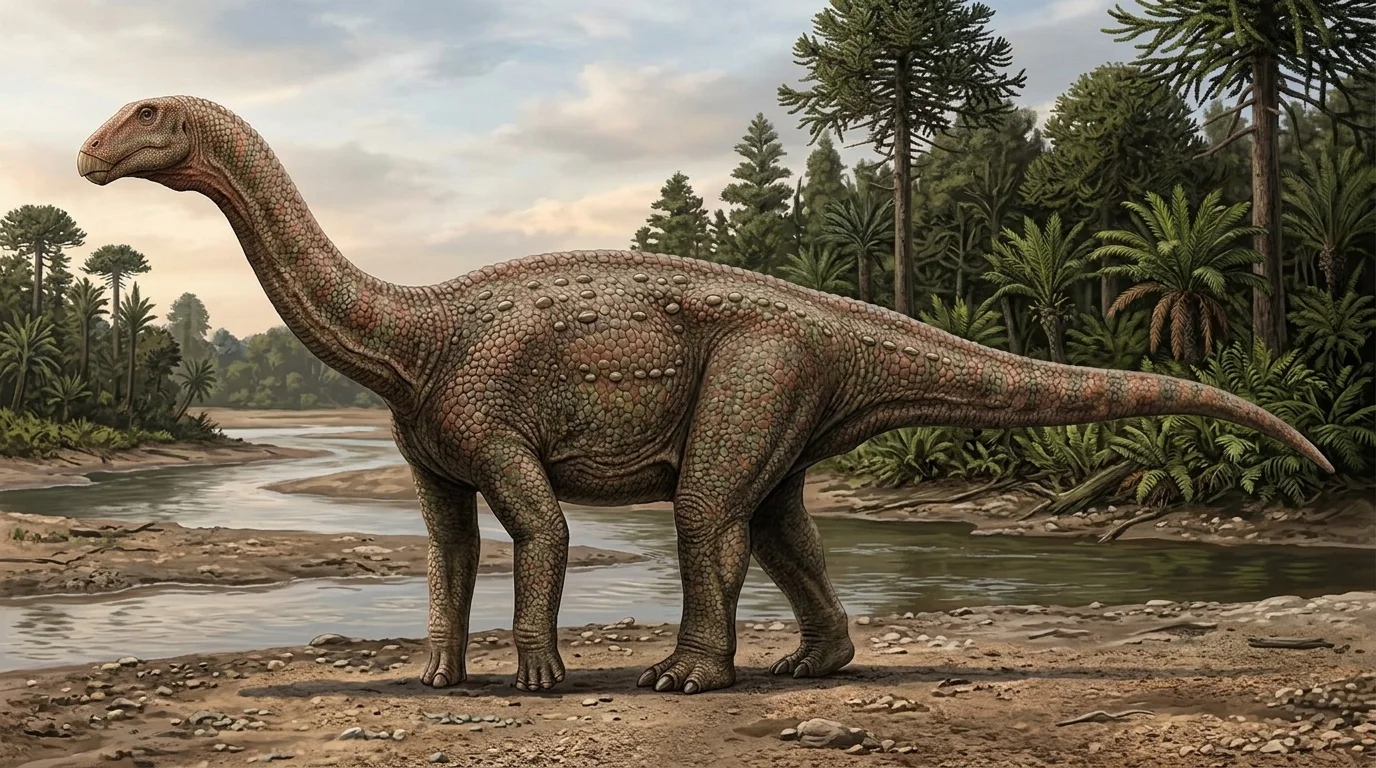
Scientific reconstruction of Riojasaurus (Riojasaurus incertus Bonaparte, 1969) in its native Geological period: Triassic Period.
Image Credit: AI-generated scientific paleoart reconstruction synthesized from species-specific osteological profiles and peer-reviewed descriptions. (AI-Generated / Open Educational Media (DinoOrigin Spec))
Phylogenetic classification of Riojasaurus incertus Bonaparte, 1969 based on peer-reviewed cladistic analyses of diagnostic skeletal synapomorphies.
| Taxonomic Rank | Taxon / Clade | Diagnostic Context |
|---|---|---|
| Kingdom | Animalia | Monophyletic prehistoric clade |
| Phylum | Chordata | Monophyletic prehistoric clade |
| Clade | Dinosauria | Monophyletic prehistoric clade |
| Order | Saurischia (Lizard-Hipped Dinosaurs) | Characterized ancestrally by a triradiate pelvis with an anteriorly pointing pubis. |
| Suborder | Sauropodomorpha | Herbivorous saurischians characterized by elongated necks, columnar limbs, and enormous body volumes. |
| Genus | Riojasaurus | Monophyletic prehistoric clade |
| Species | Riojasaurus incertus Bonaparte, 1969 | Specific authority designation |
Riojasaurus was a bulky herbivore that roamed northwestern Argentina during the Norian stage. Unlike lighter prosauropods, its limb proportions and robust vertebral column indicate it was an obligate quadruped, presaging the monumental body plans of Jurassic sauropods.
Its hollowed cervical vertebrae represent an early evolutionary adaptation toward lightening the skeletal mass of long-necked herbivores.
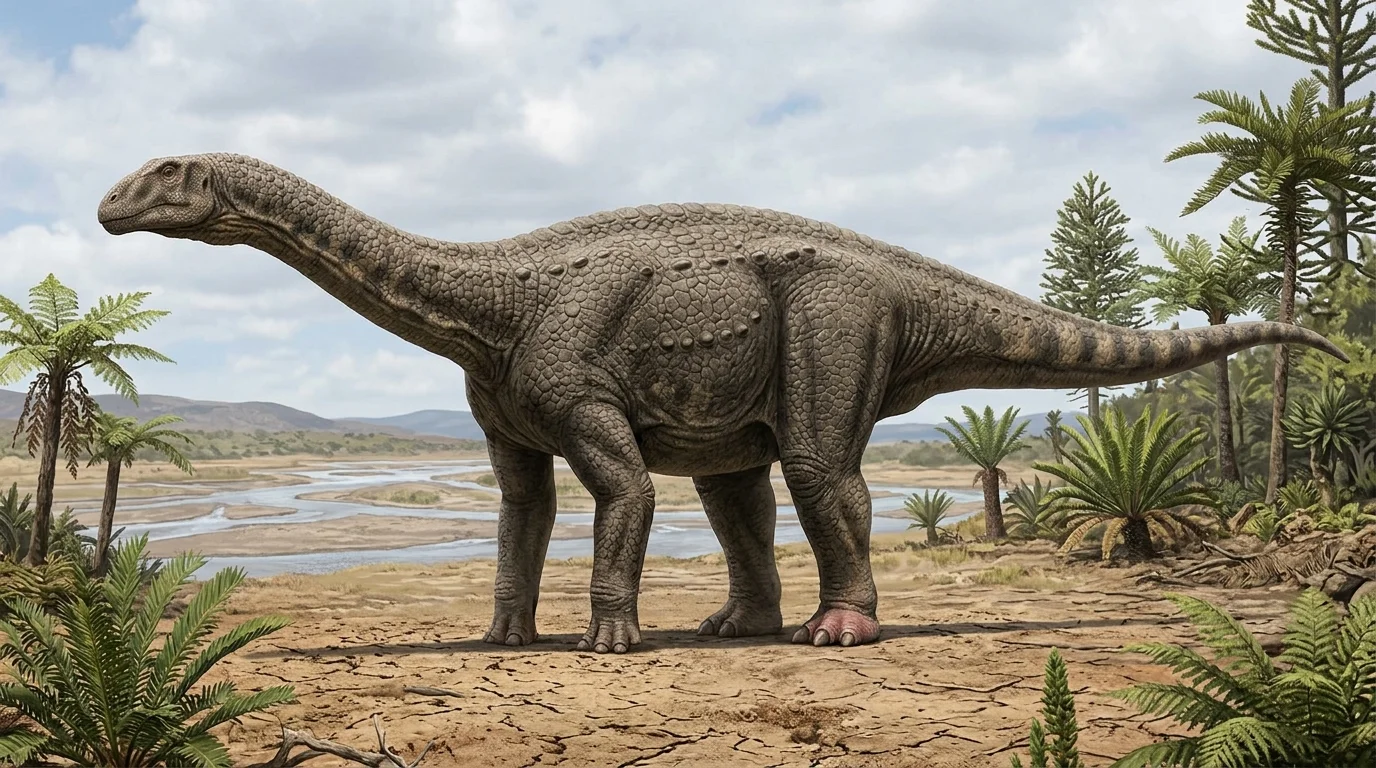
Massive quadrupedal body, pillar-like legs of roughly equal length, long neck, and heavy tail.
Anatomical dimensions relative to an average adult human (1.8 m / 6 ft tall)
Ferns, seed ferns (Dicroidium), and conifer leaves stripped with spatulate teeth.
Heavily built Late Triassic sauropodomorph with robust quadrupedal limbs adapted for weight support. Living in the Los Colorados Formation of Argentina, Riojasaurus represents a vital evolutionary bridge between small basal sauropodomorphs like Eoraptor and giant Jurassic sauropods.
Inland arid river systems bordered by dense gymnosperm forests.
Multiple well-preserved skeletons documenting virtually the entire postcranial anatomy.
Discovered and named by celebrated Argentine paleontologist José Bonaparte.
The dawn of the Mesozoic Era. Dinosaurs first emerged in the Late Triassic following the catastrophic Permian-Triassic extinction event, initially occupying modest niches alongside crurotarsan archosaurs.
During the Mesozoic Era, continental drift progressively reconfigured land bridges, atmospheric currents, and regional precipitation regimes. Fossils of Riojasaurus evidence its adaptation to the paleoenvironments of South America.
Preserved within the Huincul, Candeleros, and Ischigualasto formations, hosting colossal titanosaurs and specialized abelisaurid and carcharodontosaurid apex predators.
The anatomical architecture of Riojasaurus serves as a crucial benchmark in vertebrate paleontology, illustrating key adaptive radiations within Sauropodomorpha.
Scientifically verified answers based on peer-reviewed paleontological evidence.
Riojasaurus lived during the Triassic Period Period, approximately 227–213 Ma (million years ago). This places it within the Mesozoic Era.
Paleontological estimates place Riojasaurus at a length of 6–10 m (19.7–32.8 ft), a hip/standing height of 2–3 m (6.6–9.8 ft), and a body mass of 1.5–3.0 metric tons (3,307–6,614 lbs).
Classified as a herbivore, Riojasaurus specialized in consuming Ferns, seed ferns (Dicroidium), and conifer leaves stripped with spatulate teeth..
Fossil specimens of Riojasaurus have been recovered from Los Colorados Formation, La Rioja, Argentina, with notable historic specimens documented in 1966. Discovered and named by celebrated Argentine paleontologist José Bonaparte.
Authoritative citations establishing the factual taxonomy, biometrics, and anatomy of Riojasaurus.
Bonaparte, J. F. (1969). Dos nuevas 'faunas' de reptiles triásicos de Argentina. Gondwana Stratigraphy (IUGS Symposium, Buenos Aires), UNESCO, 281-302.
Curated & Verified: 2026-09-24Deposited in Mesozoic sedimentary strata preserving skeletal remains, teeth, or trace trackways.
Riojasaurus provides critical insights into the evolutionary radiation of Sauropodomorpha. Holotypes and fossil evidence indicate: Multiple well-preserved skeletons documenting virtually the entire postcranial anatomy.
SauropodomorphaEoraptor lunensis Sereno et al., 1993
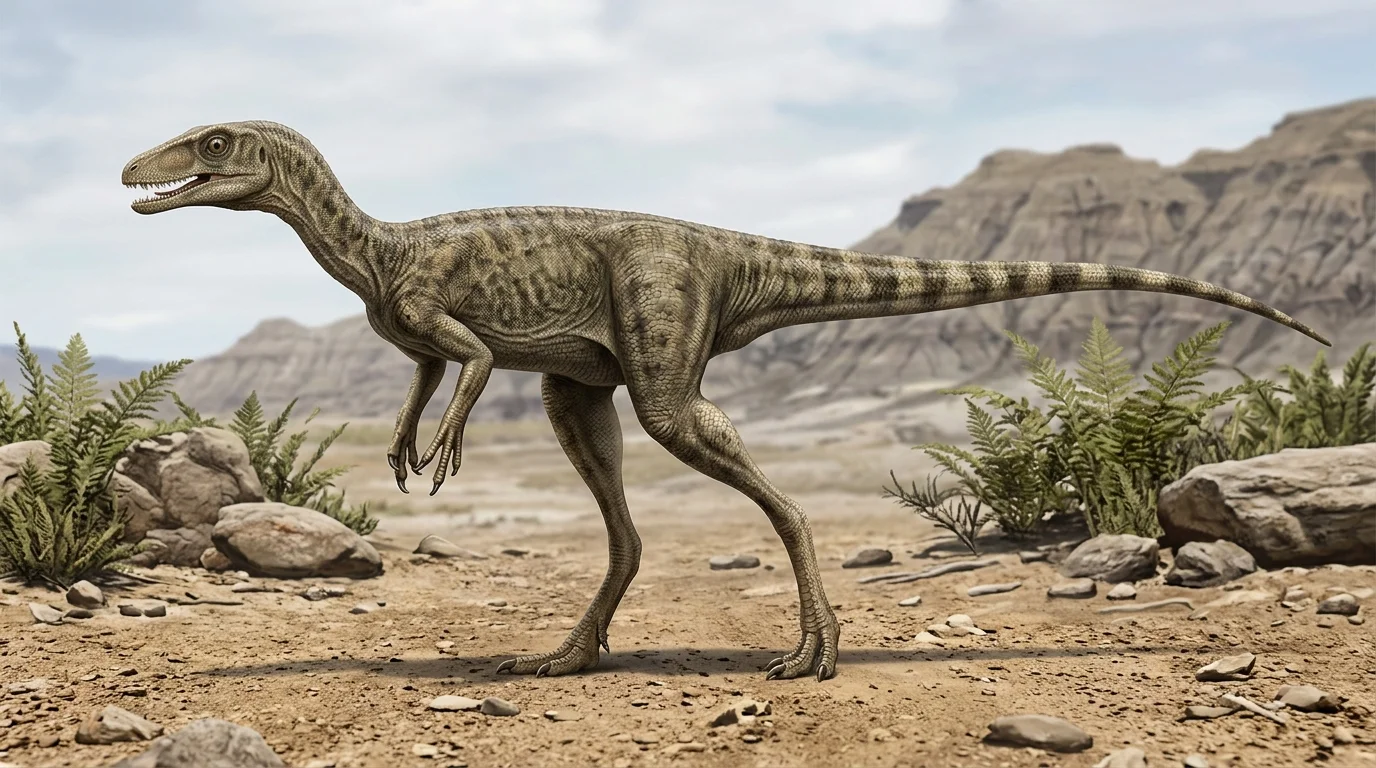
A diminutive Late Triassic dinosaur from Argentina whose phylogenetic position between basal Theropoda and stem-Sauropodomorpha has been extensively debated.
SauropodomorphaMelanorosaurus readi Haughton, 1924
A massive, quadrupedal basal sauropodomorph from the Late Triassic of South Africa.
SauropodomorphaPlateosaurus trossingensis Fraas, 1913
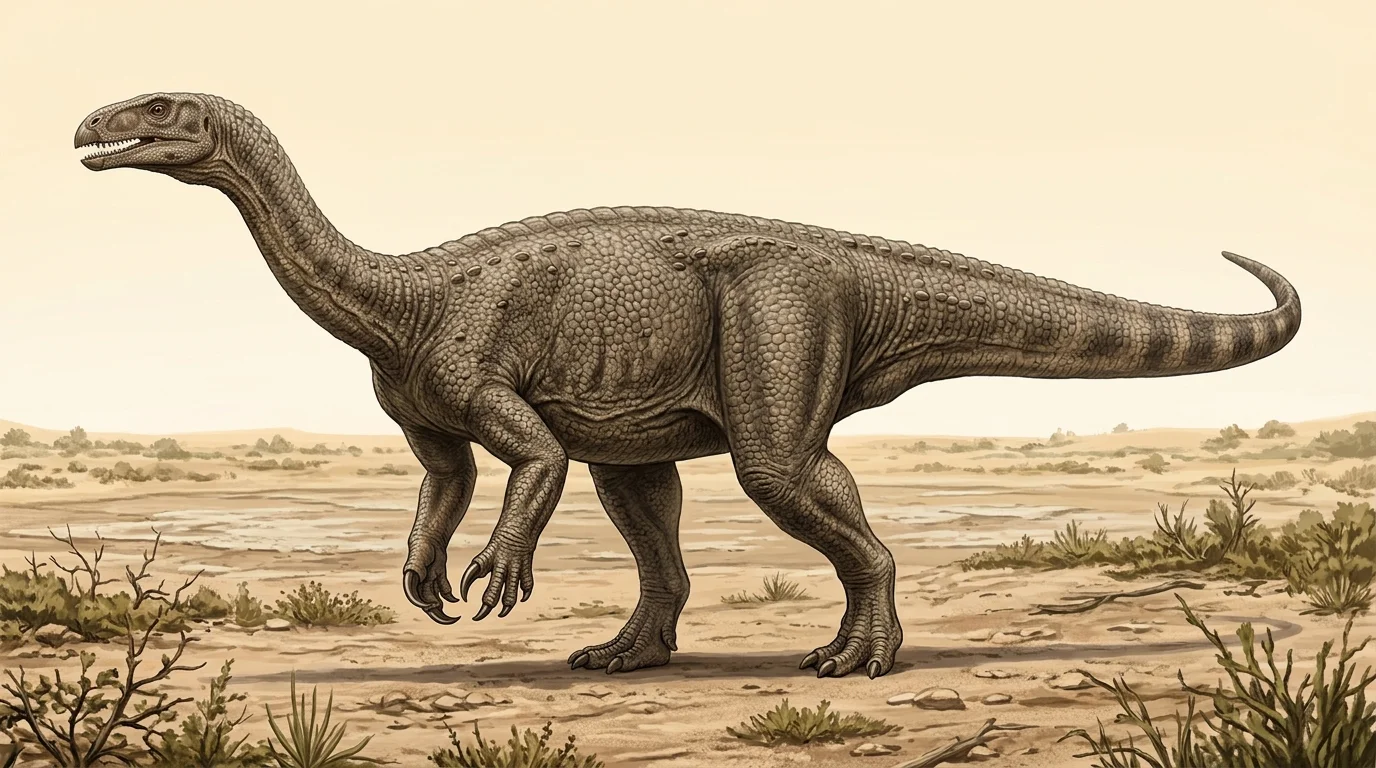
The classic European 'prosauropod', a dominant Late Triassic long-necked herbivore that lived in massive herds.