Eoraptor lunensis Sereno et al., 1993
A diminutive Late Triassic dinosaur from Argentina whose phylogenetic position between basal Theropoda and stem-Sauropodomorpha has been extensively debated.

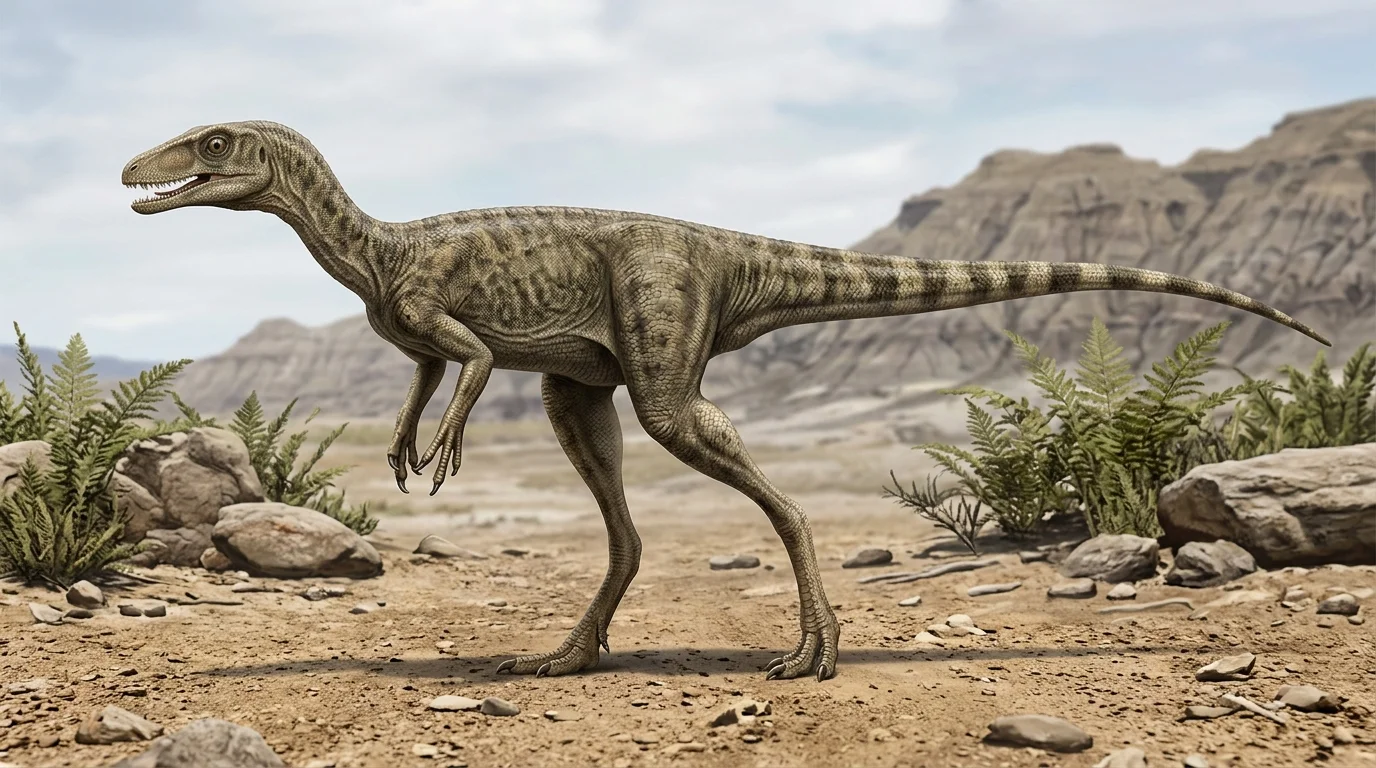
Scientific reconstruction of Eoraptor (Eoraptor lunensis Sereno et al., 1993) in its native Geological period: Triassic Period.
Image Credit: AI-generated scientific paleoart reconstruction synthesized from species-specific osteological profiles and peer-reviewed descriptions. (AI-Generated / Open Educational Media (DinoOrigin Spec))
Phylogenetic classification of Eoraptor lunensis Sereno et al., 1993 based on peer-reviewed cladistic analyses of diagnostic skeletal synapomorphies.
| Taxonomic Rank | Taxon / Clade | Diagnostic Context |
|---|---|---|
| Kingdom | Animalia | Monophyletic prehistoric clade |
| Phylum | Chordata | Monophyletic prehistoric clade |
| Clade | Dinosauria | Monophyletic prehistoric clade |
| Order | Saurischia (Lizard-Hipped Dinosaurs) | Characterized ancestrally by a triradiate pelvis with an anteriorly pointing pubis. |
| Suborder | Sauropodomorpha | Herbivorous saurischians characterized by elongated necks, columnar limbs, and enormous body volumes. |
| Genus | Eoraptor | Monophyletic prehistoric clade |
| Species | Eoraptor lunensis Sereno et al., 1993 | Specific authority designation |
Discovered in 1991, Eoraptor is an iconic species that lived approximately 231 million years ago in the Ischigualasto Formation of Argentina. Measuring around one meter in length, this lightweight biped possesses an intriguing combination of theropod-like and basal sauropodomorph traits, reflecting the evolutionary divergence near the root of Saurischia.
Originally described as a basal theropod, subsequent anatomical analyses have frequently recovered Eoraptor as a stem-sauropodomorph or basal saurischian. Its heterodont dentition features curved serrated teeth at the front of the jaw and leaf-shaped grinding teeth toward the rear, demonstrating an opportunistic omnivorous feeding strategy.
Small, lightly built biped with long slender legs, five-fingered hands with three raptorial claws, and a delicate skull.
Anatomical dimensions relative to an average adult human (1.8 m / 6 ft tall)
Opportunistic omnivore feeding on insects, small reptiles, seeds, and tender shoots.
Small, agile bipedal omnivore occupying early terrestrial niches at the dawn of the dinosaur radiation. Preserved in the Ischigualasto Formation of Argentina, Eoraptor shared its Late Triassic river valley habitat with contemporary apex predators like Herrerasaurus.
Lowland river margins and seasonal riparian corridors in western Pangaea.
Nearly complete, articulated holotype skeleton preserving the delicate skull and postcranial elements.
Uncovered by paleontologist Ricardo Martínez during an expedition led by Paul Sereno.
The dawn of the Mesozoic Era. Dinosaurs first emerged in the Late Triassic following the catastrophic Permian-Triassic extinction event, initially occupying modest niches alongside crurotarsan archosaurs.
During the Mesozoic Era, continental drift progressively reconfigured land bridges, atmospheric currents, and regional precipitation regimes. Fossils of Eoraptor evidence its adaptation to the paleoenvironments of South America.
Preserved within the Huincul, Candeleros, and Ischigualasto formations, hosting colossal titanosaurs and specialized abelisaurid and carcharodontosaurid apex predators.
The anatomical architecture of Eoraptor serves as a crucial benchmark in vertebrate paleontology, illustrating key adaptive radiations within Sauropodomorpha.
Scientifically verified answers based on peer-reviewed paleontological evidence.
Eoraptor lived during the Triassic Period Period, approximately 231.4–228 Ma (million years ago). This places it within the Mesozoic Era.
Paleontological estimates place Eoraptor at a length of 0.9–1.2 m (3.0–3.9 ft), a hip/standing height of 0.3–0.4 m (1.0–1.3 ft), and a body mass of 4–8 kg (9–18 lbs).
Classified as a omnivore, Eoraptor specialized in consuming Opportunistic omnivore feeding on insects, small reptiles, seeds, and tender shoots..
Fossil specimens of Eoraptor have been recovered from Ischigualasto Formation, San Juan, Argentina, with notable historic specimens documented in 1991. Uncovered by paleontologist Ricardo Martínez during an expedition led by Paul Sereno.
Authoritative citations establishing the factual taxonomy, biometrics, and anatomy of Eoraptor.
Martinez, R. N., Sereno, P. C., Alcober, O. A., Colombi, C. E., Renne, P. R., Montañez, I. P., & Currie, P. J. (2011). A basal dinosaurian fauna from Southeast Pangaea and the rapid rise of dinosaurs. Science, 331(6014), 206-210. https://doi.org/10.1126/science.1198440
Curated & Verified: 2026-09-24Deposited in Mesozoic sedimentary strata preserving skeletal remains, teeth, or trace trackways.
Eoraptor provides critical insights into the evolutionary radiation of Sauropodomorpha. Holotypes and fossil evidence indicate: Nearly complete, articulated holotype skeleton preserving the delicate skull and postcranial elements.
Sereno, P. C., Forster, C. A., Rogers, R. R., & Monetta, A. M. (1993). Primitive dinosaur skeleton from Argentina and the early evolution of Dinosauria. Nature, 361(6407), 64-66. https://doi.org/10.1038/361064a0
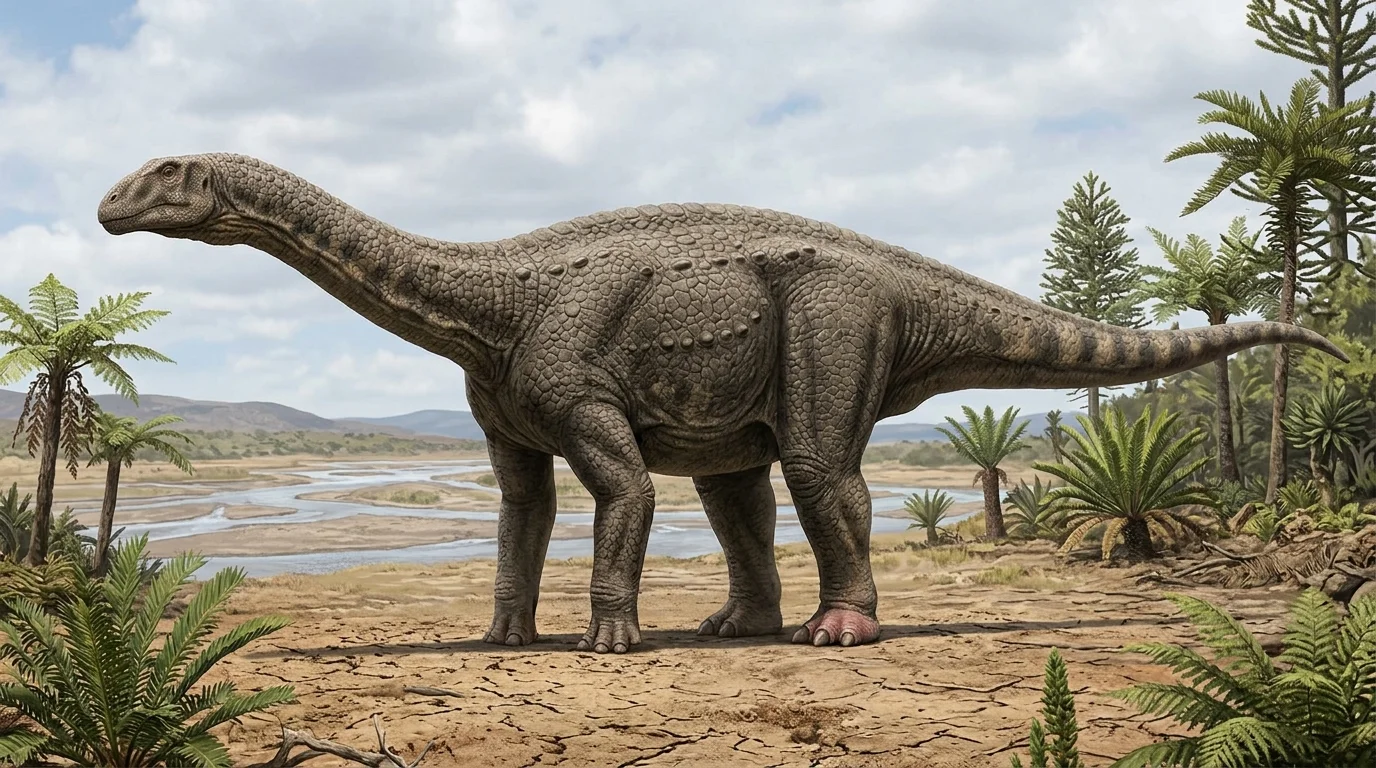
SauropodomorphaMelanorosaurus readi Haughton, 1924
A massive, quadrupedal basal sauropodomorph from the Late Triassic of South Africa.
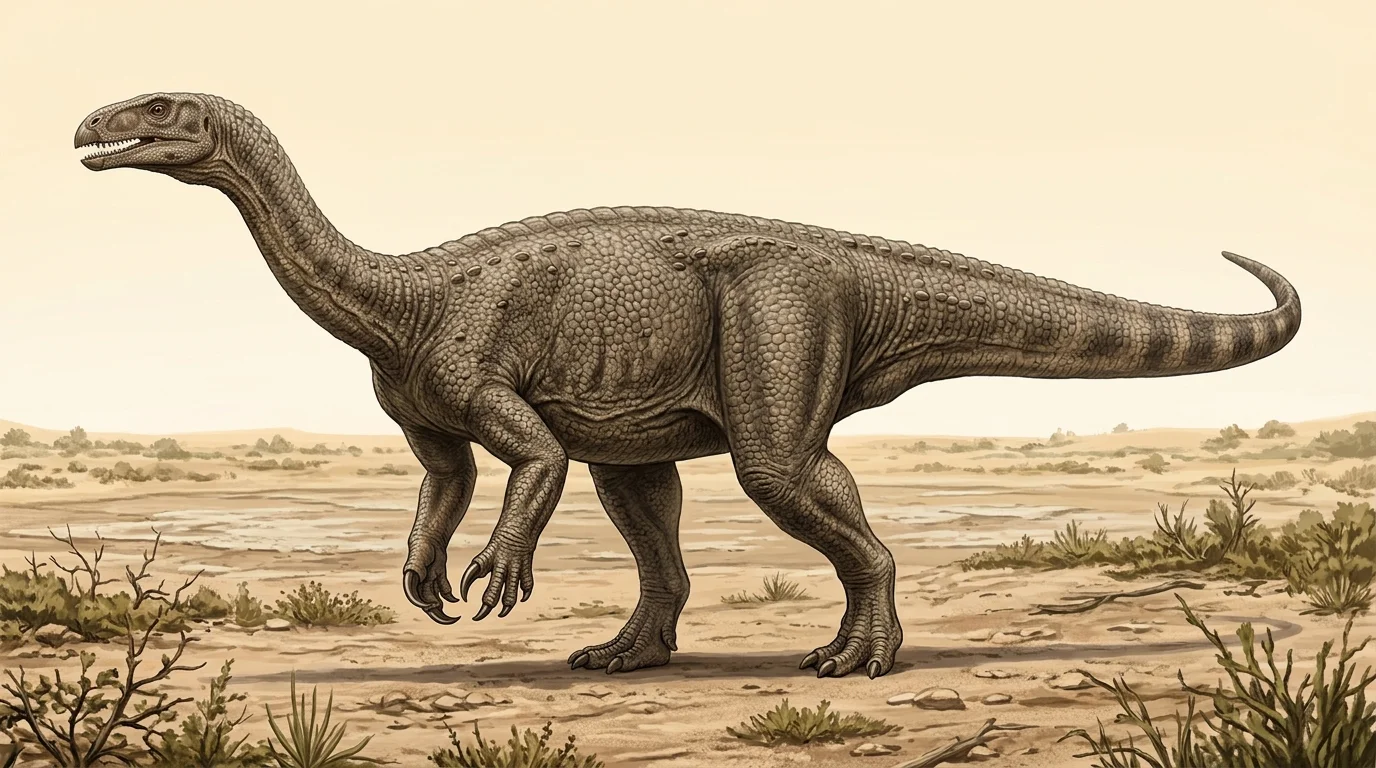
SauropodomorphaPlateosaurus trossingensis Fraas, 1913
The classic European 'prosauropod', a dominant Late Triassic long-necked herbivore that lived in massive herds.
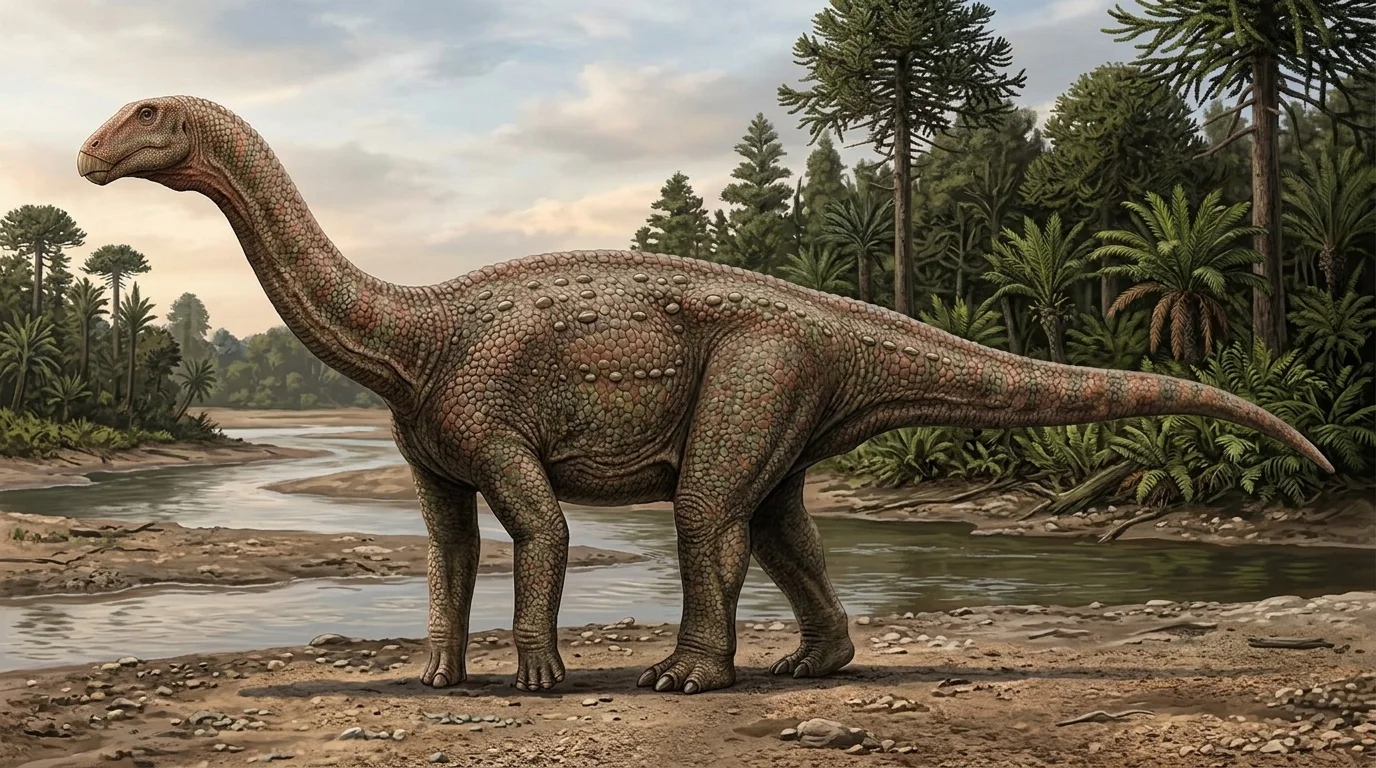
SauropodomorphaRiojasaurus incertus Bonaparte, 1969
A heavy, quadrupedal Late Triassic sauropodomorph from Argentina with dense limb bones.