Herbivorous saurischians characterized by elongated necks, columnar limbs, and enormous body volumes.
Genus
Plateosaurus
Monophyletic prehistoric clade
Species
Plateosaurus trossingensis Fraas, 1913
Specific authority designation
Anatomy & Physical Characteristics
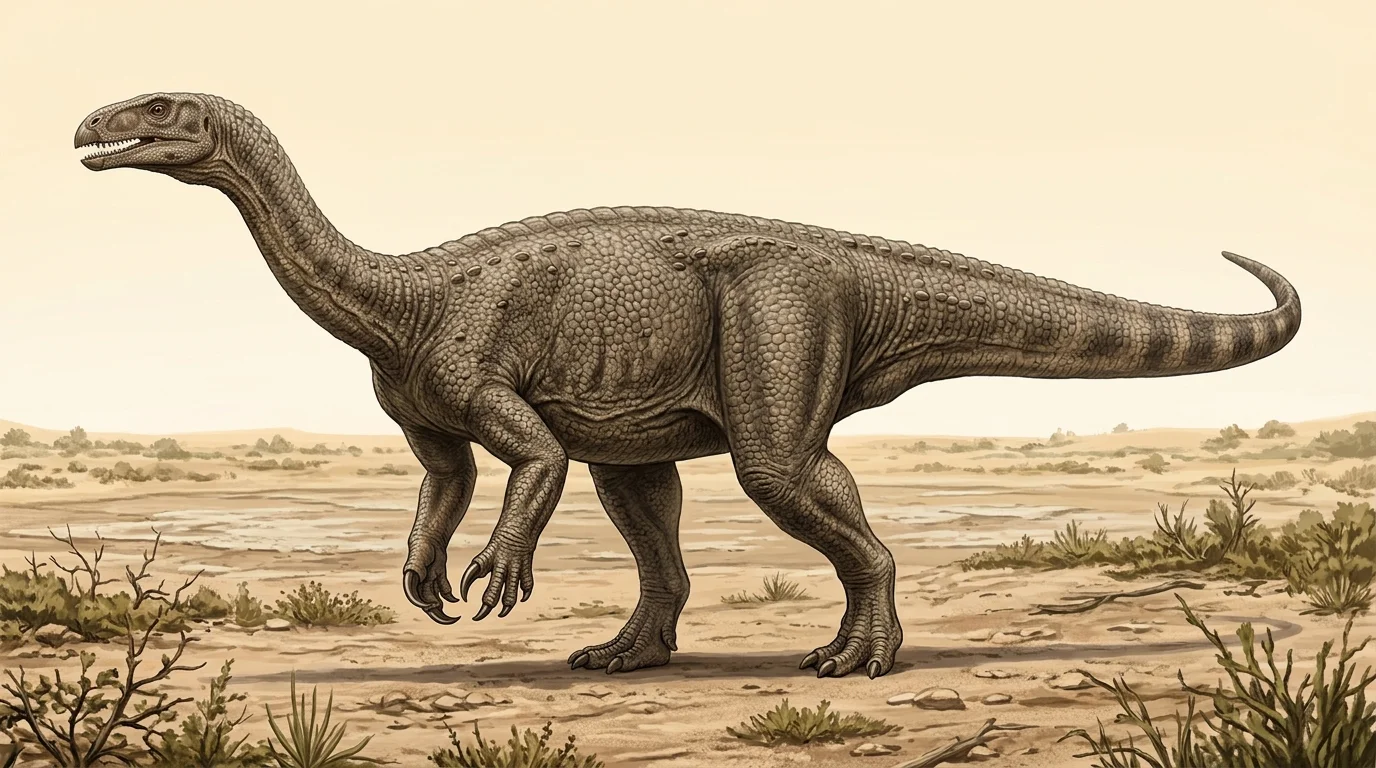
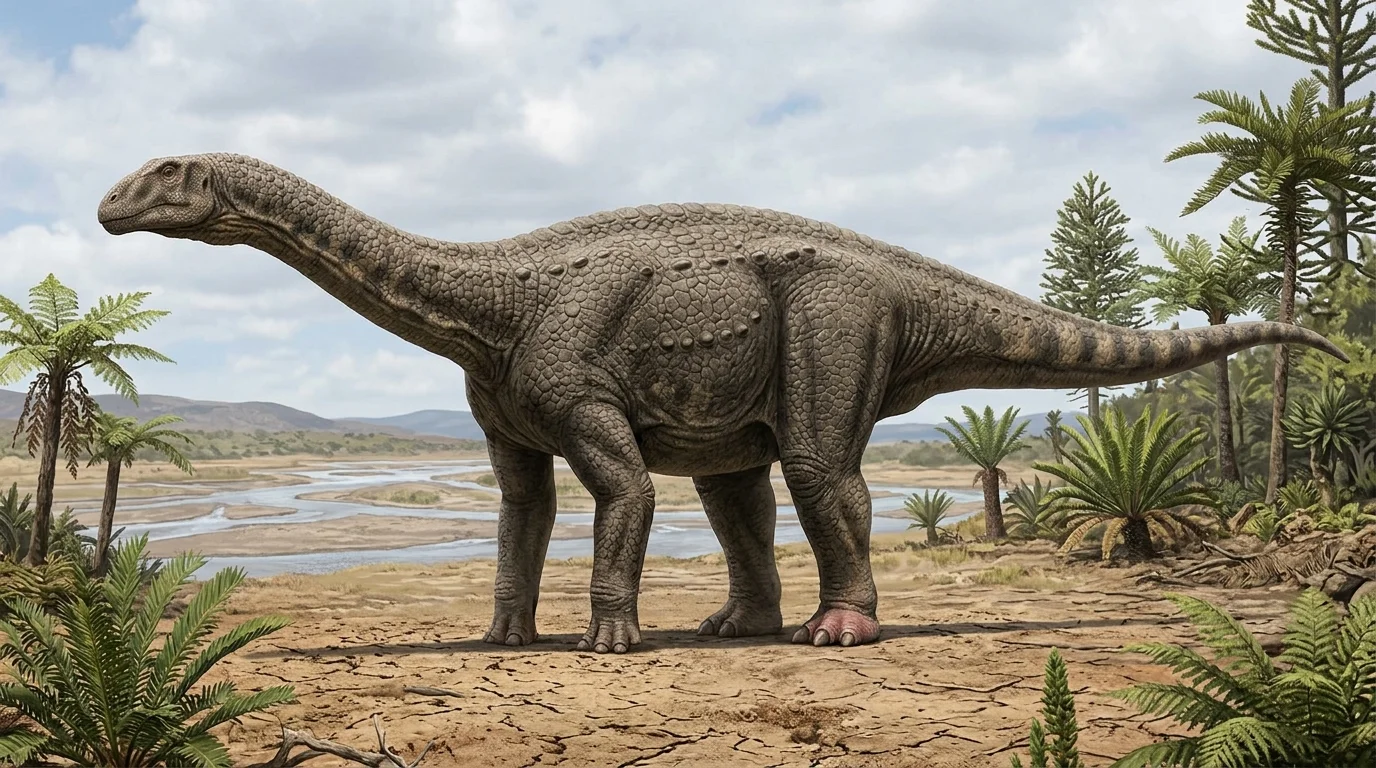
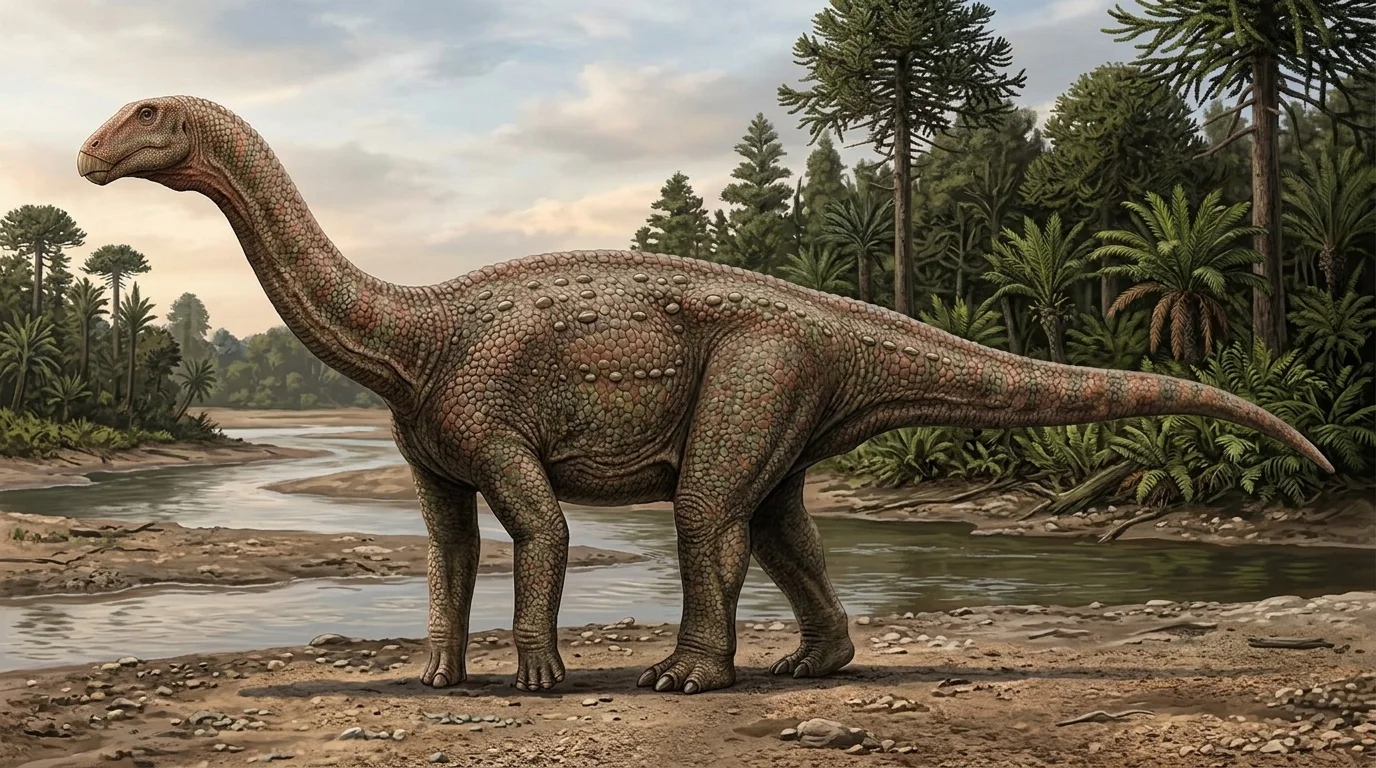
Plateosaurus was an abundant bipedal to facultatively quadrupedal sauropodomorph that dominated central European ecosystems during the Norian stage. Growing up to 10 meters in total length, it represents one of the earliest large-bodied terrestrial herbivores in Earth's history.
Bone histology demonstrates remarkable developmental plasticity in Plateosaurus, with adult sizes varying significantly based on environmental conditions and seasonal food availability.
Diagnostic Morphological Traits
Stocky torso, elongated neck, small skull with leaf-shaped teeth, and a massively enlarged, curved thumb claw.
Comparative Scale & Biometrics
Anatomical dimensions relative to an average adult human (1.8 m / 6 ft tall)
High-browsing herbivore consuming conifers, cycads, and horsetails with the aid of gastroliths.
Paleobiology & Behavior
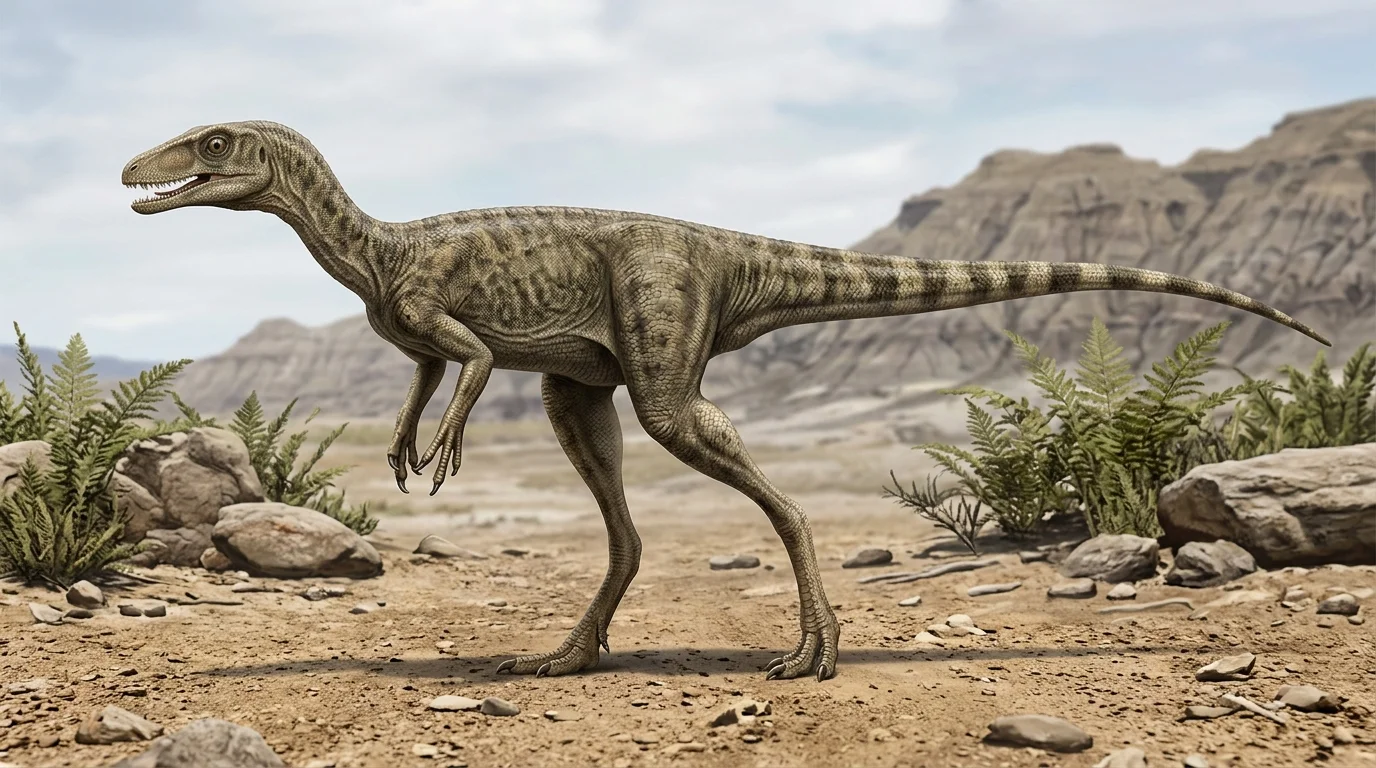
Bipedal sauropodomorph herbivore that gathered in large herds, capable of bipedal browsing to reach elevated vegetation. Abundantly preserved in bonebed deposits across Central Europe, Plateosaurus shared its Late Triassic biome with early carnivorous theropods like Liliensternus.
Habitat & Ecological Biome
Prehistoric Depositional Setting
Arid inland floodplains and mudflat basins subject to periodic inundation.
Fossil Evidence & Specimen Records
Preserved Skeletal Material & Bonebeds
Over 100 skeletons recovered from famous bonebeds in Germany, Switzerland, and Greenland.
Discovery & Taxonomic Naming History
Year of Discovery / Description1834
Type Specimen Locality & FormationTrossingen, Baden-Württemberg, Germany
Excavated by Johann Friedrich Engelhardt; named by paleontologist Hermann von Meyer in 1837.
Triassic Period PeriodTemporal Interval: 214–204 Ma (million years ago)
The dawn of the Mesozoic Era. Dinosaurs first emerged in the Late Triassic following the catastrophic Permian-Triassic extinction event, initially occupying modest niches alongside crurotarsan archosaurs.
During the Mesozoic Era, continental drift progressively reconfigured land bridges, atmospheric currents, and regional precipitation regimes. Fossils of Plateosaurus evidence its adaptation to the paleoenvironments of Europe.
Paleogeographic RealmEurope (Europe)
During the Mesozoic, Europe was largely an archipelago of islands, resulting in unique insular dwarf species and classic historical fossil discoveries.
Fossil Discovery Locality
Scientific Significance & Evolutionary Impact
The anatomical architecture of Plateosaurus serves as a crucial benchmark in vertebrate paleontology, illustrating key adaptive radiations within Sauropodomorpha.
Phylogenetic Placement: Informs cladistic debates concerning the divergence, skull biomechanics, and skeletal evolution of Triassic Period fauna.
Paleoecological Guild: Documents trophic specialization (Herbivore) and predator-prey dynamics across its regional ecosystem.
Taphonomic Record: Over 100 skeletons recovered from famous bonebeds in Germany, Switzerland, and Greenland.
Frequently Asked Questions About Plateosaurus
Scientifically verified answers based on peer-reviewed paleontological evidence.
Q1.When did Plateosaurus live?
Plateosaurus lived during the Triassic Period Period, approximately 214–204 Ma (million years ago). This places it within the Mesozoic Era.
Q2.How big was Plateosaurus?
Paleontological estimates place Plateosaurus at a length of 5–10 m (16.4–32.8 ft), a hip/standing height of 2–3.2 m (6.6–10.5 ft), and a body mass of 1.0–4.0 metric tons (2,205–8,818 lbs).
Q3.What was the diet of Plateosaurus?
Classified as a herbivore, Plateosaurus specialized in consuming High-browsing herbivore consuming conifers, cycads, and horsetails with the aid of gastroliths..
Q4.Where were Plateosaurus fossils discovered?
Fossil specimens of Plateosaurus have been recovered from Trossingen, Baden-Württemberg, Germany, with notable historic specimens documented in 1834. Excavated by Johann Friedrich Engelhardt; named by paleontologist Hermann von Meyer in 1837.
Academic Literature & Peer-Reviewed References
Authoritative citations establishing the factual taxonomy, biometrics, and anatomy of Plateosaurus.
Deposited in Mesozoic sedimentary strata preserving skeletal remains, teeth, or trace trackways.
Q5.What makes Plateosaurus scientifically significant?
Plateosaurus provides critical insights into the evolutionary radiation of Sauropodomorpha. Holotypes and fossil evidence indicate: Over 100 skeletons recovered from famous bonebeds in Germany, Switzerland, and Greenland.
Sander, P. M., & Klein, N. (2005). Developmental plasticity in the dinosaur Plateosaurus trossingensis. Science, 310(5755), 1800-1802. https://doi.org/10.1126/science.1120197
A diminutive Late Triassic dinosaur from Argentina whose phylogenetic position between basal Theropoda and stem-Sauropodomorpha has been extensively debated.