Corythosaurus casuarius Brown, 1914
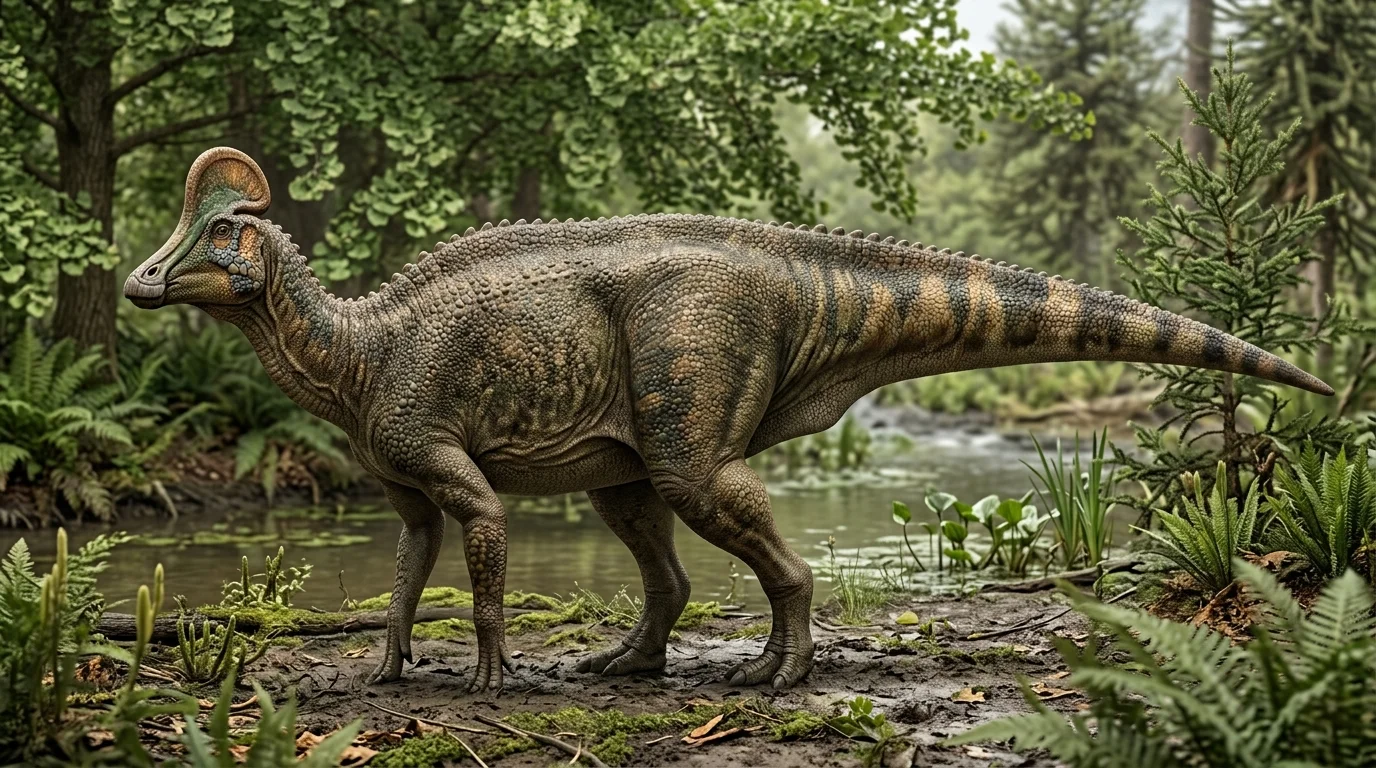
A hollow-crested hadrosaurid from Alberta possessing a tall, semicircular helmet crest for sound resonance.

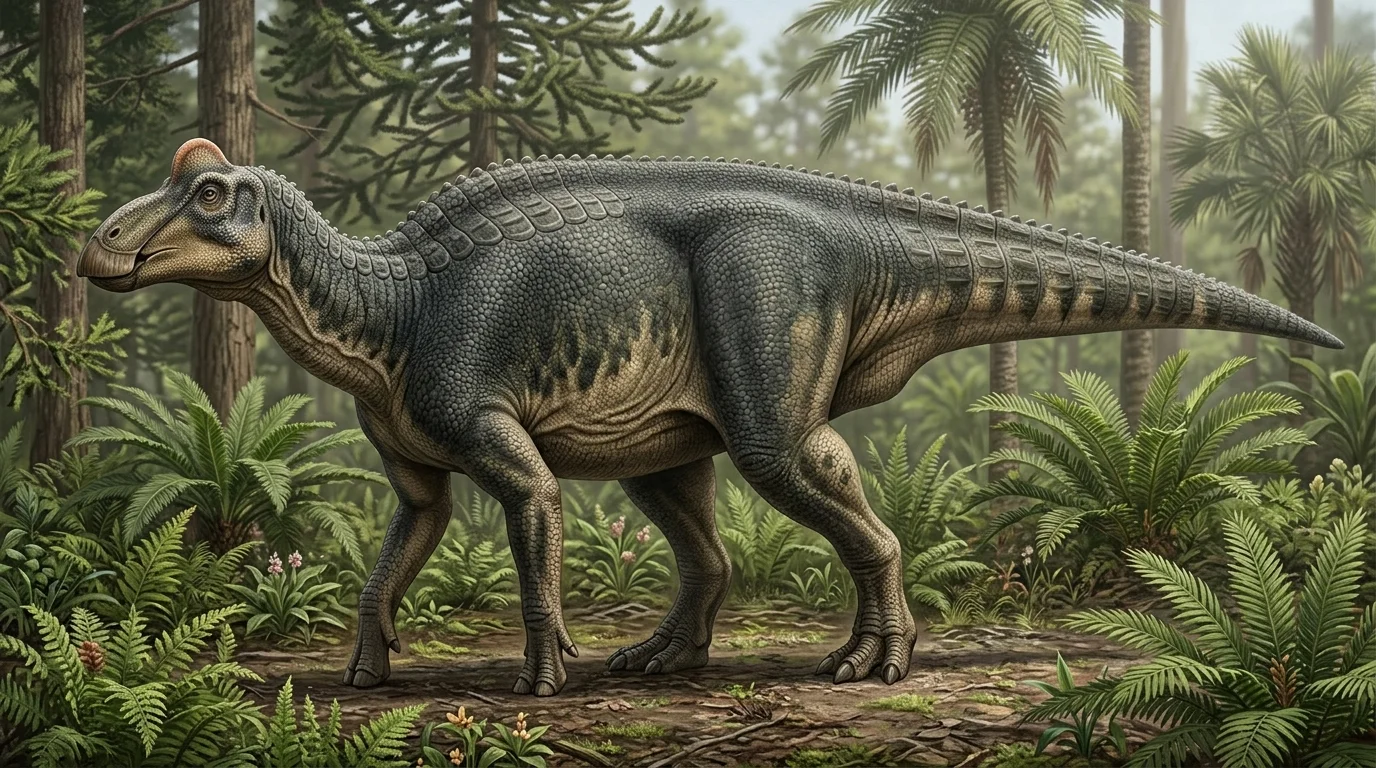
Scientific reconstruction of Corythosaurus (Corythosaurus casuarius Brown, 1914) in its native Geological period: Cretaceous Period.
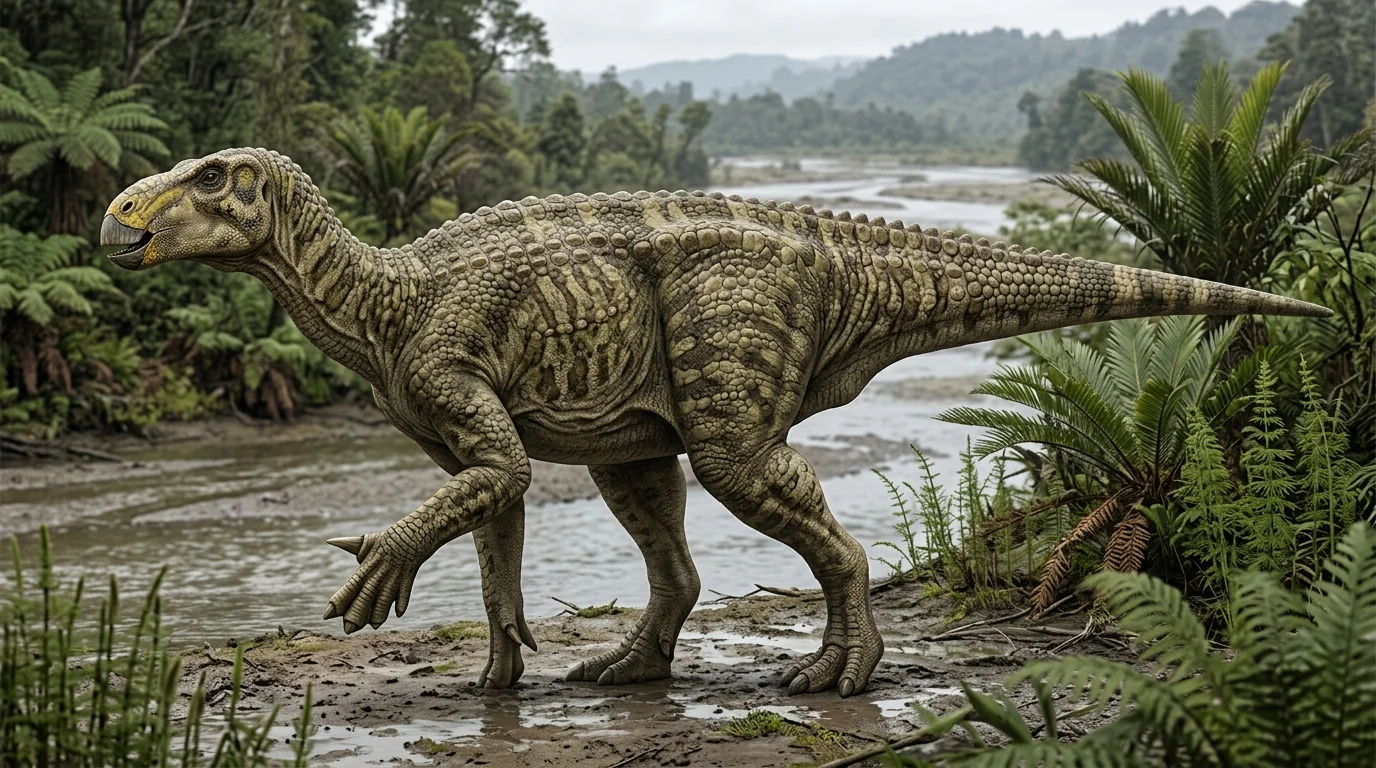
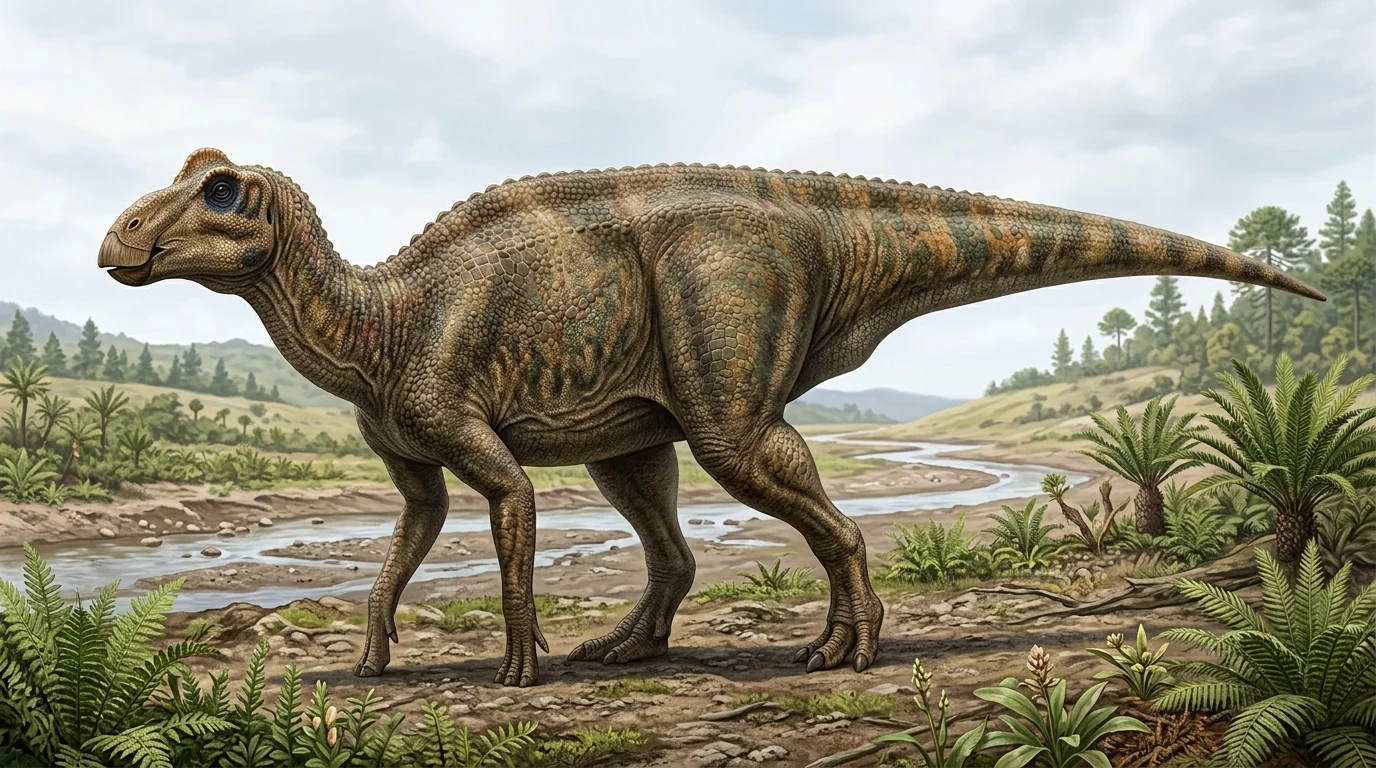
Image Credit: AI-generated scientific paleoart reconstruction synthesized from species-specific osteological profiles and peer-reviewed descriptions. (AI-Generated / Open Educational Media (DinoOrigin Spec))
Phylogenetic classification of Corythosaurus casuarius Brown, 1914 based on peer-reviewed cladistic analyses of diagnostic skeletal synapomorphies.
| Taxonomic Rank | Taxon / Clade | Diagnostic Context |
|---|---|---|
| Kingdom | Animalia | Monophyletic prehistoric clade |
| Phylum | Chordata | Monophyletic prehistoric clade |
| Clade | Dinosauria | Monophyletic prehistoric clade |
| Order | Ornithischia (Bird-Hipped Dinosaurs) | Characterized by a pelvis with a backwards-pointing pubis parallel to the ischium. |
| Suborder | Ornithopoda | Beaked, bipedal and facultatively quadrupedal herbivores with complex multi-layered dental batteries. |
| Genus | Corythosaurus | Monophyletic prehistoric clade |
| Species | Corythosaurus casuarius Brown, 1914 | Specific authority designation |
Corythosaurus ('helmet lizard') was a large lambeosaurine duck-billed dinosaur from the Late Cretaceous Dinosaur Park Formation of Alberta. It was distinguished by a high, rounded, semicircular bony crest on top of its head, resembling a Corinthian soldier's helmet.
The hollow crest contained elongated nasal passages that looped through the interior before entering the throat, functioning as an acoustic resonating chamber capable of producing deep, foghorn-like vocalizations for herd communication.
Large hadrosaurid with a tall helmet-shaped bony crest, broad tail, and four-toed webbed-appearing hooves.
Anatomical dimensions relative to an average adult human (1.8 m / 6 ft tall)
Conifer needles, fruits, seeds, and tender dicot leaves processed with thousands of grinding teeth.
Herbivorous hadrosaurid that used its hollow helmet-like cranial crest as an acoustic resonating chamber and visual display structure. In the Dinosaur Park ecosystem, Corythosaurus lived sympatrically with related crest-bearing hadrosaurs like Parasaurolophus and horned herbivores like Centrosaurus.
Subtropical coastal floodplains, bayous, and dense conifer-angiosperm river valleys.
Nearly complete skeletons with preserved skin impressions and ossified tendons.
Discovered by Barnum Brown along the Red Deer River; described in 1914.
The longest and final period of the Mesozoic Era, characterized by the rise of flowering plants, ceratopsians, hadrosaurs, tyrannosaurids, and concluding with the Chicxulub asteroid impact.
During the Mesozoic Era, continental drift progressively reconfigured land bridges, atmospheric currents, and regional precipitation regimes. Fossils of Corythosaurus evidence its adaptation to the paleoenvironments of North America.
Home to the fossil-rich Morrison Formation of the Late Jurassic and the Hell Creek and Dinosaur Park Formations of the Late Cretaceous.
The anatomical architecture of Corythosaurus serves as a crucial benchmark in vertebrate paleontology, illustrating key adaptive radiations within Ornithopoda.
Scientifically verified answers based on peer-reviewed paleontological evidence.
Corythosaurus lived during the Cretaceous Period Period, approximately 77–75 Ma (million years ago). This places it within the Mesozoic Era.
Paleontological estimates place Corythosaurus at a length of 8.5–10 m (27.9–32.8 ft), a hip/standing height of 3–3.8 m (9.8–12.5 ft), and a body mass of 3.0–4.5 metric tons (6,614–9,921 lbs).
Classified as a herbivore, Corythosaurus specialized in consuming Conifer needles, fruits, seeds, and tender dicot leaves processed with thousands of grinding teeth..
Fossil specimens of Corythosaurus have been recovered from Dinosaur Park Formation, Alberta, Canada, with notable historic specimens documented in 1911. Discovered by Barnum Brown along the Red Deer River; described in 1914.
Authoritative citations establishing the factual taxonomy, biometrics, and anatomy of Corythosaurus.
Brown, B. (1914). Corythosaurus casuarius, a new crested dinosaur from the Belly River Cretaceous, with preliminary monograph on the family Trachodontidae. Bulletin of the American Museum of Natural History, 33(35), 559-565.
Curated & Verified: 2026-09-24Deposited in Mesozoic sedimentary strata preserving skeletal remains, teeth, or trace trackways.
Corythosaurus provides critical insights into the evolutionary radiation of Ornithopoda. Holotypes and fossil evidence indicate: Nearly complete skeletons with preserved skin impressions and ossified tendons.
OrnithopodaEdmontosaurus regalis Lambe, 1917
A colossal duck-billed hadrosaurid that was the primary herbivore of Late Cretaceous North America.
OrnithopodaIguanodon bernissartensis Boulenger, 1881
A foundational Early Cretaceous ornithopod possessing a specialized conical thumb spike and facultative quadrupedal gait.
OrnithopodaMaiasaura peeblesorum Horner & Makela, 1979
The 'good mother lizard', the first dinosaur proven to provide intensive parental care to its hatched young.