Centrosaurus apertus Lambe, 1904
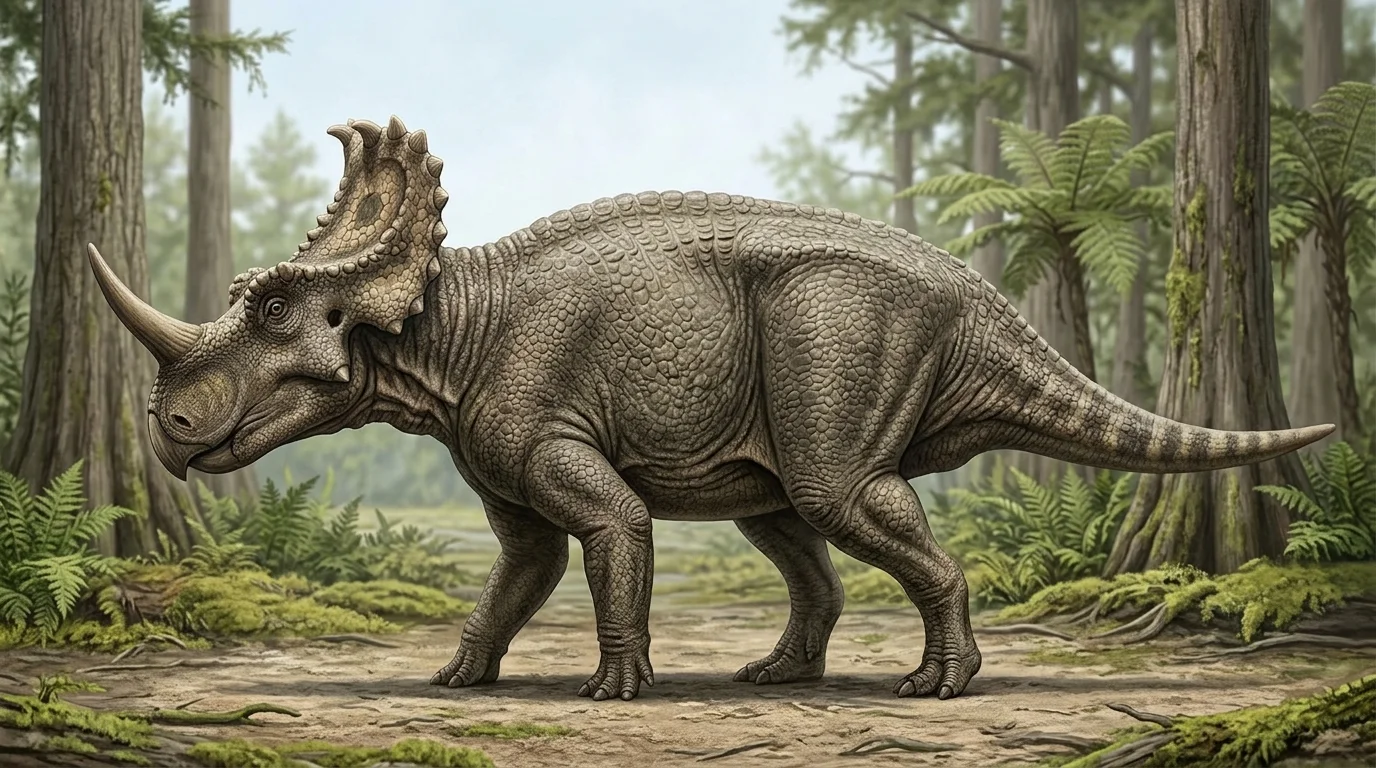
A prominent centrosaurine ceratopsid from Alberta featuring a forward-curved nasal horn and hooked frill spikes.

Scientific reconstruction of Centrosaurus (Centrosaurus apertus Lambe, 1904) in its native Geological period: Cretaceous Period.
Image Credit: AI-generated scientific paleoart reconstruction synthesized from species-specific osteological profiles and peer-reviewed descriptions. (AI-Generated / Open Educational Media (DinoOrigin Spec))
Phylogenetic classification of Centrosaurus apertus Lambe, 1904 based on peer-reviewed cladistic analyses of diagnostic skeletal synapomorphies.
| Taxonomic Rank | Taxon / Clade | Diagnostic Context |
|---|---|---|
| Kingdom | Animalia | Monophyletic prehistoric clade |
| Phylum | Chordata | Monophyletic prehistoric clade |
| Clade | Dinosauria | Monophyletic prehistoric clade |
| Order | Ornithischia (Bird-Hipped Dinosaurs) | Characterized by a pelvis with a backwards-pointing pubis parallel to the ischium. |
| Infraorder | Ceratopsia | Ornithischian dinosaurs characterized by beaks, rostral bones, facial horns, and elaborate neck frills. |
| Genus | Centrosaurus | Monophyletic prehistoric clade |
| Species | Centrosaurus apertus Lambe, 1904 | Specific authority designation |
Centrosaurus was an abundant horned dinosaur of the Dinosaur Park Formation in Alberta, Canada. Measuring six meters in length, it possessed a massive single horn over its snout that often curved forward, two small brow hornlets, and two forward-hooking hook-like horns projecting over the top of its neck frill.
Immense bonebeds containing thousands of Centrosaurus individuals reveal that they traveled in vast migratory herds that suffered mass drownings while crossing flooded Cretaceous rivers.
Stout, powerful quadruped with a long nasal horn, scalloped frill with downward-curving hooks, and strong shoulders.
Anatomical dimensions relative to an average adult human (1.8 m / 6 ft tall)
Herbivorous; processed tough woody shrubs, cycads, and palms with continuously shearing dental batteries.
Gregarious horned herbivore that gathered in massive herds numbering hundreds of individuals, as demonstrated by catastrophic bonebed deposits. In the Dinosaur Park Formation, Centrosaurus coexisted with fellow ceratopsians like Styracosaurus and duck-billed hadrosaurs like Corythosaurus.
Lowland coastal plains, swamp forests, and coastal floodplains of the Western Interior Seaway.
Megabonebeds in Dinosaur Provincial Park yielding thousands of bones and dozens of intact skulls.
Discovered by Canadian paleontologist Lawrence Lambe along the Red Deer River.
The longest and final period of the Mesozoic Era, characterized by the rise of flowering plants, ceratopsians, hadrosaurs, tyrannosaurids, and concluding with the Chicxulub asteroid impact.
During the Mesozoic Era, continental drift progressively reconfigured land bridges, atmospheric currents, and regional precipitation regimes. Fossils of Centrosaurus evidence its adaptation to the paleoenvironments of North America.
Home to the fossil-rich Morrison Formation of the Late Jurassic and the Hell Creek and Dinosaur Park Formations of the Late Cretaceous.
The anatomical architecture of Centrosaurus serves as a crucial benchmark in vertebrate paleontology, illustrating key adaptive radiations within Ceratopsia.
Scientifically verified answers based on peer-reviewed paleontological evidence.
Centrosaurus lived during the Cretaceous Period Period, approximately 76.5–75.5 Ma (million years ago). This places it within the Mesozoic Era.
Paleontological estimates place Centrosaurus at a length of 5.5–6 m (18.0–19.7 ft), a hip/standing height of 2–2.3 m (6.6–7.5 ft), and a body mass of 2.0–3.0 metric tons (4,409–6,614 lbs).
Classified as a herbivore, Centrosaurus specialized in consuming Herbivorous; processed tough woody shrubs, cycads, and palms with continuously shearing dental batteries..
Fossil specimens of Centrosaurus have been recovered from Dinosaur Park Formation, Alberta, Canada, with notable historic specimens documented in 1902. Discovered by Canadian paleontologist Lawrence Lambe along the Red Deer River.
Authoritative citations establishing the factual taxonomy, biometrics, and anatomy of Centrosaurus.
Lambe, L. M. (1904). On the squamosal bone of the Cretaceous dinosaur Centrosaurus apertus, and a monograph of the horned dinosaurs from the Belly River series. The Ottawa Naturalist, 18(4), 81-84.
Curated & Verified: 2026-09-24Deposited in Mesozoic sedimentary strata preserving skeletal remains, teeth, or trace trackways.
Centrosaurus provides critical insights into the evolutionary radiation of Ceratopsia. Holotypes and fossil evidence indicate: Megabonebeds in Dinosaur Provincial Park yielding thousands of bones and dozens of intact skulls.
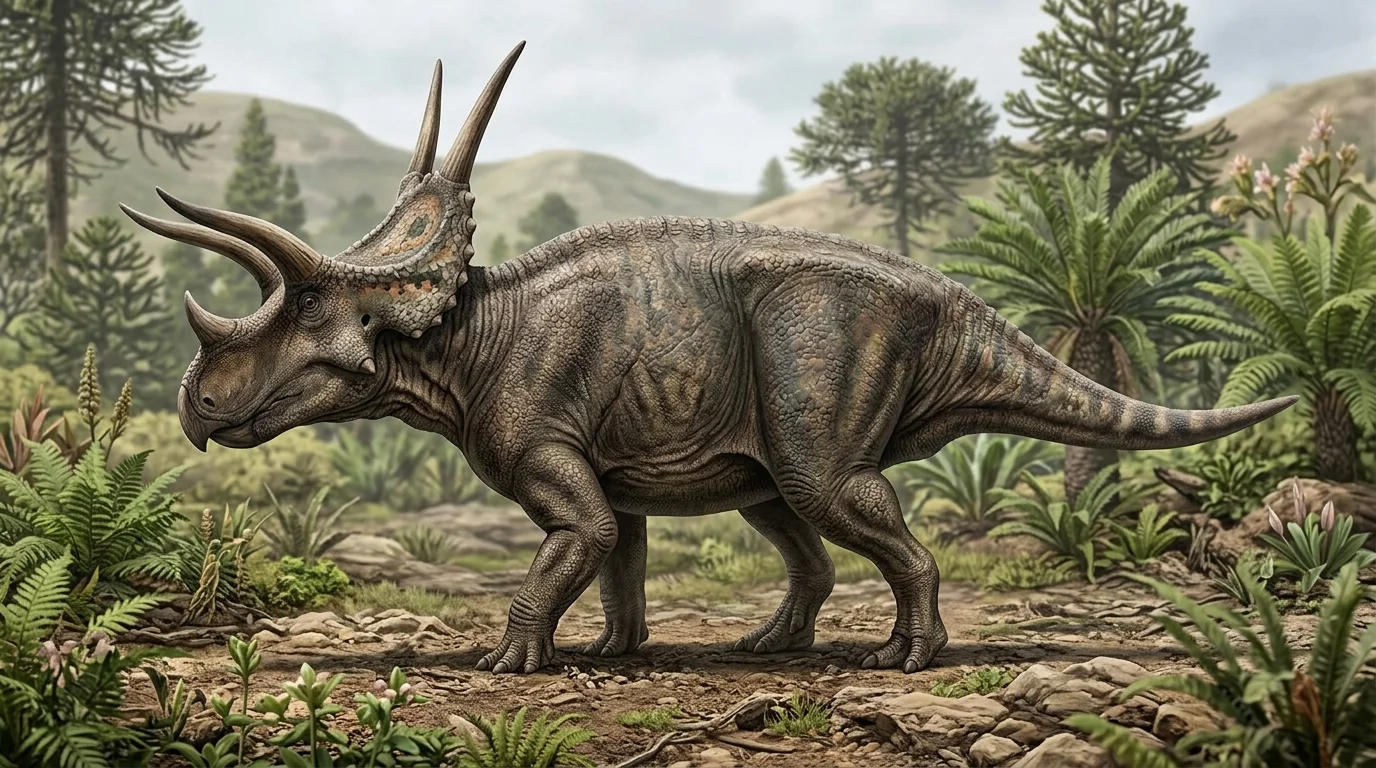
CeratopsiaDiabloceratops eatoni Kirkland & DeBlieux, 2010
The 'devil-horned face', a basal centrosaurine featuring long curved brow horns and majestic frill spikes.
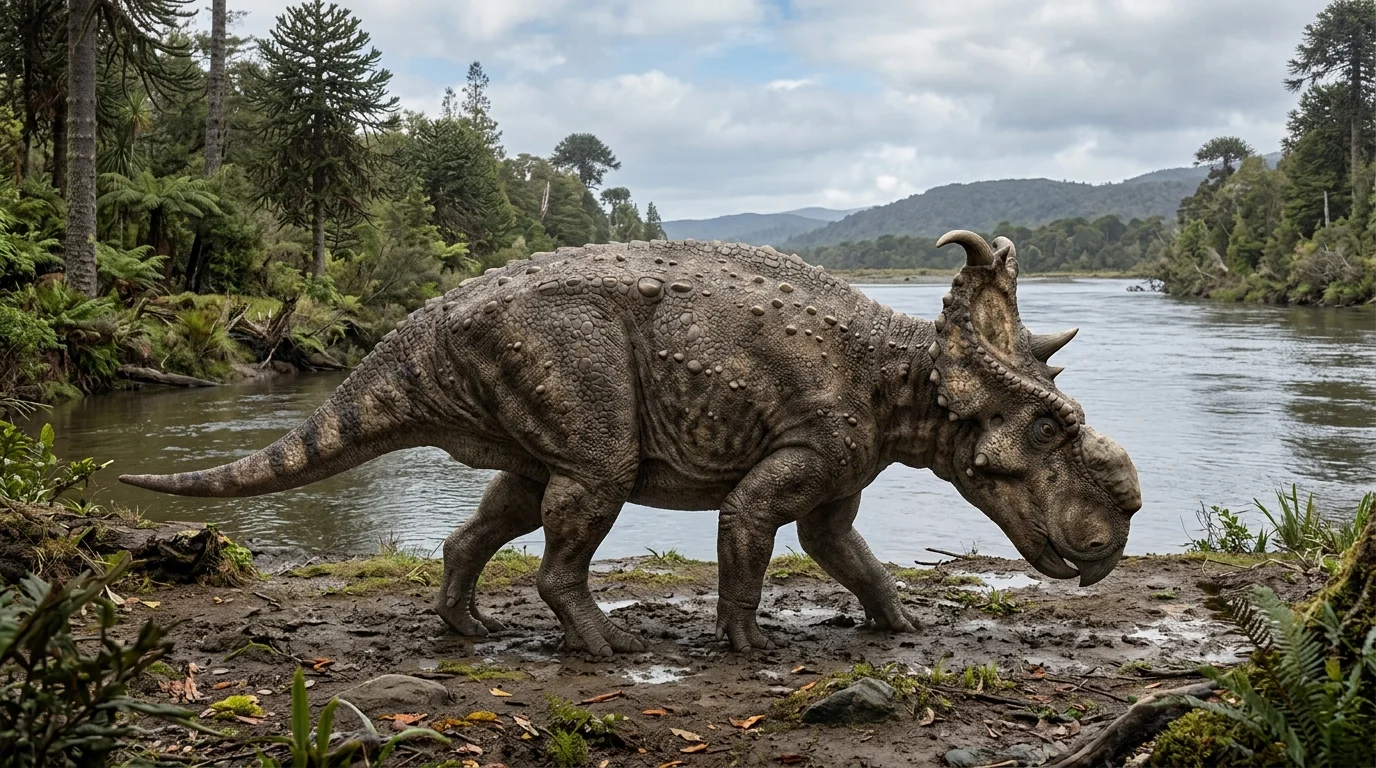
CeratopsiaPachyrhinosaurus canadensis Sternberg, 1950
The 'thick-nosed lizard', an Arctic-adapted ceratopsid that replaced horns with massive bony bosses.
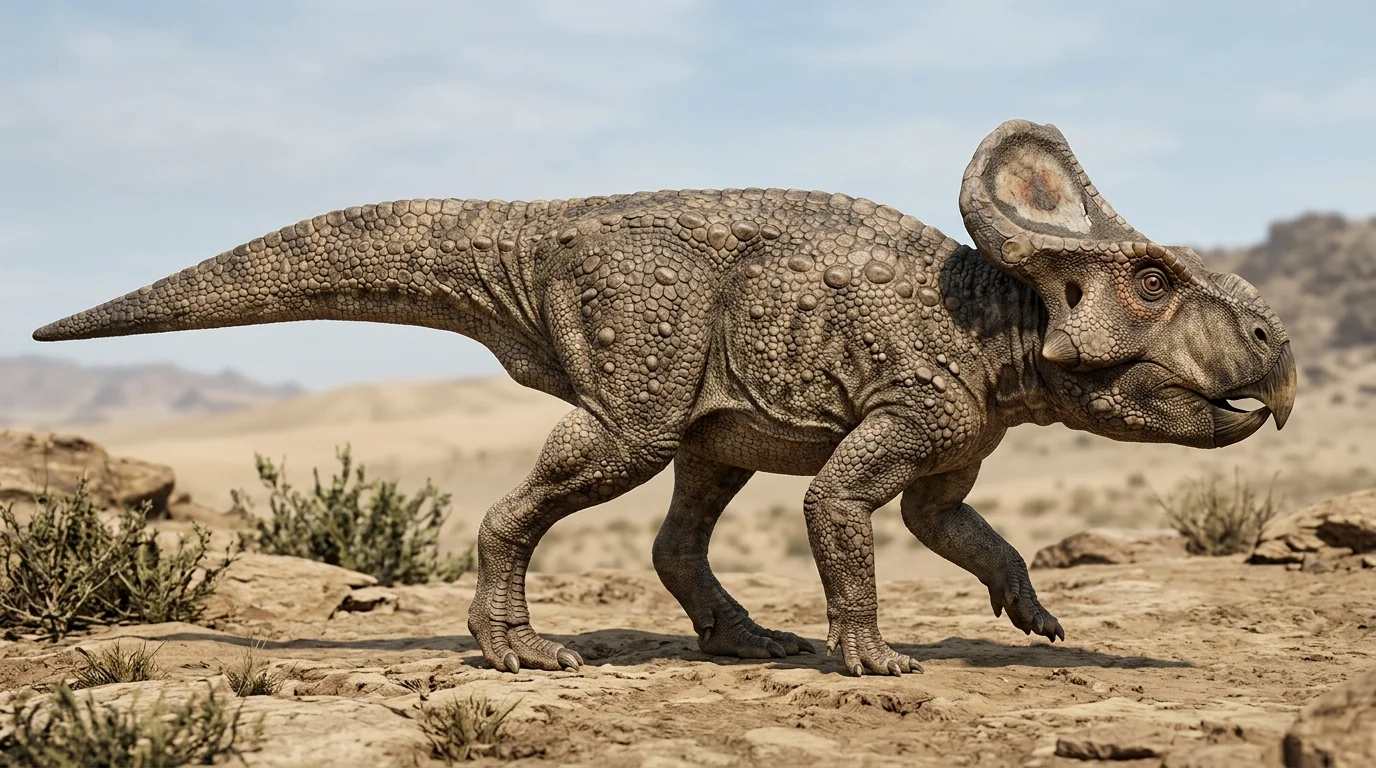
CeratopsiaProtoceratops andrewsi Granger & Gregory, 1923
A sheep-sized, hornless horned dinosaur that roamed the sand dunes of the Late Cretaceous Gobi Desert.