Concavenator corcovatus Ortega et al., 2010
A bizarre Early Cretaceous Spanish carcharodontosaurid featuring a sharp humped back and quill knobs on its arms.

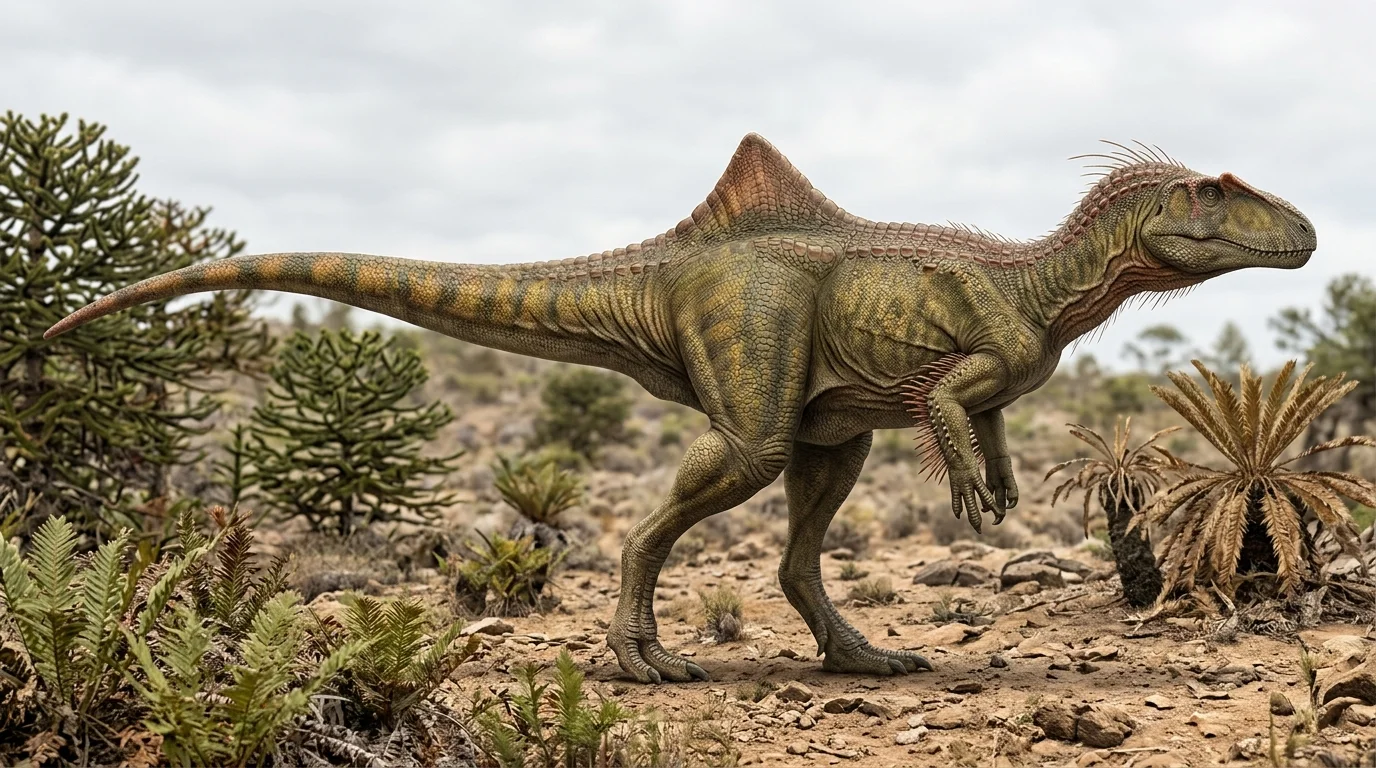
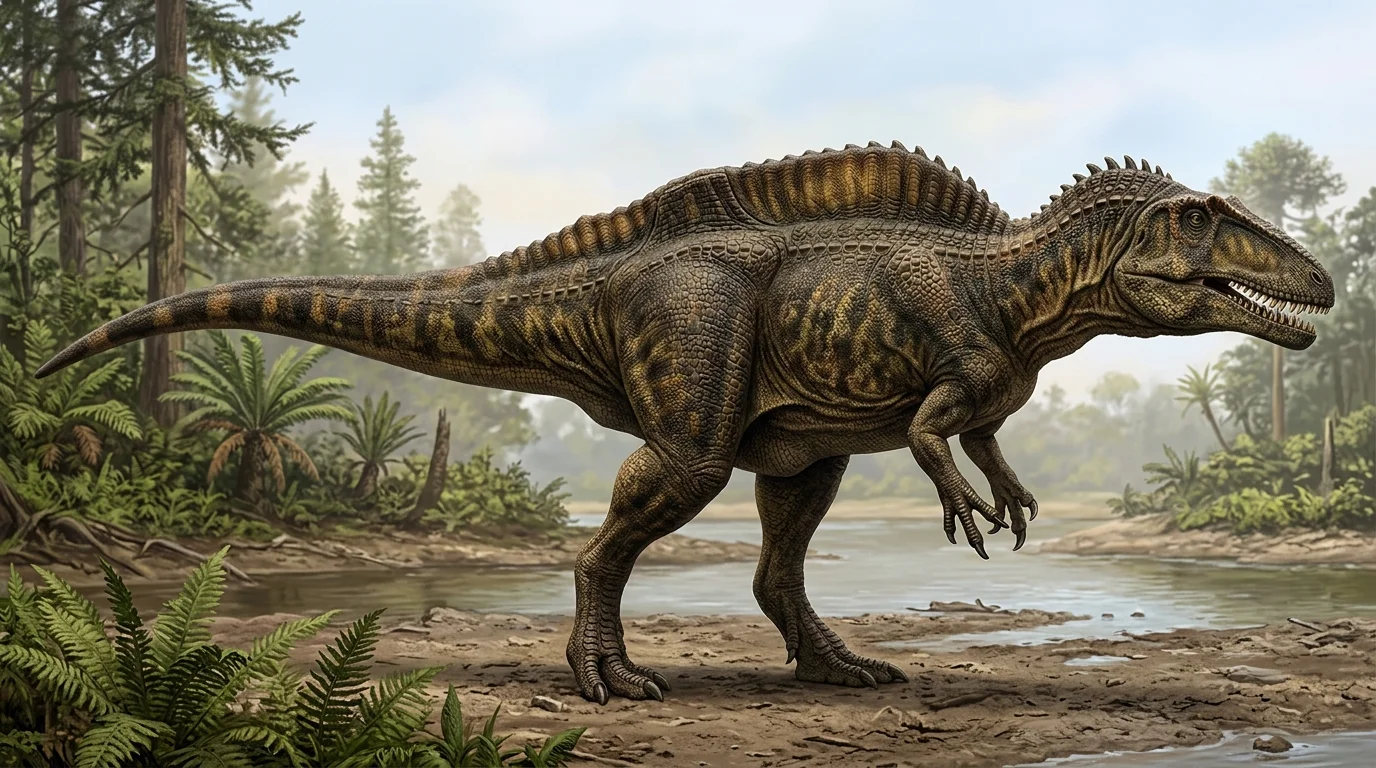
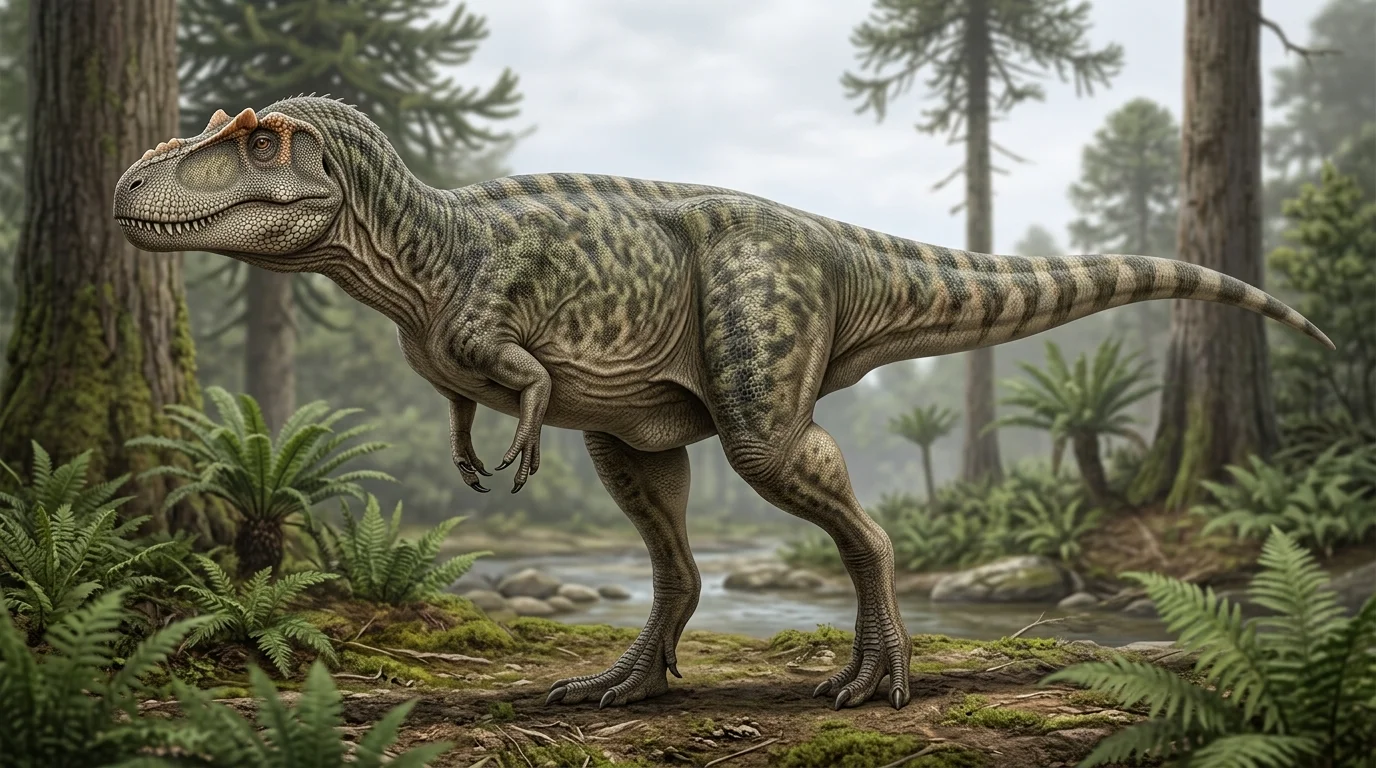
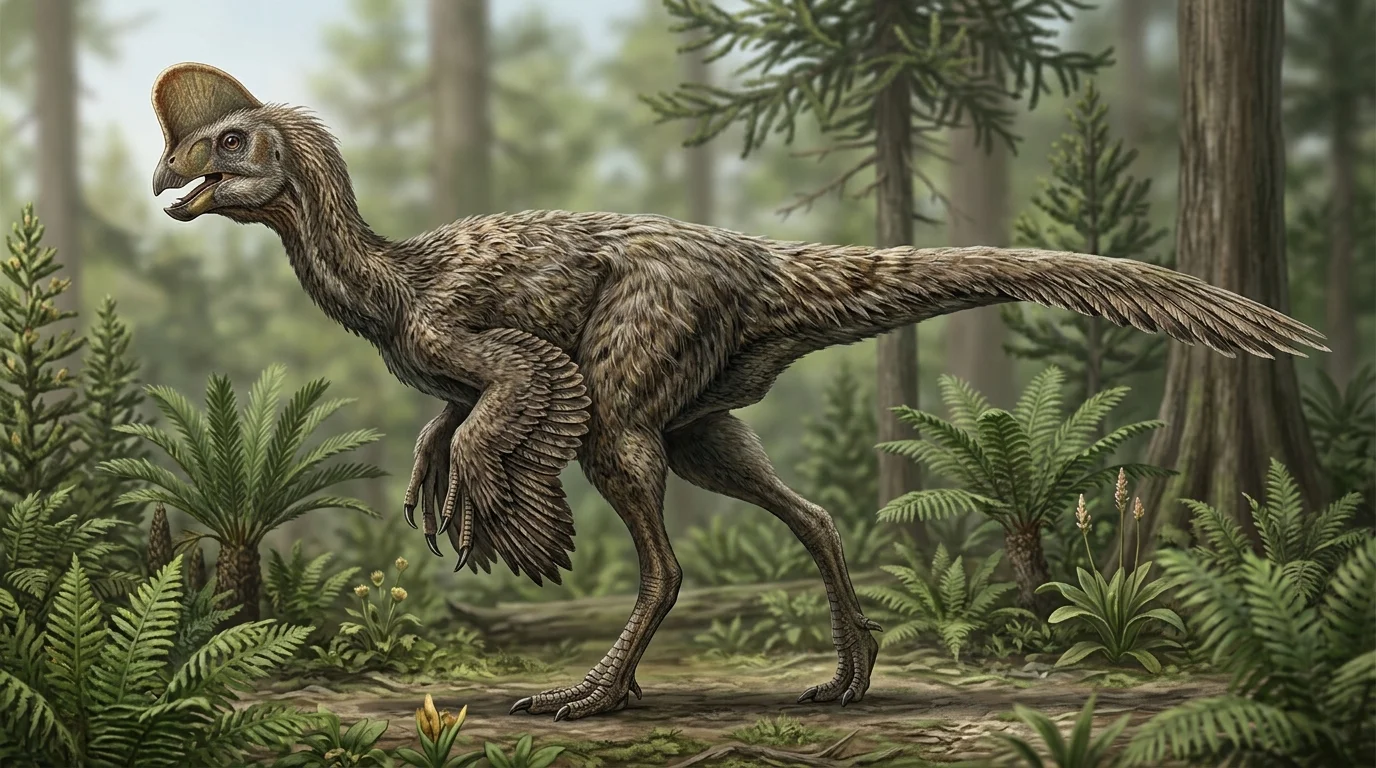
Scientific reconstruction of Concavenator (Concavenator corcovatus Ortega et al., 2010) in its native Geological period: Cretaceous Period.
Image Credit: AI-generated scientific paleoart reconstruction synthesized from species-specific osteological profiles and peer-reviewed descriptions. (AI-Generated / Open Educational Media (DinoOrigin Spec))
Phylogenetic classification of Concavenator corcovatus Ortega et al., 2010 based on peer-reviewed cladistic analyses of diagnostic skeletal synapomorphies.
| Taxonomic Rank | Taxon / Clade | Diagnostic Context |
|---|---|---|
| Kingdom | Animalia | Monophyletic prehistoric clade |
| Phylum | Chordata | Monophyletic prehistoric clade |
| Clade | Dinosauria | Monophyletic prehistoric clade |
| Order | Saurischia (Lizard-Hipped Dinosaurs) | Characterized ancestrally by a triradiate pelvis with an anteriorly pointing pubis. |
| Suborder | Theropoda | Bipedal saurischian dinosaurs, historically dominated by carnivores and including the avian lineage. |
| Genus | Concavenator | Monophyletic prehistoric clade |
| Species | Concavenator corcovatus Ortega et al., 2010 | Specific authority designation |
Concavenator ('humpbacked hunter of Cuenca') was an extraordinary carcharodontosaurian theropod found in the exceptionally preserved Las Hoyas fossil site in Spain. It possessed two tall, elongated vertebrae in front of its hips that formed a narrow, pointed dorsal crest or hump.
Its ulna (forearm bone) preserves distinct quill knobs (papillae), representing osteological attachment points for feather-like integumentary quills, pushing the evolutionary origin of quilled structures deep into carcharodontosaurian theropods.
Medium-sized theropod with a sharp triangular crest over its lower back and quill-bearing forearms.
Anatomical dimensions relative to an average adult human (1.8 m / 6 ft tall)
Hunted primitive birds, ornithopods, and contemporary aquatic vertebrates with ziphodont teeth.
Unusual carcharodontosaurid predator with a pointed dorsal hump and ulnar quill knobs indicating integumentary structures. In the Las Hoyas wetland ecosystem of Early Cretaceous Spain, Concavenator hunted alongside European iguanodontians allied with Iguanodon.
Subtropical freshwater wetlands, lake basins, and surrounding forested uplands.
Virtually complete articulated holotype skeleton with skin and soft tissue impressions (MCCM-LH 6666).
Unearthed by paleontologists Francisco Ortega, Fernando Escaso, and José Luis Sanz.
The longest and final period of the Mesozoic Era, characterized by the rise of flowering plants, ceratopsians, hadrosaurs, tyrannosaurids, and concluding with the Chicxulub asteroid impact.
During the Mesozoic Era, continental drift progressively reconfigured land bridges, atmospheric currents, and regional precipitation regimes. Fossils of Concavenator evidence its adaptation to the paleoenvironments of Europe.
During the Mesozoic, Europe was largely an archipelago of islands, resulting in unique insular dwarf species and classic historical fossil discoveries.
The anatomical architecture of Concavenator serves as a crucial benchmark in vertebrate paleontology, illustrating key adaptive radiations within Theropoda.
Scientifically verified answers based on peer-reviewed paleontological evidence.
Concavenator lived during the Cretaceous Period Period, approximately 130–125 Ma (million years ago). This places it within the Mesozoic Era.
Paleontological estimates place Concavenator at a length of 5.5–6 m (18.0–19.7 ft), a hip/standing height of 1.7–2 m (5.6–6.6 ft), and a body mass of 350–500 kg (772–1,102 lbs).
Classified as a carnivore, Concavenator specialized in consuming Hunted primitive birds, ornithopods, and contemporary aquatic vertebrates with ziphodont teeth..
Fossil specimens of Concavenator have been recovered from Las Hoyas, Cuenca, Spain, with notable historic specimens documented in 2003. Unearthed by paleontologists Francisco Ortega, Fernando Escaso, and José Luis Sanz.
Authoritative citations establishing the factual taxonomy, biometrics, and anatomy of Concavenator.
Ortega, F., Escaso, F., & Sanz, J. L. (2010). A bizarre, humped Carcharodontosauria (Theropoda) from the Lower Cretaceous of Spain. Nature, 467(7312), 203-206. https://doi.org/10.1038/nature09181
Curated & Verified: 2026-09-24Deposited in Mesozoic sedimentary strata preserving skeletal remains, teeth, or trace trackways.
Concavenator provides critical insights into the evolutionary radiation of Theropoda. Holotypes and fossil evidence indicate: Virtually complete articulated holotype skeleton with skin and soft tissue impressions (MCCM-LH 6666).
TheropodaAcrocanthosaurus atokensis Stovall & Langston, 1950
A high-spined North American apex predator famous for hunting sauropods across Early Cretaceous river valleys.
TheropodaAlbertosaurus sarcophagus Osborn, 1905
A fleet-footed, gracile tyrannosaurid from the Late Cretaceous of western Canada known from prominent multi-individual bonebed associations.
TheropodaAnzu wyliei Lamanna et al., 2014
The 'Chicken from Hell', a gigantic, crested caenagnathid oviraptorosaur from the Hell Creek Formation.