Muttaburrasaurus langdoni Bartholomai & Molnar, 1981
A large Australian ornithopod equipped with a prominent bulbous, hollow nasal muzzle for vocal displays.

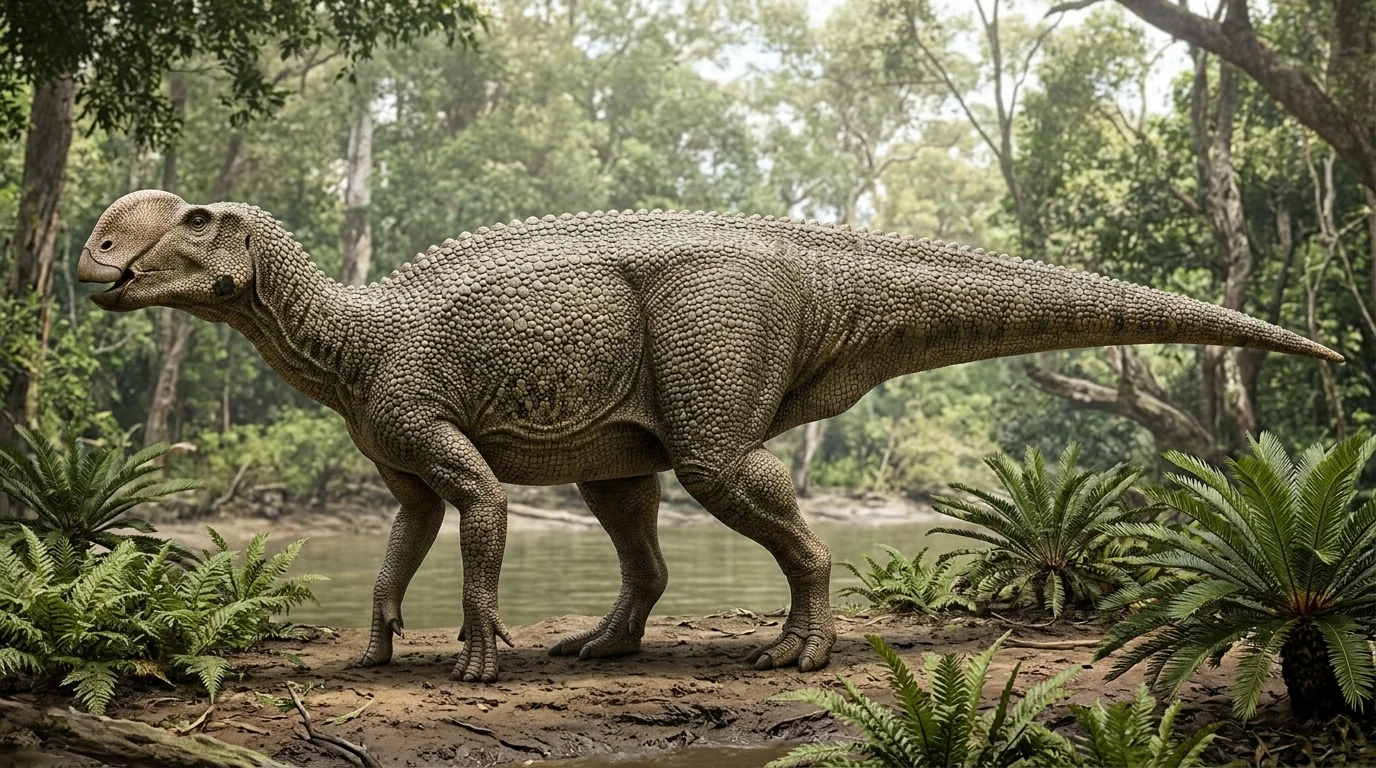
Scientific reconstruction of Muttaburrasaurus (Muttaburrasaurus langdoni Bartholomai & Molnar, 1981) in its native Geological period: Cretaceous Period.
Image Credit: AI-generated scientific paleoart reconstruction synthesized from species-specific osteological profiles and peer-reviewed descriptions. (AI-Generated / Open Educational Media (DinoOrigin Spec))
Phylogenetic classification of Muttaburrasaurus langdoni Bartholomai & Molnar, 1981 based on peer-reviewed cladistic analyses of diagnostic skeletal synapomorphies.
| Taxonomic Rank | Taxon / Clade | Diagnostic Context |
|---|---|---|
| Kingdom | Animalia | Monophyletic prehistoric clade |
| Phylum | Chordata | Monophyletic prehistoric clade |
| Clade | Dinosauria | Monophyletic prehistoric clade |
| Order | Ornithischia (Bird-Hipped Dinosaurs) | Characterized by a pelvis with a backwards-pointing pubis parallel to the ischium. |
| Suborder | Ornithopoda | Beaked, bipedal and facultatively quadrupedal herbivores with complex multi-layered dental batteries. |
| Genus | Muttaburrasaurus | Monophyletic prehistoric clade |
| Species | Muttaburrasaurus langdoni Bartholomai & Molnar, 1981 | Specific authority designation |
Muttaburrasaurus is one of Australia's most famous and complete dinosaurs, discovered near the town of Muttaburra in Queensland. Growing up to eight meters in length, it was an imposing herbivore that possessed an enlarged, hollow, bulbous expansion on the top of its snout.
This inflated nasal cavity likely acted as a resonating chamber to broadcast loud vocalizations across ancient Australian river systems or served as a colorful display structure.
Robust iguanodontian with an inflated nasal dome, strong hind legs, thumb spike, and powerful jaws.
Anatomical dimensions relative to an average adult human (1.8 m / 6 ft tall)
Tough cycads, ferns, and podocarps sliced with shearing teeth lacking secondary ridges.
Large herbivorous ornithopod possessing an inflated, hollow nasal snout used for visual display and vocal resonance. In the mid-Cretaceous river valleys of Australia, Muttaburrasaurus shared its habitat with armored ankylosaurs like Minmi and faced predatory threats from Australovenator.
Temperate floodplain forests and coastal scrub along the inland Eromanga Sea.
Approximately 60% complete holotype skeleton including intact skull on display at the Queensland Museum.
Found by grazier Doug Langdon; described by Alan Bartholomai and Ralph Molnar in 1981.
The longest and final period of the Mesozoic Era, characterized by the rise of flowering plants, ceratopsians, hadrosaurs, tyrannosaurids, and concluding with the Chicxulub asteroid impact.
During the Mesozoic Era, continental drift progressively reconfigured land bridges, atmospheric currents, and regional precipitation regimes. Fossils of Muttaburrasaurus evidence its adaptation to the paleoenvironments of Australia.
Ancient Gondwanan inland river basins and coastal marine margins.
The anatomical architecture of Muttaburrasaurus serves as a crucial benchmark in vertebrate paleontology, illustrating key adaptive radiations within Ornithopoda.
Scientifically verified answers based on peer-reviewed paleontological evidence.
Muttaburrasaurus lived during the Cretaceous Period Period, approximately 105–100 Ma (million years ago). This places it within the Mesozoic Era.
Paleontological estimates place Muttaburrasaurus at a length of 7.5–8.5 m (24.6–27.9 ft), a hip/standing height of 2.5–3 m (8.2–9.8 ft), and a body mass of 2.5–3.5 metric tons (5,512–7,716 lbs).
Classified as a herbivore, Muttaburrasaurus specialized in consuming Tough cycads, ferns, and podocarps sliced with shearing teeth lacking secondary ridges..
Fossil specimens of Muttaburrasaurus have been recovered from Mackunda Formation, Muttaburra, Queensland, Australia, with notable historic specimens documented in 1963. Found by grazier Doug Langdon; described by Alan Bartholomai and Ralph Molnar in 1981.
Authoritative citations establishing the factual taxonomy, biometrics, and anatomy of Muttaburrasaurus.
Bartholomai, A., & Molnar, R. E. (1981). Muttaburrasaurus, a new iguanodontid (Ornithischia: Ornithopoda) dinosaur from the Lower Cretaceous of Queensland. Memoirs of the Queensland Museum, 20(2), 319-349.
Curated & Verified: 2026-09-24Deposited in Mesozoic sedimentary strata preserving skeletal remains, teeth, or trace trackways.
Muttaburrasaurus provides critical insights into the evolutionary radiation of Ornithopoda. Holotypes and fossil evidence indicate: Approximately 60% complete holotype skeleton including intact skull on display at the Queensland Museum.
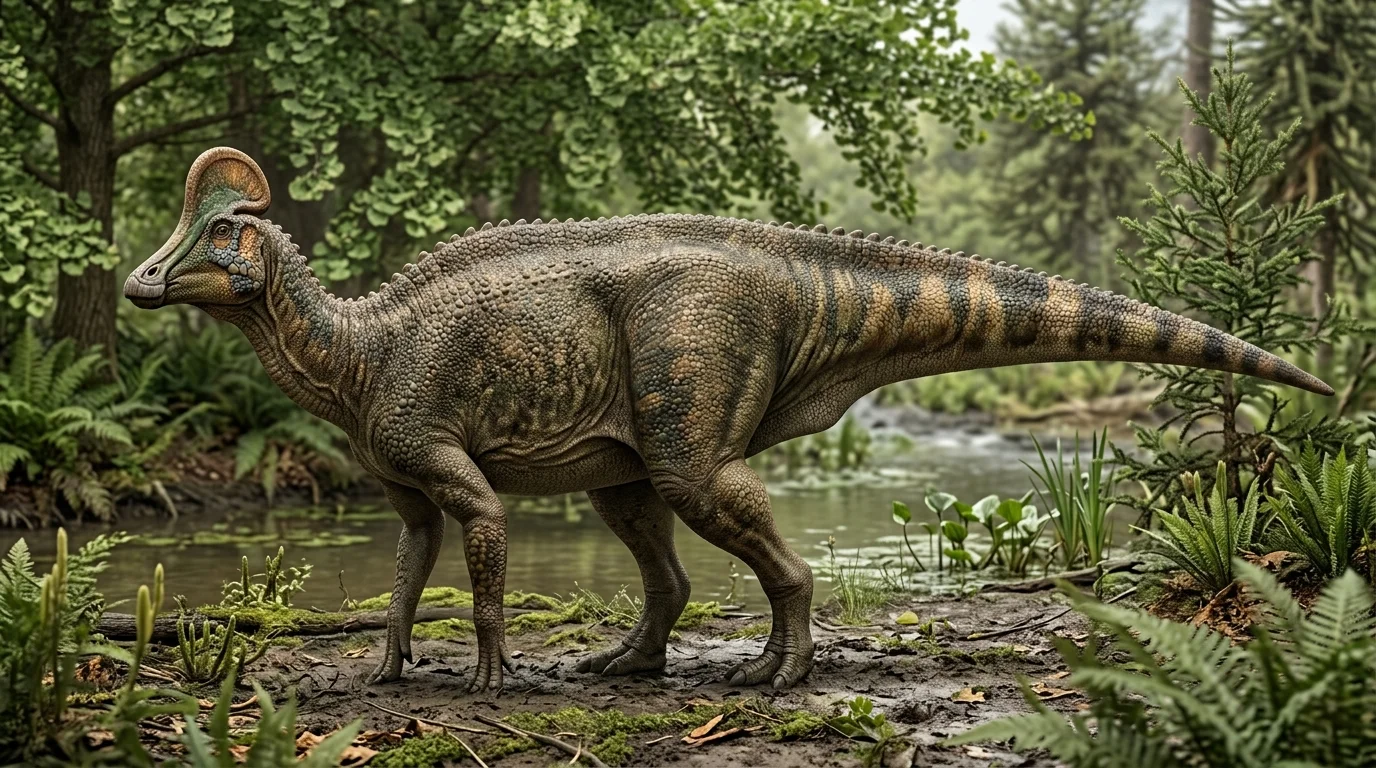
OrnithopodaCorythosaurus casuarius Brown, 1914
A hollow-crested hadrosaurid from Alberta possessing a tall, semicircular helmet crest for sound resonance.
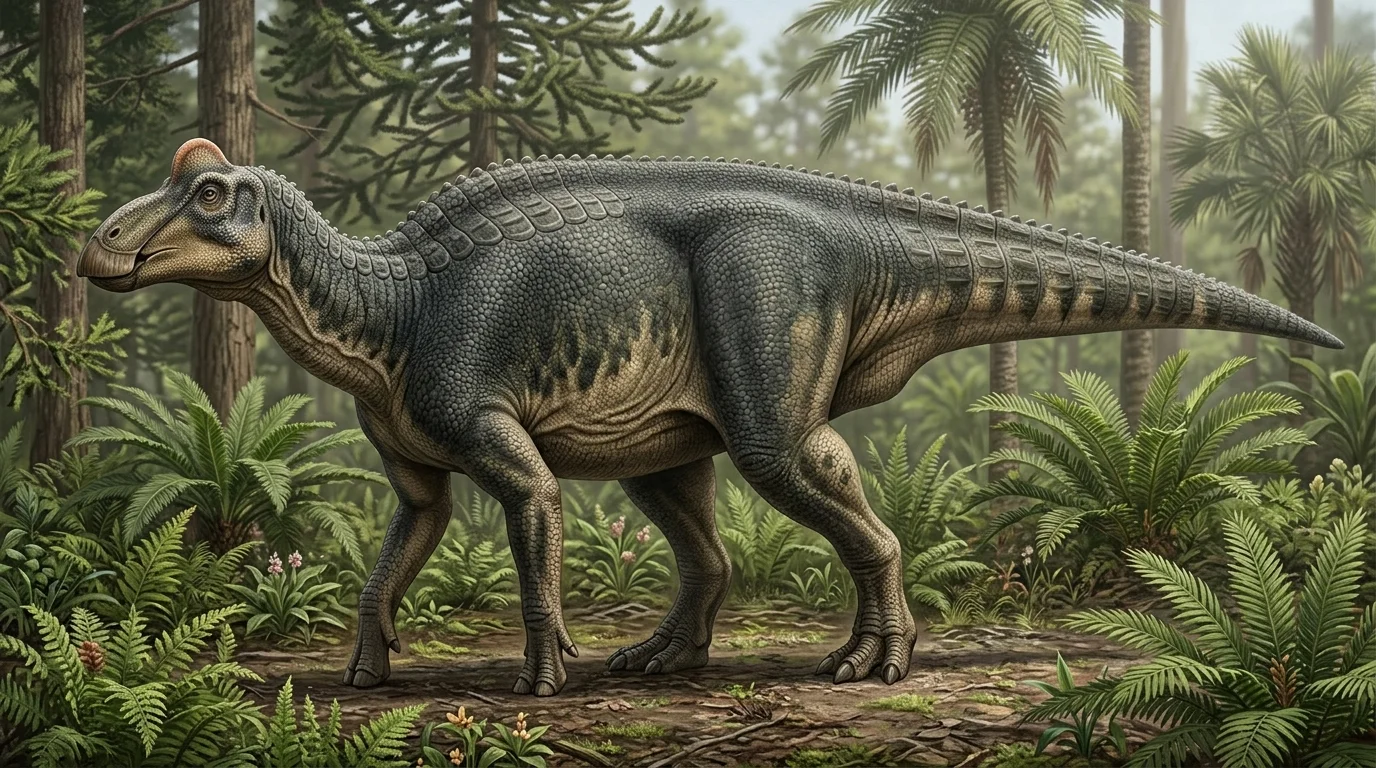
OrnithopodaEdmontosaurus regalis Lambe, 1917
A colossal duck-billed hadrosaurid that was the primary herbivore of Late Cretaceous North America.
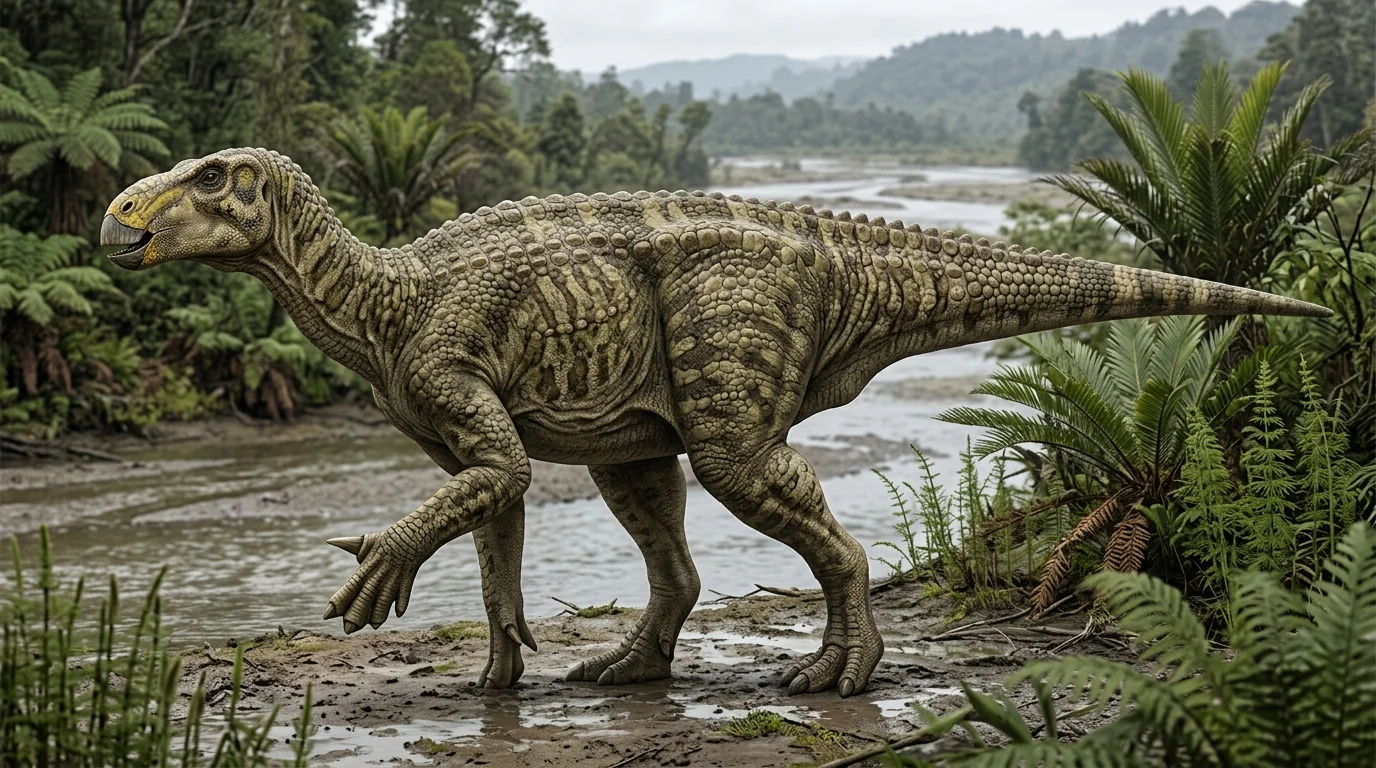
OrnithopodaIguanodon bernissartensis Boulenger, 1881
A foundational Early Cretaceous ornithopod possessing a specialized conical thumb spike and facultative quadrupedal gait.