Phylogenetic classification of Nigersaurus taqueti Sereno et al., 1999 based on peer-reviewed cladistic analyses of diagnostic skeletal synapomorphies.
Herbivorous saurischians characterized by elongated necks, columnar limbs, and enormous body volumes.
Genus
Nigersaurus
Monophyletic prehistoric clade
Species
Nigersaurus taqueti Sereno et al., 1999
Specific authority designation
Anatomy & Physical Characteristics
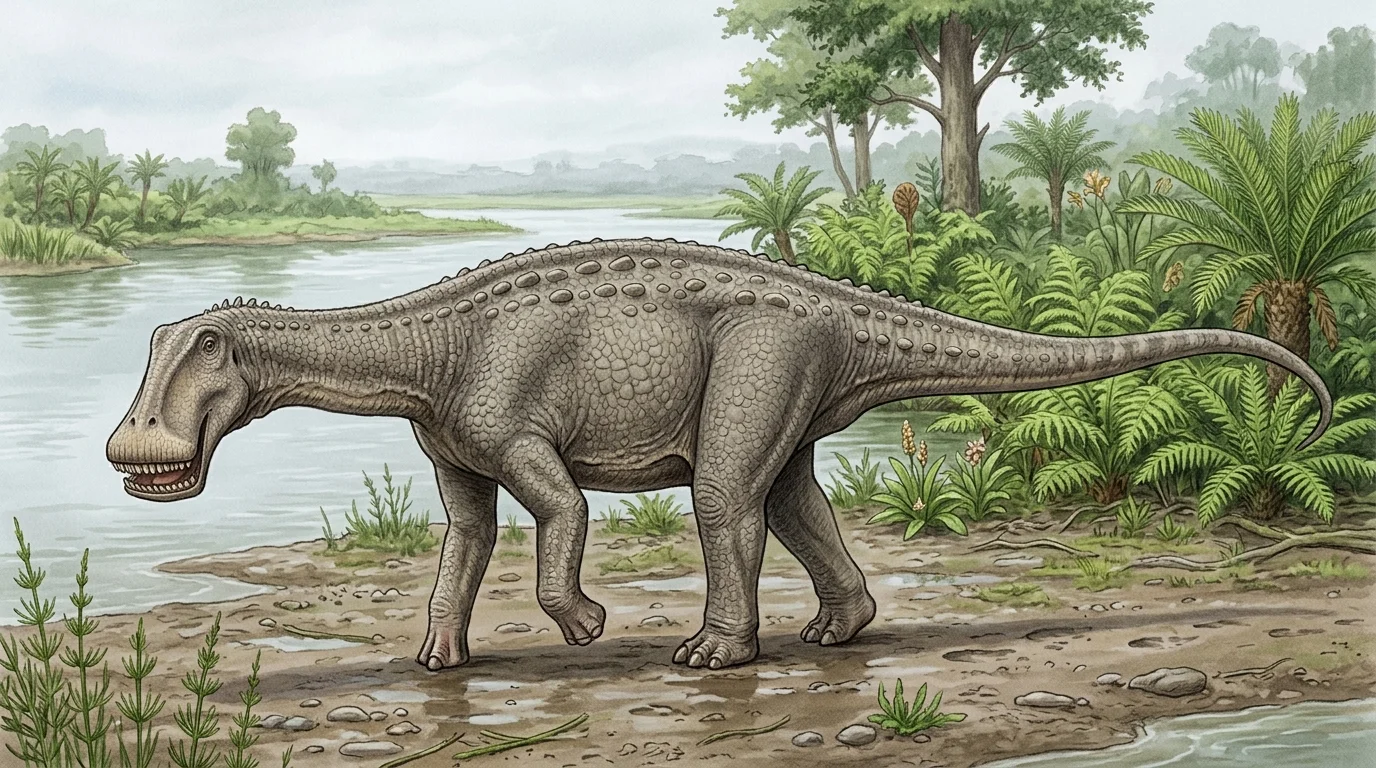
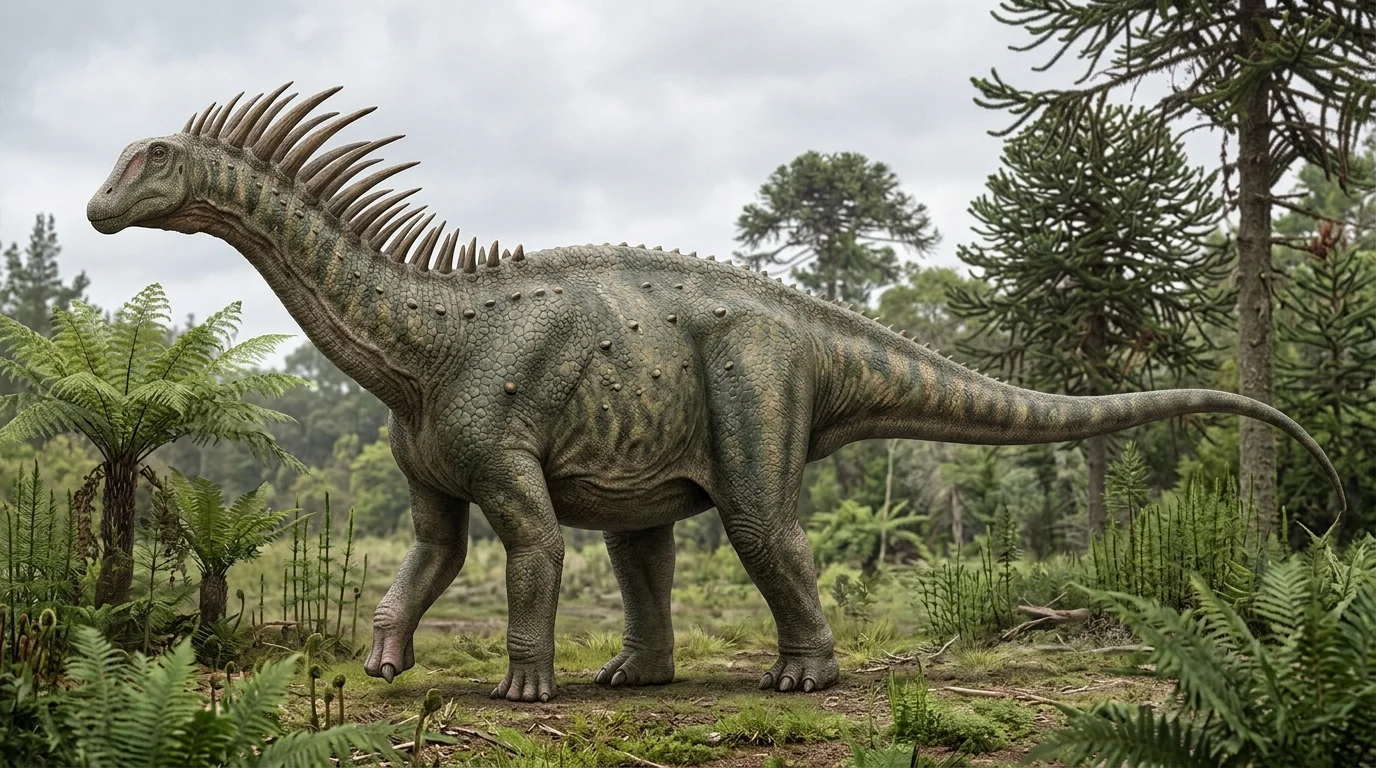
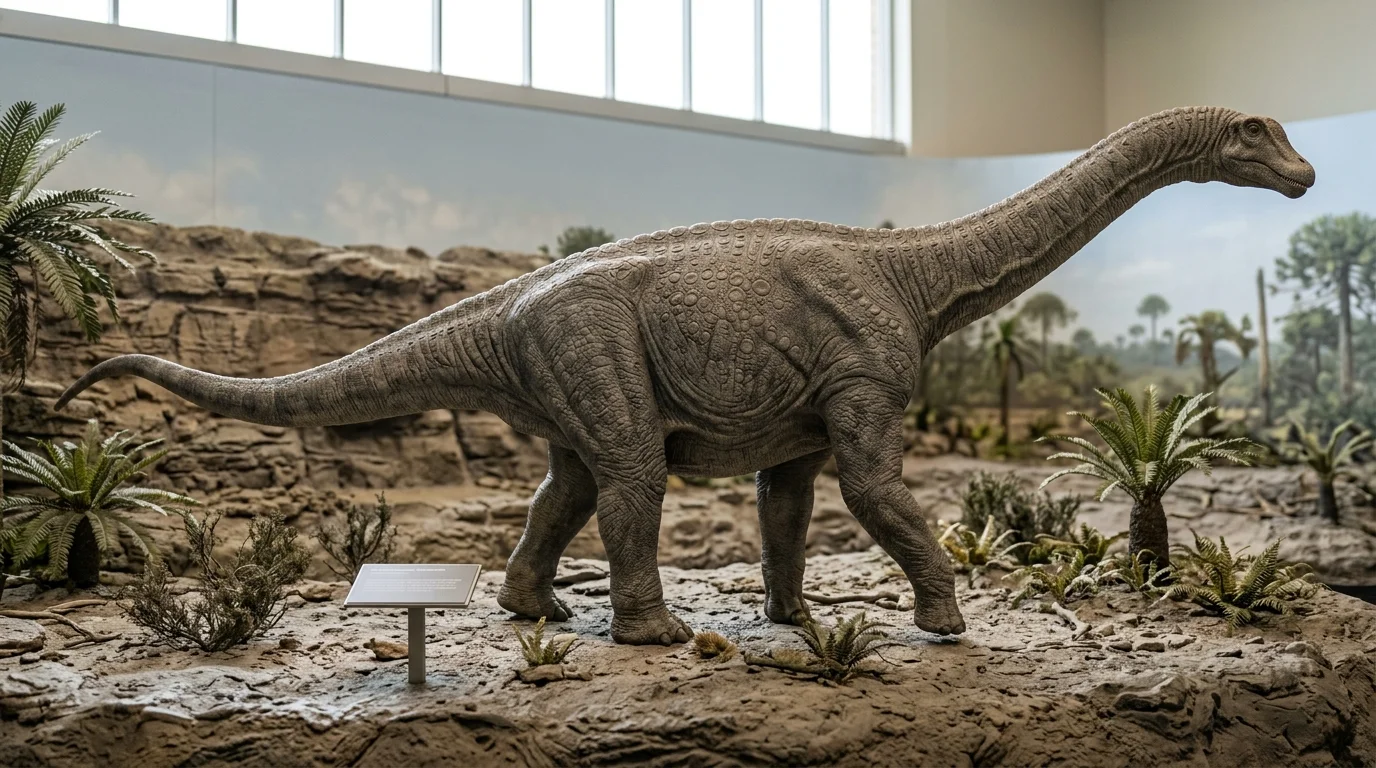
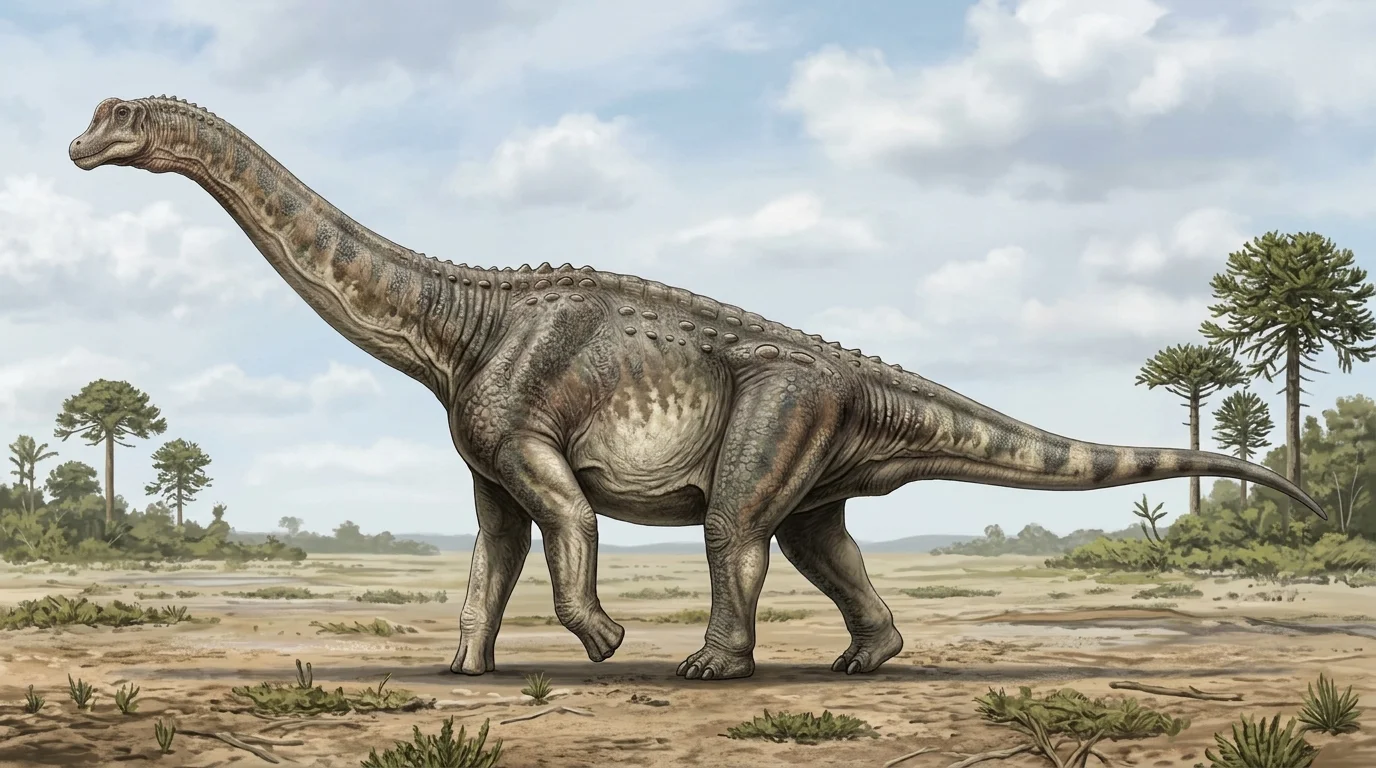
Nigersaurus was one of the most bizarre dinosaurs in the fossil record. Discovered in the Early Cretaceous Elrhaz Formation of Niger, this nine-meter rebbachisaurid sauropod had a skull with bone so thin it was translucent, and jaws that formed a wide, straight-edged square vacuum-cleaner muzzle.
Its jaws contained over 500 teeth aligned in straight transversal batteries that replaced themselves every 14 days, adapted specifically for ground-level grazing on horsetails and ferns.
Diagnostic Morphological Traits
Short-necked sauropod with a broad vacuum-like muzzle, delicate skeletal bones, and downward-angled head posture.
Comparative Scale & Biometrics
Anatomical dimensions relative to an average adult human (1.8 m / 6 ft tall)
Ground-level horsetails, ferns, and soft angiosperms cropped with 500 continuously replaced teeth.
Paleobiology & Behavior
Specialized low-level sauropod browser with a wide, vacuum-shaped muzzle containing over 500 continuously replaced teeth. In the Elrhaz Formation of Niger, Nigersaurus grazed along riverbanks alongside the sail-backed herbivore Ouranosaurus and spinosaurid predator Suchomimus.
Habitat & Ecological Biome
Prehistoric Depositional Setting
Lush, well-watered river systems, inland deltas, and fern-covered floodplains of the ancient Sahara.
Fossil Evidence & Specimen Records
Preserved Skeletal Material & Bonebeds
Delicate cranial material, jaw batteries, and lightened pneumatic postcranial skeleton.
Discovery & Taxonomic Naming History
Year of Discovery / Description1976
Type Specimen Locality & FormationElrhaz Formation, Gadoufaoua, Niger
Named by Philippe Taquet; complete anatomy revealed by Paul Sereno's expeditions in 1999.
Cretaceous Period PeriodTemporal Interval: 115–105 Ma (million years ago)
The longest and final period of the Mesozoic Era, characterized by the rise of flowering plants, ceratopsians, hadrosaurs, tyrannosaurids, and concluding with the Chicxulub asteroid impact.
During the Mesozoic Era, continental drift progressively reconfigured land bridges, atmospheric currents, and regional precipitation regimes. Fossils of Nigersaurus evidence its adaptation to the paleoenvironments of Africa.
Paleogeographic RealmAfrica (Africa)
Featuring the Bahariya and Kem Kem deltaic systems of North Africa, home to colossal riverine theropods and unique freshwater ecosystems.
Fossil Discovery Locality
Scientific Significance & Evolutionary Impact
The anatomical architecture of Nigersaurus serves as a crucial benchmark in vertebrate paleontology, illustrating key adaptive radiations within Sauropodomorpha.
Phylogenetic Placement: Informs cladistic debates concerning the divergence, skull biomechanics, and skeletal evolution of Cretaceous Period fauna.
Paleoecological Guild: Documents trophic specialization (Herbivore) and predator-prey dynamics across its regional ecosystem.
Scientifically verified answers based on peer-reviewed paleontological evidence.
Q1.When did Nigersaurus live?
Nigersaurus lived during the Cretaceous Period Period, approximately 115–105 Ma (million years ago). This places it within the Mesozoic Era.
Q2.How big was Nigersaurus?
Paleontological estimates place Nigersaurus at a length of 8.5–9.5 m (27.9–31.2 ft), a hip/standing height of 2.2–2.6 m (7.2–8.5 ft), and a body mass of 3.5–4.5 metric tons (7,716–9,921 lbs).
Q3.What was the diet of Nigersaurus?
Classified as a herbivore, Nigersaurus specialized in consuming Ground-level horsetails, ferns, and soft angiosperms cropped with 500 continuously replaced teeth..
Q4.Where were Nigersaurus fossils discovered?
Fossil specimens of Nigersaurus have been recovered from Elrhaz Formation, Gadoufaoua, Niger, with notable historic specimens documented in 1976. Named by Philippe Taquet; complete anatomy revealed by Paul Sereno's expeditions in 1999.
Academic Literature & Peer-Reviewed References
Authoritative citations establishing the factual taxonomy, biometrics, and anatomy of Nigersaurus.
Sereno, P. C., Beck, A. L., Dutheil, D. B., et al. (1999). Cretaceous sauropods from the Sahara and the uneven rate of skeletal evolution among dinosaurs. Science, 286(5443), 1342-1347. https://doi.org/10.1126/science.286.5443.1342
Deposited in Mesozoic sedimentary strata preserving skeletal remains, teeth, or trace trackways.
Q5.What makes Nigersaurus scientifically significant?
Nigersaurus provides critical insights into the evolutionary radiation of Sauropodomorpha. Holotypes and fossil evidence indicate: Delicate cranial material, jaw batteries, and lightened pneumatic postcranial skeleton.
Sereno, P. C., Wilson, J. A., Witmer, L. M., et al. (2007). Structural extremes in a Cretaceous dinosaur. PLoS ONE, 2(11), e1230. https://doi.org/10.1371/journal.pone.0001230
Among the largest and most massive terrestrial animals known to science, with scaled estimates reaching 65 to 80 metric tons based on fragmentary titanosaur remains.