Minmi paravertebra Molnar, 1980
A small, agile Australian ankylosaur featuring unique horizontal 'paravertebra' bone plates along its spine.

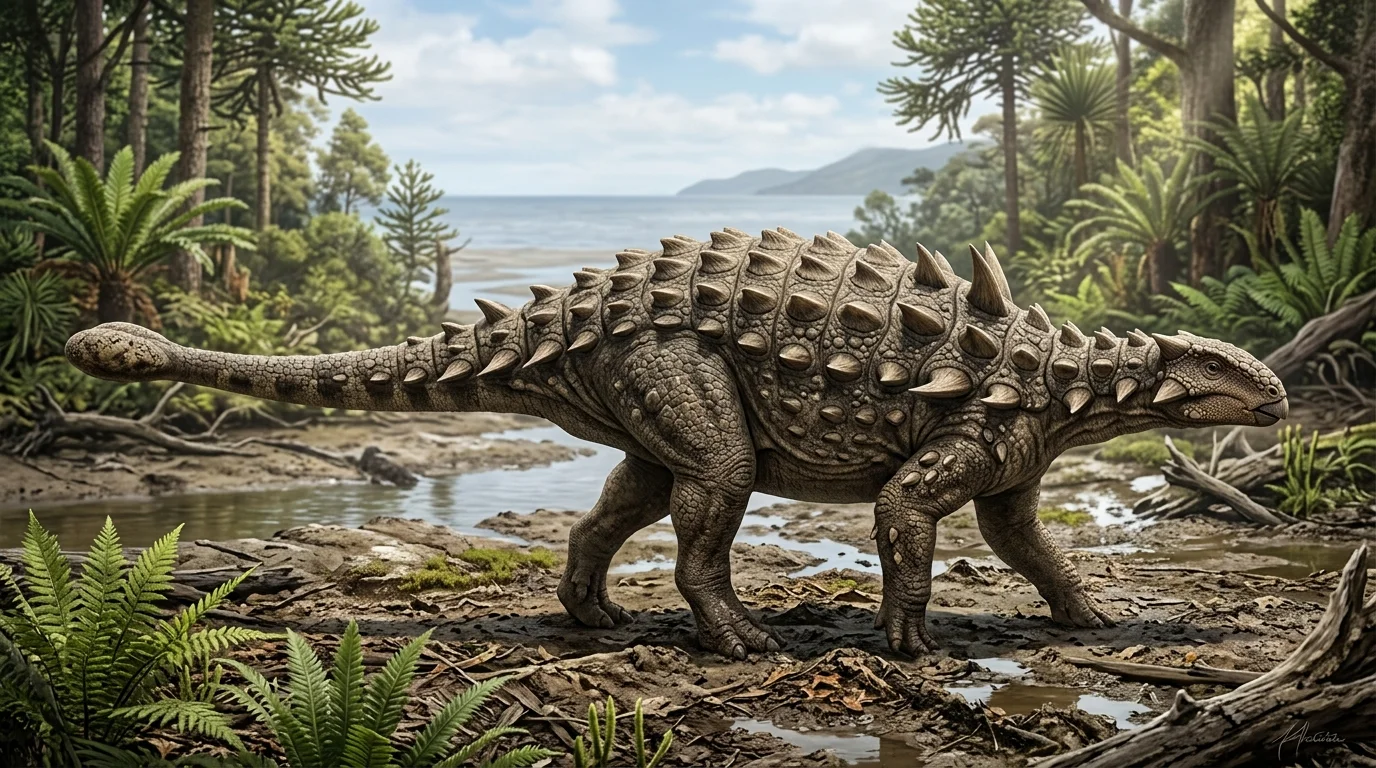
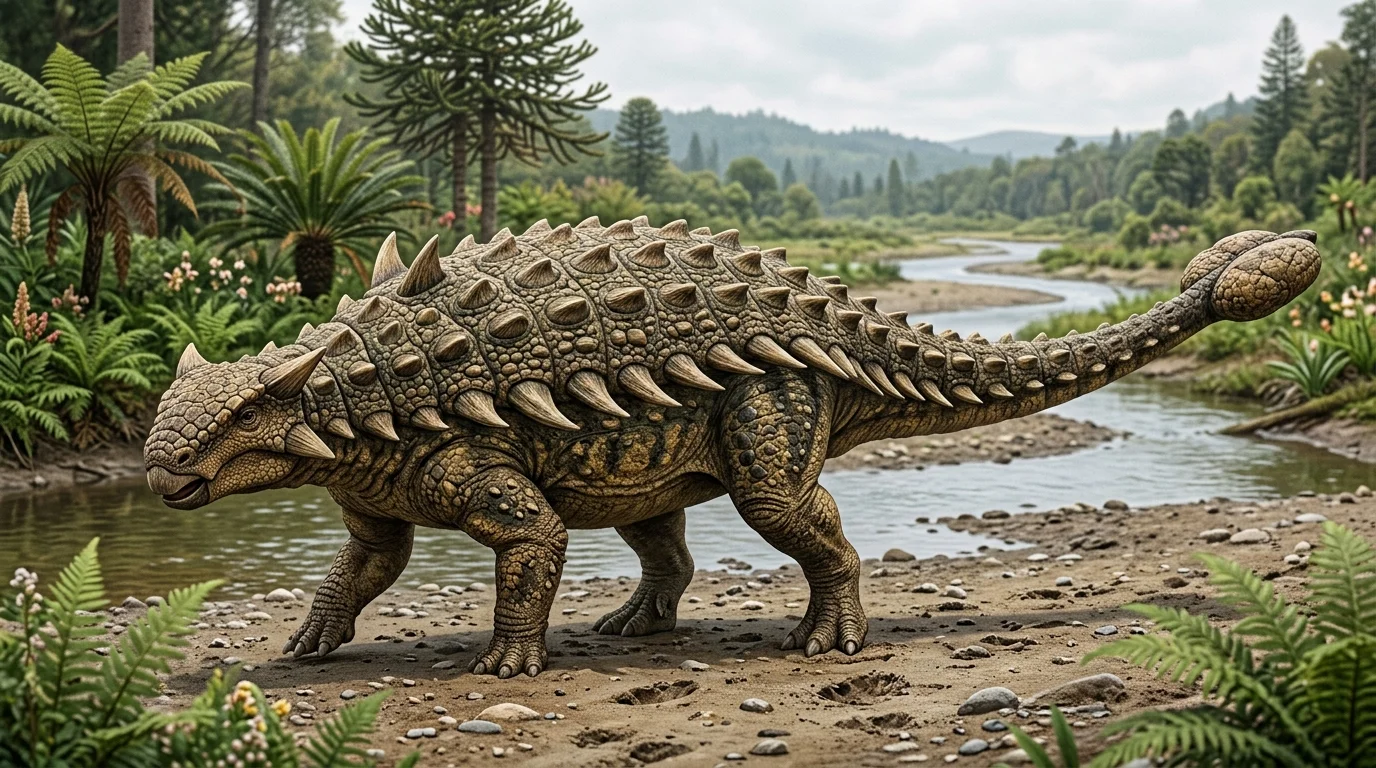
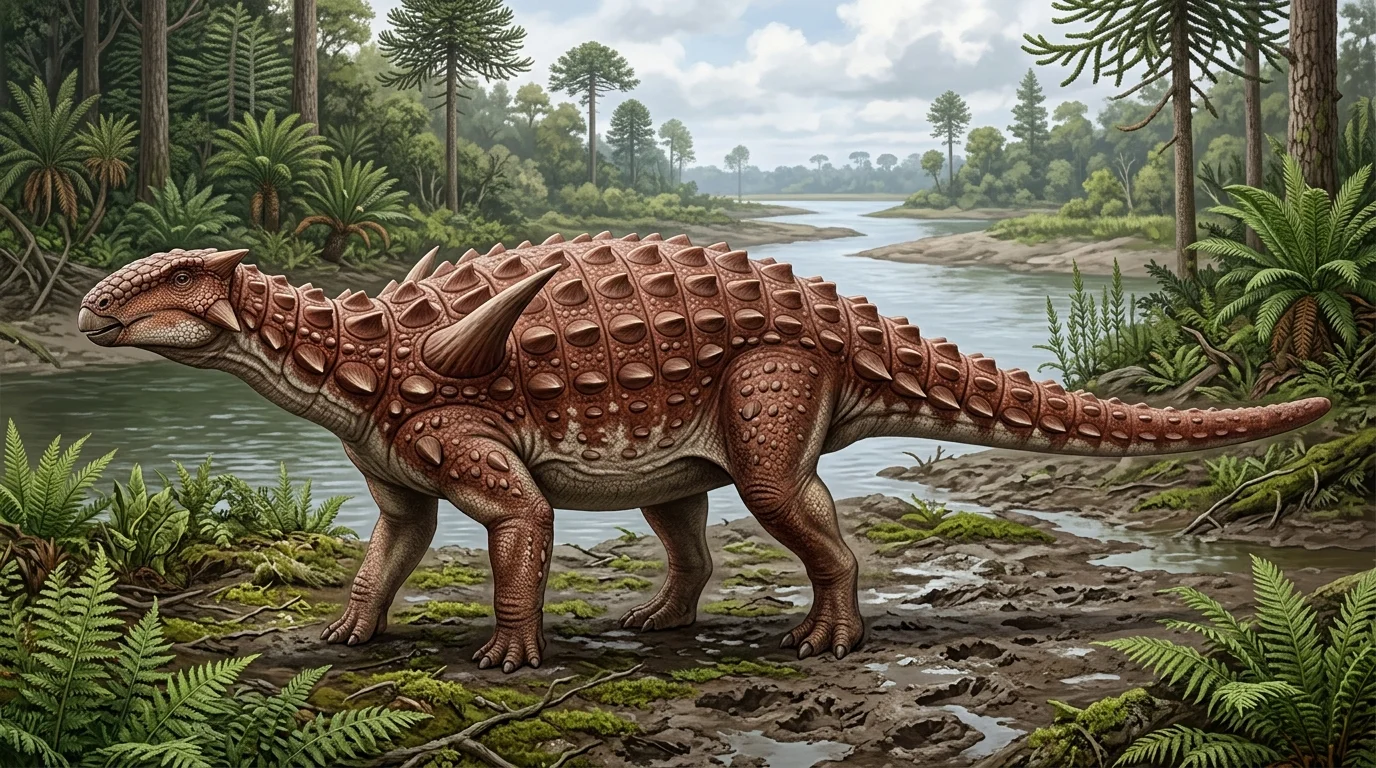
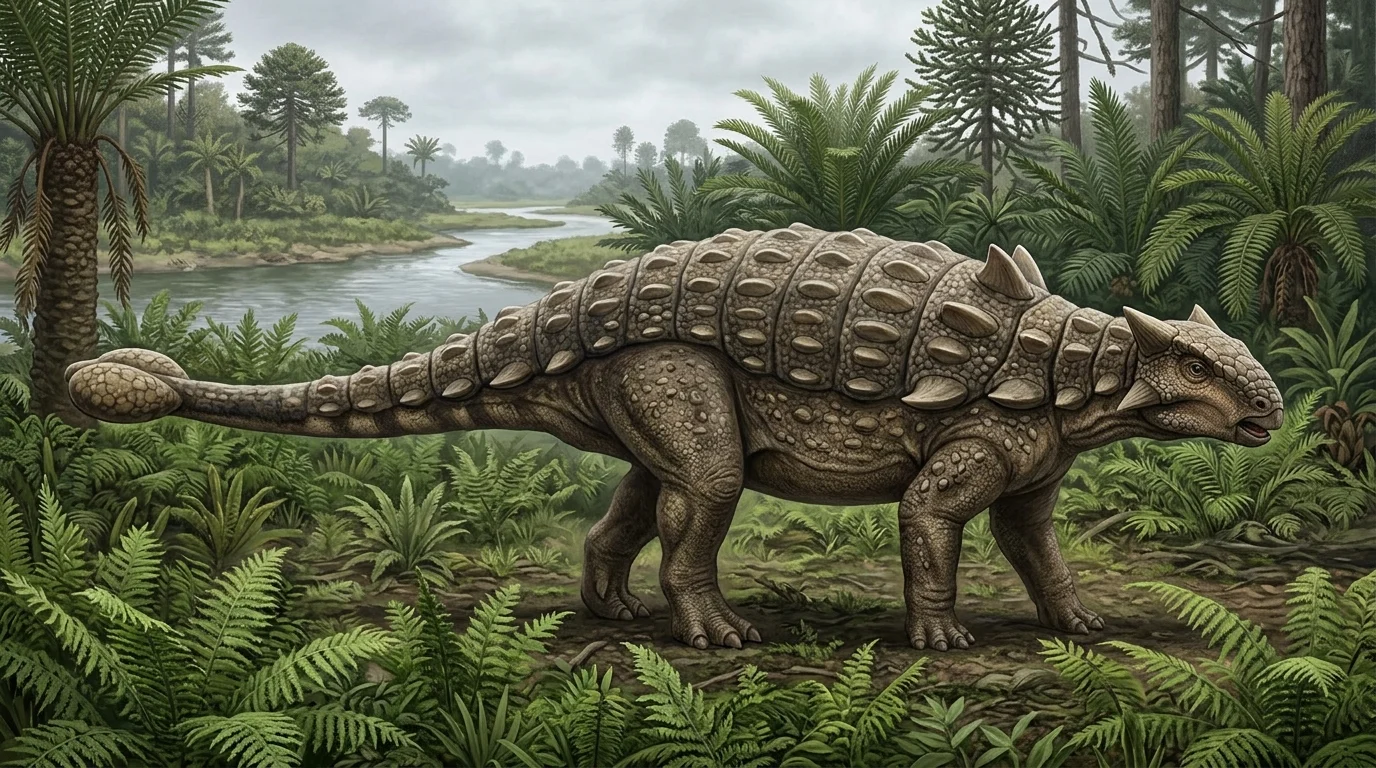
Scientific reconstruction of Minmi (Minmi paravertebra Molnar, 1980) in its native Geological period: Cretaceous Period.
Image Credit: AI-generated scientific paleoart reconstruction synthesized from species-specific osteological profiles and peer-reviewed descriptions. (AI-Generated / Open Educational Media (DinoOrigin Spec))
Phylogenetic classification of Minmi paravertebra Molnar, 1980 based on peer-reviewed cladistic analyses of diagnostic skeletal synapomorphies.
| Taxonomic Rank | Taxon / Clade | Diagnostic Context |
|---|---|---|
| Kingdom | Animalia | Monophyletic prehistoric clade |
| Phylum | Chordata | Monophyletic prehistoric clade |
| Clade | Dinosauria | Monophyletic prehistoric clade |
| Order | Ornithischia (Bird-Hipped Dinosaurs) | Characterized by a pelvis with a backwards-pointing pubis parallel to the ischium. |
| Infraorder | Ankylosauria | Heavily armored quadrupedal ornithischians protected by osteoderms and tail clubs. |
| Genus | Minmi | Monophyletic prehistoric clade |
| Species | Minmi paravertebra Molnar, 1980 | Specific authority designation |
Minmi was a small, primitive ankylosaurian dinosaur from the Early Cretaceous of Queensland, Australia. Measuring roughly three meters in length, it was notable for possessing unique horizontal bony plates ('paravertebrae') that ran parallel to its spine, providing skeletal reinforcement while preserving flexibility.
Fossilized gut contents in an exquisitely preserved specimen revealed that Minmi fed selectively on seeds, fruiting bodies, and delicate fern fronds.
Small quadruped with keeled dermal scutes, spiky neck rings, flexible spine, and a hornless tail.
Anatomical dimensions relative to an average adult human (1.8 m / 6 ft tall)
Selective herbivore; chewed seeds, spore cases, and soft dicot leaves.
Small, agile basal ankylosaurian covered in belly armor and bony scutes along its spine. Inhabiting the Early Cretaceous floodplains of eastern Australia, Minmi coexisted with large ornithopods like Muttaburrasaurus and was preyed upon by megaraptorans like Australovenator.
Temperate floodplain forests and coastal scrub along the inland Eromanga Sea.
Nearly complete articulated skeleton with intact skin impressions and belly contents (QM F1801).
Found by Alan Bartholomai; named by Ralph Molnar in 1980.
The longest and final period of the Mesozoic Era, characterized by the rise of flowering plants, ceratopsians, hadrosaurs, tyrannosaurids, and concluding with the Chicxulub asteroid impact.
During the Mesozoic Era, continental drift progressively reconfigured land bridges, atmospheric currents, and regional precipitation regimes. Fossils of Minmi evidence its adaptation to the paleoenvironments of Australia.
Ancient Gondwanan inland river basins and coastal marine margins.
The anatomical architecture of Minmi serves as a crucial benchmark in vertebrate paleontology, illustrating key adaptive radiations within Ankylosauria.
Scientifically verified answers based on peer-reviewed paleontological evidence.
Minmi lived during the Cretaceous Period Period, approximately 120–112 Ma (million years ago). This places it within the Mesozoic Era.
Paleontological estimates place Minmi at a length of 2.5–3 m (8.2–9.8 ft), a hip/standing height of 0.9–1.1 m (3.0–3.6 ft), and a body mass of 250–400 kg (551–882 lbs).
Classified as a herbivore, Minmi specialized in consuming Selective herbivore; chewed seeds, spore cases, and soft dicot leaves..
Fossil specimens of Minmi have been recovered from Bungil Formation, Minmi Crossing, Queensland, Australia, with notable historic specimens documented in 1964. Found by Alan Bartholomai; named by Ralph Molnar in 1980.
Authoritative citations establishing the factual taxonomy, biometrics, and anatomy of Minmi.
Molnar, R. E. (1980). An ankylosaur (Ornithischia: Reptilia) from the Lower Cretaceous of southern Queensland. Memoirs of the Queensland Museum, 20(1), 77-87.
Curated & Verified: 2026-09-24Deposited in Mesozoic sedimentary strata preserving skeletal remains, teeth, or trace trackways.
Minmi provides critical insights into the evolutionary radiation of Ankylosauria. Holotypes and fossil evidence indicate: Nearly complete articulated skeleton with intact skin impressions and belly contents (QM F1801).
AnkylosauriaAnkylosaurus magniventris Brown, 1908
The definitive armored dinosaur of the Late Cretaceous, encased in bony osteoderms and armed with an osseous tail club.
AnkylosauriaBorealopelta markmitchelli Brown et al., 2017
The world's best-preserved dinosaur fossil, a 110-million-year-old nodosaur with intact skin, armor, and stomach contents.
AnkylosauriaEuoplocephalus tutus Lambe, 1910
A heavily armored, tank-like ankylosaurid with armored eyelids and a massive bone-crushing tail club.