Protoceratops andrewsi Granger & Gregory, 1923
A sheep-sized, hornless horned dinosaur that roamed the sand dunes of the Late Cretaceous Gobi Desert.

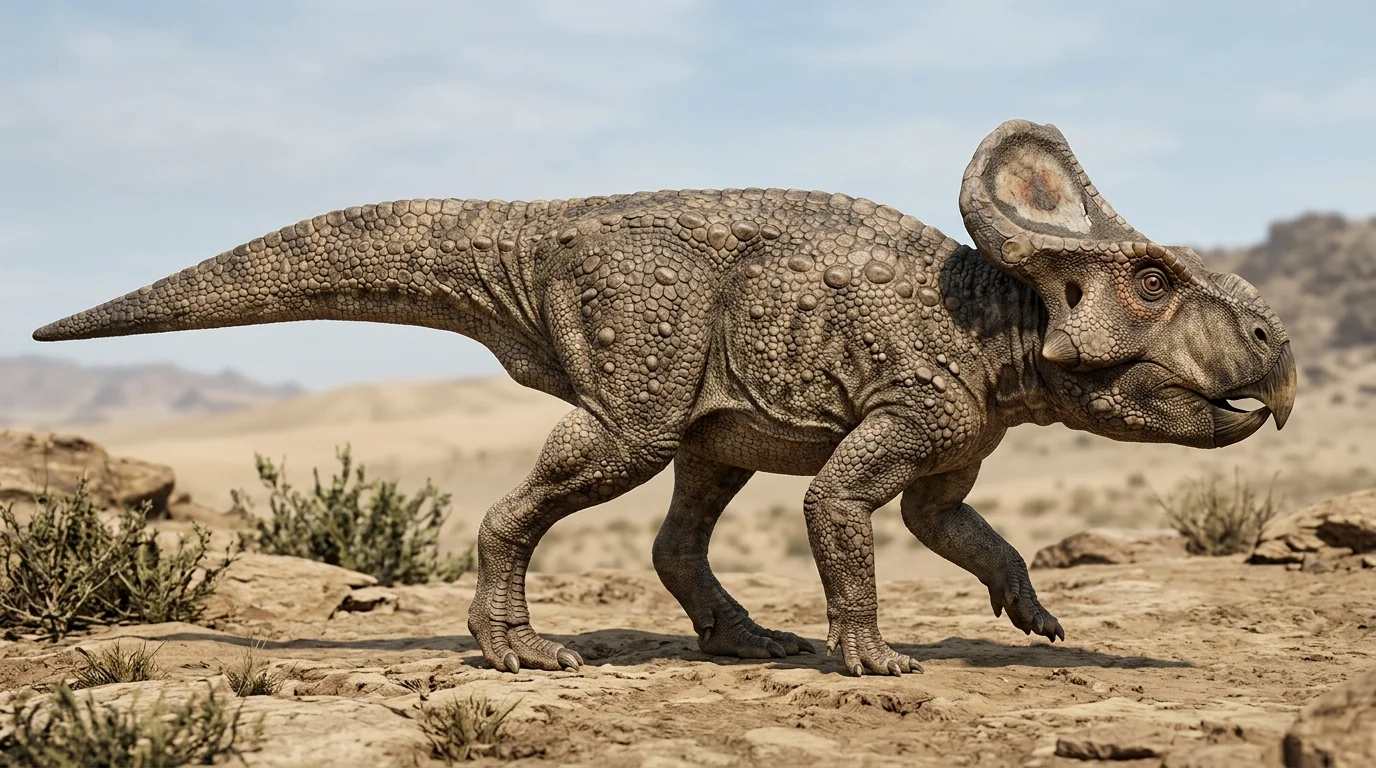
Scientific reconstruction of Protoceratops (Protoceratops andrewsi Granger & Gregory, 1923) in its native Geological period: Cretaceous Period.
Image Credit: AI-generated scientific paleoart reconstruction synthesized from species-specific osteological profiles and peer-reviewed descriptions. (AI-Generated / Open Educational Media (DinoOrigin Spec))
Phylogenetic classification of Protoceratops andrewsi Granger & Gregory, 1923 based on peer-reviewed cladistic analyses of diagnostic skeletal synapomorphies.
| Taxonomic Rank | Taxon / Clade | Diagnostic Context |
|---|---|---|
| Kingdom | Animalia | Monophyletic prehistoric clade |
| Phylum | Chordata | Monophyletic prehistoric clade |
| Clade | Dinosauria | Monophyletic prehistoric clade |
| Order | Ornithischia (Bird-Hipped Dinosaurs) | Characterized by a pelvis with a backwards-pointing pubis parallel to the ischium. |
| Infraorder | Ceratopsia | Ornithischian dinosaurs characterized by beaks, rostral bones, facial horns, and elaborate neck frills. |
| Genus | Protoceratops | Monophyletic prehistoric clade |
| Species | Protoceratops andrewsi Granger & Gregory, 1923 | Specific authority designation |
Protoceratops is one of the most thoroughly studied dinosaurs on Earth, known from hundreds of specimens covering every ontogenetic stage from embryonic eggs to elderly adults. Inhabiting ancient sand dunes of the Djadochta Formation, it possessed a large neck frill and a parrot-like beak, but lacked the prominent facial horns of later ceratopsids.
Its most famous fossil, the 'Fighting Dinosaurs', captures a Protoceratops locked in mortal combat with a Velociraptor, buried instantaneously by a collapsing sand dune 75 million years ago.
Stocky quadruped with an expansive bony neck frill, deep snout, horny beak, and robust chewing muscles.
Anatomical dimensions relative to an average adult human (1.8 m / 6 ft tall)
Fibrous desert vegetation, roots, and tough cycads sheared with dental batteries.
Small sheep-sized horned dinosaur documented by hundreds of fossil skeletons across all ontogenetic growth stages. Preserved famously locked in mortal combat with Velociraptor in the Djadokhta Formation, Protoceratops was an abundant primary consumer alongside oviraptorosaurs like Oviraptor.
Semi-arid desert dune basins, arid scrublands, and seasonal watering oases.
Hundreds of complete articulated skeletons, developmental growth series, and the iconic Fighting Dinosaurs fossil.
Discovered by photographer J.B. Shackelford during the Central Asiatic Expeditions led by Roy Chapman Andrews.
The longest and final period of the Mesozoic Era, characterized by the rise of flowering plants, ceratopsians, hadrosaurs, tyrannosaurids, and concluding with the Chicxulub asteroid impact.
During the Mesozoic Era, continental drift progressively reconfigured land bridges, atmospheric currents, and regional precipitation regimes. Fossils of Protoceratops evidence its adaptation to the paleoenvironments of Asia.
Renowned for the exceptionally preserved feathered dinosaurs of Liaoning, China and the Cretaceous dune habitats of the Gobi Desert in Mongolia.
The anatomical architecture of Protoceratops serves as a crucial benchmark in vertebrate paleontology, illustrating key adaptive radiations within Ceratopsia.
Scientifically verified answers based on peer-reviewed paleontological evidence.
Protoceratops lived during the Cretaceous Period Period, approximately 75–71 Ma (million years ago). This places it within the Mesozoic Era.
Paleontological estimates place Protoceratops at a length of 1.8–2.5 m (5.9–8.2 ft), a hip/standing height of 0.7–0.9 m (2.3–3.0 ft), and a body mass of 100–180 kg (220–397 lbs).
Classified as a herbivore, Protoceratops specialized in consuming Fibrous desert vegetation, roots, and tough cycads sheared with dental batteries..
Fossil specimens of Protoceratops have been recovered from Djadochta Formation, Flaming Cliffs, Mongolia, with notable historic specimens documented in 1922. Discovered by photographer J.B. Shackelford during the Central Asiatic Expeditions led by Roy Chapman Andrews.
Authoritative citations establishing the factual taxonomy, biometrics, and anatomy of Protoceratops.
Granger, W., & Gregory, W. K. (1923). Protoceratops andrewsi, a pre-ceratopsian dinosaur from Mongolia. American Museum Novitates, 72, 1-9.
Curated & Verified: 2026-09-24Deposited in Mesozoic sedimentary strata preserving skeletal remains, teeth, or trace trackways.
Protoceratops provides critical insights into the evolutionary radiation of Ceratopsia. Holotypes and fossil evidence indicate: Hundreds of complete articulated skeletons, developmental growth series, and the iconic Fighting Dinosaurs fossil.
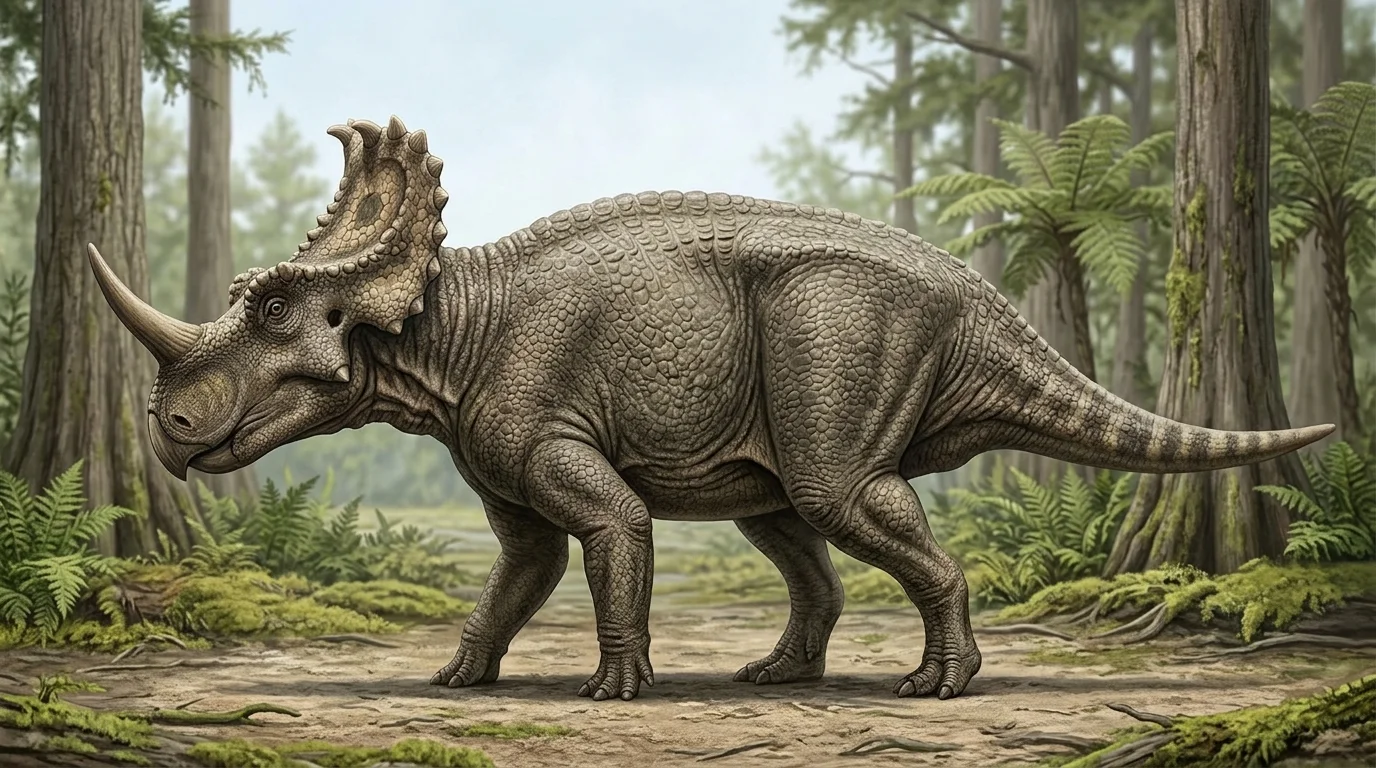
CeratopsiaCentrosaurus apertus Lambe, 1904
A prominent centrosaurine ceratopsid from Alberta featuring a forward-curved nasal horn and hooked frill spikes.
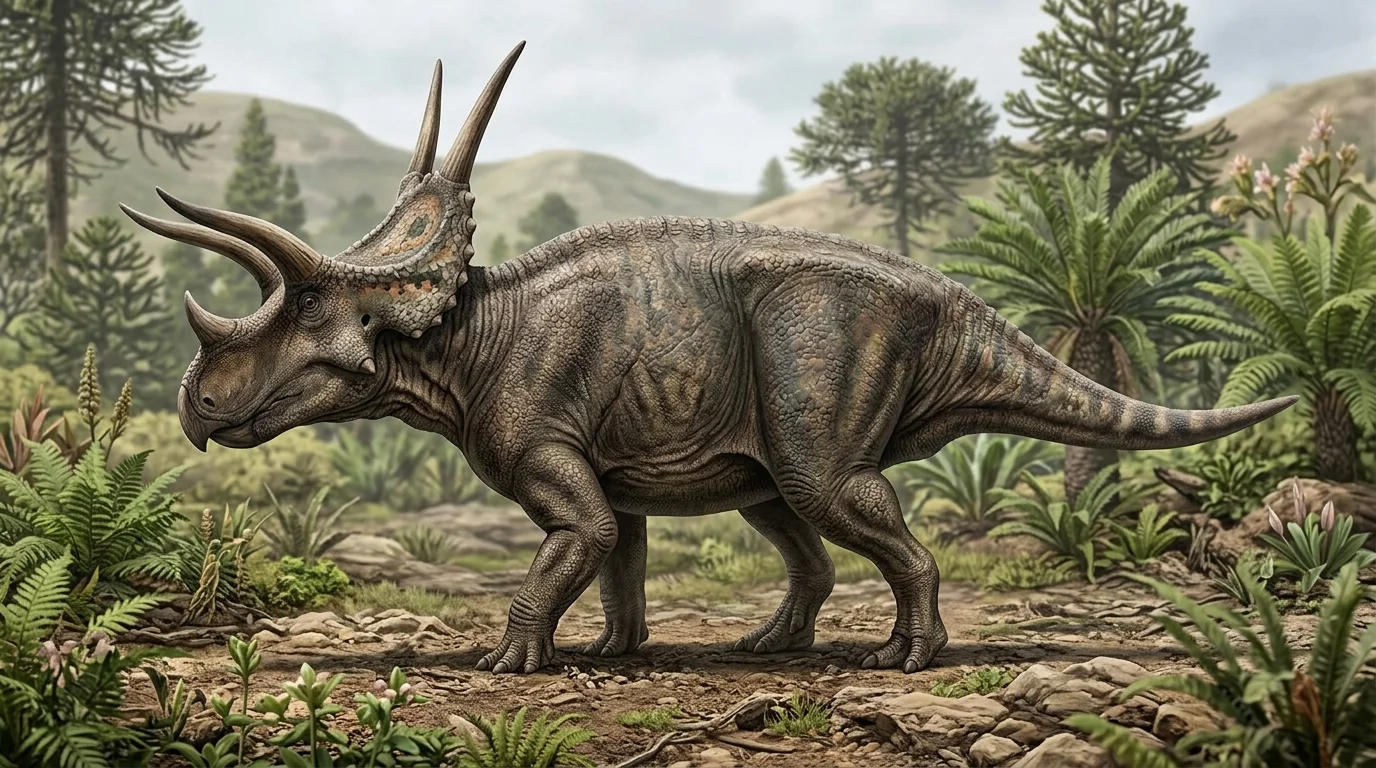
CeratopsiaDiabloceratops eatoni Kirkland & DeBlieux, 2010
The 'devil-horned face', a basal centrosaurine featuring long curved brow horns and majestic frill spikes.
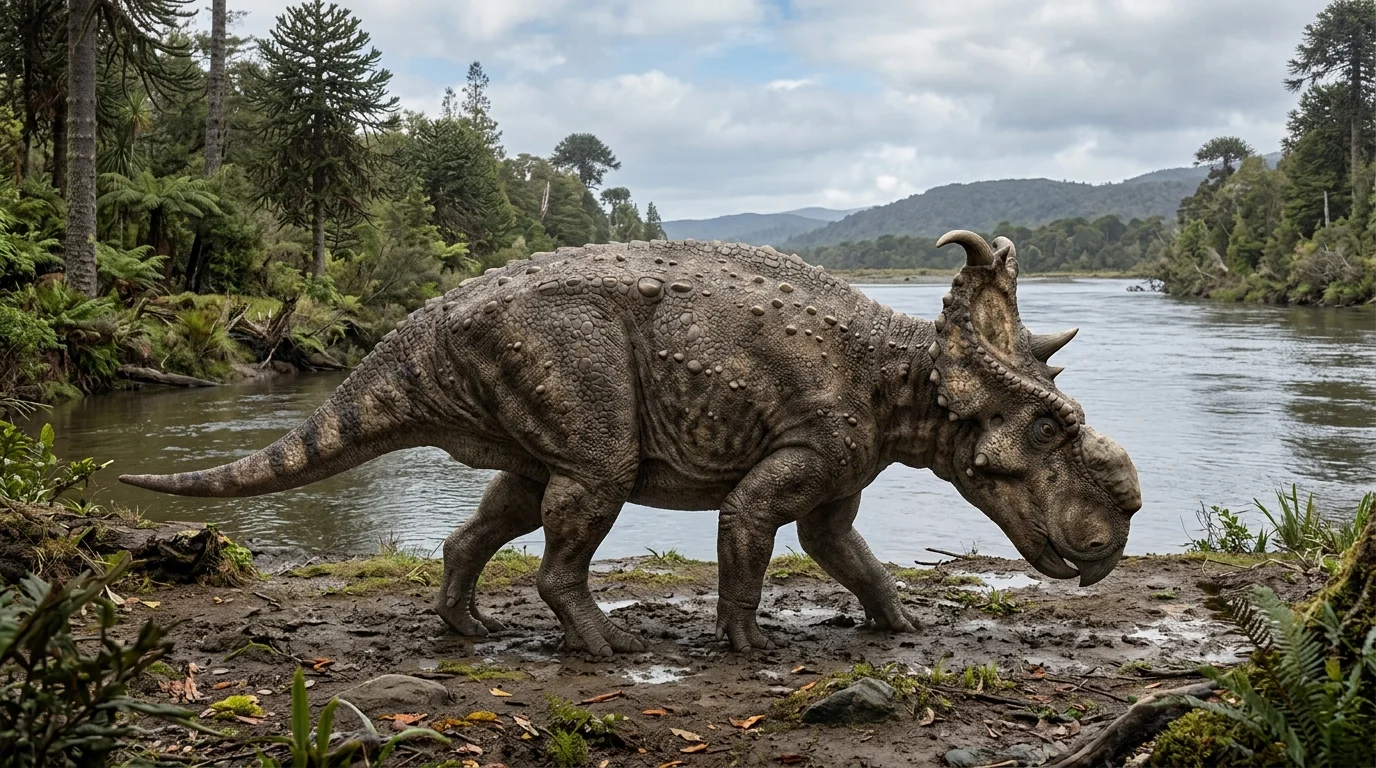
CeratopsiaPachyrhinosaurus canadensis Sternberg, 1950
The 'thick-nosed lizard', an Arctic-adapted ceratopsid that replaced horns with massive bony bosses.