Loading species comparison matrix...
Direct Paleobiological Analysis
Dreadnoughtusvs.Amargasaurus
A side-by-side scientific comparison of physiological dimensions, biomechanics, temporal horizons, and anatomical specializations.
Comparing 2 of maximum 4 specimens
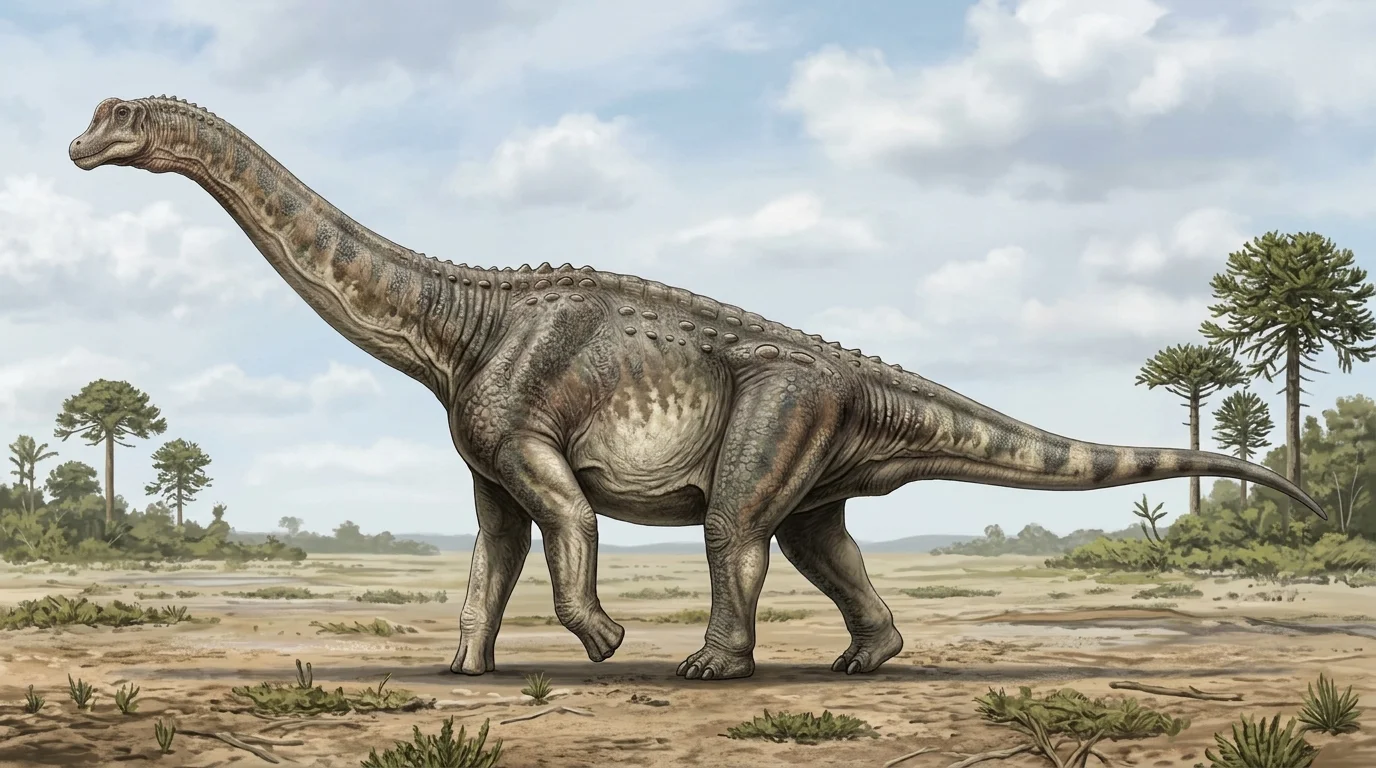 Sauropodomorpha
Dreadnoughtus
Dreadnoughtus schrani Lacovara et al., 2014
The 'fearing nothing' super-titanosaur from Argentina, with the most complete skeleton of any giant titanosaur.
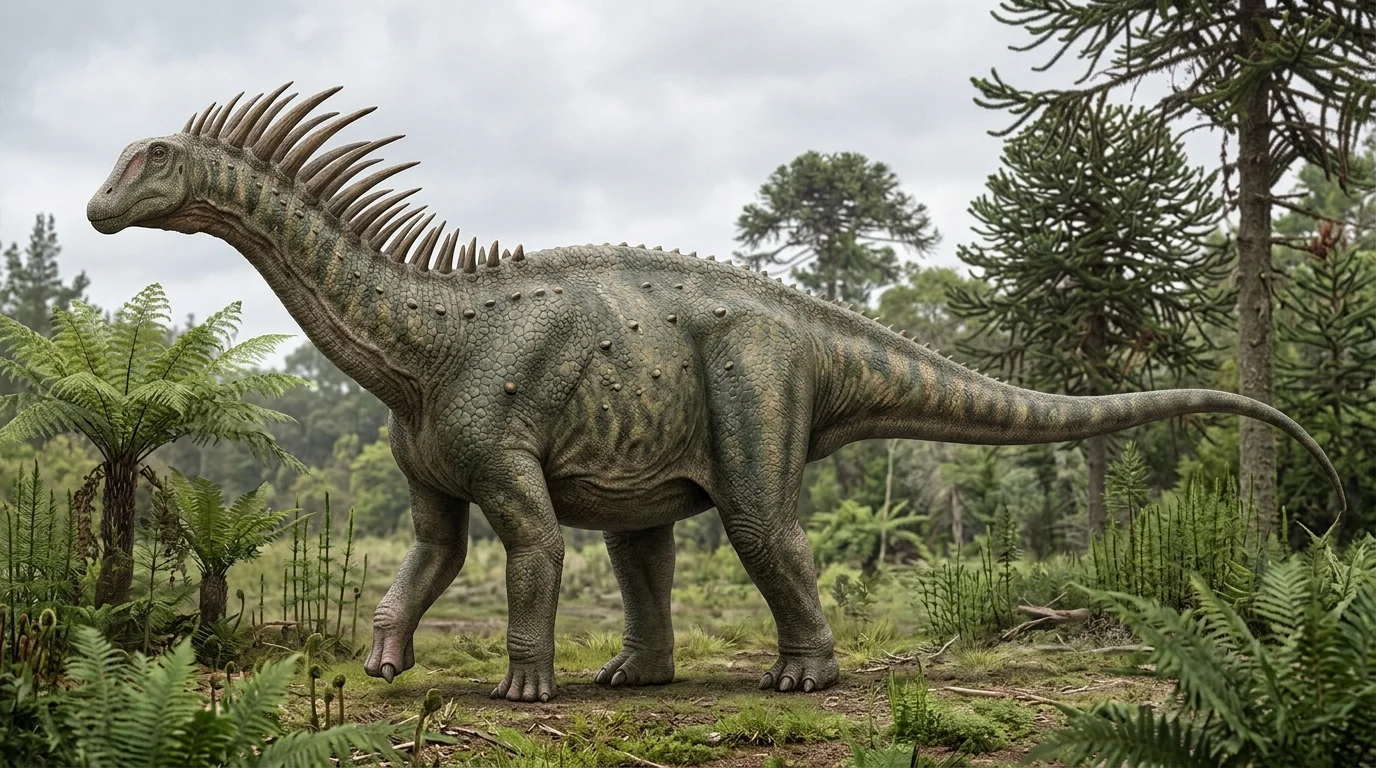 Sauropodomorpha
Amargasaurus
Amargasaurus cazaui Salgado & Bonaparte, 1991
A striking, double-sailed dicraeosaurid sauropod from Argentina sporting parallel rows of tall neck spines.
Comparative Paleobiological & Anatomical Matrix
| Feature / Trait | Dreadnoughtus | Amargasaurus |
|---|---|---|
Total Length | 24–26 m (78.7–85.3 ft) Estimated maximum | 8.5–10 m (27.9–32.8 ft) Estimated maximum |
Hip Height | 5.5–6.5 m (18.0–21.3 ft) Model estimate | 2.2–2.7 m (7.2–8.9 ft) Model estimate |
Body Mass | 35.0–49.0 metric tons (77,162–108,026 lbs) Volumetric/allometric model | 2.5–4.0 metric tons (5,512–8,818 lbs) Volumetric/allometric model |
Epoch Horizon | Cretaceous Period 77–76 Ma (million years ago) | Cretaceous Period 129–122 Ma (million years ago) |
Diet & Trophic Role | Herbivore Conifers, cycads, and ferns cropped and swallowed whole for fermentation in huge digestive guts. | Herbivore Low-growing ferns, cycads, and horsetails stripped with pencil-shaped peg teeth. |
Taxonomic Clade | Sauropodomorpha(Suborder) | Sauropodomorpha(Suborder) |
Fossil Localities | Cerro Fortaleza Formation, Santa Cruz, Argentina Named: 2005 | La Amarga Formation, Neuquén, Argentina Named: 1984 |
Locomotion & Behavior | Massive titanosaur sauropod that spent the vast majority of its time bulk feeding on conifer and fern foliage to sustain its gigantic body mass. Discovered in southern Patagonia, Dreadnoughtus is ecologically comparable to earlier colossal titanosaurs such as [Argentinosaurus](/dinosaurs/argentinosaurus) and [Patagotitan](/dinosaurs/patagotitan). | Low-browsing sauropod that used its neck spines for visual signaling, defense, or sexual display. Phylogenetically allied with the Late Jurassic African [Dicraeosaurus](/dinosaurs/dicraeosaurus), Amargasaurus represents a specialized South American branch of short-necked dicraeosaurids adapted to low-tier foraging. |
Holotype & Fossils | Holotype preserving over 145 skeletal elements, making it the most anatomically complete giant titanosaur. | Nearly complete skeleton with intact skull, cervical spine, and postcrania at MACN, Buenos Aires. |
Paleontological Uncertainty Advisory: Anatomical dimensions, body masses, and metabolic rates are scientific estimates derived from volumetric scaling, laser scanning, and biomechanical limb bone allometry. Missing traits indicate non-preserved fossil elements rather than anatomical absence.