Loading species comparison matrix...
Direct Paleobiological Analysis
Argentinosaurusvs.Brachiosaurus
A side-by-side scientific comparison of physiological dimensions, biomechanics, temporal horizons, and anatomical specializations.
Direct Paleobiological Summary
Argentinosaurus vs. Brachiosaurus: At a Glance
Key Paleontological Distinction: Argentinosaurus was probably longer and substantially heavier, while Brachiosaurus was taller at the shoulder because of its distinctive long forelimbs. Exact size and mass remain model-dependent estimates because Argentinosaurus is known from incomplete fossil remains.
ArgentinosaurusTitanosauria
A colossal South American titanosaur from the Late Cretaceous (~96–92 Ma). Built with a broad-gauge barrel torso and massive columnar legs, prioritizing graviportal bulk over upright neck posture.
- • Length: 30–35 m (98–115 ft) [Estimated]
- • Mass: 65–80 metric tons [Modeled]
- • Shoulder Stance: Level to gently sloping dorsal column
BrachiosaurusMacronaria
Side-by-Side Anatomical Comparison
Empirical fossil measurements and model-dependent allometric reconstructions.
Model-Dependent Estimates Labeled
| Anatomical Trait | Argentinosaurus huinculensis | Brachiosaurus altithorax | Paleobiological Context |
|---|---|---|---|
| Estimated Total Length | 30–35 m (98–115 ft) Model estimate (scaled) | 22–26 m (72–85 ft) Scaled skeletal composite | Argentinosaurus exceeded Brachiosaurus in total body length by an estimated 8 to 10 meters. |
| Estimated Body Mass |
Which Was Bigger? (Length vs. Mass vs. Height)
Understanding why paleontologists evaluate dinosaur size along distinct anatomical dimensions rather than a single metric.
Dimension 1: Length
Argentinosaurus was Significantly Longer
When scaled against relatively complete titanosaur skeletons (such as Patagotitan mayorum), Argentinosaurus is reconstructed at approximately 30 to 35 meters (98 to 115 feet) from snout to tail tip. In contrast, Brachiosaurus altithorax measured approximately 22 to 26 meters (72 to 85 feet). Brachiosaurus had a relatively shorter tail compared to titanosaurs and diplodocids, making Argentinosaurus markedly longer overall.
Dimension 2: Mass
Argentinosaurus Was Far Heavier
Mass is the definitive scientific measurement of animal size. Comparative allometric scaling equations and volumetric reconstructions estimate the body mass of Argentinosaurus between 65 and 80 metric tons (65,000–80,000 kg). In a landmark biomechanical study, Sellers et al. (2013) created a digital skeletal model at this immense scale (~83 metric tons) and demonstrated through multi-body dynamic simulation that walking locomotion was mechanically viable. In contrast, bone-circumference and volumetric models for Brachiosaurus place it between . Argentinosaurus was therefore roughly twice as heavy, supported by extraordinarily broad vertebrae and graviportal limb anatomy.
Related Sauropod Research & Taxonomic Hubs
Deepen your research into colossal sauropod evolution, biomechanics, and comparative anatomy across our peer-reviewed encyclopedia:
Argentinosaurus Profile →
Explore holotype PVPH-1 fossil evidence, Huincul Formation geology, and 80-ton mass models.
Brachiosaurus Profile →
Discover Morrison Formation high-canopy browsing mechanics and humerus-to-femur proportions.
Largest Dinosaurs Topic Hub →
Side-by-side ranking of Argentinosaurus, Patagotitan, Dreadnoughtus, and other Mesozoic titans.
Long-Necked Dinosaurs Guide →
Biomechanics of neck elongation, pneumatic vertebrae, and blood pressure hydrostatic modeling.
Sauropodomorpha Taxonomy →
Explore the complete suborder from early bipedal sauropodomorphs to gigantic titanosaurians.
All Dinosaur Comparisons →
Compare any two to four dinosaurs across dimensions, periods, diets, and skull anatomy.
Comparing 2 of maximum 4 specimens
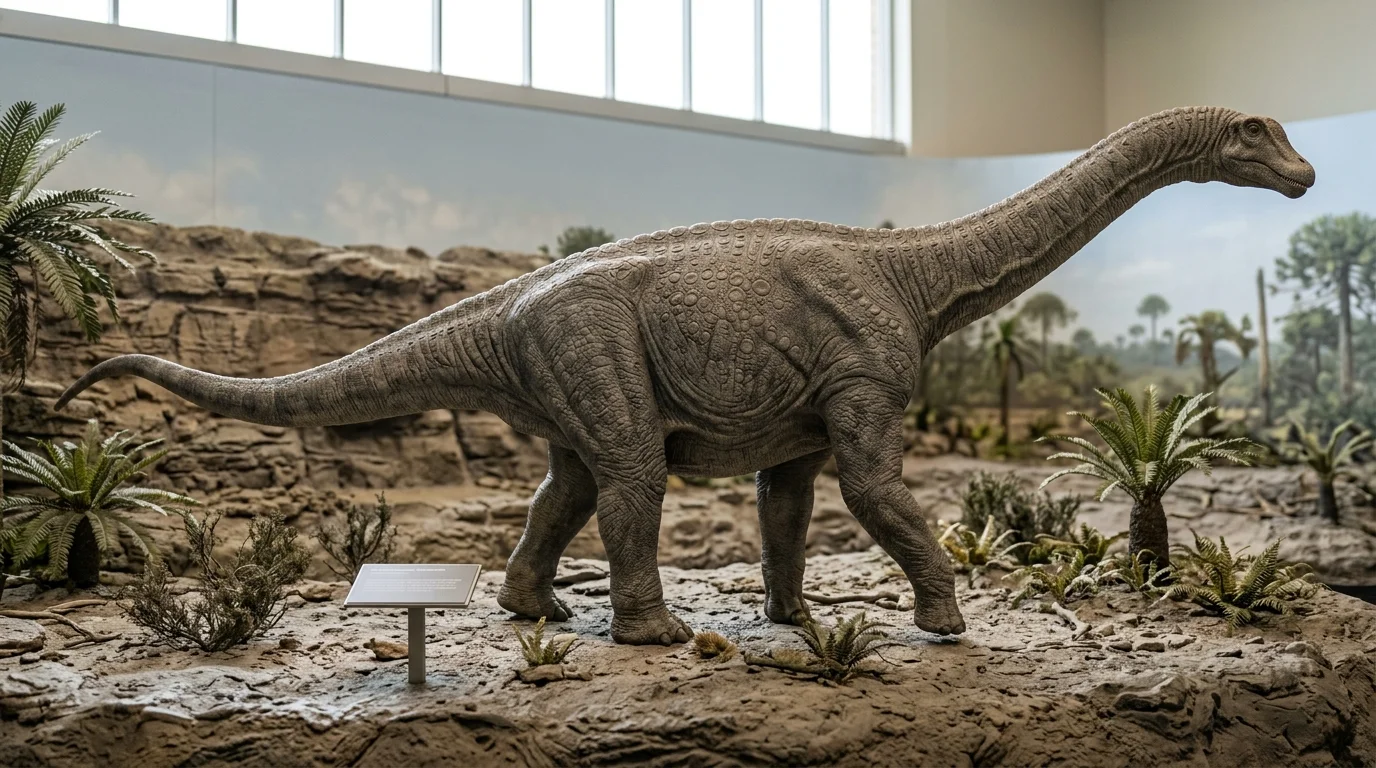 Sauropodomorpha
Argentinosaurus
Argentinosaurus huinculensis Bonaparte & Coria, 1993
Among the largest and most massive terrestrial animals known to science, with scaled estimates reaching 65 to 80 metric tons based on fragmentary titanosaur remains.
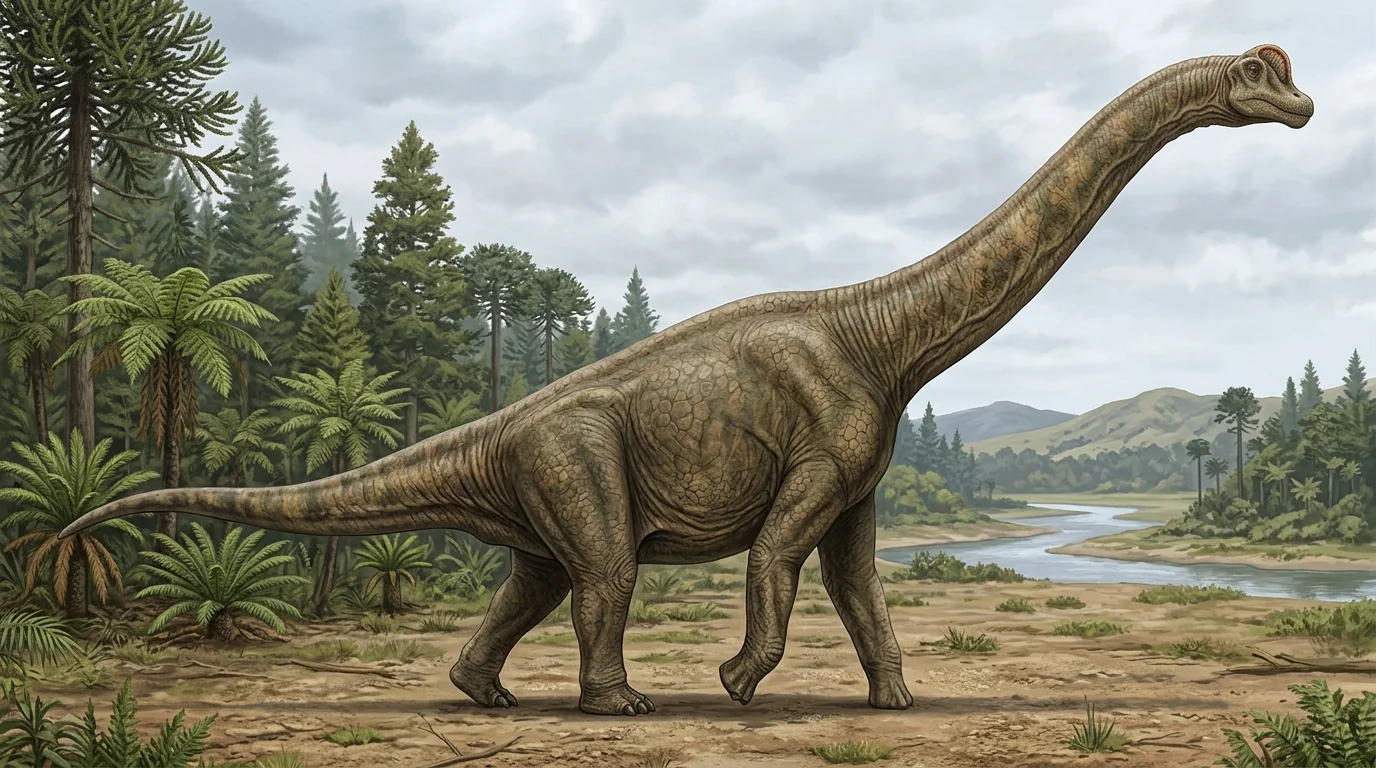 Sauropodomorpha
Brachiosaurus
Brachiosaurus altithorax Riggs, 1903
A monumental sauropod with forelimbs longer than hindlimbs, adapted for high-canopy browsing in Late Jurassic North America.
Comparative Paleobiological & Anatomical Matrix
| Feature / Trait | Argentinosaurus | Brachiosaurus |
|---|---|---|
Total Length | 30–35 m (98.4–114.8 ft) Estimated maximum | 22–26 m (72.2–85.3 ft) Estimated maximum |
Hip Height | 14–18 m (45.9–59.1 ft) Model estimate | 11–13 m (36.1–42.7 ft) Model estimate |
Body Mass | 65.0–80.0 metric tons (143,300–176,370 lbs) Volumetric/allometric model | 28.0–40.0 metric tons (61,729–88,185 lbs) Volumetric/allometric model |
Epoch Horizon | Cretaceous Period 96–92 Ma (million years ago) | Jurassic Period 154–150 Ma (million years ago) |
Diet & Trophic Role | Herbivore Conifers, ferns, and high canopy vegetation swallowed whole and pulverized in a massive gizzard and fermentation gut. | Herbivore Conifers, ginkgoes, cycads, and high foliage foliage clipped by spatulate teeth and digested via large intestinal fermentation chambers. |
Taxonomic Clade | Sauropodomorpha(Suborder) | Sauropodomorpha(Suborder) |
Fossil Localities | Plaza Huincul, Neuquen Province, Argentina Named: 1987 | Grand River Valley, Fruita, Colorado, United States Named: 1900 |
Locomotion & Behavior | Immense keystone herbivore traveling in loose herds, consuming immense forest biomass with virtually no adult natural predators. In the Huincul Formation, bonebed taphonomy indicates its carcasses were scavenged or hunted by carcharodontosaurid theropods like [Mapusaurus](/dinosaurs/mapusaurus), while representing an extreme size class ecologically comparable to later titanosaurs [Patagotitan](/dinosaurs/patagotitan) and [Dreadnoughtus](/dinosaurs/dreadnoughtus). | Brachiosaurus functioned as a high-tier canopy specialist in semi-arid river basin forests. Broad, spoon-shaped (spatulate) teeth functioned as shearing shears for stripping tough foliage, which was fermented in a cavernous digestive tract. Bonebed taphonomy indicates solitary or small-group movement across expansive ranges to satisfy massive metabolic and caloric requirements. |
Holotype & Fossils | Known from fragmentary holotype remains (PVPH-1) including dorsal vertebrae, sacrum, ribs, and a partial femur, from which complete skeletal dimensions are comparatively scaled. | Fossils of Brachiosaurus altithorax are relatively rare compared to other Morrison sauropods. The taxon is founded on Elmer Riggs's 1900 holotype (FMNH P 25107) from the Grand River Valley of Colorado, which preserves a sacrum, ribs, coracoid, humerus, and femur. Referred material includes isolated cervical vertebrae and partial postcrania, with cranial anatomy reconstructed from closely related macronarian taxa. |
Paleontological Uncertainty Advisory: Anatomical dimensions, body masses, and metabolic rates are scientific estimates derived from volumetric scaling, laser scanning, and biomechanical limb bone allometry. Missing traits indicate non-preserved fossil elements rather than anatomical absence.