Amargasaurus cazaui Salgado & Bonaparte, 1991
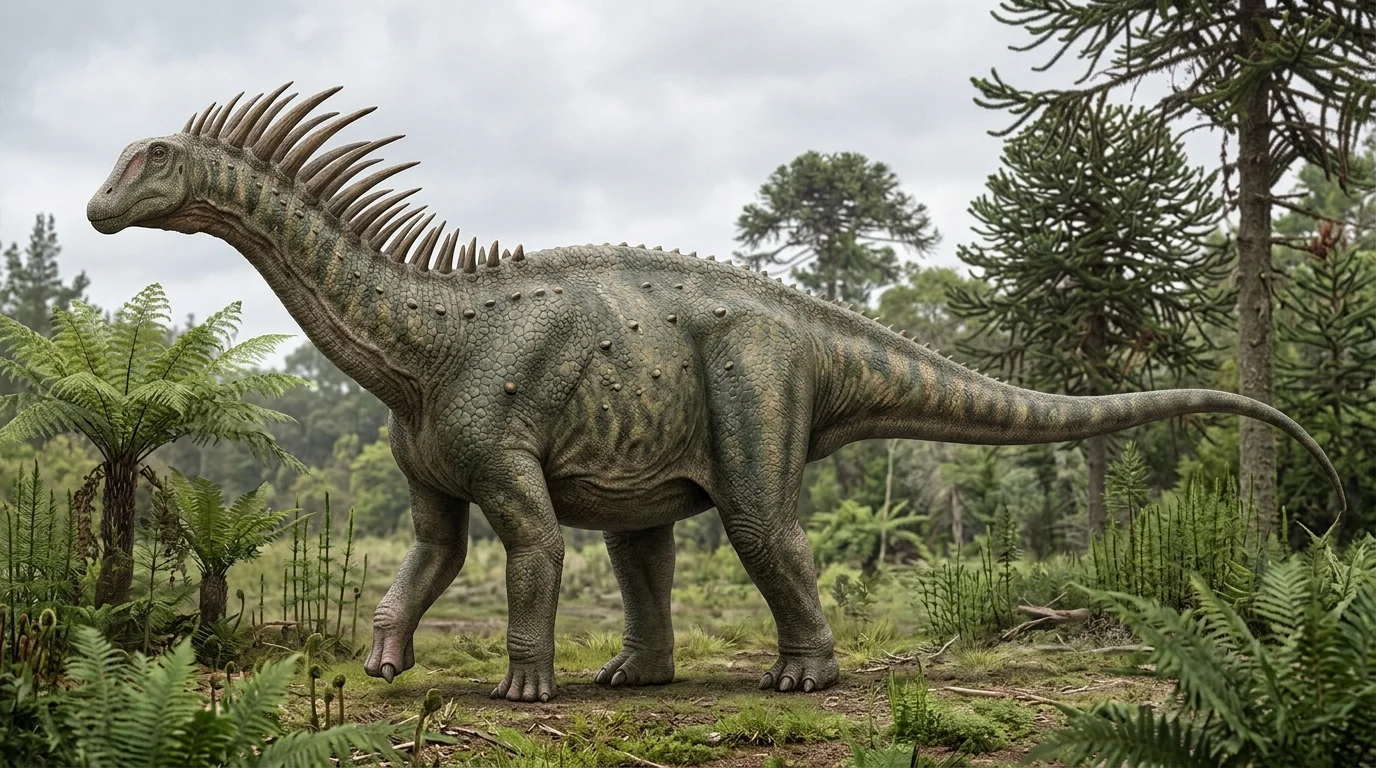
A striking, double-sailed dicraeosaurid sauropod from Argentina sporting parallel rows of tall neck spines.

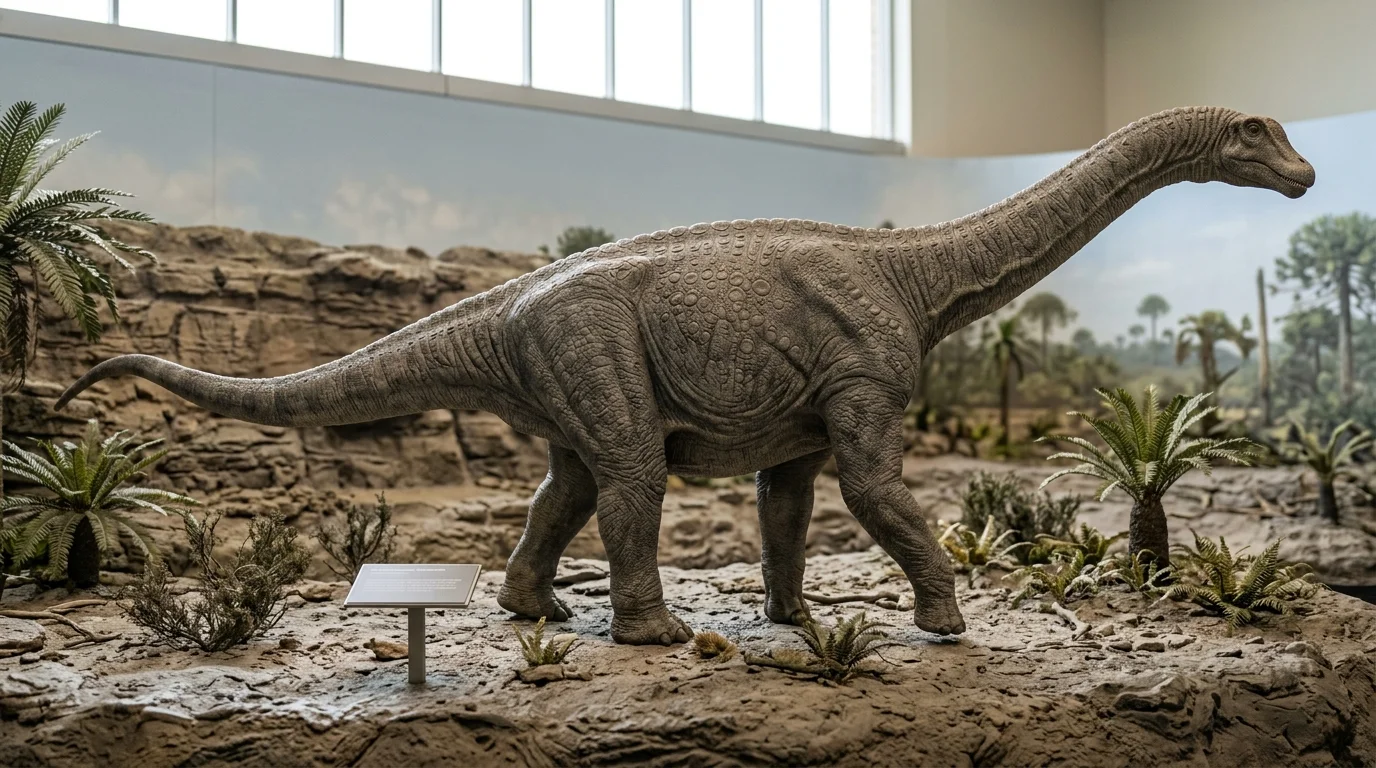
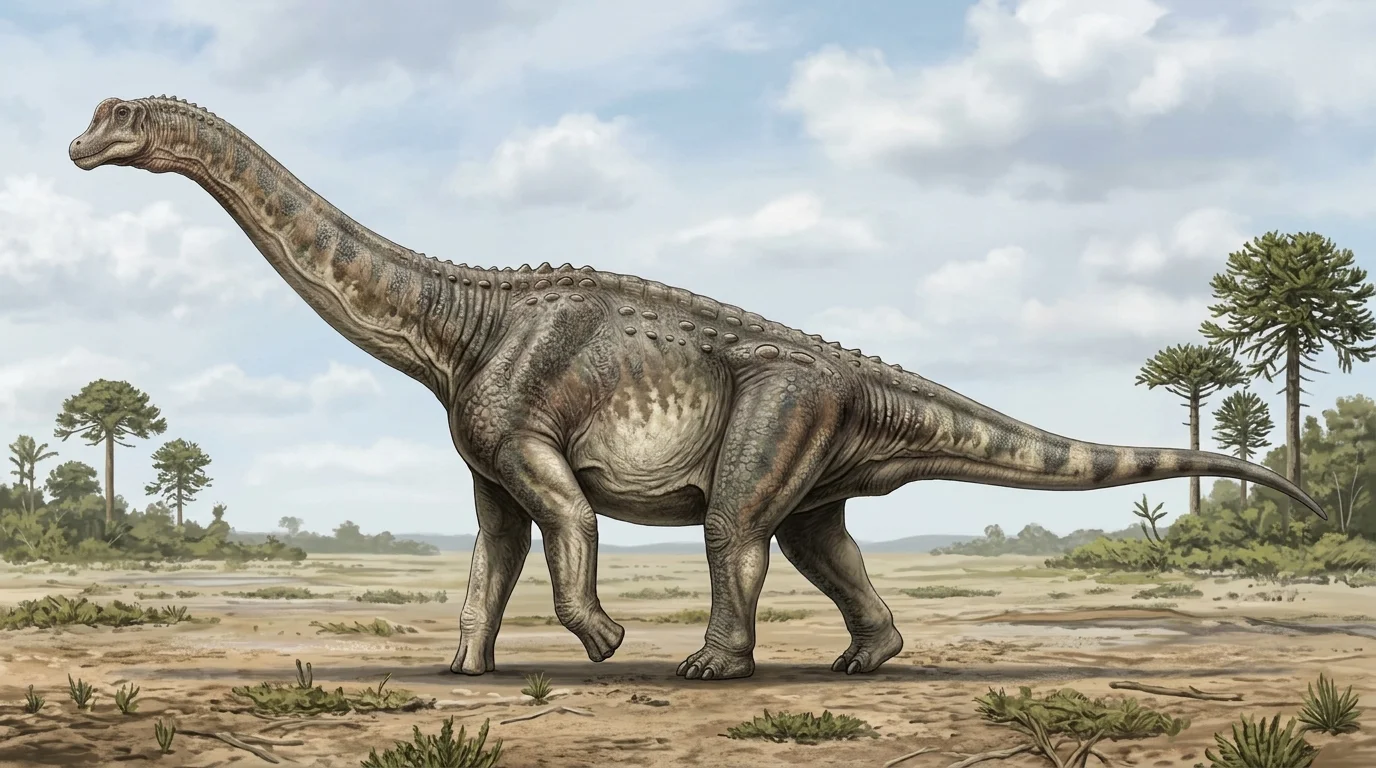
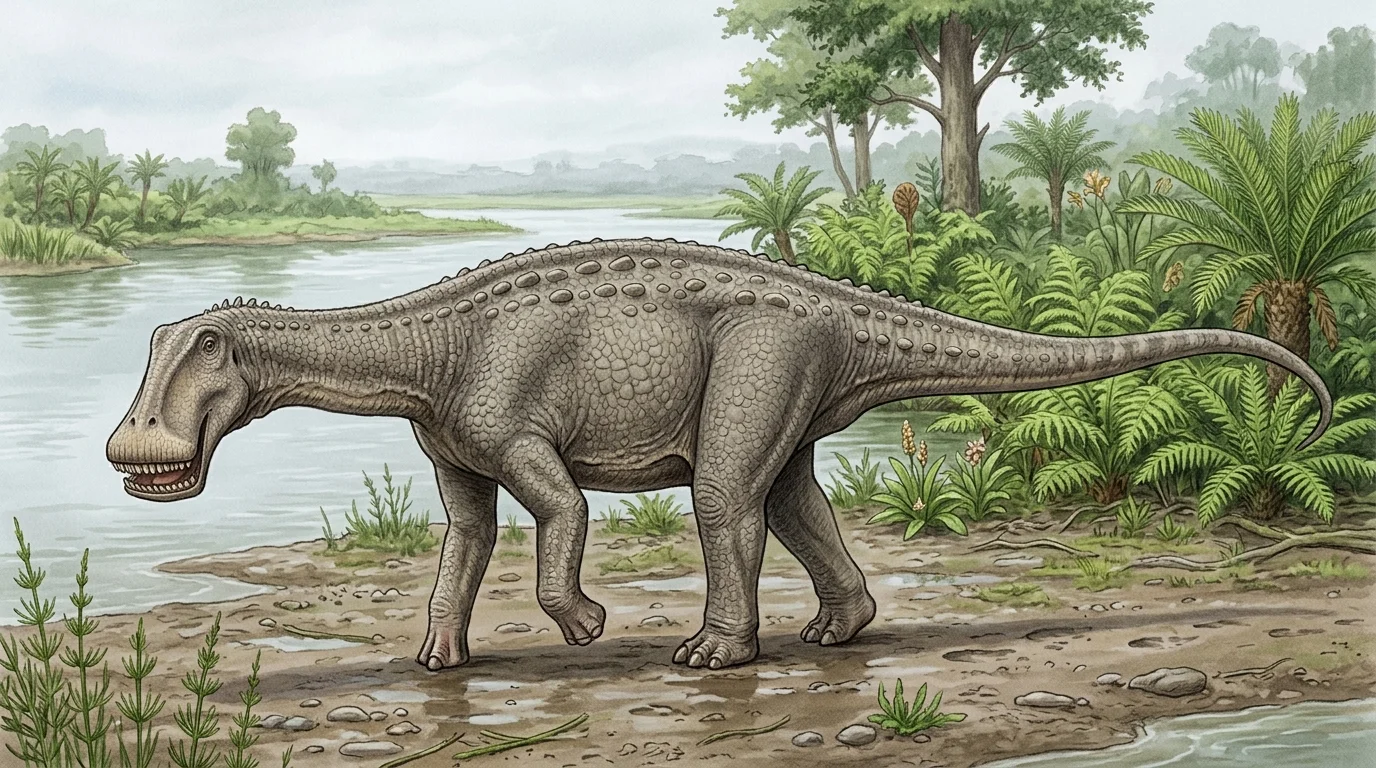
Scientific reconstruction of Amargasaurus (Amargasaurus cazaui Salgado & Bonaparte, 1991) in its native Geological period: Cretaceous Period.
Image Credit: AI-generated scientific paleoart reconstruction synthesized from species-specific osteological profiles and peer-reviewed descriptions. (AI-Generated / Open Educational Media (DinoOrigin Spec))
Phylogenetic classification of Amargasaurus cazaui Salgado & Bonaparte, 1991 based on peer-reviewed cladistic analyses of diagnostic skeletal synapomorphies.
| Taxonomic Rank | Taxon / Clade | Diagnostic Context |
|---|---|---|
| Kingdom | Animalia | Monophyletic prehistoric clade |
| Phylum | Chordata | Monophyletic prehistoric clade |
| Clade | Dinosauria | Monophyletic prehistoric clade |
| Order | Saurischia (Lizard-Hipped Dinosaurs) | Characterized ancestrally by a triradiate pelvis with an anteriorly pointing pubis. |
| Suborder | Sauropodomorpha | Herbivorous saurischians characterized by elongated necks, columnar limbs, and enormous body volumes. |
| Genus | Amargasaurus | Monophyletic prehistoric clade |
| Species | Amargasaurus cazaui Salgado & Bonaparte, 1991 | Specific authority designation |
Amargasaurus is instantly recognizable by the extraordinary parallel rows of long, backward-curving spines projecting from its cervical and anterior dorsal vertebrae. Inhabiting Early Cretaceous Patagonia, this compact, nine-meter sauropod displayed one of the most flamboyant spinal adaptations in dinosaur history.
Whether these twin rows of spines were covered in keratinous horns for defense or supported double skin sails for display remains one of paleontology's most intriguing debates.
Compact sauropod with a relatively short neck crowned with two parallel rows of long, curved spines.
Anatomical dimensions relative to an average adult human (1.8 m / 6 ft tall)
Low-growing ferns, cycads, and horsetails stripped with pencil-shaped peg teeth.
Low-browsing sauropod that used its neck spines for visual signaling, defense, or sexual display. Phylogenetically allied with the Late Jurassic African Dicraeosaurus, Amargasaurus represents a specialized South American branch of short-necked dicraeosaurids adapted to low-tier foraging.
Braided river basins, conifer-fern floodplains, and semi-arid inland valleys.
Nearly complete skeleton with intact skull, cervical spine, and postcrania at MACN, Buenos Aires.
Discovered by paleontologist José Bonaparte and named by Leonardo Salgado and Bonaparte in 1991.
The longest and final period of the Mesozoic Era, characterized by the rise of flowering plants, ceratopsians, hadrosaurs, tyrannosaurids, and concluding with the Chicxulub asteroid impact.
During the Mesozoic Era, continental drift progressively reconfigured land bridges, atmospheric currents, and regional precipitation regimes. Fossils of Amargasaurus evidence its adaptation to the paleoenvironments of South America.
Preserved within the Huincul, Candeleros, and Ischigualasto formations, hosting colossal titanosaurs and specialized abelisaurid and carcharodontosaurid apex predators.
The anatomical architecture of Amargasaurus serves as a crucial benchmark in vertebrate paleontology, illustrating key adaptive radiations within Sauropodomorpha.
Scientifically verified answers based on peer-reviewed paleontological evidence.
Amargasaurus lived during the Cretaceous Period Period, approximately 129–122 Ma (million years ago). This places it within the Mesozoic Era.
Paleontological estimates place Amargasaurus at a length of 8.5–10 m (27.9–32.8 ft), a hip/standing height of 2.2–2.7 m (7.2–8.9 ft), and a body mass of 2.5–4.0 metric tons (5,512–8,818 lbs).
Classified as a herbivore, Amargasaurus specialized in consuming Low-growing ferns, cycads, and horsetails stripped with pencil-shaped peg teeth..
Fossil specimens of Amargasaurus have been recovered from La Amarga Formation, Neuquén, Argentina, with notable historic specimens documented in 1984. Discovered by paleontologist José Bonaparte and named by Leonardo Salgado and Bonaparte in 1991.
Authoritative citations establishing the factual taxonomy, biometrics, and anatomy of Amargasaurus.
Salgado, L., & Bonaparte, J. F. (1991). Un nuevo sauropodo Dicraeosauridae, Amargasaurus cazaui gen. et sp. nov., de la Formacion La Amarga, Neocomiano de la provincia del Neuquen, Argentina. Ameghiniana, 28(3-4), 333-346.
Curated & Verified: 2026-09-24Deposited in Mesozoic sedimentary strata preserving skeletal remains, teeth, or trace trackways.
Amargasaurus provides critical insights into the evolutionary radiation of Sauropodomorpha. Holotypes and fossil evidence indicate: Nearly complete skeleton with intact skull, cervical spine, and postcrania at MACN, Buenos Aires.
Featured SpecimenSauropodomorphaArgentinosaurus huinculensis Bonaparte & Coria, 1993
Among the largest and most massive terrestrial animals known to science, with scaled estimates reaching 65 to 80 metric tons based on fragmentary titanosaur remains.
SauropodomorphaDreadnoughtus schrani Lacovara et al., 2014
The 'fearing nothing' super-titanosaur from Argentina, with the most complete skeleton of any giant titanosaur.
SauropodomorphaNigersaurus taqueti Sereno et al., 1999
The 'Mesozoic lawnmower', a specialized sauropod with a wide, straight-edged mouth and 500 replaceable teeth.