Cetiosaurus oxoniensis Phillips, 1871
The 'whale lizard', the first sauropod dinosaur discovered and named in scientific history.

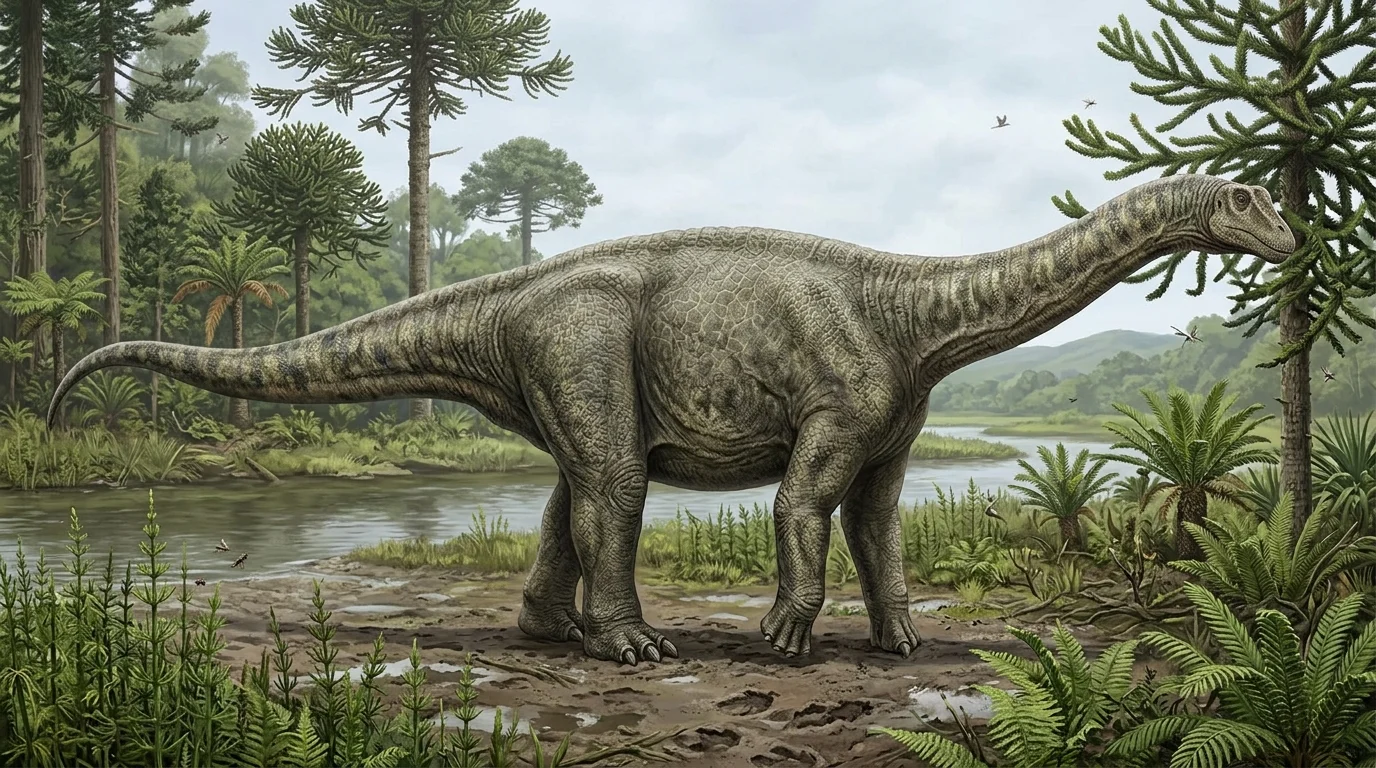
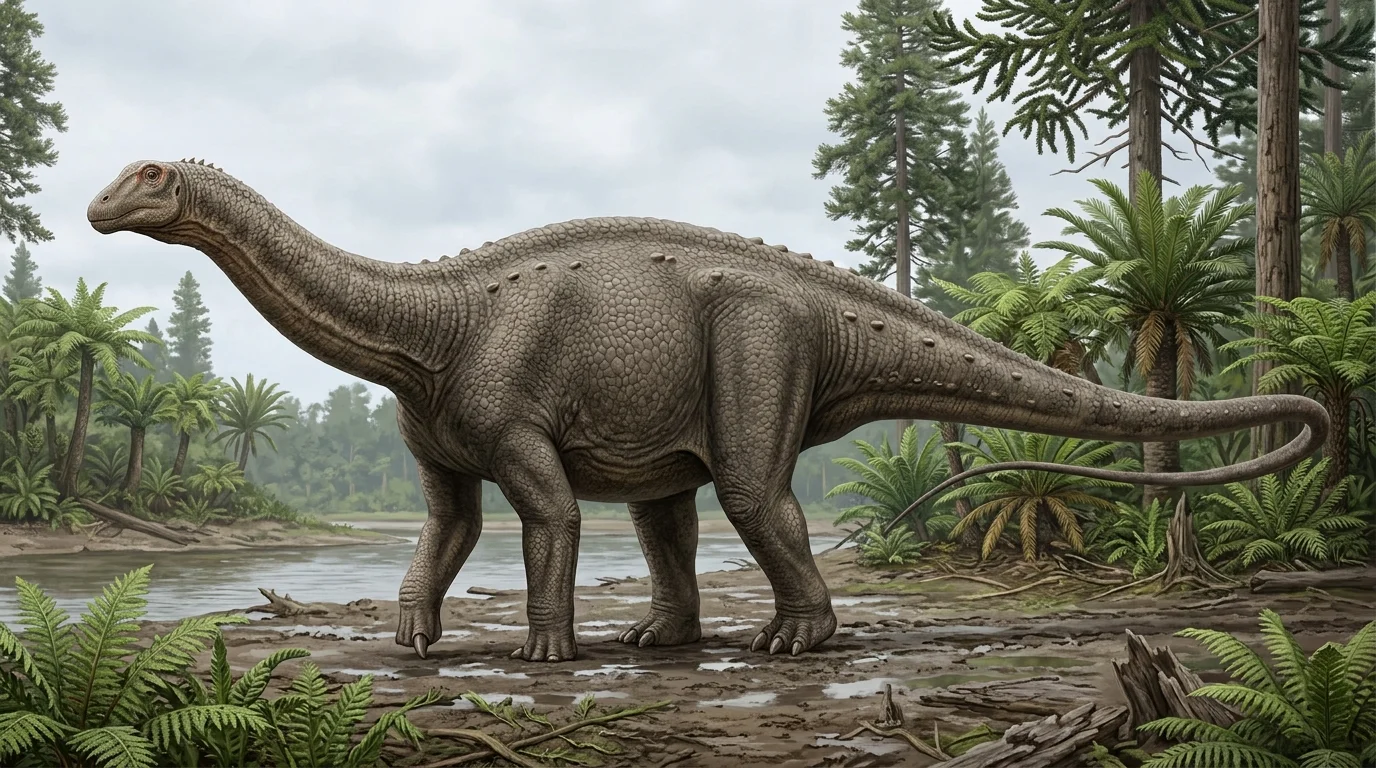
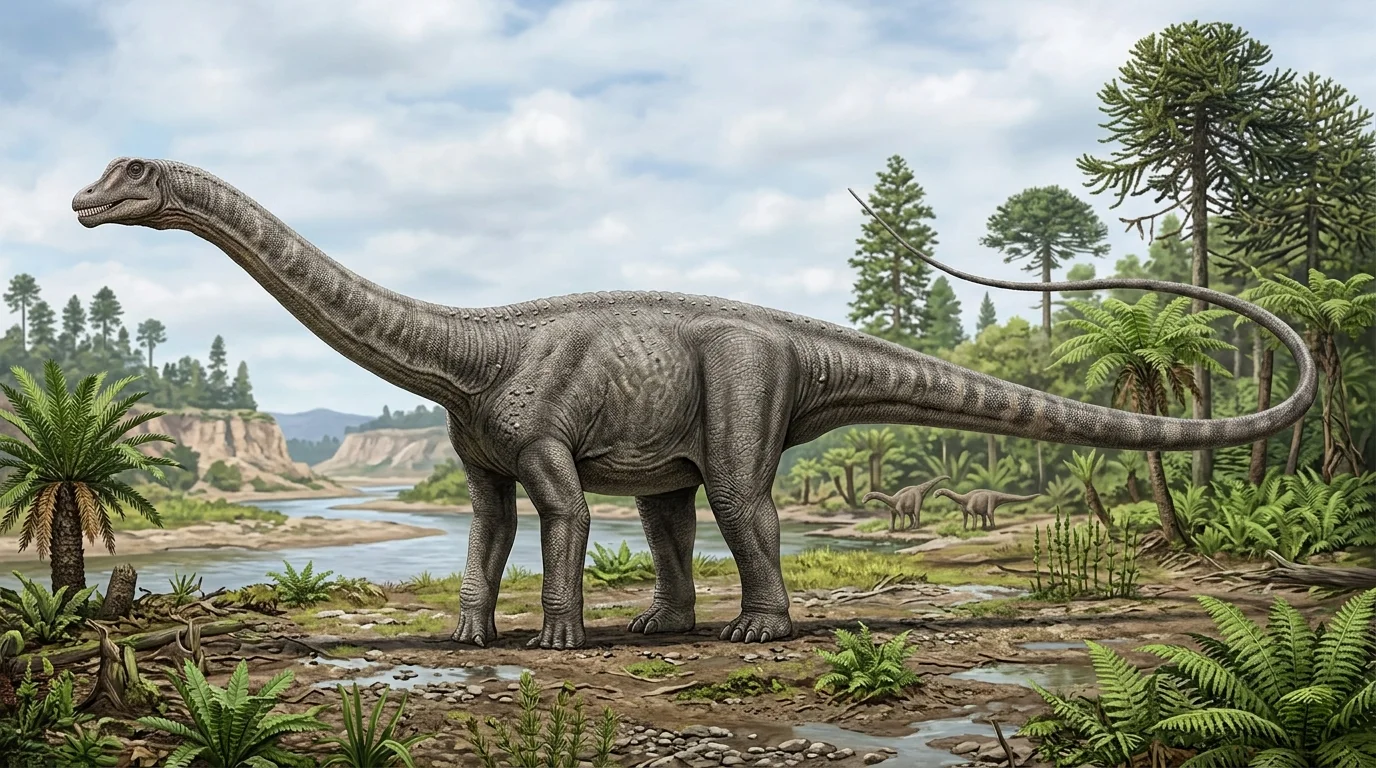
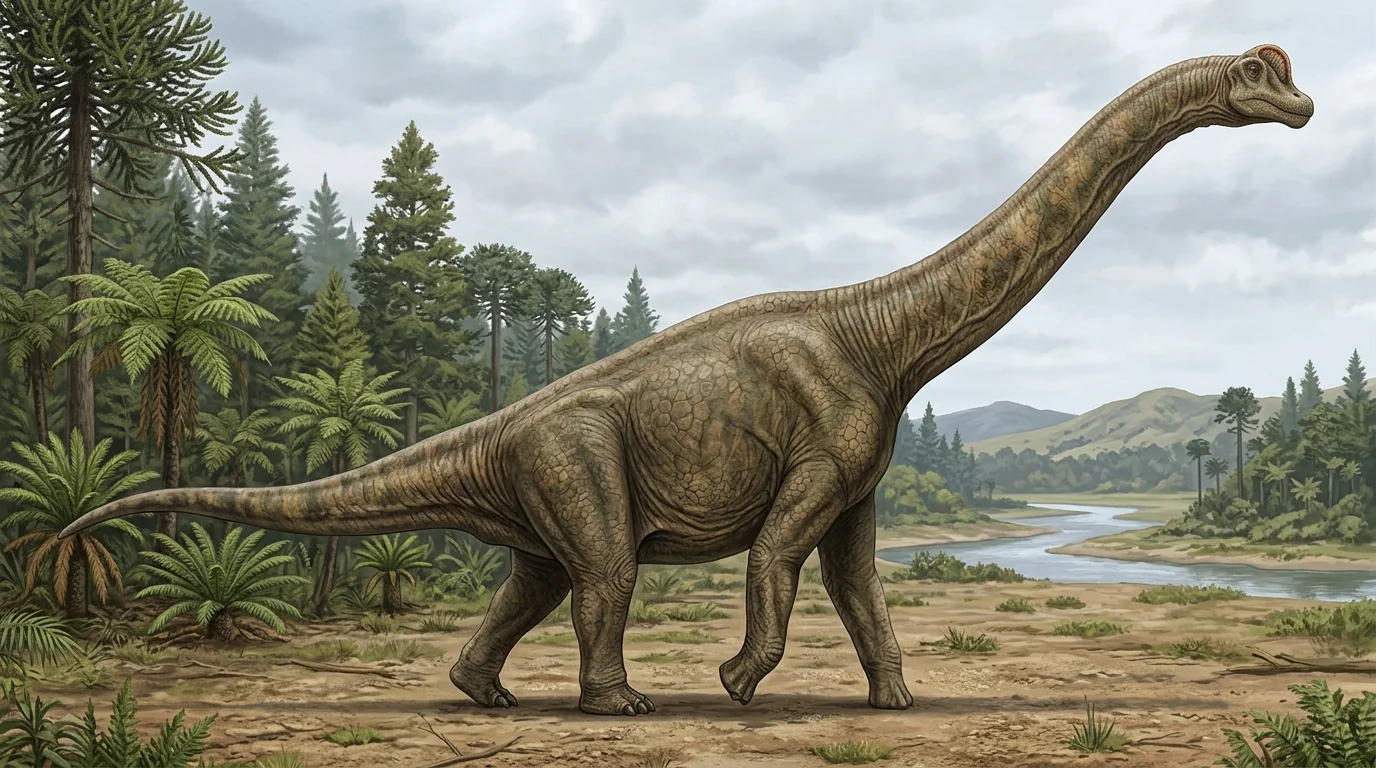
Scientific reconstruction of Cetiosaurus (Cetiosaurus oxoniensis Phillips, 1871) in its native Geological period: Jurassic Period.
Image Credit: AI-generated scientific paleoart reconstruction synthesized from species-specific osteological profiles and peer-reviewed descriptions. (AI-Generated / Open Educational Media (DinoOrigin Spec))
Phylogenetic classification of Cetiosaurus oxoniensis Phillips, 1871 based on peer-reviewed cladistic analyses of diagnostic skeletal synapomorphies.
| Taxonomic Rank | Taxon / Clade | Diagnostic Context |
|---|---|---|
| Kingdom | Animalia | Monophyletic prehistoric clade |
| Phylum | Chordata | Monophyletic prehistoric clade |
| Clade | Dinosauria | Monophyletic prehistoric clade |
| Order | Saurischia (Lizard-Hipped Dinosaurs) | Characterized ancestrally by a triradiate pelvis with an anteriorly pointing pubis. |
| Suborder | Sauropodomorpha | Herbivorous saurischians characterized by elongated necks, columnar limbs, and enormous body volumes. |
| Genus | Cetiosaurus | Monophyletic prehistoric clade |
| Species | Cetiosaurus oxoniensis Phillips, 1871 | Specific authority designation |
Cetiosaurus was the first sauropod dinosaur described by science, named by Sir Richard Owen in 1841. Because its massive, solid limb bones resembled those of marine cetaceans, Owen initially misidentified it as a gargantuan sea monster before further discoveries revealed it was a terrestrial herbivorous dinosaur.
Unlike later sauropods with hollowed pleurocoelous vertebrae, Cetiosaurus retained dense, solid vertebrae that made its skeleton extremely heavy.
Primitive sauropod with dense bones, moderately long neck, pillar-like legs, and heavy tail.
Anatomical dimensions relative to an average adult human (1.8 m / 6 ft tall)
Herbivorous; stripped conifers and ferns with spoon-shaped teeth.
Early eusauropod herbivore that browsed low to medium vegetation across the Middle Jurassic English archipelago. Cetiosaurus shared this prehistoric coastal landscape with the iconic early megalosaurid carnivore Megalosaurus.
Subtropical coastal mudflats, estuaries, and inland lagoons.
Rutland skeleton (LEICS G468.1968) preserving over 15 meters of articulated skeleton.
Described by Richard Owen; extensive articulated skeleton found in 1968 known as the Rutland Dinosaur.
Marked by lush greenhouse climates, the breakup of Pangaea, and the evolutionary explosion of sauropods, plated stegosaurs, and apex megalosauroid and allosauroid theropods.
During the Mesozoic Era, continental drift progressively reconfigured land bridges, atmospheric currents, and regional precipitation regimes. Fossils of Cetiosaurus evidence its adaptation to the paleoenvironments of Europe.
During the Mesozoic, Europe was largely an archipelago of islands, resulting in unique insular dwarf species and classic historical fossil discoveries.
The anatomical architecture of Cetiosaurus serves as a crucial benchmark in vertebrate paleontology, illustrating key adaptive radiations within Sauropodomorpha.
Scientifically verified answers based on peer-reviewed paleontological evidence.
Cetiosaurus lived during the Jurassic Period Period, approximately 168–166 Ma (million years ago). This places it within the Mesozoic Era.
Paleontological estimates place Cetiosaurus at a length of 14–16 m (45.9–52.5 ft), a hip/standing height of 4–5 m (13.1–16.4 ft), and a body mass of 10.0–15.0 metric tons (22,046–33,069 lbs).
Classified as a herbivore, Cetiosaurus specialized in consuming Herbivorous; stripped conifers and ferns with spoon-shaped teeth..
Fossil specimens of Cetiosaurus have been recovered from Rutland & Oxfordshire, United Kingdom, with notable historic specimens documented in 1841. Described by Richard Owen; extensive articulated skeleton found in 1968 known as the Rutland Dinosaur.
Authoritative citations establishing the factual taxonomy, biometrics, and anatomy of Cetiosaurus.
Phillips, J. (1871). Geology of Oxford and the Valley of the Thames. Clarendon Press, Oxford, 1-523.
Curated & Verified: 2026-09-24Deposited in Mesozoic sedimentary strata preserving skeletal remains, teeth, or trace trackways.
Cetiosaurus provides critical insights into the evolutionary radiation of Sauropodomorpha. Holotypes and fossil evidence indicate: Rutland skeleton (LEICS G468.1968) preserving over 15 meters of articulated skeleton.
Upchurch, P., & Martin, J. (2003). The anatomy and taxonomy of Cetiosaurus (Saurischia, Sauropoda) from the Middle Jurassic of England. Journal of Vertebrate Paleontology, 23(1), 208-231. https://doi.org/10.1671/0272-4634(2003)23[208:TAATOC]2.0.CO;2
SauropodomorphaApatosaurus ajax Marsh, 1877
A colossal, heavily built diplodocid sauropod characterized by thick cervical vertebrae and a whip-like tail.
SauropodomorphaBarosaurus lentus Marsh, 1890
A massive diplodocid with an extraordinarily long neck and shorter tail than Diplodocus.
Featured SpecimenSauropodomorphaBrachiosaurus altithorax Riggs, 1903
A monumental sauropod with forelimbs longer than hindlimbs, adapted for high-canopy browsing in Late Jurassic North America.