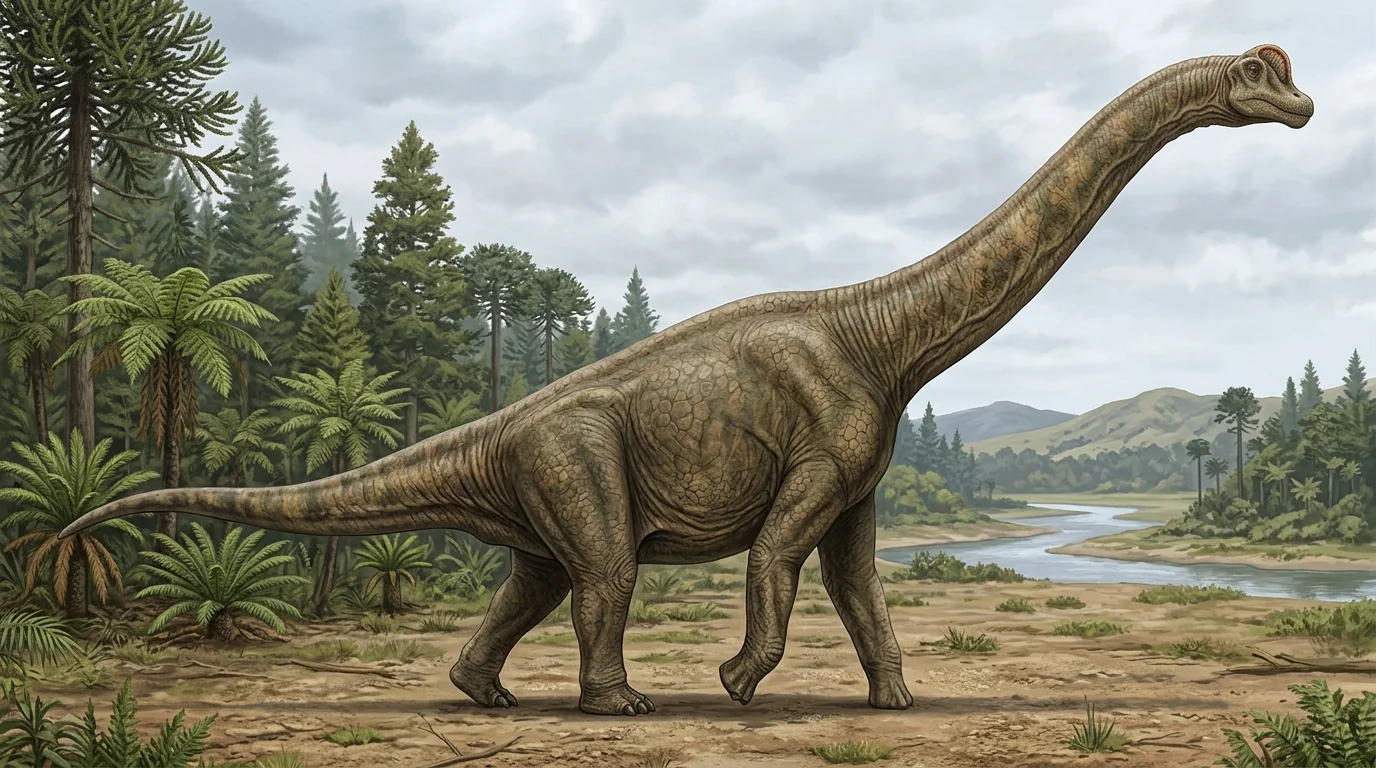
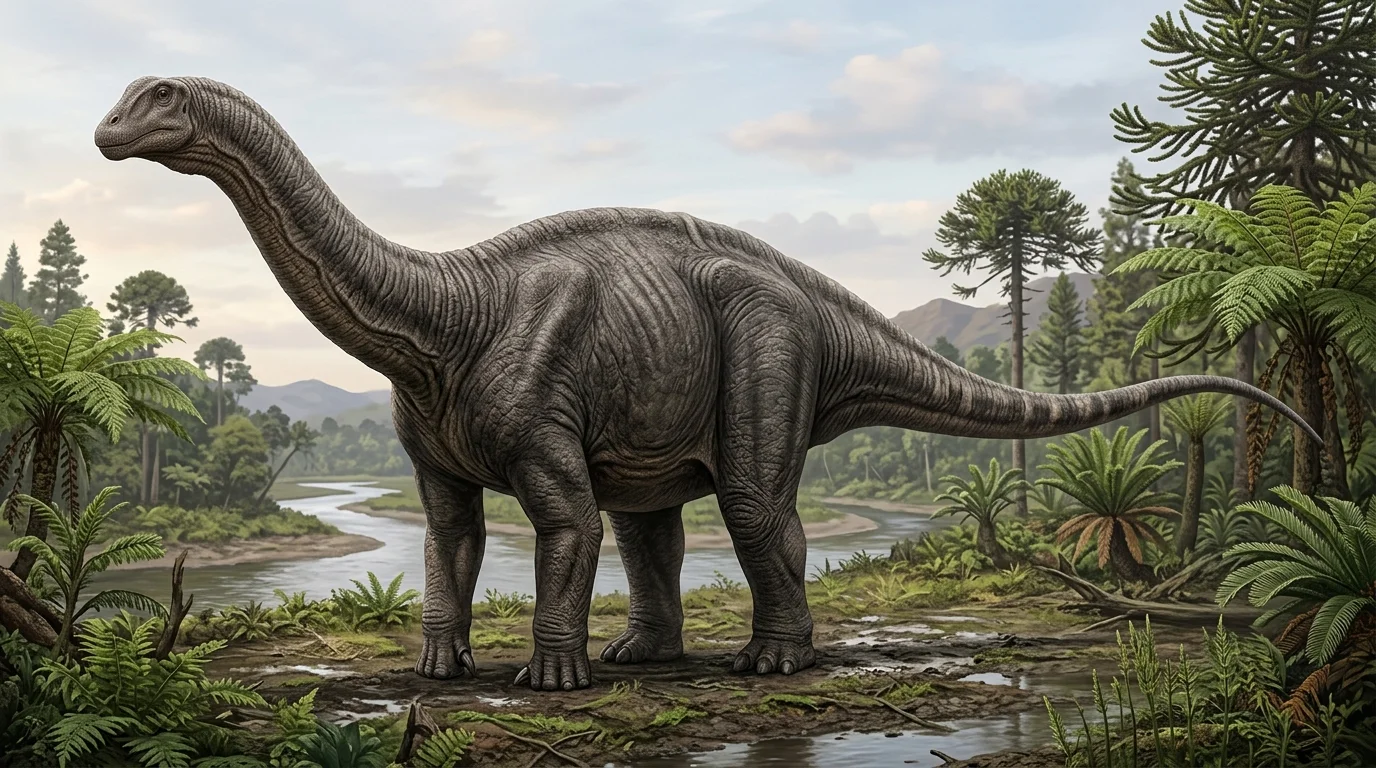
Herbivorous saurischians characterized by elongated necks, columnar limbs, and enormous body volumes.
Genus
Apatosaurus
Monophyletic prehistoric clade
Species
Apatosaurus ajax Marsh, 1877
Specific authority designation
Anatomy & Physical Characteristics
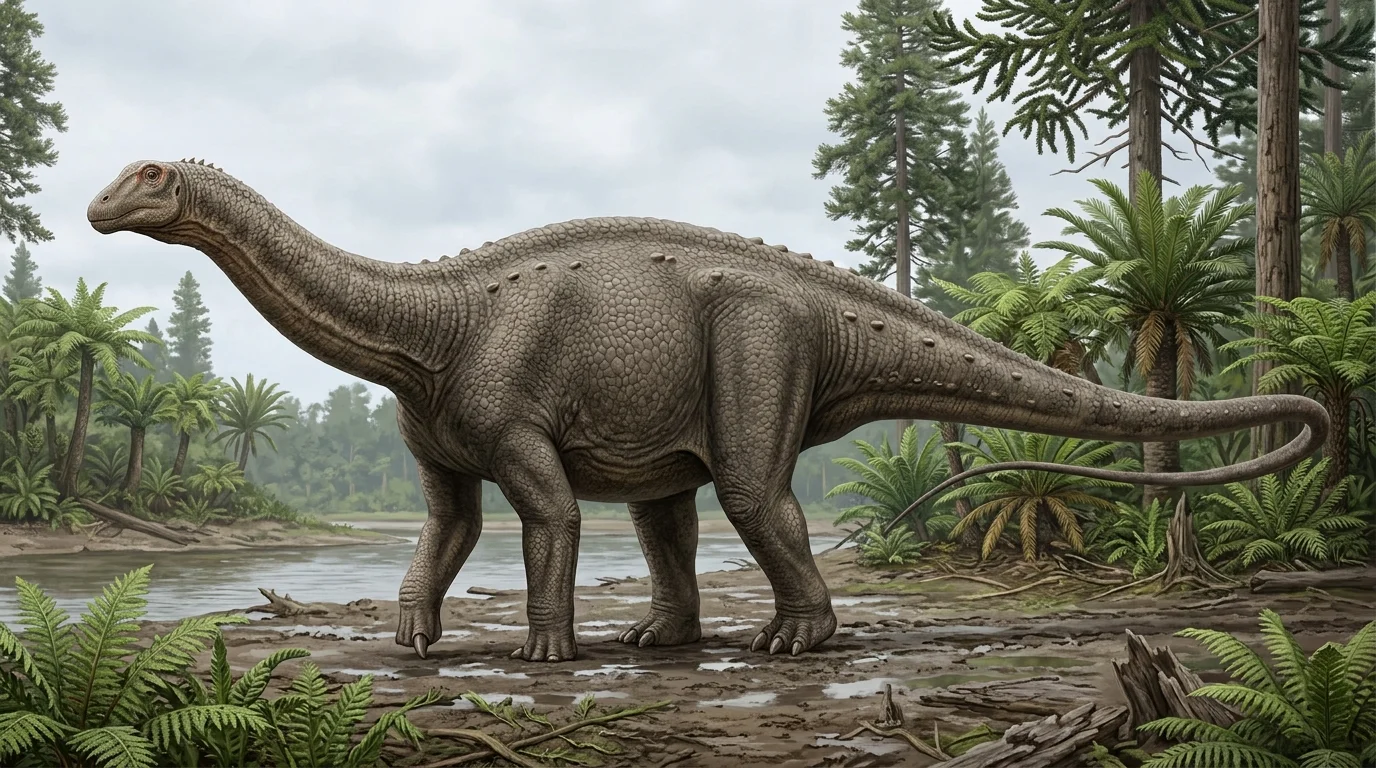
Apatosaurus was one of the heaviest and most robust diplodocid sauropods of the Late Jurassic Morrison Formation. Unlike the more gracile Diplodocus, Apatosaurus possessed massively thickened neck vertebrae with downward-pointing cervical ribs, suggesting a heavily muscled, low-browsing neck.
Its long, tapered whiplash tail could have been cracked like a bullwhip to produce supersonic acoustic booms exceeding 200 decibels for defense or herd communication.
Diagnostic Morphological Traits
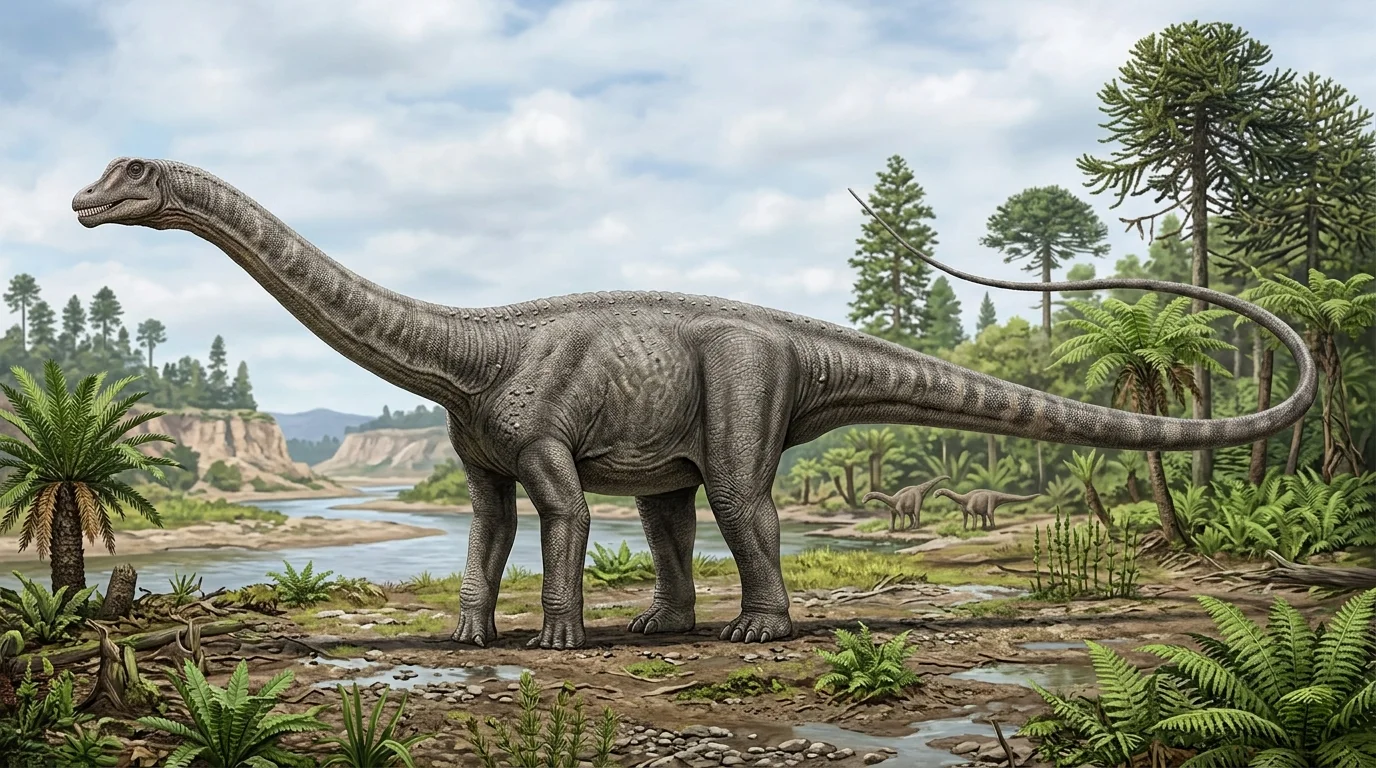
Immense quadruped with a deeply robust, broad neck, pillar-like legs, and an extraordinarily long whiplash tail.
Comparative Scale & Biometrics
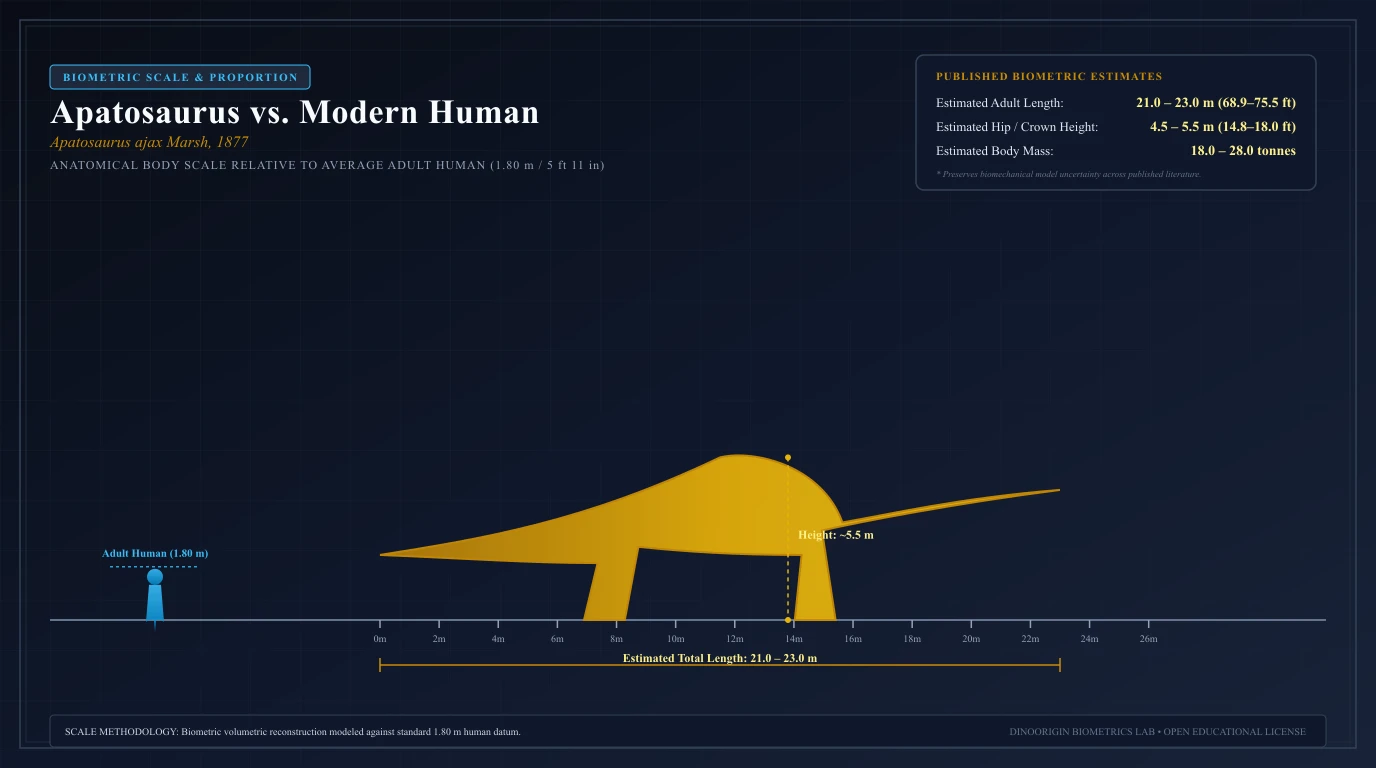
Anatomical dimensions relative to an average adult human (1.8 m / 6 ft tall)
Approx. 12.8× human length
Apatosaurus (Length)21–23 m (68.9–75.5 ft)
Adult Human1.8 m (6.0 ft)
Length
21–23 m (68.9–75.5 ft)
Height
4.5–5.5 m (14.8–18.0 ft)
Estimated Mass
18.0–28.0 metric tons (39,683–61,729 lbs)
Biometric Human Scale Reference
Comparative size scale of Apatosaurus relative to a 1.8-meter adult human, illustrating an estimated length of 21.0–23.0 m and height of 4.5–5.5 m (preserving model uncertainty).
Ferns, horsetails, bennettitaleans, and conifer foliage cropped with peg-like front teeth.
Paleobiology & Behavior
Low-to-mid level bulk feeder traveling in herds across expansive seasonal migratory routes. In the Morrison Formation ecosystem, Apatosaurus coexisted with fellow diplodocids like Diplodocus and faced predation pressure primarily from large allosauroids such as Allosaurus.
Habitat & Ecological Biome
Prehistoric Depositional Setting
Vast semi-arid savannah-like floodplains with seasonal gallery forests.
Fossil Evidence & Specimen Records
Preserved Skeletal Material & Bonebeds
Numerous complete and articulated skeletons excavated across Colorado, Wyoming, and Utah.
Anatomical Osteology & Skeletal Reconstruction
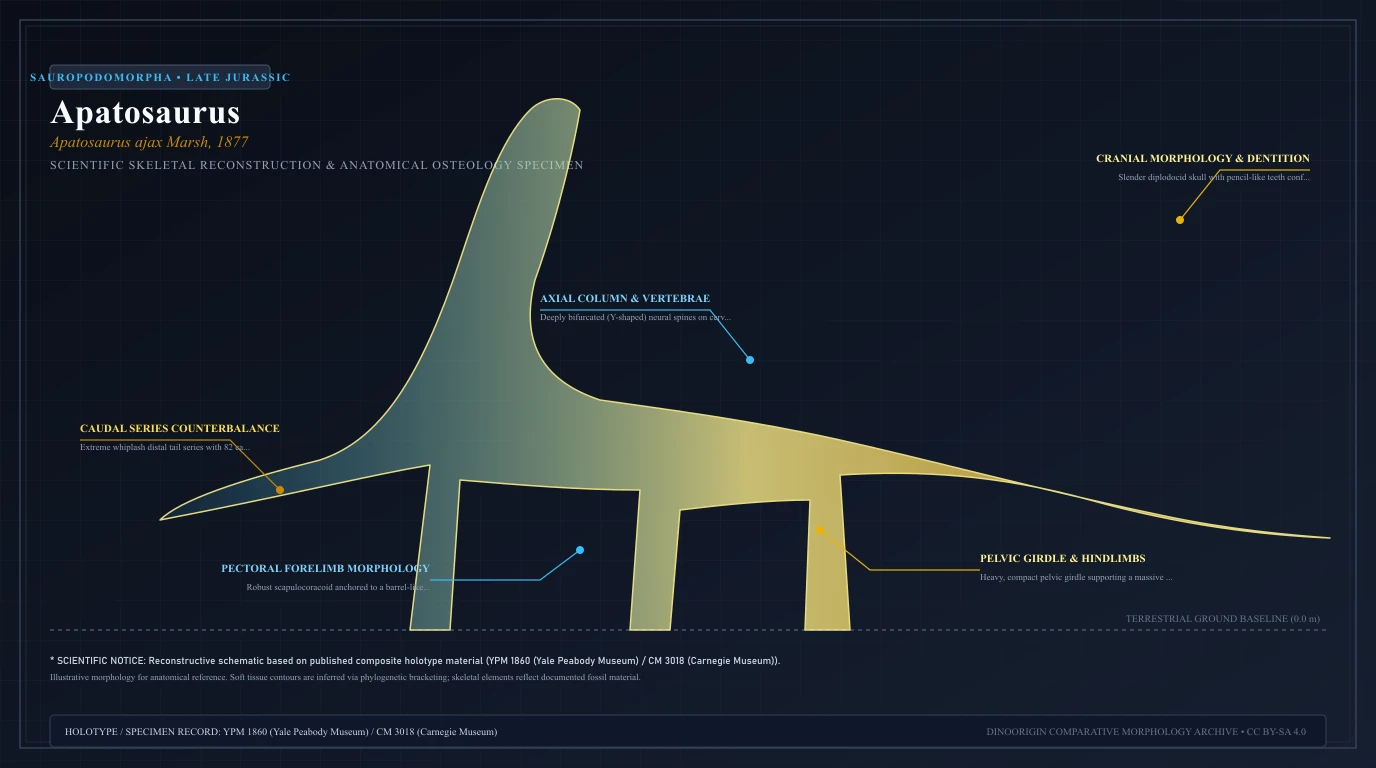
Anatomical skeletal reconstruction of Apatosaurus (Apatosaurus ajax Marsh, 1877) illustrating cranial fenestrae, vertebral column, and appendicular proportions based on composite fossil material.
Discovery & Taxonomic Naming History
Year of Discovery / Description1877
Type Specimen Locality & FormationMorrison Formation, Colorado, United States
Named by Othniel Charles Marsh during the historic Bone Wars.
Jurassic Period PeriodTemporal Interval: 152–151 Ma (million years ago)
Marked by lush greenhouse climates, the breakup of Pangaea, and the evolutionary explosion of sauropods, plated stegosaurs, and apex megalosauroid and allosauroid theropods.
During the Mesozoic Era, continental drift progressively reconfigured land bridges, atmospheric currents, and regional precipitation regimes. Fossils of Apatosaurus evidence its adaptation to the paleoenvironments of North America.
Paleogeographic RealmNorth America (North America)
Home to the fossil-rich Morrison Formation of the Late Jurassic and the Hell Creek and Dinosaur Park Formations of the Late Cretaceous.
Fossil Discovery Locality
Scientific Significance & Evolutionary Impact
The anatomical architecture of Apatosaurus serves as a crucial benchmark in vertebrate paleontology, illustrating key adaptive radiations within Sauropodomorpha.
Phylogenetic Placement: Informs cladistic debates concerning the divergence, skull biomechanics, and skeletal evolution of Jurassic Period fauna.
Paleoecological Guild: Documents trophic specialization (Herbivore) and predator-prey dynamics across its regional ecosystem.
Taphonomic Record: Numerous complete and articulated skeletons excavated across Colorado, Wyoming, and Utah.
Frequently Asked Questions About Apatosaurus
Scientifically verified answers based on peer-reviewed paleontological evidence.
Q1.When did Apatosaurus live?
Apatosaurus lived during the Jurassic Period Period, approximately 152–151 Ma (million years ago). This places it within the Mesozoic Era.
Q2.How big was Apatosaurus?
Paleontological estimates place Apatosaurus at a length of 21–23 m (68.9–75.5 ft), a hip/standing height of 4.5–5.5 m (14.8–18.0 ft), and a body mass of 18.0–28.0 metric tons (39,683–61,729 lbs).
Q3.What was the diet of Apatosaurus?
Classified as a herbivore, Apatosaurus specialized in consuming Ferns, horsetails, bennettitaleans, and conifer foliage cropped with peg-like front teeth..
Q4.Where were Apatosaurus fossils discovered?
Fossil specimens of Apatosaurus have been recovered from Morrison Formation, Colorado, United States, with notable historic specimens documented in 1877. Named by Othniel Charles Marsh during the historic Bone Wars.
Academic Literature & Peer-Reviewed References
Authoritative citations establishing the factual taxonomy, biometrics, and anatomy of Apatosaurus.
Marsh, O. C. (1877). Notice of new dinosaurian reptiles from the Jurassic formation. American Journal of Science, 14(84), 514-516. https://doi.org/10.2475/ajs.s3-14.84.514
Deposited in Mesozoic sedimentary strata preserving skeletal remains, teeth, or trace trackways.
Q5.What makes Apatosaurus scientifically significant?
Apatosaurus provides critical insights into the evolutionary radiation of Sauropodomorpha. Holotypes and fossil evidence indicate: Numerous complete and articulated skeletons excavated across Colorado, Wyoming, and Utah.
Tschopp, E., Mateus, O., & Benson, R. B. J. (2015). A specimen-level phylogenetic analysis and taxonomic revision of Diplodocidae (Dinosauria, Sauropoda). PeerJ, 3, e857. https://doi.org/10.7717/peerj.857