Megalosaurus bucklandii Mantell, 1827
The first scientifically named non-avian dinosaur in history, described from Middle Jurassic rocks of England.

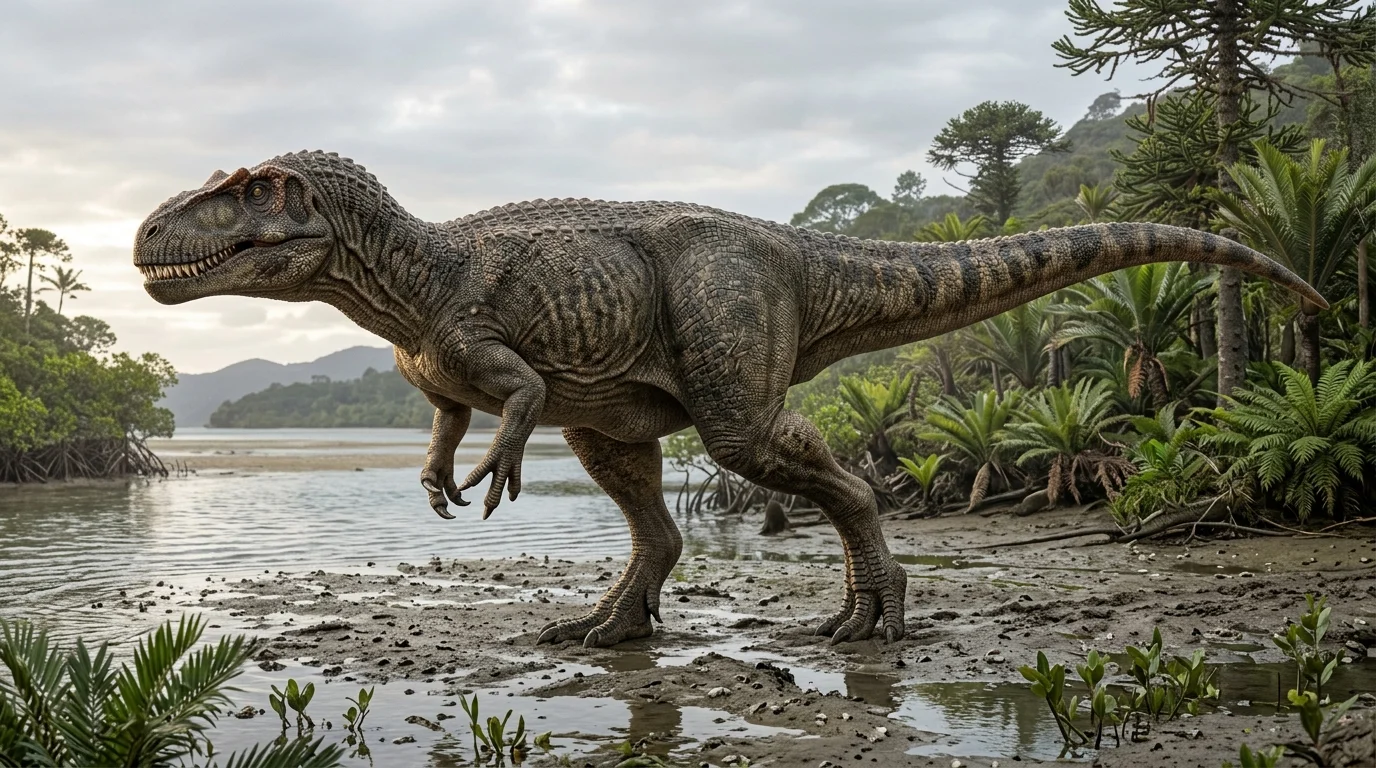
Scientific reconstruction of Megalosaurus (Megalosaurus bucklandii Mantell, 1827) in its native Geological period: Jurassic Period.
Image Credit: AI-generated scientific paleoart reconstruction synthesized from species-specific osteological profiles and peer-reviewed descriptions. (AI-Generated / Open Educational Media (DinoOrigin Spec))
Phylogenetic classification of Megalosaurus bucklandii Mantell, 1827 based on peer-reviewed cladistic analyses of diagnostic skeletal synapomorphies.
| Taxonomic Rank | Taxon / Clade | Diagnostic Context |
|---|---|---|
| Kingdom | Animalia | Monophyletic prehistoric clade |
| Phylum | Chordata | Monophyletic prehistoric clade |
| Clade | Dinosauria | Monophyletic prehistoric clade |
| Order | Saurischia (Lizard-Hipped Dinosaurs) | Characterized ancestrally by a triradiate pelvis with an anteriorly pointing pubis. |
| Suborder | Theropoda | Bipedal saurischian dinosaurs, historically dominated by carnivores and including the avian lineage. |
| Genus | Megalosaurus | Monophyletic prehistoric clade |
| Species | Megalosaurus bucklandii Mantell, 1827 | Specific authority designation |
Megalosaurus holds a monumental place in the history of science as the first non-avian dinosaur to be formally named in 1824 by William Buckland. Roaming the coastal lagoons of Middle Jurassic Britain, it was a robust, heavily built macropredator.
While early Victorian reconstructions imagined it as a quadrupedal overgrown lizard, modern phylogenetic analysis places it as a bipedal basal megalosauroid possessing muscular hindquarters and blade-like teeth.
Stocky, muscular theropod with a deep skull, broad neck, robust torso, and powerful legs.
Anatomical dimensions relative to an average adult human (1.8 m / 6 ft tall)
Carnivorous; consumed contemporary sauropods like Cetiosaurus and early ornithischians.
Robust Middle Jurassic apex predator with powerful jaws and recurved serrated teeth. In the ancient British coastal archipelago, Megalosaurus was the top carnivore of its ecosystem, hunting contemporary herbivorous sauropods like Cetiosaurus.
Coastal lagoons, mangrove-like estuaries, and carbonate tidal flats.
Lectotype partial dentary with erupting teeth (OUMNH J.13505) and isolated limb elements.
Described by Reverend William Buckland, professor of geology at the University of Oxford.
Marked by lush greenhouse climates, the breakup of Pangaea, and the evolutionary explosion of sauropods, plated stegosaurs, and apex megalosauroid and allosauroid theropods.
During the Mesozoic Era, continental drift progressively reconfigured land bridges, atmospheric currents, and regional precipitation regimes. Fossils of Megalosaurus evidence its adaptation to the paleoenvironments of Europe.
During the Mesozoic, Europe was largely an archipelago of islands, resulting in unique insular dwarf species and classic historical fossil discoveries.
The anatomical architecture of Megalosaurus serves as a crucial benchmark in vertebrate paleontology, illustrating key adaptive radiations within Theropoda.
Scientifically verified answers based on peer-reviewed paleontological evidence.
Megalosaurus lived during the Jurassic Period Period, approximately 168–166 Ma (million years ago). This places it within the Mesozoic Era.
Paleontological estimates place Megalosaurus at a length of 6–8 m (19.7–26.2 ft), a hip/standing height of 2–2.6 m (6.6–8.5 ft), and a body mass of 0.8–1.4 metric tons (1,764–3,086 lbs).
Classified as a carnivore, Megalosaurus specialized in consuming Carnivorous; consumed contemporary sauropods like Cetiosaurus and early ornithischians..
Fossil specimens of Megalosaurus have been recovered from Stonesfield Slate, Oxfordshire, United Kingdom, with notable historic specimens documented in 1824. Described by Reverend William Buckland, professor of geology at the University of Oxford.
Authoritative citations establishing the factual taxonomy, biometrics, and anatomy of Megalosaurus.
Benson, R. B. J. (2010). A description of Megalosaurus bucklandii (Dinosauria: Theropoda) from the Bathonian of the UK and the relationships of Middle Jurassic theropods. Zoological Journal of the Linnean Society, 158(4), 882-935. https://doi.org/10.1111/j.1096-3642.2009.00569.x
Curated & Verified: 2026-09-24Deposited in Mesozoic sedimentary strata preserving skeletal remains, teeth, or trace trackways.
Megalosaurus provides critical insights into the evolutionary radiation of Theropoda. Holotypes and fossil evidence indicate: Lectotype partial dentary with erupting teeth (OUMNH J.13505) and isolated limb elements.
Buckland, W. (1824). Notice on the Megalosaurus or great fossil lizard of Stonesfield. Transactions of the Geological Society of London, 1(2), 390-396. https://doi.org/10.1144/transgslb.1.2.390
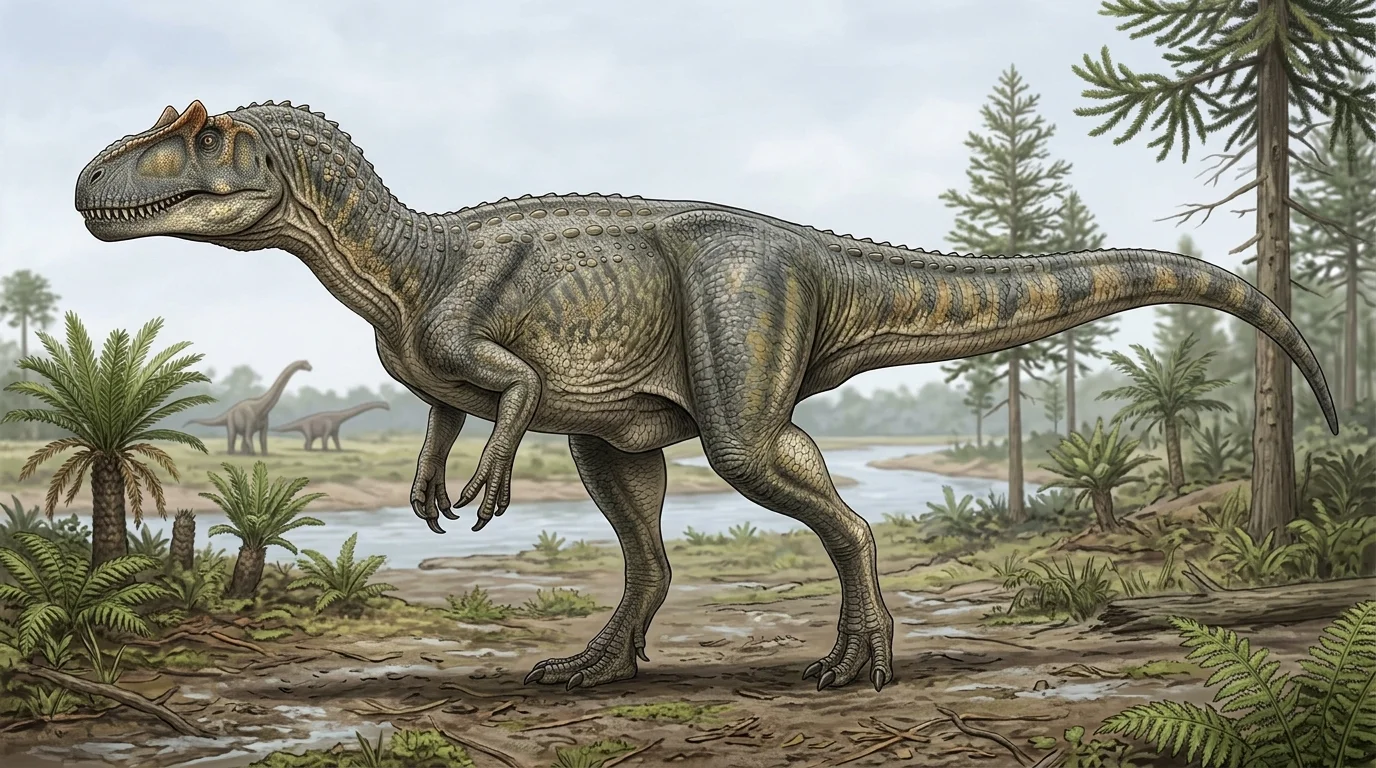
TheropodaAllosaurus fragilis Marsh, 1877
The most abundant apex theropod of Late Jurassic North America, equipped with a kinetic skull and slashing serrated teeth.
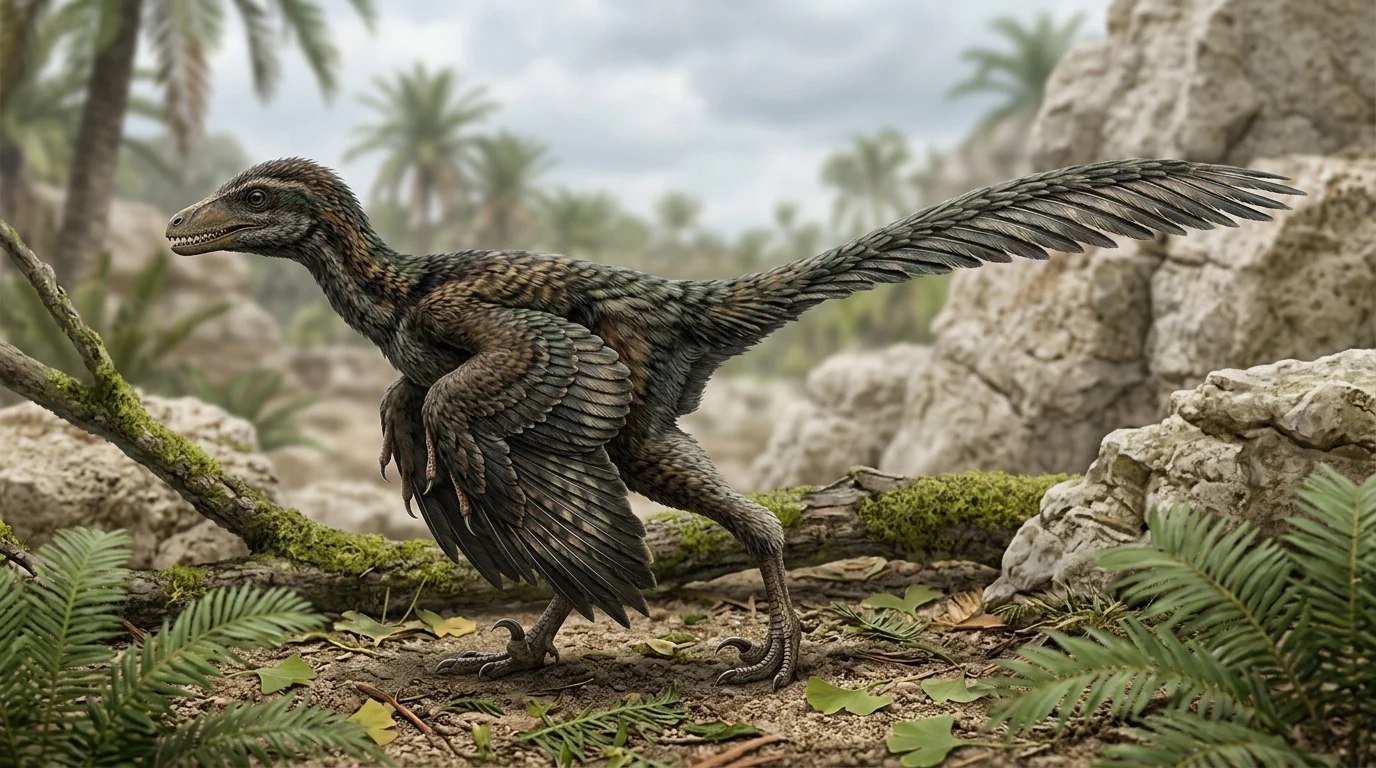
TheropodaArchaeopteryx lithographica von Meyer, 1861
An iconic stem-avialan from the Late Jurassic Solnhofen limestone exhibiting transitional features bridging non-avian theropods and birds.
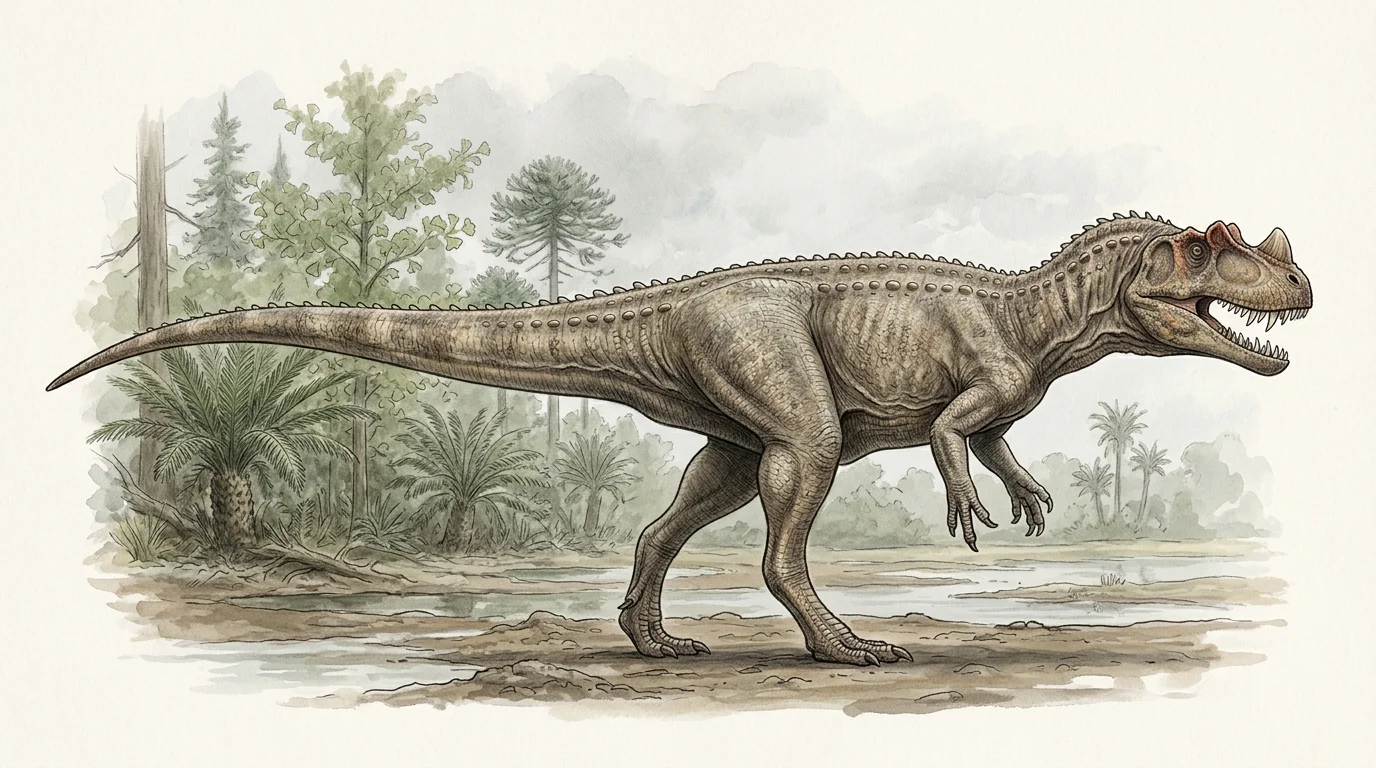
TheropodaCeratosaurus nasicornis Marsh, 1884
A distinctive Late Jurassic theropod sporting a prominent nasal horn core and a line of small osteoderms along its back.