An early predatory dinosaur from the Late Triassic Ischigualasto Formation of Argentina whose precise phylogenetic position near the root of Saurischia remains debated.
Primary Scientific Paleoart
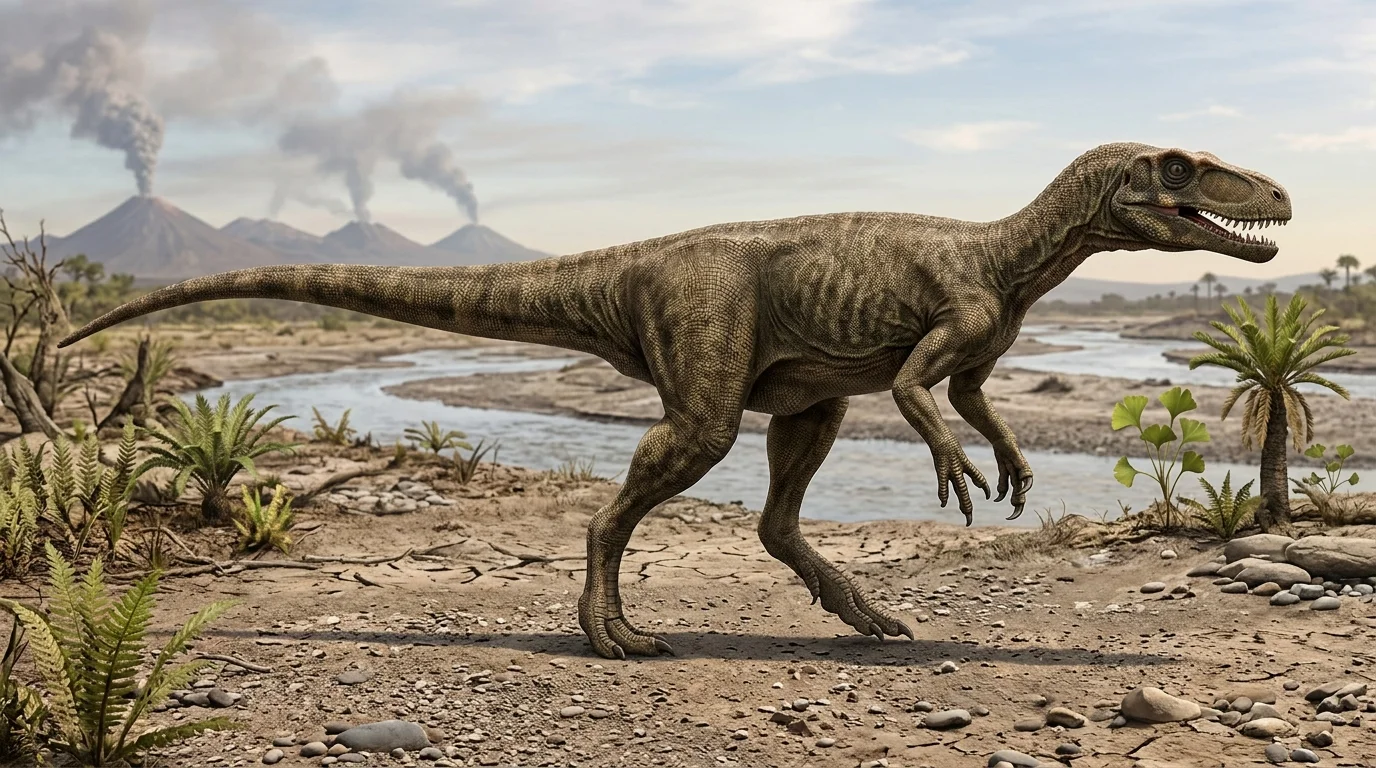
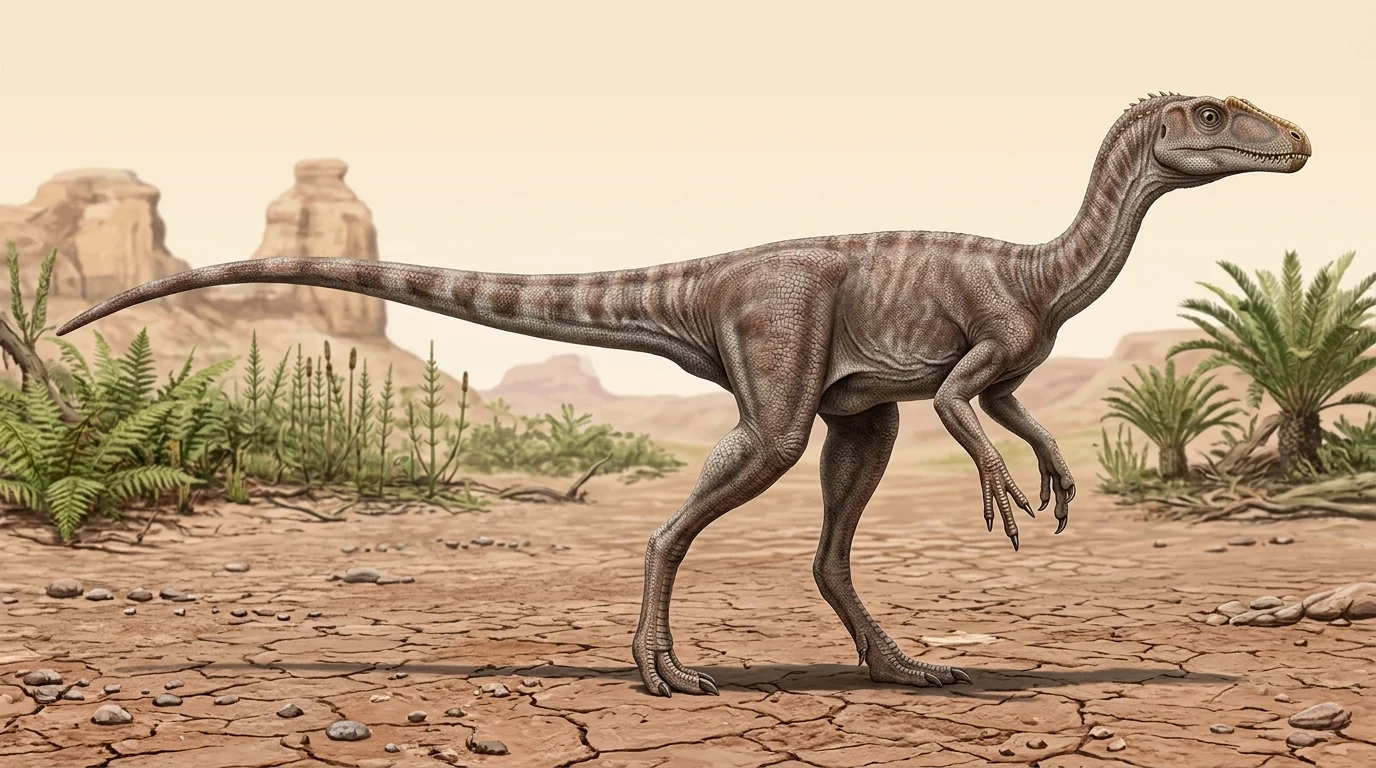
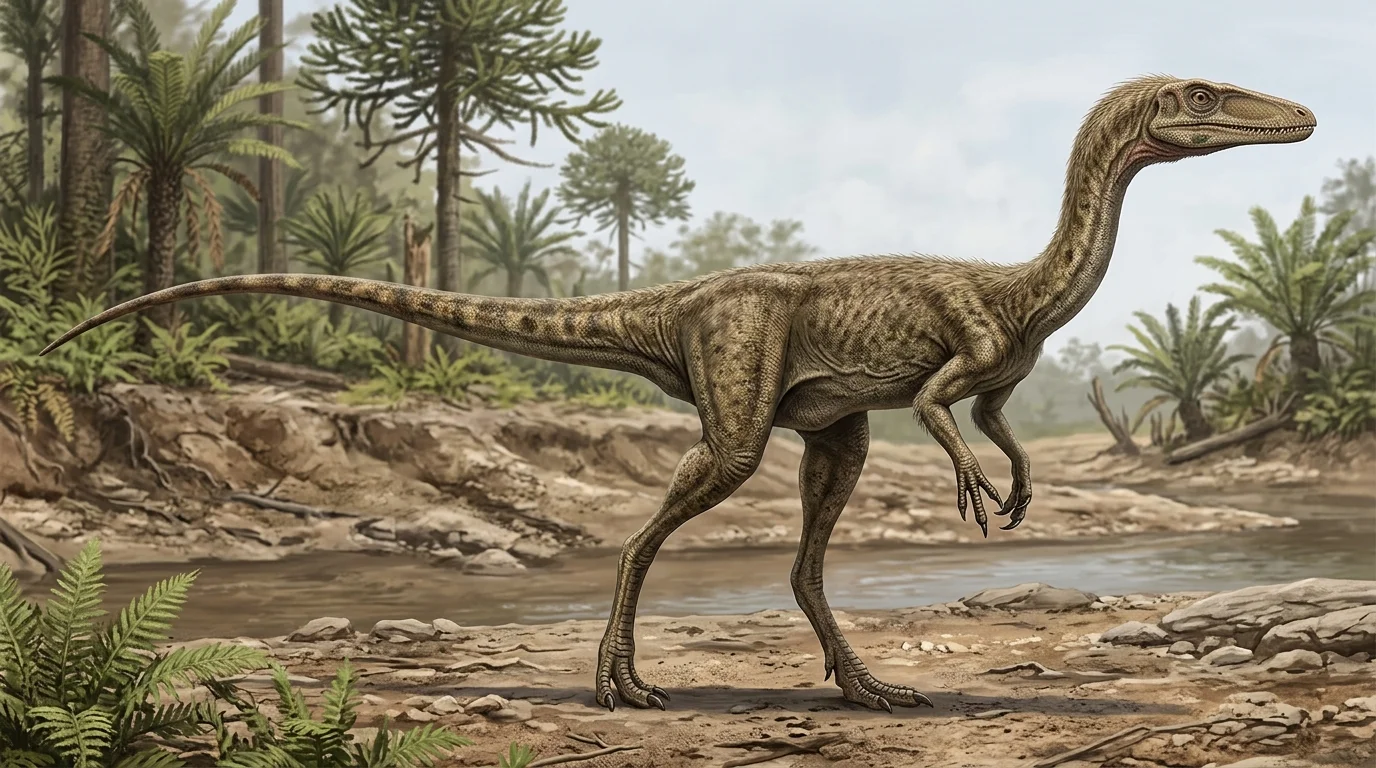
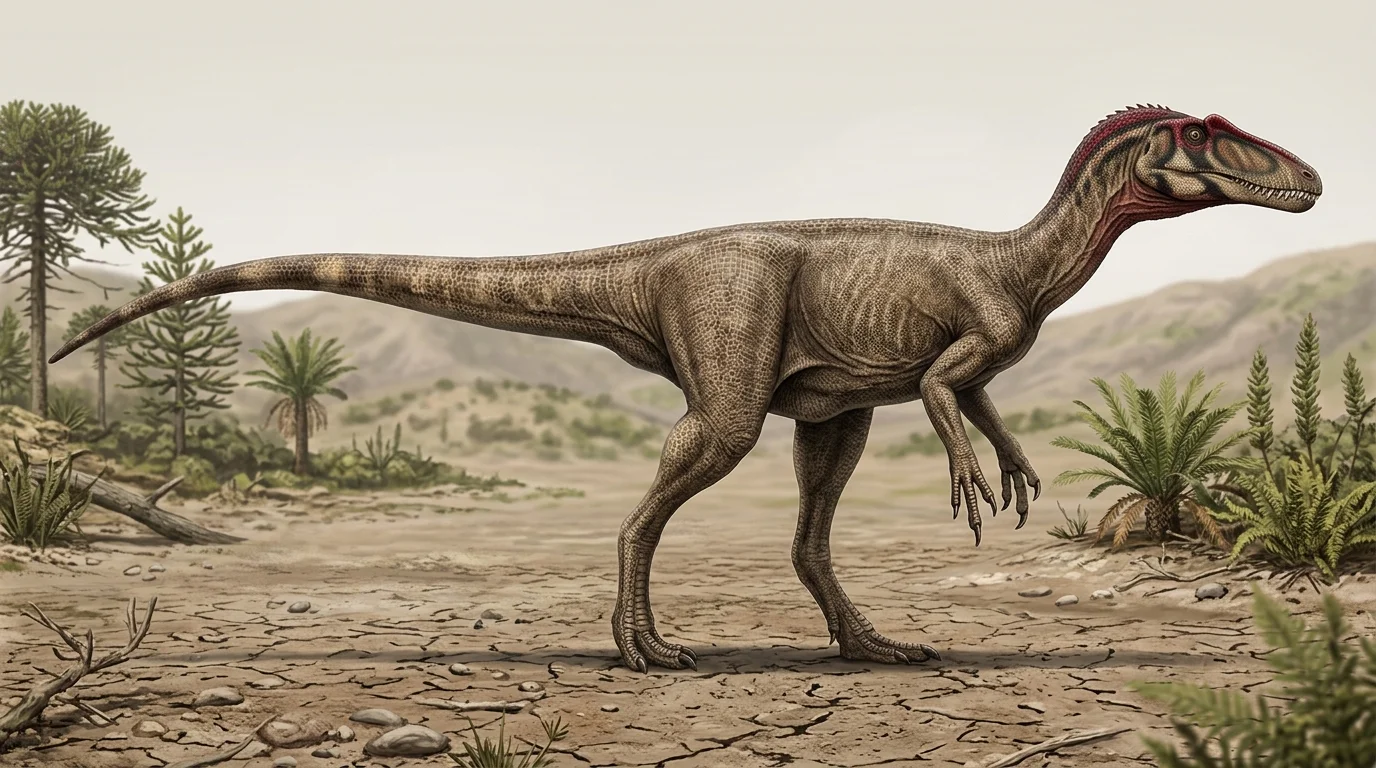
Scientific reconstruction of Herrerasaurus (Herrerasaurus ischigualastensis Reig, 1963) in its native Geological period: Triassic Period.
Image Credit: AI-generated scientific paleoart reconstruction synthesized from species-specific osteological profiles and peer-reviewed descriptions. (AI-Generated / Open Educational Media (DinoOrigin Spec))
Phylogenetic classification of Herrerasaurus ischigualastensis Reig, 1963 based on peer-reviewed cladistic analyses of diagnostic skeletal synapomorphies.
Bipedal saurischian dinosaurs, historically dominated by carnivores and including the avian lineage.
Genus
Herrerasaurus
Monophyletic prehistoric clade
Species
Herrerasaurus ischigualastensis Reig, 1963
Specific authority designation
Anatomy & Physical Characteristics
Herrerasaurus represents one of the earliest predatory dinosaurs known to science. Possessing a flexible lower jaw joint and robust clawed forelimbs, it occupied an apex terrestrial guild in western Gondwana during the Carnian stage of the Late Triassic.
Its anatomy displays a mosaic of primitive archosaurian and early dinosaurian features. While historically placed within Theropoda, cladistic analyses frequently recover herrerasaurids as very early branching saurischians or a distinct lineage basal to the theropod-sauropodomorph split; its precise phylogenetic affinities remain an active subject of debate.
Diagnostic Morphological Traits
Deep skull with intramandibular joint, muscular hind limbs, and strong hands bearing curved raptorial talons.
Comparative Scale & Biometrics
Anatomical dimensions relative to an average adult human (1.8 m / 6 ft tall)
Flesh-eating macropredator feeding on contemporary herbivorous rhynchosaurs (Hyperodapedon) and synapsids.
Paleobiology & Behavior
Dominant apex predator of the Carnian stage, using sharp recurved teeth and grasping hand claws to capture early synapsids and sauropodomorphs. In the Ischigualasto valley of Argentina, Herrerasaurus preyed upon and competed with contemporary basal dinosaurs including Eoraptor.
Habitat & Ecological Biome
Prehistoric Depositional Setting
Volcanically active river valleys and braided floodplain basins with seasonal droughts.
Fossil Evidence & Specimen Records
Preserved Skeletal Material & Bonebeds
Several articulated skeletons including near-complete skulls found in the Valley of the Moon.
Discovery & Taxonomic Naming History
Year of Discovery / Description1959
Type Specimen Locality & FormationIschigualasto Formation, San Juan, Argentina
Discovered by local goat rancher Victorino Herrera; described by Osvaldo Reig in 1963.
Triassic Period PeriodTemporal Interval: 231.4–228 Ma (million years ago)
The dawn of the Mesozoic Era. Dinosaurs first emerged in the Late Triassic following the catastrophic Permian-Triassic extinction event, initially occupying modest niches alongside crurotarsan archosaurs.
During the Mesozoic Era, continental drift progressively reconfigured land bridges, atmospheric currents, and regional precipitation regimes. Fossils of Herrerasaurus evidence its adaptation to the paleoenvironments of South America.
Paleogeographic RealmSouth America (South America)
Preserved within the Huincul, Candeleros, and Ischigualasto formations, hosting colossal titanosaurs and specialized abelisaurid and carcharodontosaurid apex predators.
Fossil Discovery Locality
Scientific Significance & Evolutionary Impact
The anatomical architecture of Herrerasaurus serves as a crucial benchmark in vertebrate paleontology, illustrating key adaptive radiations within Theropoda.
Phylogenetic Placement: Informs cladistic debates concerning the divergence, skull biomechanics, and skeletal evolution of Triassic Period fauna.
Paleoecological Guild: Documents trophic specialization (Carnivore) and predator-prey dynamics across its regional ecosystem.
Taphonomic Record: Several articulated skeletons including near-complete skulls found in the Valley of the Moon.
Frequently Asked Questions About Herrerasaurus
Scientifically verified answers based on peer-reviewed paleontological evidence.
Q1.When did Herrerasaurus live?
Herrerasaurus lived during the Triassic Period Period, approximately 231.4–228 Ma (million years ago). This places it within the Mesozoic Era.
Q2.How big was Herrerasaurus?
Paleontological estimates place Herrerasaurus at a length of 3–4.5 m (9.8–14.8 ft), a hip/standing height of 1.1–1.4 m (3.6–4.6 ft), and a body mass of 180–350 kg (397–772 lbs).
Q3.What was the diet of Herrerasaurus?
Classified as a carnivore, Herrerasaurus specialized in consuming Flesh-eating macropredator feeding on contemporary herbivorous rhynchosaurs (Hyperodapedon) and synapsids..
Q4.Where were Herrerasaurus fossils discovered?
Fossil specimens of Herrerasaurus have been recovered from Ischigualasto Formation, San Juan, Argentina, with notable historic specimens documented in 1959. Discovered by local goat rancher Victorino Herrera; described by Osvaldo Reig in 1963.
Academic Literature & Peer-Reviewed References
Authoritative citations establishing the factual taxonomy, biometrics, and anatomy of Herrerasaurus.
Reig, O. A. (1963). La presencia de dinosaurios saurisquios en los 'Estratos de Ischigualasto' (Mesotriásico Superior) de las provincias de San Juan y La Rioja (República Argentina). Ameghiniana, 3(1), 3-20.
Deposited in Mesozoic sedimentary strata preserving skeletal remains, teeth, or trace trackways.
Q5.What makes Herrerasaurus scientifically significant?
Herrerasaurus provides critical insights into the evolutionary radiation of Theropoda. Holotypes and fossil evidence indicate: Several articulated skeletons including near-complete skulls found in the Valley of the Moon.
Sereno, P. C., & Novas, F. E. (1992). The complete skull and skeleton of an early dinosaur. Science, 258(5085), 1137-1140. https://doi.org/10.1126/science.258.5085.1137