Euoplocephalus tutus Lambe, 1910
A heavily armored, tank-like ankylosaurid with armored eyelids and a massive bone-crushing tail club.

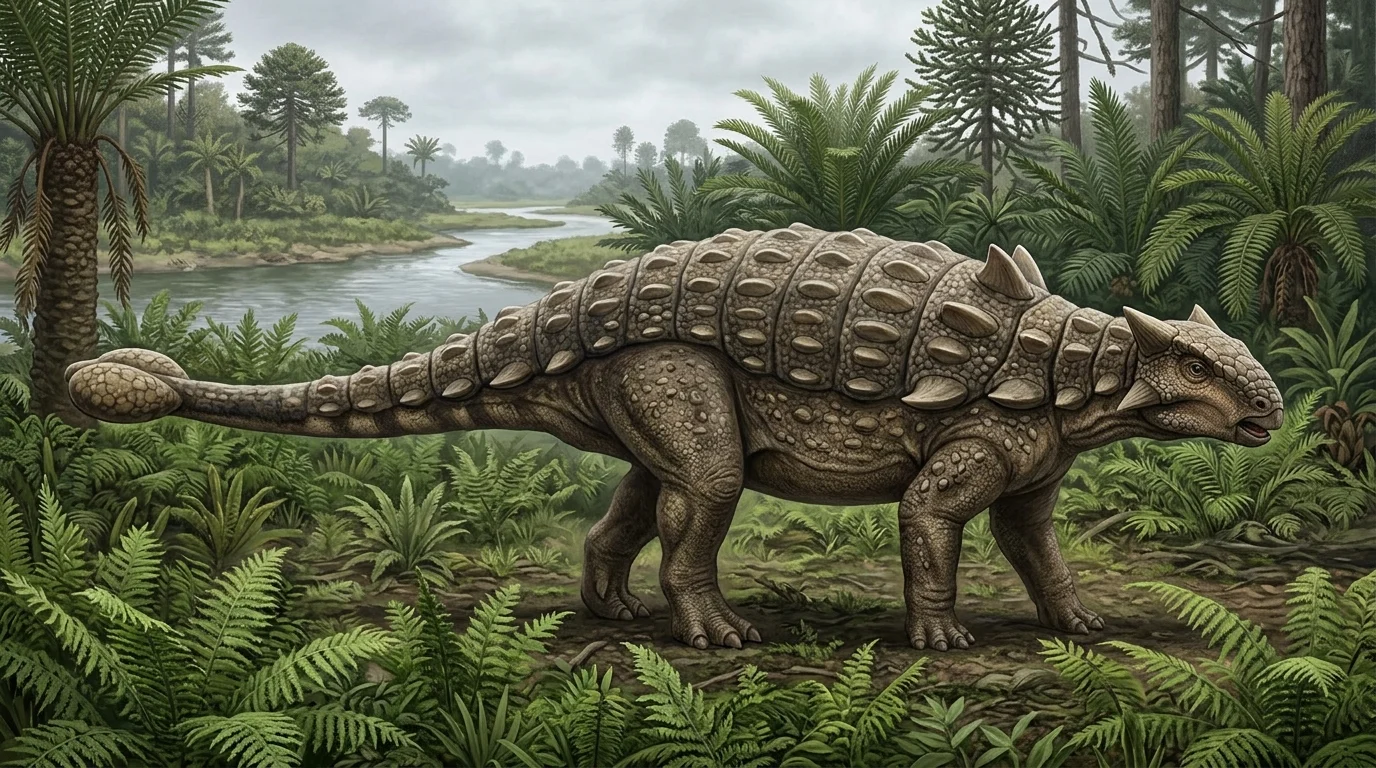
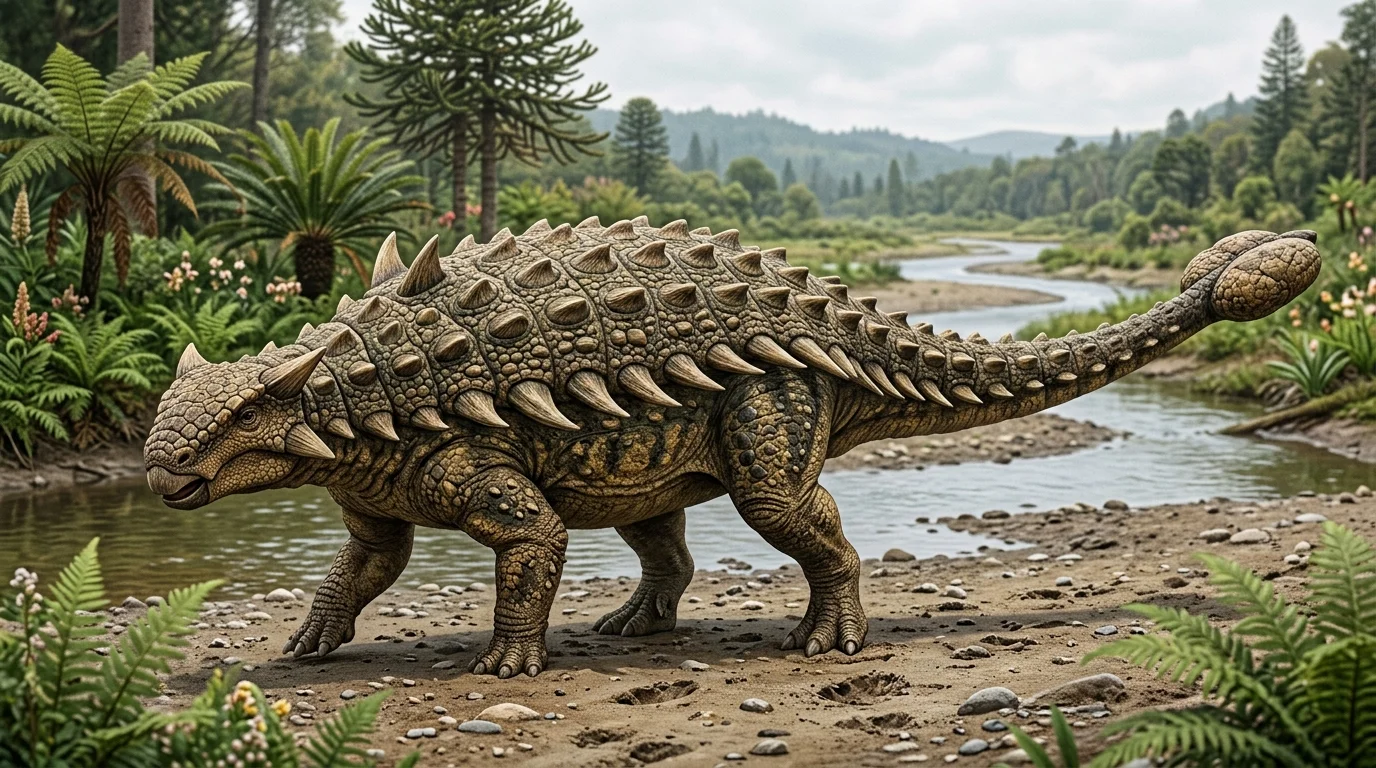
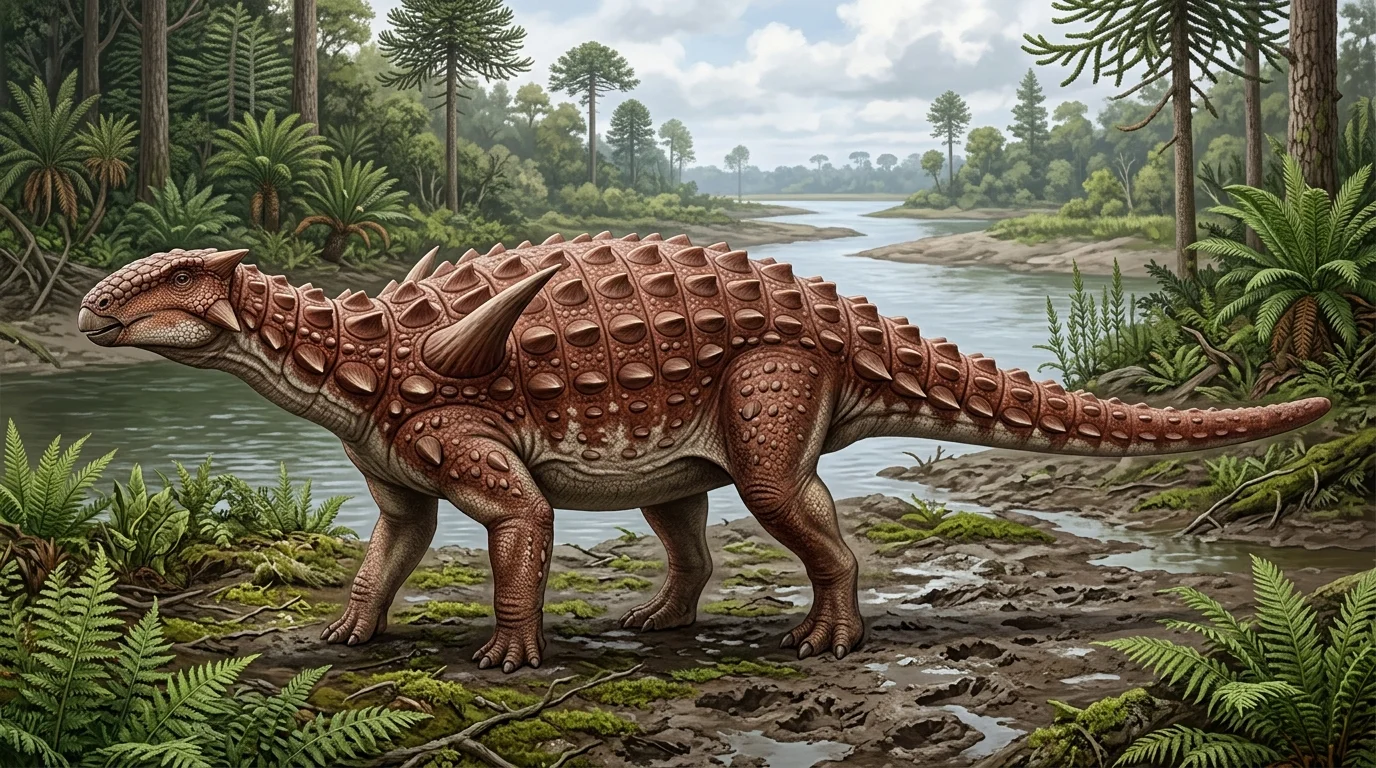
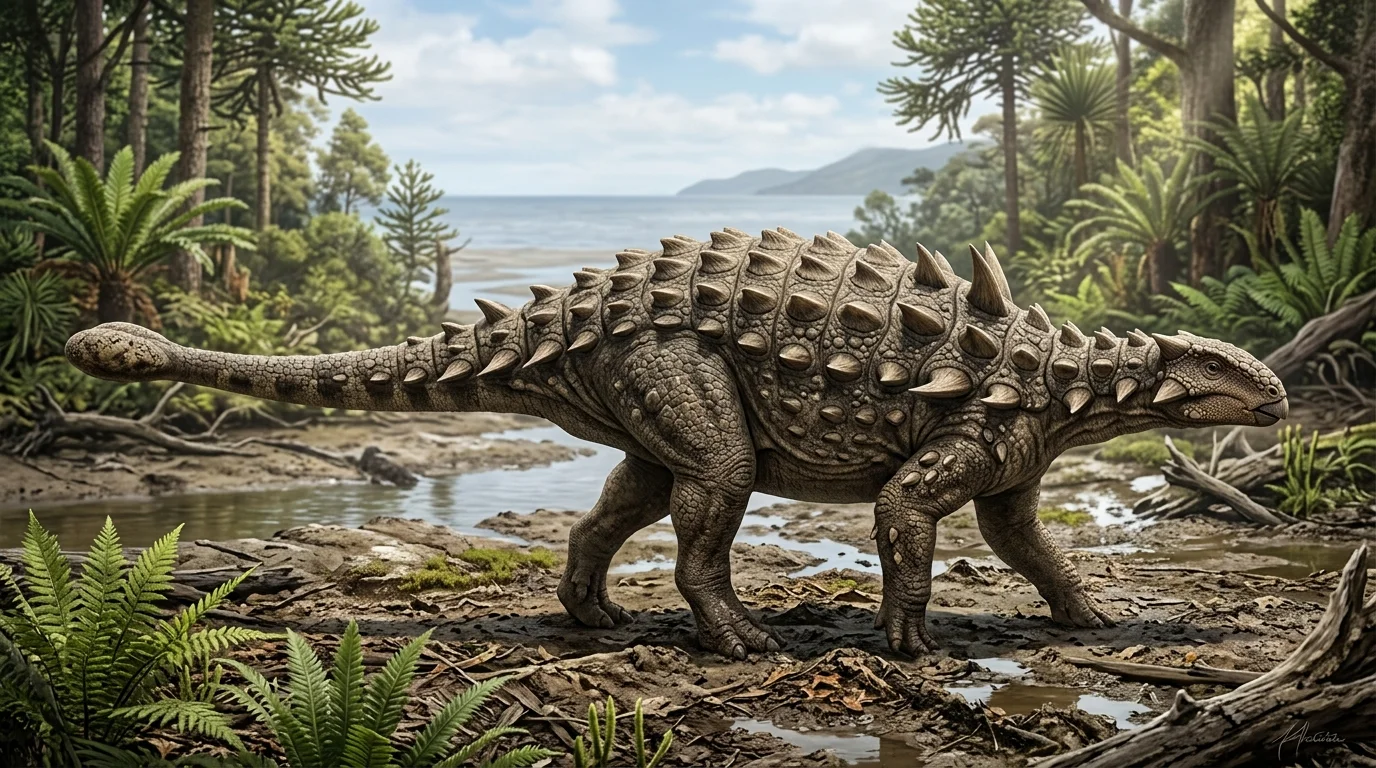
Scientific reconstruction of Euoplocephalus (Euoplocephalus tutus Lambe, 1910) in its native Geological period: Cretaceous Period.
Image Credit: AI-generated scientific paleoart reconstruction synthesized from species-specific osteological profiles and peer-reviewed descriptions. (AI-Generated / Open Educational Media (DinoOrigin Spec))
Phylogenetic classification of Euoplocephalus tutus Lambe, 1910 based on peer-reviewed cladistic analyses of diagnostic skeletal synapomorphies.
| Taxonomic Rank | Taxon / Clade | Diagnostic Context |
|---|---|---|
| Kingdom | Animalia | Monophyletic prehistoric clade |
| Phylum | Chordata | Monophyletic prehistoric clade |
| Clade | Dinosauria | Monophyletic prehistoric clade |
| Order | Ornithischia (Bird-Hipped Dinosaurs) | Characterized by a pelvis with a backwards-pointing pubis parallel to the ischium. |
| Infraorder | Ankylosauria | Heavily armored quadrupedal ornithischians protected by osteoderms and tail clubs. |
| Genus | Euoplocephalus | Monophyletic prehistoric clade |
| Species | Euoplocephalus tutus Lambe, 1910 | Specific authority designation |
Euoplocephalus was one of the most thoroughly armored dinosaurs of the Late Cretaceous Dinosaur Park Formation. Growing up to six meters in length, virtually its entire upper body was encased in thick, keeled osteoderms fused into defensive bands.
Even its eyelids were protected by specialized bony armored plates (palpebral bones) that slid shut like armored shutters. Its tail ended in a heavy, solid bony club capable of exerting impact forces sufficient to fracture the shins of attacking tyrannosaurs.
Broad, tank-like quadruped with armored head, triangular horns, banded dorsal armor, and a heavy terminal tail club.
Anatomical dimensions relative to an average adult human (1.8 m / 6 ft tall)
Ground foliage, roots, and shrubs processed with small serrated leaf-shaped teeth.
Heavily armored ankylosaurid with bony eyelid plates and a rigid tail club used for active defense. In the Dinosaur Park Formation, Euoplocephalus foraged for low ground vegetation alongside horned dinosaurs like Styracosaurus and hadrosaurs like Corythosaurus.
Coastal plain woodlands, lowland river valleys, and fern meadows.
Over 40 specimens known, including complete articulated armor shields, skulls, and tail clubs.
Collected by Lawrence Lambe; renamed Euoplocephalus by Lambe in 1910.
The longest and final period of the Mesozoic Era, characterized by the rise of flowering plants, ceratopsians, hadrosaurs, tyrannosaurids, and concluding with the Chicxulub asteroid impact.
During the Mesozoic Era, continental drift progressively reconfigured land bridges, atmospheric currents, and regional precipitation regimes. Fossils of Euoplocephalus evidence its adaptation to the paleoenvironments of North America.
Home to the fossil-rich Morrison Formation of the Late Jurassic and the Hell Creek and Dinosaur Park Formations of the Late Cretaceous.
The anatomical architecture of Euoplocephalus serves as a crucial benchmark in vertebrate paleontology, illustrating key adaptive radiations within Ankylosauria.
Scientifically verified answers based on peer-reviewed paleontological evidence.
Euoplocephalus lived during the Cretaceous Period Period, approximately 76.5–75 Ma (million years ago). This places it within the Mesozoic Era.
Paleontological estimates place Euoplocephalus at a length of 5.5–6 m (18.0–19.7 ft), a hip/standing height of 1.5–1.8 m (4.9–5.9 ft), and a body mass of 2.0–2.7 metric tons (4,409–5,952 lbs).
Classified as a herbivore, Euoplocephalus specialized in consuming Ground foliage, roots, and shrubs processed with small serrated leaf-shaped teeth..
Fossil specimens of Euoplocephalus have been recovered from Dinosaur Park Formation, Alberta, Canada, with notable historic specimens documented in 1897. Collected by Lawrence Lambe; renamed Euoplocephalus by Lambe in 1910.
Authoritative citations establishing the factual taxonomy, biometrics, and anatomy of Euoplocephalus.
Arbour, V. M., & Currie, P. J. (2013). Euoplocephalus tutus and the diversity of ankylosaurid dinosaurs in the Late Cretaceous of Alberta, Canada, and Montana, USA. PLoS ONE, 8(5), e62421. https://doi.org/10.1371/journal.pone.0062421
Curated & Verified: 2026-09-24Deposited in Mesozoic sedimentary strata preserving skeletal remains, teeth, or trace trackways.
Euoplocephalus provides critical insights into the evolutionary radiation of Ankylosauria. Holotypes and fossil evidence indicate: Over 40 specimens known, including complete articulated armor shields, skulls, and tail clubs.
Lambe, L. M. (1910). Note on the parietal crest of Centrosaurus apertus and a proposed new name for Stereocephalus tutus. The Ottawa Naturalist, 24(9), 149-151.
AnkylosauriaAnkylosaurus magniventris Brown, 1908
The definitive armored dinosaur of the Late Cretaceous, encased in bony osteoderms and armed with an osseous tail club.
AnkylosauriaBorealopelta markmitchelli Brown et al., 2017
The world's best-preserved dinosaur fossil, a 110-million-year-old nodosaur with intact skin, armor, and stomach contents.
AnkylosauriaMinmi paravertebra Molnar, 1980
A small, agile Australian ankylosaur featuring unique horizontal 'paravertebra' bone plates along its spine.