Liliensternus liliensterni Huene, 1934
A large, active predatory coelophysoid that roamed Late Triassic Germany.

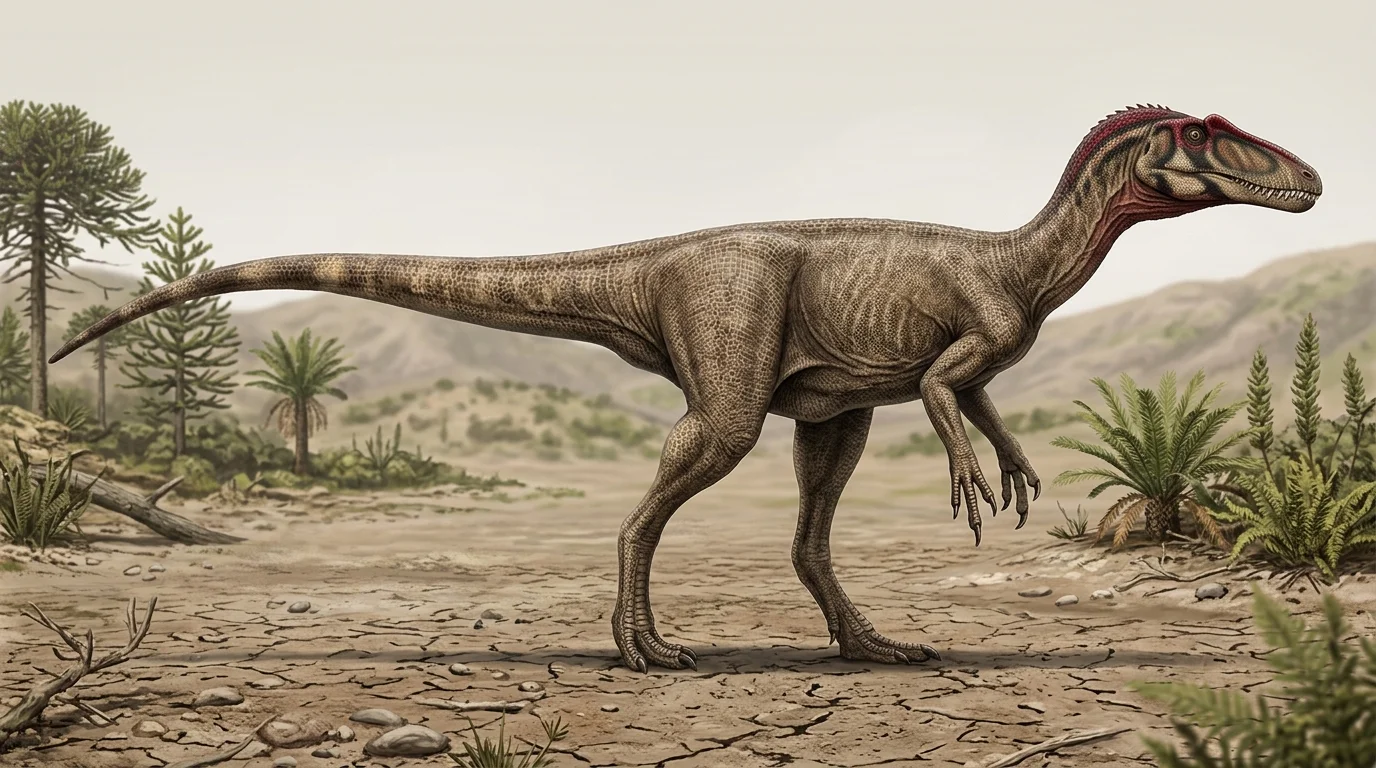
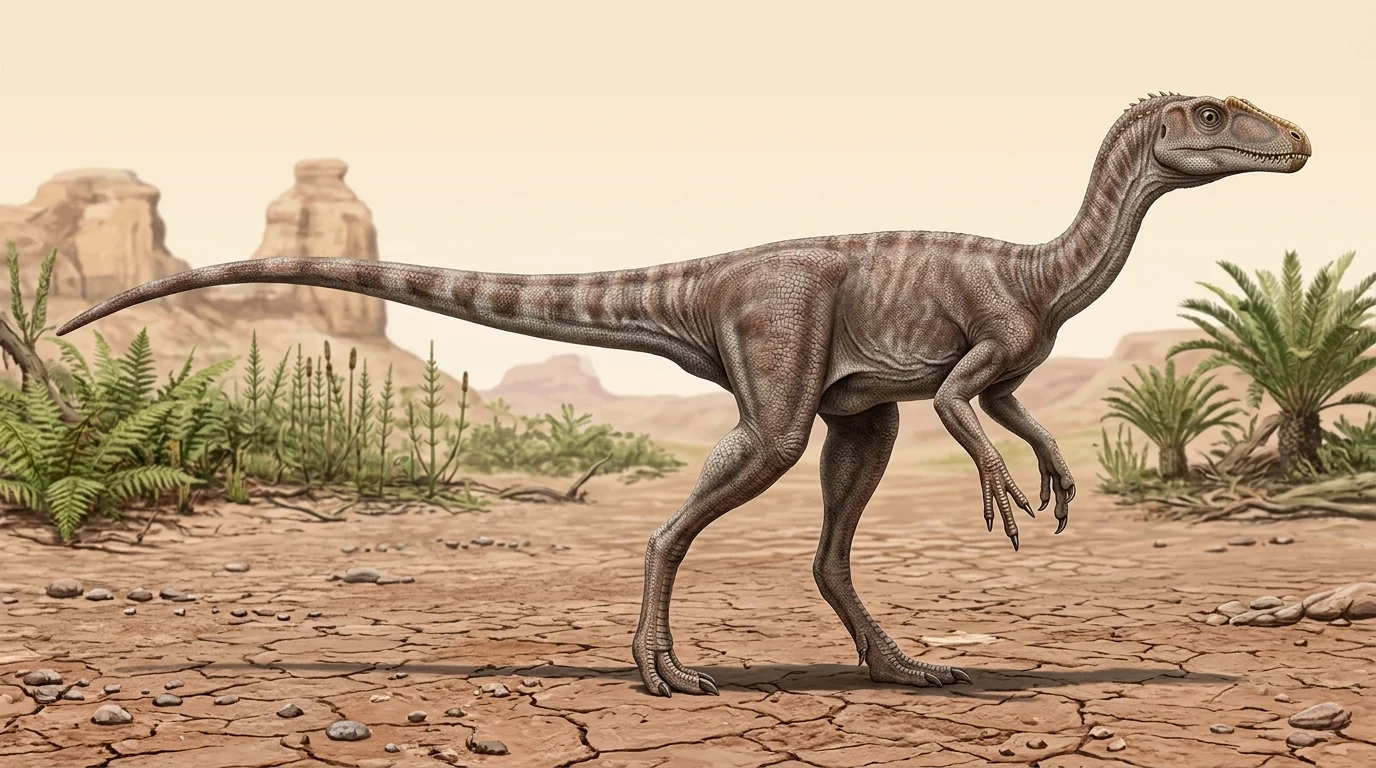
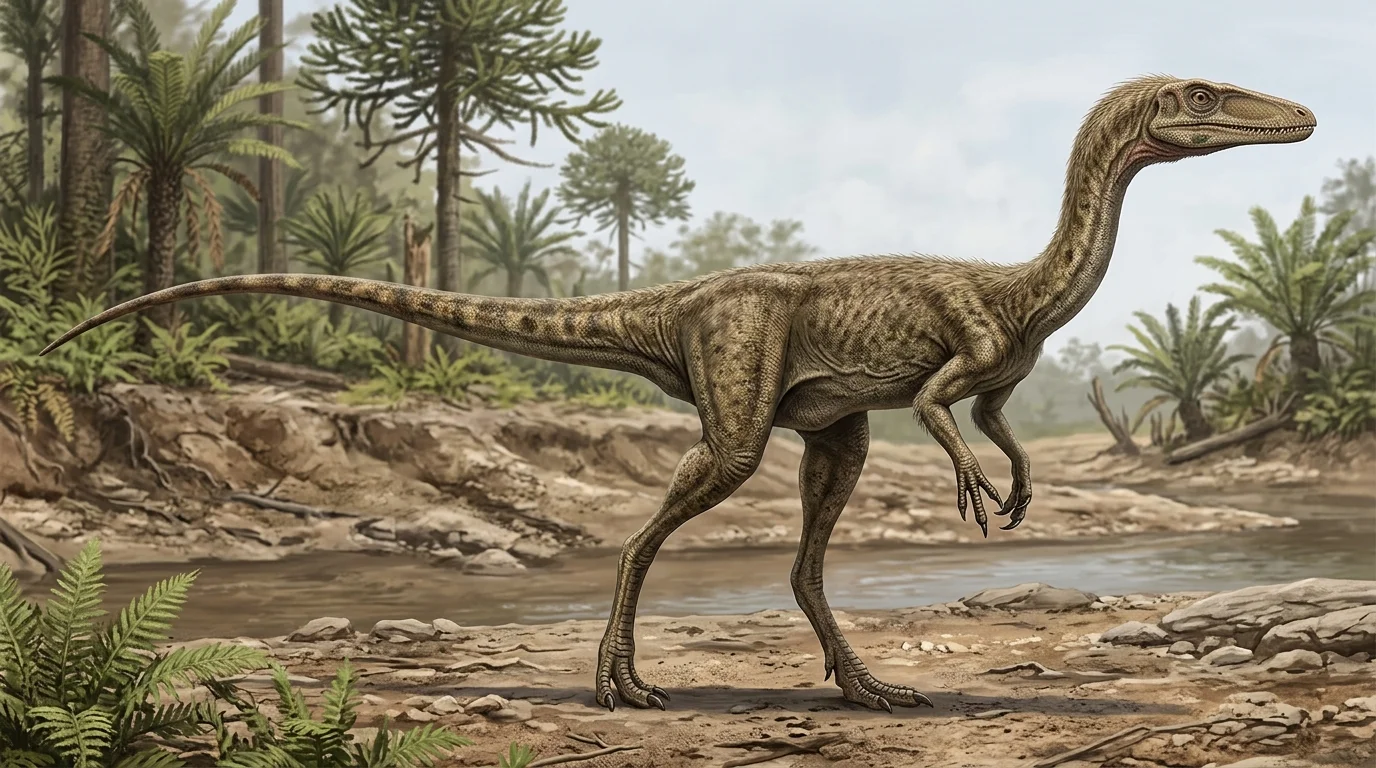
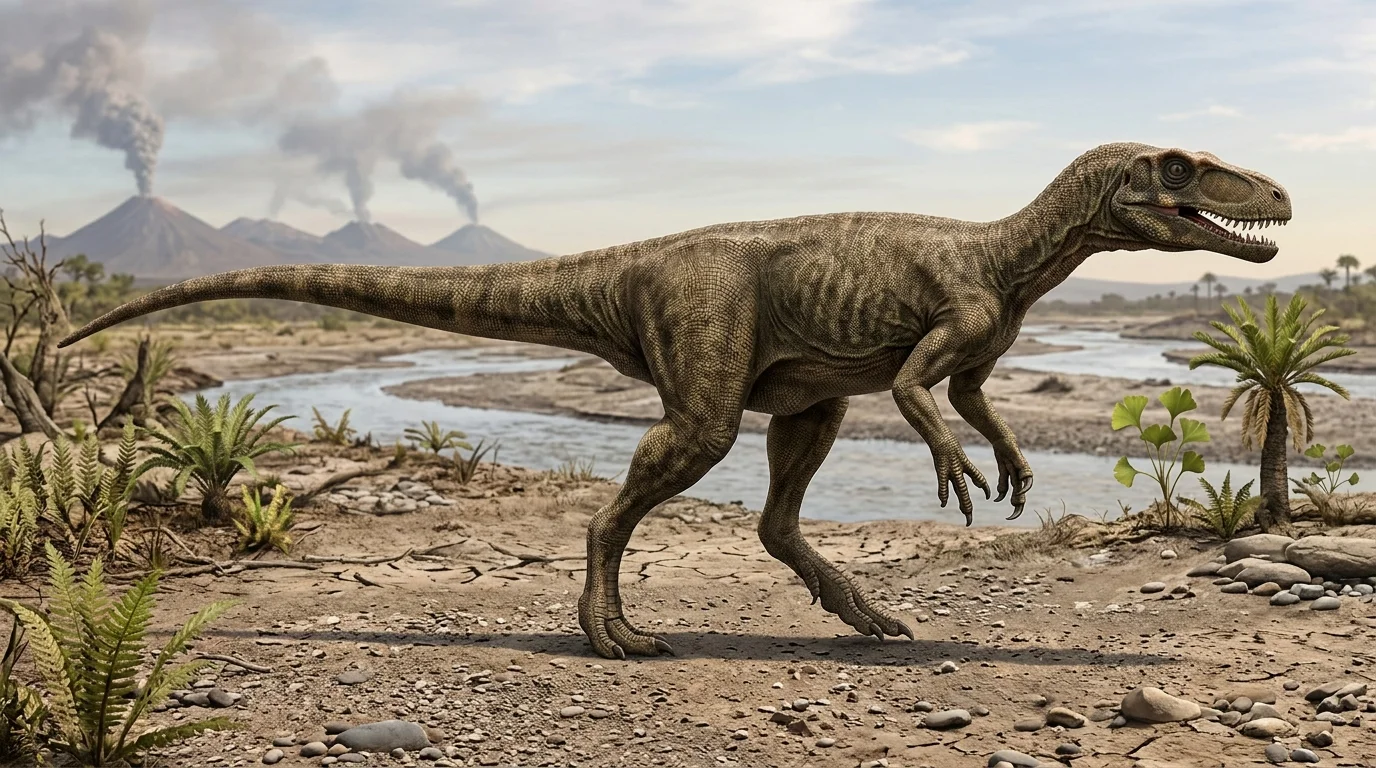
Scientific reconstruction of Liliensternus (Liliensternus liliensterni Huene, 1934) in its native Geological period: Triassic Period.
Image Credit: AI-generated scientific paleoart reconstruction synthesized from species-specific osteological profiles and peer-reviewed descriptions. (AI-Generated / Open Educational Media (DinoOrigin Spec))
Phylogenetic classification of Liliensternus liliensterni Huene, 1934 based on peer-reviewed cladistic analyses of diagnostic skeletal synapomorphies.
| Taxonomic Rank | Taxon / Clade | Diagnostic Context |
|---|---|---|
| Kingdom | Animalia | Monophyletic prehistoric clade |
| Phylum | Chordata | Monophyletic prehistoric clade |
| Clade | Dinosauria | Monophyletic prehistoric clade |
| Order | Saurischia (Lizard-Hipped Dinosaurs) | Characterized ancestrally by a triradiate pelvis with an anteriorly pointing pubis. |
| Suborder | Theropoda | Bipedal saurischian dinosaurs, historically dominated by carnivores and including the avian lineage. |
| Genus | Liliensternus | Monophyletic prehistoric clade |
| Species | Liliensternus liliensterni Huene, 1934 | Specific authority designation |
Liliensternus was one of the largest predatory dinosaurs of the Triassic Period, reaching over five meters in total length. Known from the Trossingen Formation of Germany, it occupied an intermediate predatory niche between smaller coelophysids and later Jurassic theropods.
Its long, slender hind limbs and hollow vertebrae made it an exceptionally swift hunter capable of chasing down contemporary prosauropods like Plateosaurus.
Elongated snout with blade-like teeth, slender neck, narrow torso, and four-fingered hands with sharp claws.
Anatomical dimensions relative to an average adult human (1.8 m / 6 ft tall)
Carnivorous; sliced flesh with recurved, laterally compressed serrated teeth.
Agile, slender-limbed predatory coelophysoid that hunted early herbivores in Late Triassic woodlands. Discovered in the Keuper beds of Germany, Liliensternus lived alongside abundant early sauropodomorph herbivores including Plateosaurus.
Lowland floodplains and semi-arid shrublands across the European archipelago.
Two partial subadult skeletons preserving skulls, vertebrae, and limb bones.
Excavated by amateur paleontologist Hugo Rühle von Lilienstern; described by Friedrich von Huene in 1934.
The dawn of the Mesozoic Era. Dinosaurs first emerged in the Late Triassic following the catastrophic Permian-Triassic extinction event, initially occupying modest niches alongside crurotarsan archosaurs.
During the Mesozoic Era, continental drift progressively reconfigured land bridges, atmospheric currents, and regional precipitation regimes. Fossils of Liliensternus evidence its adaptation to the paleoenvironments of Europe.
During the Mesozoic, Europe was largely an archipelago of islands, resulting in unique insular dwarf species and classic historical fossil discoveries.
The anatomical architecture of Liliensternus serves as a crucial benchmark in vertebrate paleontology, illustrating key adaptive radiations within Theropoda.
Scientifically verified answers based on peer-reviewed paleontological evidence.
Liliensternus lived during the Triassic Period Period, approximately 228–201.3 Ma (million years ago). This places it within the Mesozoic Era.
Paleontological estimates place Liliensternus at a length of 4.5–5.5 m (14.8–18.0 ft), a hip/standing height of 1.5–1.8 m (4.9–5.9 ft), and a body mass of 120–200 kg (265–441 lbs).
Classified as a carnivore, Liliensternus specialized in consuming Carnivorous; sliced flesh with recurved, laterally compressed serrated teeth..
Fossil specimens of Liliensternus have been recovered from Thuringia, Germany, with notable historic specimens documented in 1932. Excavated by amateur paleontologist Hugo Rühle von Lilienstern; described by Friedrich von Huene in 1934.
Authoritative citations establishing the factual taxonomy, biometrics, and anatomy of Liliensternus.
von Huene, F. (1934). Ein neuer Coelurosaurier in der thüringischen Trias. Paläontologische Zeitschrift, 16(3-4), 145-170. https://doi.org/10.1007/BF03044503
Curated & Verified: 2026-09-24Deposited in Mesozoic sedimentary strata preserving skeletal remains, teeth, or trace trackways.
Liliensternus provides critical insights into the evolutionary radiation of Theropoda. Holotypes and fossil evidence indicate: Two partial subadult skeletons preserving skulls, vertebrae, and limb bones.
TheropodaChindesaurus bryansmalli Long & Murry, 1995
A basal carnivorous dinosaur from the Chinle Formation of the Petrified Forest National Park.
TheropodaCoelophysis bauri Cope, 1887
A slender, agile early theropod from the Late Triassic, known from hundreds of well-preserved skeletons at Ghost Ranch, New Mexico.
TheropodaHerrerasaurus ischigualastensis Reig, 1963
An early predatory dinosaur from the Late Triassic Ischigualasto Formation of Argentina whose precise phylogenetic position near the root of Saurischia remains debated.