Ankylosaurus magniventris Brown, 1908
The definitive armored dinosaur of the Late Cretaceous, encased in bony osteoderms and armed with an osseous tail club.

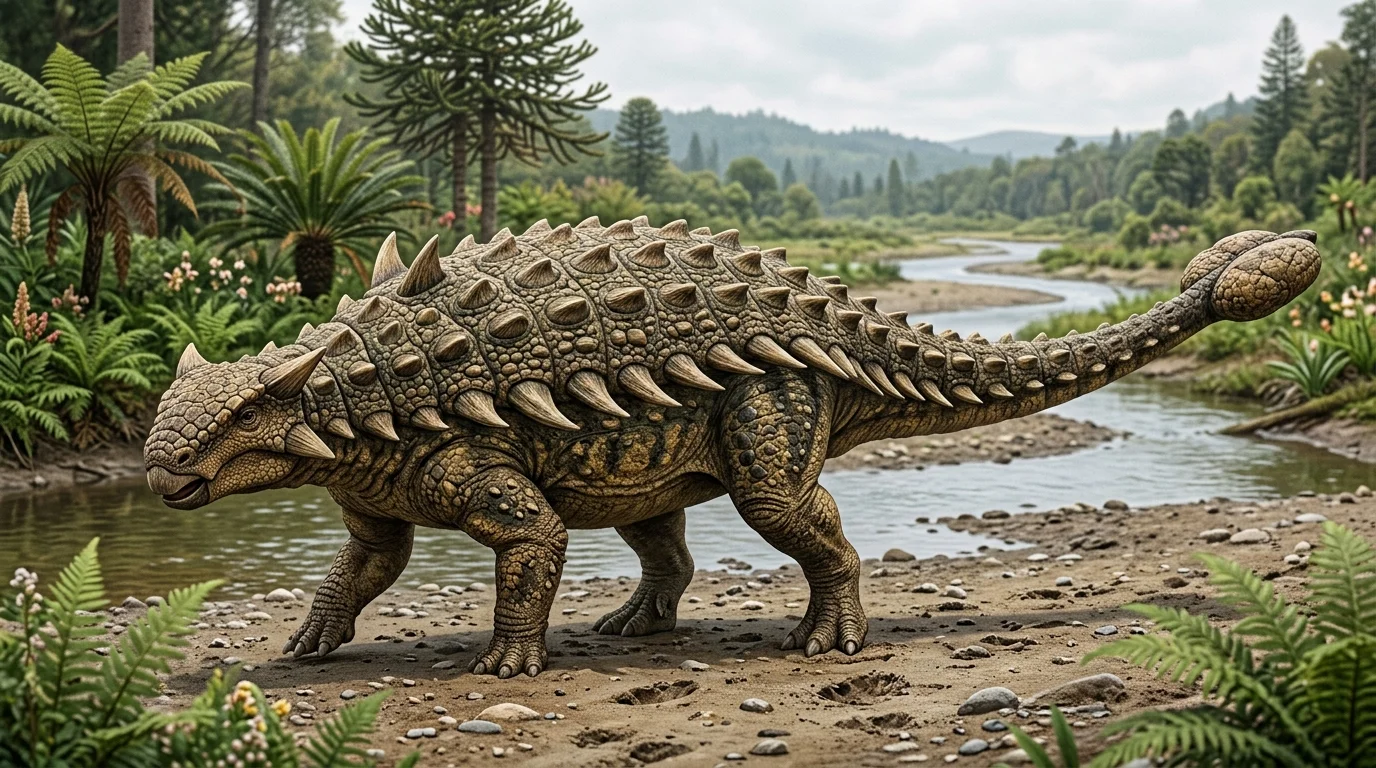
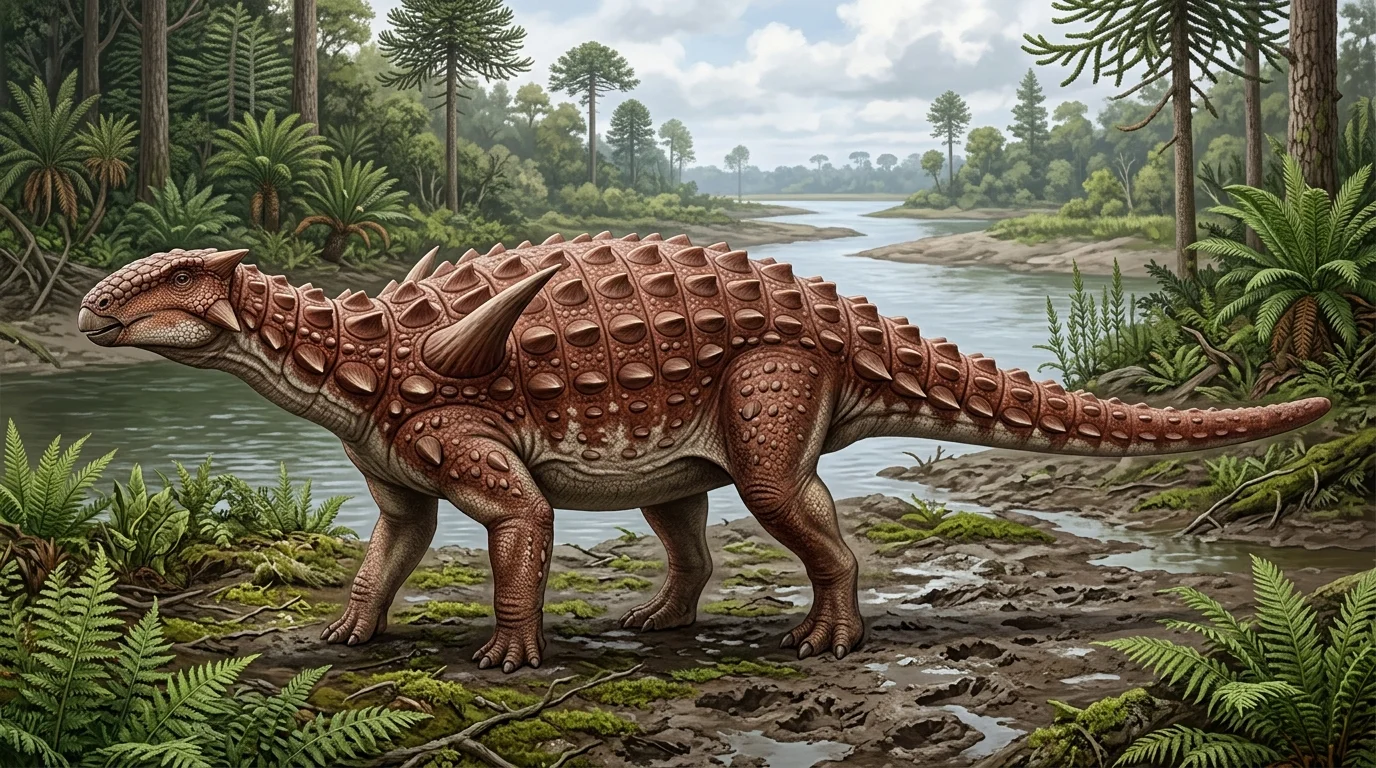
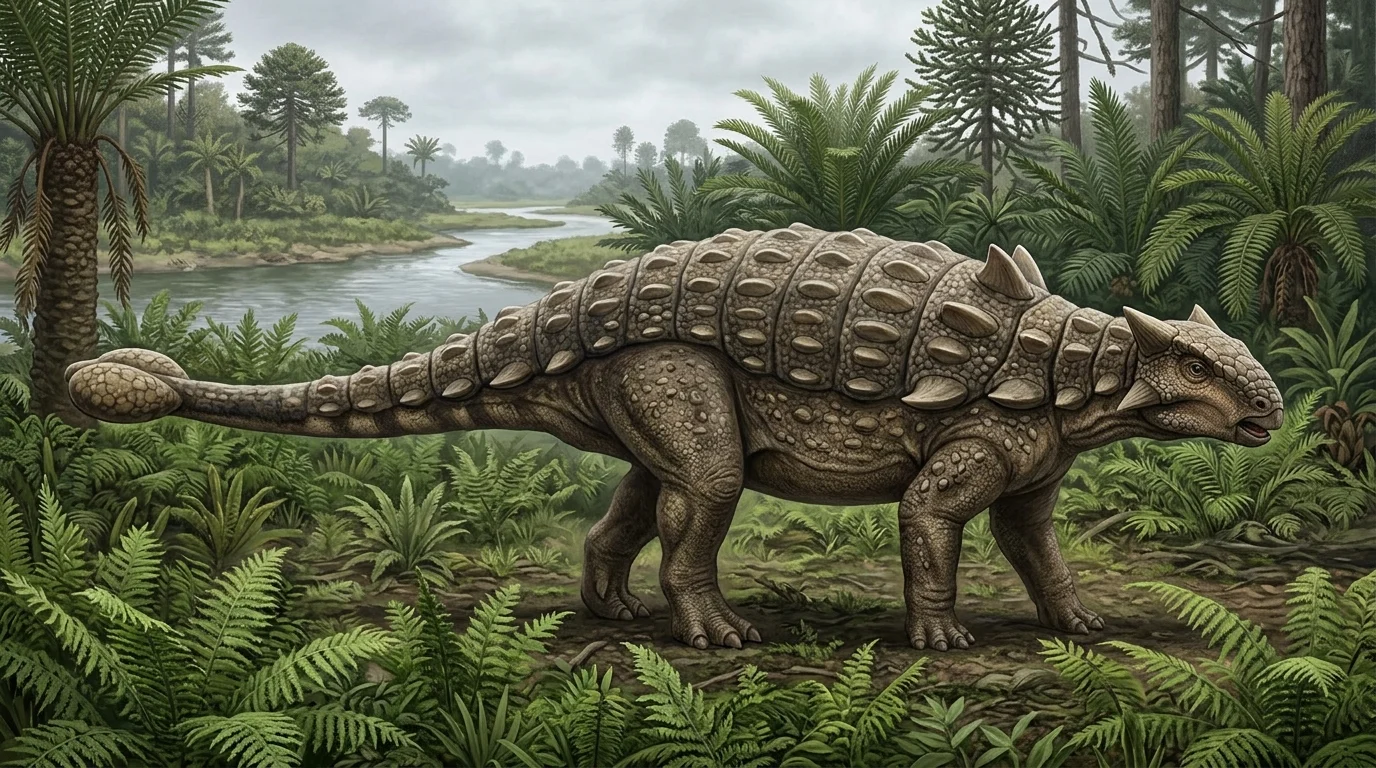
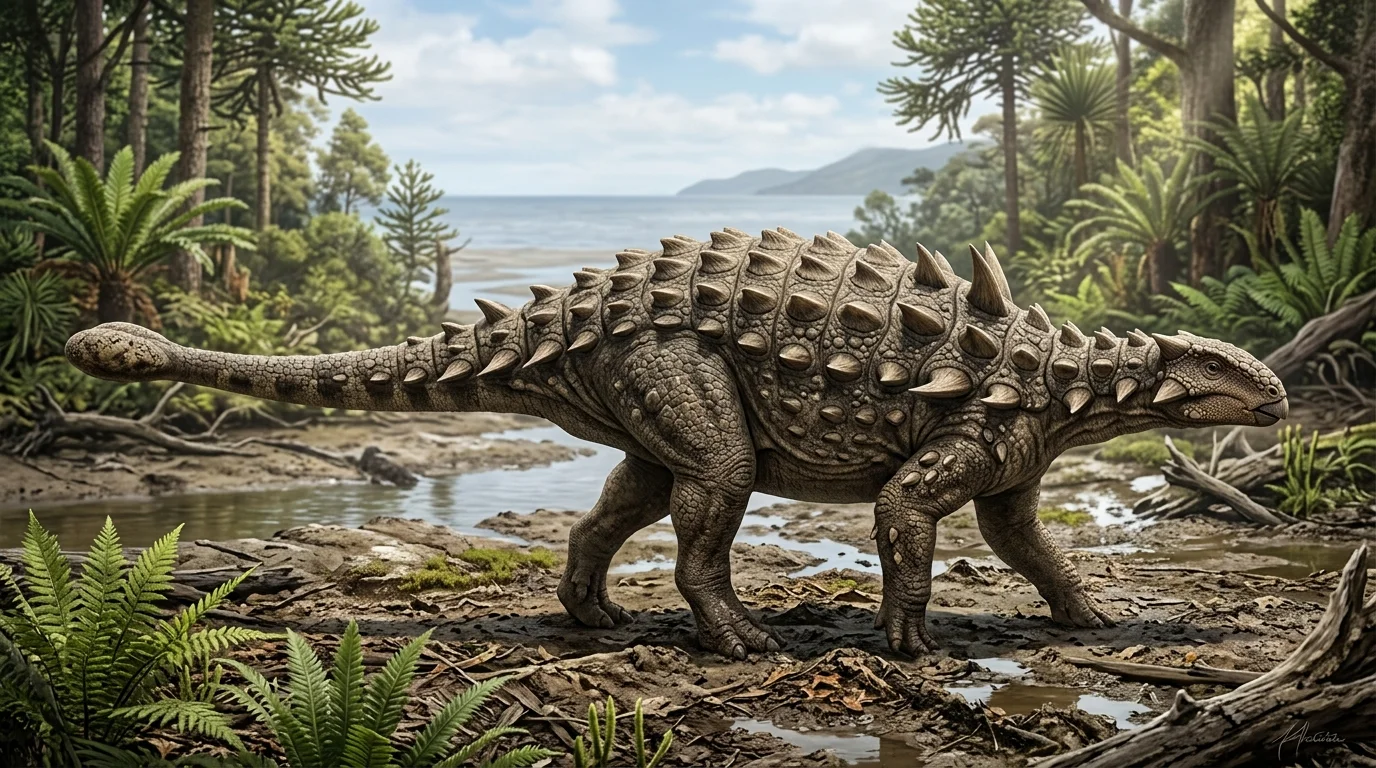
Scientific reconstruction of Ankylosaurus (Ankylosaurus magniventris Brown, 1908) in its native Geological period: Cretaceous Period.
Image Credit: AI-generated scientific paleoart reconstruction synthesized from species-specific osteological profiles and peer-reviewed descriptions. (AI-Generated / Open Educational Media (DinoOrigin Spec))
Phylogenetic classification of Ankylosaurus magniventris Brown, 1908 based on peer-reviewed cladistic analyses of diagnostic skeletal synapomorphies.
| Taxonomic Rank | Taxon / Clade | Diagnostic Context |
|---|---|---|
| Kingdom | Animalia | Monophyletic prehistoric clade |
| Phylum | Chordata | Monophyletic prehistoric clade |
| Clade | Dinosauria | Monophyletic prehistoric clade |
| Order | Ornithischia (Bird-Hipped Dinosaurs) | Characterized by a pelvis with a backwards-pointing pubis parallel to the ischium. |
| Infraorder | Ankylosauria | Heavily armored quadrupedal ornithischians protected by osteoderms and tail clubs. |
| Genus | Ankylosaurus | Monophyletic prehistoric clade |
| Species | Ankylosaurus magniventris Brown, 1908 | Specific authority designation |
Ankylosaurus magniventris was the largest known member of Ankylosauria (armored dinosaurs), living in western North America during the late Cretaceous Period (~68 to 66 million years ago). Reaching estimated lengths of 7.5 to 8 meters and body masses between 4,500 and 6,000 kg, Ankylosaurus possessed a low, barrel-shaped body shielded by oval osteoderms, keeled dermal plates, and fused cranial armor that even covered its eyelids.
Locomotion and Biomechanics: Ankylosaurus moved in a low-slung, graviportal quadrupedal stance with robust limb bones and widespread digits. Biomechanical models and trackway comparisons indicate slow, stable walking speeds estimated between 5 and 8 km/h, with body mass and heavy armor plating preventing agile cursorial locomotion.
Scientific Significance: Ankylosaurus exemplifies the peak of defensive morphological specialization in ornithischian evolution. Cranial and postcranial re-evaluations (Arbour & Mallon, 2017) revealed complex, looping nasal passages thought to function in thermoregulation and vocal resonation, as well as an exceptionally modified distal tail vertebra sheath that formed a massive bony tail club.
Extremely wide, barrel-shaped body with thick dorsal osteoderm armor, cranial hornlets, and a massive distal tail club.
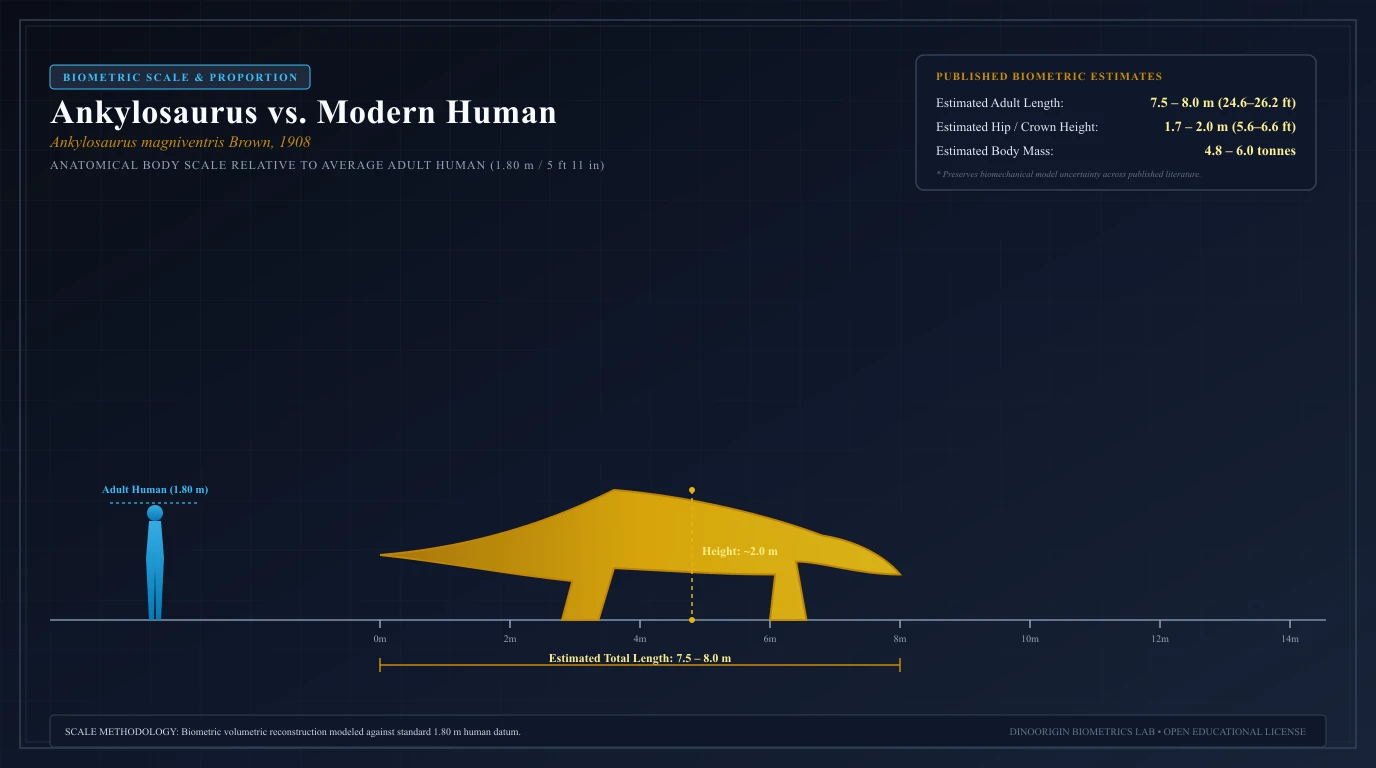
Anatomical dimensions relative to an average adult human (1.8 m / 6 ft tall)
Non-selective herbivore feeding on low shrubs, ferns, fibrous roots, and fallen fruit, processed by small phylliform teeth.
Ankylosaurus was a specialized low-level browser, using its broad keratinous beak and small, fluted teeth to ingest non-selective ground vegetation, fruits, and fibrous shrubs. Finite element biomechanical analysis demonstrates that its rigid tail club could deliver impact forces exceeding 14,000 Newtons—easily sufficient to shatter the metatarsals or tibiae of contemporary macropredators such as Tyrannosaurus rex. Fossil distribution suggests solitary or dispersed foraging rather than dense herd aggregations.
Coastal lowlands, moist subtropical woodlands, and alluvial floodplains of the Western Interior Seaway.
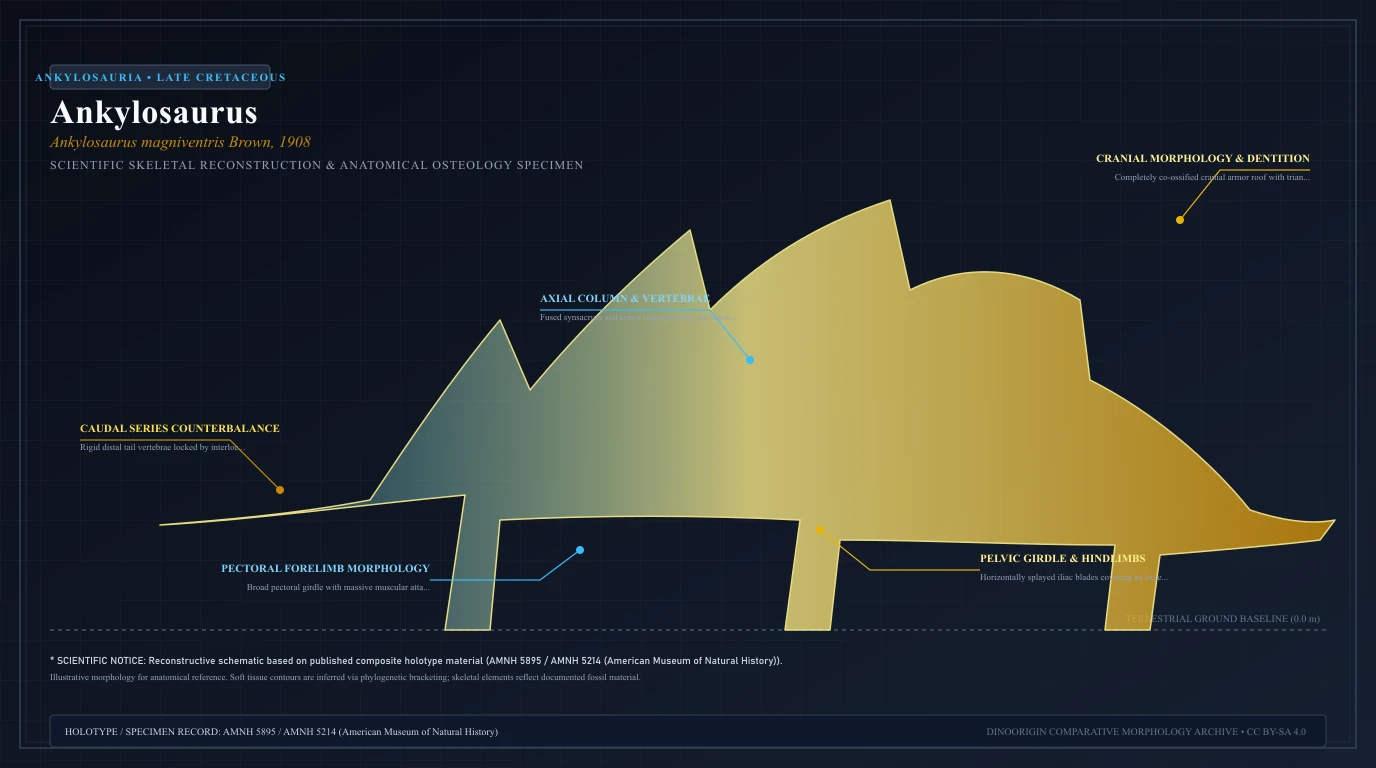
Fossils of Ankylosaurus magniventris are relatively scarce compared to contemporary ceratopsians and hadrosaurs. The species is known from Barnum Brown's 1906 holotype (AMNH 5895) from the Hell Creek Formation of Montana, which includes cranial fragments, vertebrae, and dermal armor, alongside referred partial skulls (AMNH 5214) and isolated tail clubs.

Anatomical skeletal reconstruction of Ankylosaurus (Ankylosaurus magniventris Brown, 1908) illustrating cranial fenestrae, vertebral column, and appendicular proportions based on composite fossil material.
Discovered by Barnum Brown; named Ankylosaurus magniventris ('fused lizard with great belly') in 1908.
The longest and final period of the Mesozoic Era, characterized by the rise of flowering plants, ceratopsians, hadrosaurs, tyrannosaurids, and concluding with the Chicxulub asteroid impact.
During the Mesozoic Era, continental drift progressively reconfigured land bridges, atmospheric currents, and regional precipitation regimes. Fossils of Ankylosaurus evidence its adaptation to the paleoenvironments of North America.
Home to the fossil-rich Morrison Formation of the Late Jurassic and the Hell Creek and Dinosaur Park Formations of the Late Cretaceous.
The anatomical architecture of Ankylosaurus serves as a crucial benchmark in vertebrate paleontology, illustrating key adaptive radiations within Ankylosauria.
Scientifically verified answers based on peer-reviewed paleontological evidence.
Ankylosaurus lived during the Cretaceous Period Period, approximately 68–66 Ma (million years ago). This places it within the Mesozoic Era.
Paleontological estimates place Ankylosaurus at a length of 7.5–8 m (24.6–26.2 ft), a hip/standing height of 1.7–2 m (5.6–6.6 ft), and a body mass of 4.8–6.0 metric tons (10,582–13,228 lbs).
Classified as a herbivore, Ankylosaurus specialized in consuming Non-selective herbivore feeding on low shrubs, ferns, fibrous roots, and fallen fruit, processed by small phylliform teeth..
Fossil specimens of Ankylosaurus have been recovered from Hell Creek Formation, Montana, United States, with notable historic specimens documented in 1906. Discovered by Barnum Brown; named Ankylosaurus magniventris ('fused lizard with great belly') in 1908.
Authoritative citations establishing the factual taxonomy, biometrics, and anatomy of Ankylosaurus.
Arbour, V. M., & Mallon, J. C. (2017). Unusual cranial and postcranial anatomy in the archetypal ankylosaur Ankylosaurus magniventris. FACETS, 2(2), 764-794. https://doi.org/10.1139/facets-2017-0063
Curated & Verified: 2026-09-24
Comparative size scale of Ankylosaurus relative to a 1.8-meter adult human, illustrating an estimated length of 7.5–8.0 m and height of 1.7–2.0 m (preserving model uncertainty).
Deposited in Mesozoic sedimentary strata preserving skeletal remains, teeth, or trace trackways.
Ankylosaurus provides critical insights into the evolutionary radiation of Ankylosauria. Holotypes and fossil evidence indicate: Fossils of Ankylosaurus magniventris are relatively scarce compared to contemporary ceratopsians and hadrosaurs. The species is known from Barnum Brown's 1906 holotype (AMNH 5895) from the Hell Creek Formation of Montana, which includes cranial fragments, vertebrae, and dermal armor, alongside referred partial skulls (AMNH 5214) and isolated tail clubs.
Brown, B. (1908). The Ankylosauridae, a new family of armored dinosaurs from the Upper Cretaceous. Bulletin of the American Museum of Natural History, 24(12), 187-201.
AnkylosauriaBorealopelta markmitchelli Brown et al., 2017
The world's best-preserved dinosaur fossil, a 110-million-year-old nodosaur with intact skin, armor, and stomach contents.
AnkylosauriaEuoplocephalus tutus Lambe, 1910
A heavily armored, tank-like ankylosaurid with armored eyelids and a massive bone-crushing tail club.
AnkylosauriaMinmi paravertebra Molnar, 1980
A small, agile Australian ankylosaur featuring unique horizontal 'paravertebra' bone plates along its spine.