Argentinosaurus huinculensis Bonaparte & Coria, 1993
Among the largest and most massive terrestrial animals known to science, with scaled estimates reaching 65 to 80 metric tons based on fragmentary titanosaur remains.

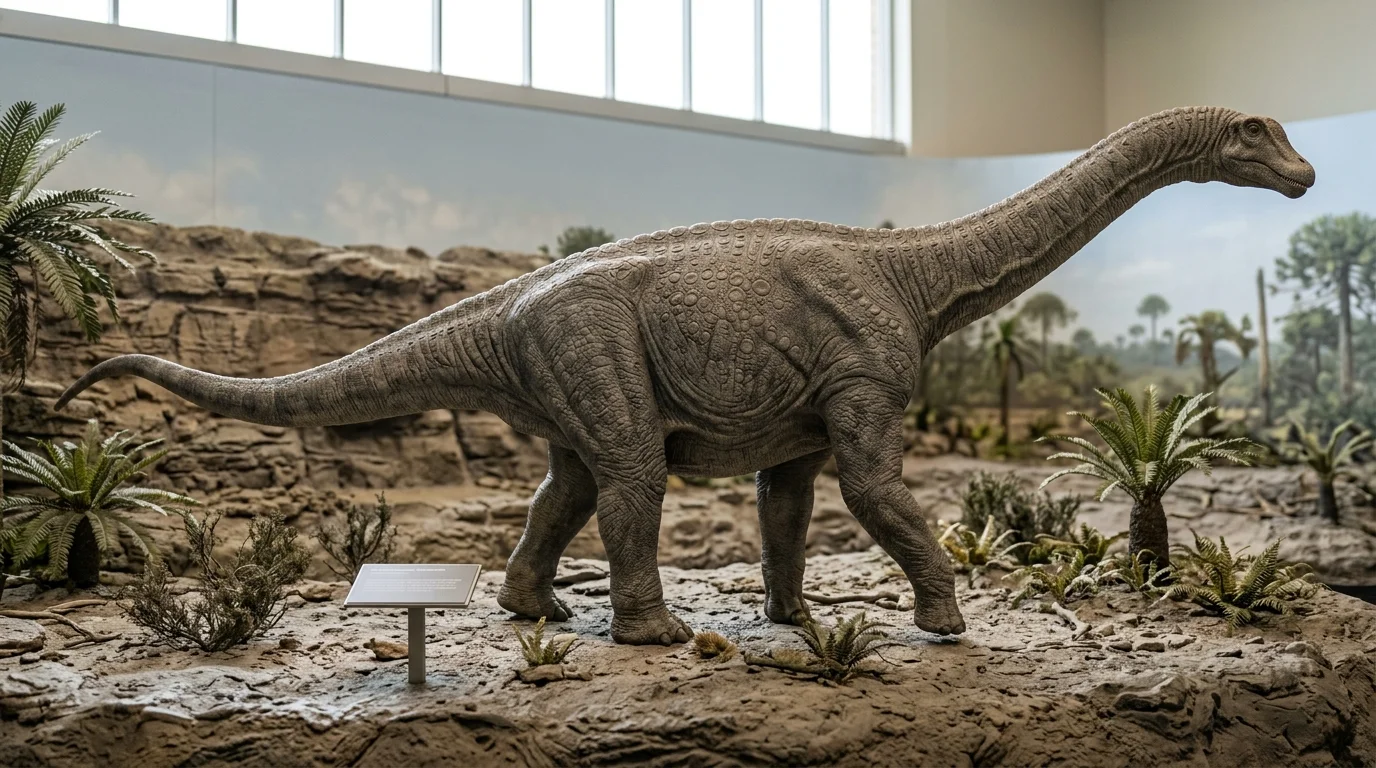
Scientific reconstruction of Argentinosaurus (Argentinosaurus huinculensis Bonaparte & Coria, 1993) in its native Geological period: Cretaceous Period.
Image Credit: AI-generated scientific paleoart reconstruction synthesized from species-specific osteological profiles and peer-reviewed descriptions. (AI-Generated / Open Educational Media (DinoOrigin Spec))
Phylogenetic classification of Argentinosaurus huinculensis Bonaparte & Coria, 1993 based on peer-reviewed cladistic analyses of diagnostic skeletal synapomorphies.
| Taxonomic Rank | Taxon / Clade | Diagnostic Context |
|---|---|---|
| Kingdom | Animalia | Monophyletic prehistoric clade |
| Phylum | Chordata | Monophyletic prehistoric clade |
| Clade | Dinosauria | Monophyletic prehistoric clade |
| Order | Saurischia (Lizard-Hipped Dinosaurs) | Characterized ancestrally by a triradiate pelvis with an anteriorly pointing pubis. |
| Suborder | Sauropodomorpha | Herbivorous saurischians characterized by elongated necks, columnar limbs, and enormous body volumes. |
| Genus | Argentinosaurus | Monophyletic prehistoric clade |
| Species | Argentinosaurus huinculensis Bonaparte & Coria, 1993 | Specific authority designation |
Scientific Size Synthesis: Argentinosaurus huinculensis was a colossal titanosaur sauropod from the Late Cretaceous Huincul Formation of Argentina (~96–92 Ma). Rather than relying on a single complete skeleton, modern paleontologists understand its immense proportions by clearly distinguishing between empirical fossil evidence and comparative models:
Holotype PVPH-1 preserves isolated, monumental elements: a dorsal vertebra standing 1.59 meters (5.2 feet) tall, sacral vertebrae, rib fragments, and an incomplete femur shaft (~1.18 m preserved, reconstructed at ~2.5 m).
Length estimates of 30 to 35 meters (98 to 115 feet) are derived through comparative allometric scaling from more completely preserved titanosaurian relatives like Patagotitan mayorum and Dreadnoughtus schrani.
Comparative allometric scaling equations and volumetric models broadly estimate adult mass between 65 and 80 metric tons (65,000–80,000 kg). Biomechanical simulations by Sellers et al. (2013) tested a digital model at this colossal scale (~83 metric tons), demonstrating that forward walking gaits (~12–16 km/h) were mechanically viable using graviportal columnar limbs.
Argentinosaurus is known exclusively from fragmentary material. In high-energy Late Cretaceous river systems, colossal carcasses were routinely disarticulated by water currents and scavenged by giant carcharodontosaurids like Mapusaurus. Because no complete articulated skeleton exists, scientific publications present size ranges rather than absolute definitive measurements.
Argentinosaurus huinculensis was a colossal titanosaur sauropod from the Late Cretaceous Huincul Formation of Argentina. Preserved through gigantic fossil elements—including a single dorsal vertebra standing 1.59 meters tall, a sacrum, ribs, and an incomplete femur—Argentinosaurus pushed the limits of terrestrial vertebrate size.
Because no complete skeleton has been recovered, total length ranges (30–35 meters) and mass estimates (65–80 metric tons) are model-dependent values derived through comparative allometric scaling from more complete titanosaurian relatives like Patagotitan and Dreadnoughtus. Biomechanical models indicate such immense proportions required columnar limbs, reinforced vertebral articulations, and specialized cardiovascular dynamics.
Colossal quadruped with immense pillar-like legs, a broad barrel torso, an elongated thick neck, and a heavy tapering tail.
Anatomical dimensions relative to an average adult human (1.8 m / 6 ft tall)
Conifers, ferns, and high canopy vegetation swallowed whole and pulverized in a massive gizzard and fermentation gut.
Immense keystone herbivore traveling in loose herds, consuming immense forest biomass with virtually no adult natural predators. In the Huincul Formation, bonebed taphonomy indicates its carcasses were scavenged or hunted by carcharodontosaurid theropods like Mapusaurus, while representing an extreme size class ecologically comparable to later titanosaurs Patagotitan and Dreadnoughtus.
Alluvial river floodplains and dense conifer-angiosperm woodland ecosystems of central Patagonia.
Known from fragmentary holotype remains (PVPH-1) including dorsal vertebrae, sacrum, ribs, and a partial femur, from which complete skeletal dimensions are comparatively scaled.
Found by rancher Guillermo Heredia; excavated by Jose Bonaparte and described by Bonaparte and Coria in 1993.
The longest and final period of the Mesozoic Era, characterized by the rise of flowering plants, ceratopsians, hadrosaurs, tyrannosaurids, and concluding with the Chicxulub asteroid impact.
During the Mesozoic Era, continental drift progressively reconfigured land bridges, atmospheric currents, and regional precipitation regimes. Fossils of Argentinosaurus evidence its adaptation to the paleoenvironments of South America.
Preserved within the Huincul, Candeleros, and Ischigualasto formations, hosting colossal titanosaurs and specialized abelisaurid and carcharodontosaurid apex predators.
The anatomical architecture of Argentinosaurus serves as a crucial benchmark in vertebrate paleontology, illustrating key adaptive radiations within Sauropodomorpha.
Scientifically verified answers based on peer-reviewed paleontological evidence.
Argentinosaurus huinculensis is estimated to have measured between 30 and 35 meters (98 to 115 feet) in total length, with a standing hip height of 4.5 to 5 meters and an estimated body mass of 65 to 80 metric tons (65,000 to 80,000 kg). Because no complete skeleton has been recovered, these numbers are model-dependent estimates derived from comparative allometric scaling with more complete titanosaurs like Patagotitan and Dreadnoughtus.
Argentinosaurus is known from fragmentary holotype material (PVPH-1) discovered in 1987 in the Huincul Formation of Argentina by Guillermo Heredia and excavated by José Bonaparte and Rodolfo Coria. The material includes isolated giant dorsal vertebrae standing up to 1.59 meters (5.2 feet) tall, sacral vertebrae, rib fragments, and an incomplete femur shaft (~1.18 m preserved, reconstructed at ~2.5 m).
Argentinosaurus is widely considered by paleontologists to be among the largest and heaviest terrestrial animals known to science. While rival titanosaurs such as Patagotitan mayorum and Puertasaurus reuili reached comparable lengths and masses, Argentinosaurus consistently ranks at the upper apex of vertebrate body mass reconstructions.
Authoritative citations establishing the factual taxonomy, biometrics, and anatomy of Argentinosaurus.
Bonaparte, J. F., & Coria, R. A. (1993). Un nuevo y gigantesco sauropodo titanosaurio de la Formacion Rio Limay (Albiano-Cenomaniano) de la Provincia del Neuquen, Argentina. Ameghiniana, 30(3), 271-282.
Curated & Verified: 2026-09-24Deposited in Mesozoic sedimentary strata preserving skeletal remains, teeth, or trace trackways.
Comparative allometric scaling equations and volumetric body reconstructions estimate the adult body mass of Argentinosaurus between 65 and 80 metric tons (143,000 to 176,000 lbs). Biomechanical simulations by Sellers et al. (2013) evaluated a digital model at this colossal scale (~83 metric tons) and confirmed that walking locomotion was mechanically viable, supported by graviportal columnar limbs and a pacing gait estimated at 12–16 km/h.
Argentinosaurus was approximately 30–50% longer (30–35 m vs. 22–26 m) and roughly double the body mass (65–80 tons vs. 28–40 tons) of Brachiosaurus. In terms of height, they cannot be compared by a single number: Brachiosaurus had elongated forelimbs creating a taller shoulder height (~5.5–6.2 m) and an upright neck, whereas Argentinosaurus was a broad-gauge titanosaur with a hip height of ~4.5–5 m whose neck posture and total head reach remain model-dependent. They lived in different eras, separated by ~55 million years.
Sellers, W. I., Margetts, L., Coria, R. A., & Manning, P. L. (2013). March of the Titans: The locomotor capabilities of sauropod dinosaurs. PLoS ONE, 8(10), e78733. https://doi.org/10.1371/journal.pone.0078733
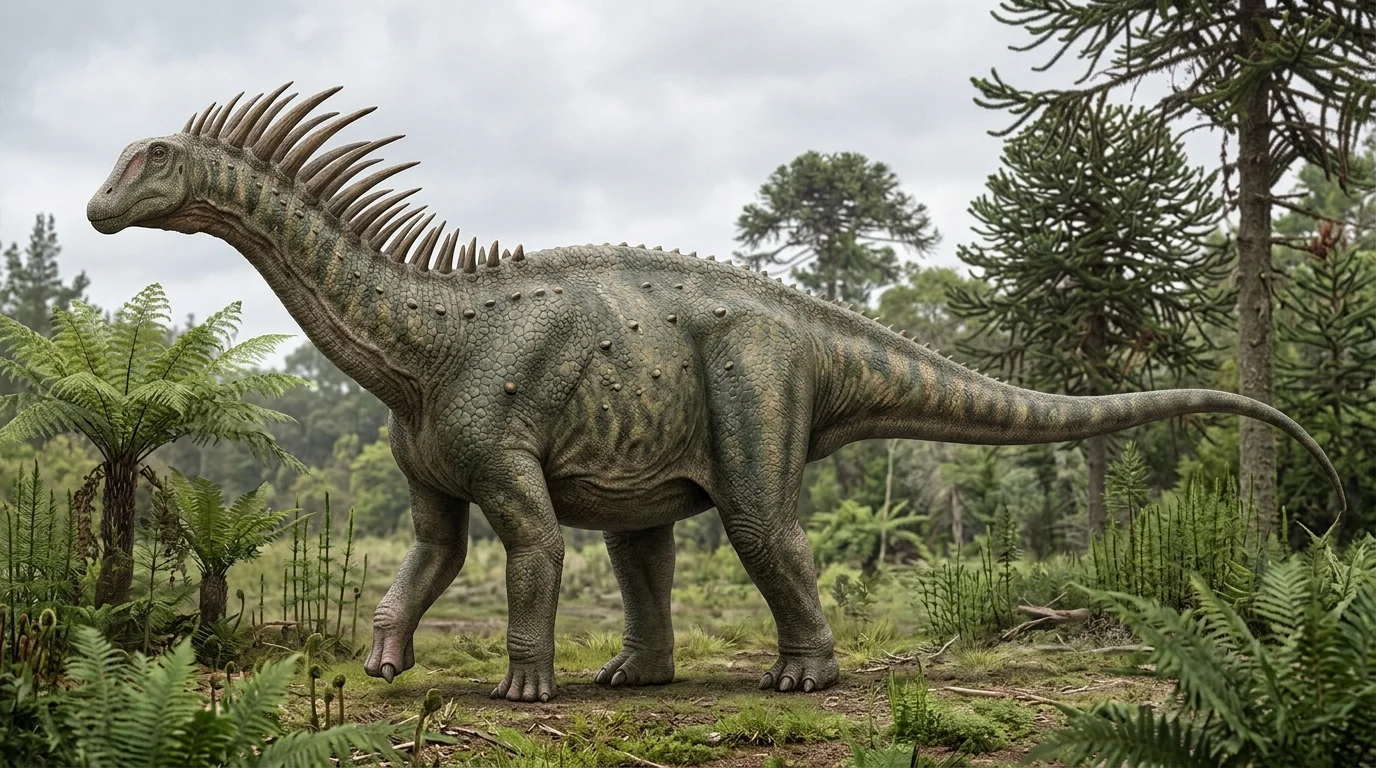
SauropodomorphaAmargasaurus cazaui Salgado & Bonaparte, 1991
A striking, double-sailed dicraeosaurid sauropod from Argentina sporting parallel rows of tall neck spines.
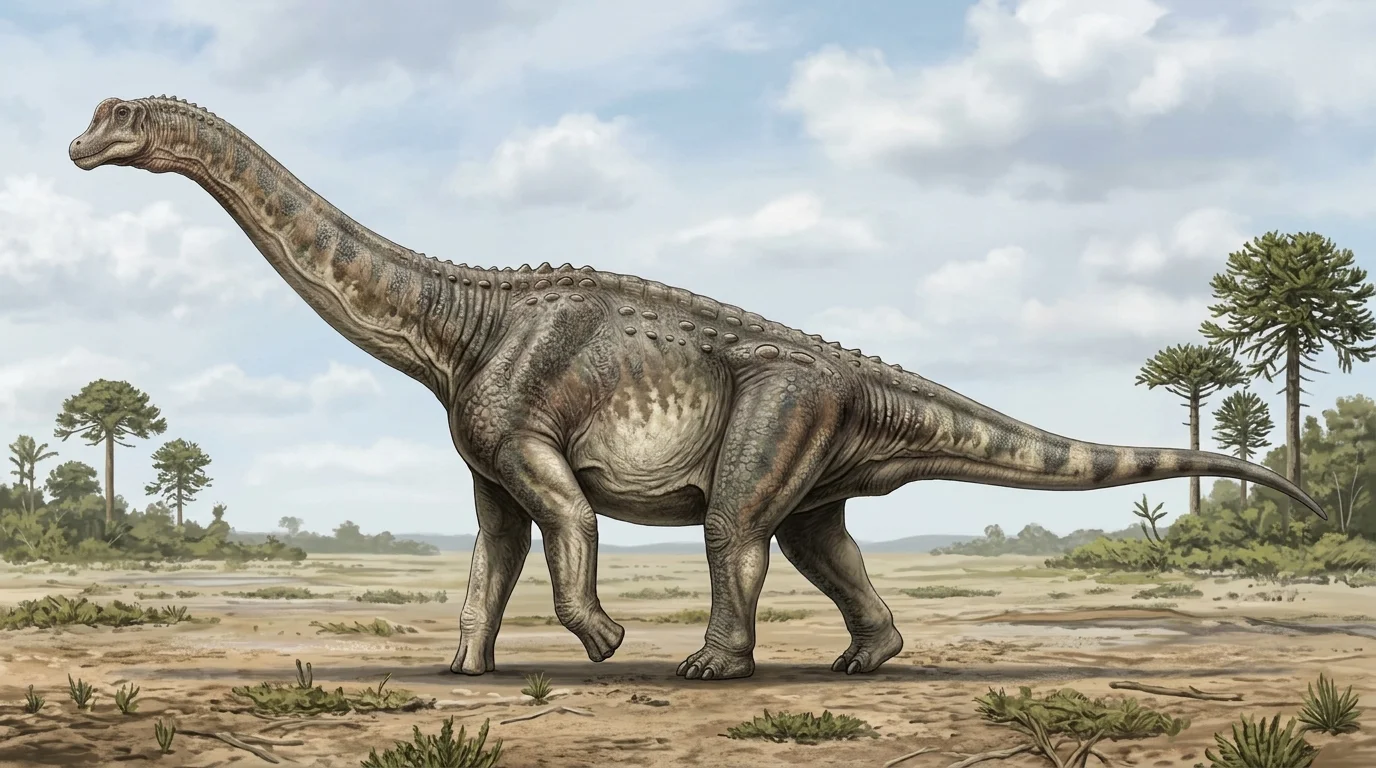
SauropodomorphaDreadnoughtus schrani Lacovara et al., 2014
The 'fearing nothing' super-titanosaur from Argentina, with the most complete skeleton of any giant titanosaur.
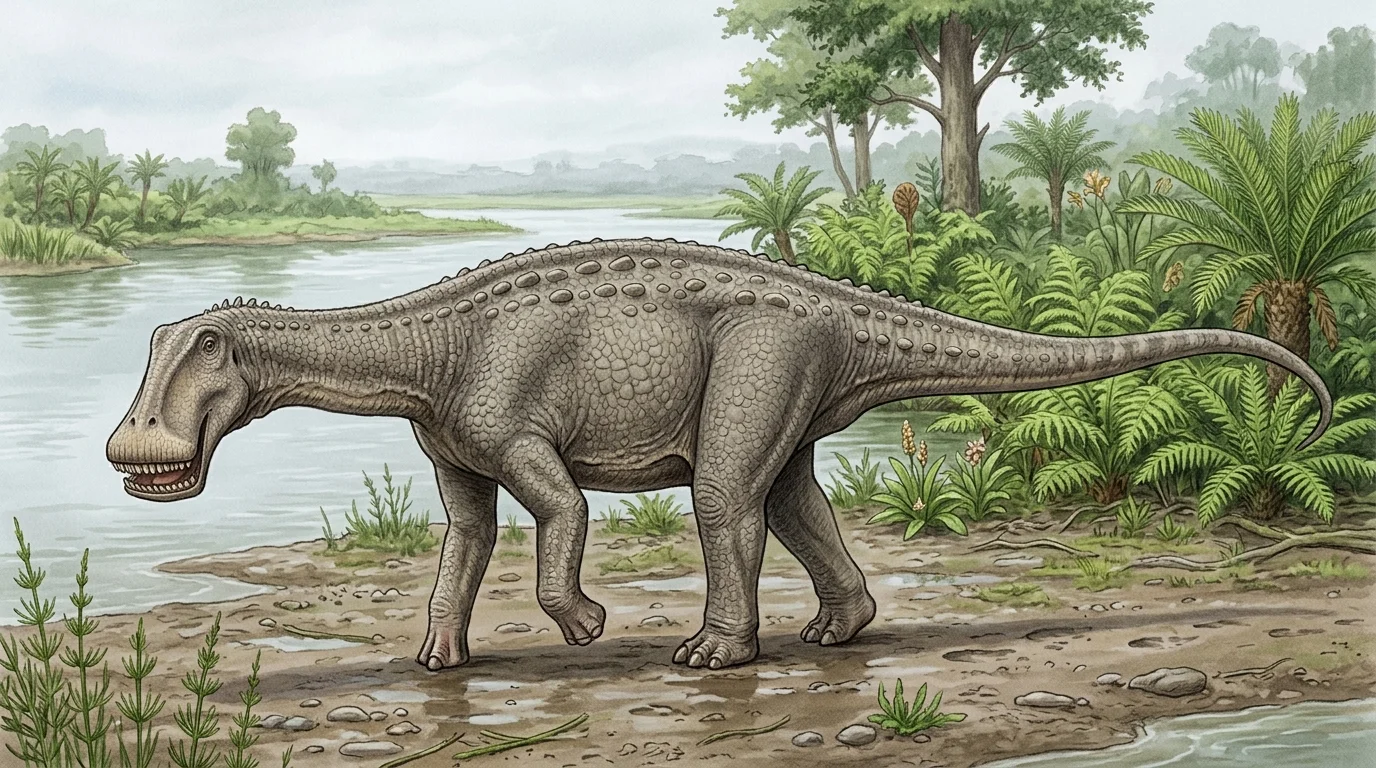
SauropodomorphaNigersaurus taqueti Sereno et al., 1999
The 'Mesozoic lawnmower', a specialized sauropod with a wide, straight-edged mouth and 500 replaceable teeth.