Patagotitan mayorum Carballido et al., 2017
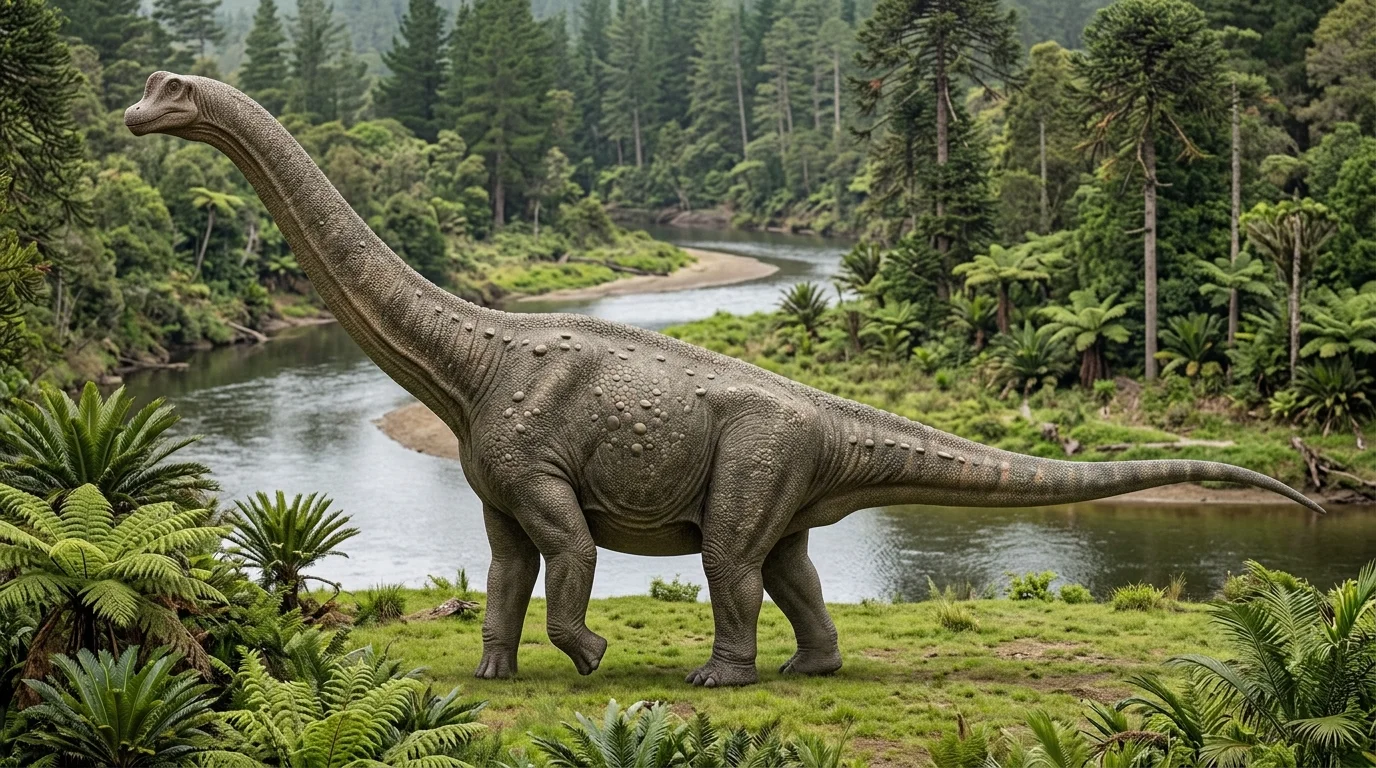
One of the most colossal land animals ever discovered, reaching 37 meters in length and weighing over 55 metric tons.

Scientific reconstruction of Patagotitan (Patagotitan mayorum Carballido et al., 2017) in its native Geological period: Cretaceous Period.
Image Credit: AI-generated scientific paleoart reconstruction synthesized from species-specific osteological profiles and peer-reviewed descriptions. (AI-Generated / Open Educational Media (DinoOrigin Spec))
Phylogenetic classification of Patagotitan mayorum Carballido et al., 2017 based on peer-reviewed cladistic analyses of diagnostic skeletal synapomorphies.
| Taxonomic Rank | Taxon / Clade | Diagnostic Context |
|---|---|---|
| Kingdom | Animalia | Monophyletic prehistoric clade |
| Phylum | Chordata | Monophyletic prehistoric clade |
| Clade | Dinosauria | Monophyletic prehistoric clade |
| Order | Saurischia (Lizard-Hipped Dinosaurs) | Characterized ancestrally by a triradiate pelvis with an anteriorly pointing pubis. |
| Suborder | Sauropodomorpha | Herbivorous saurischians characterized by elongated necks, columnar limbs, and enormous body volumes. |
| Genus | Patagotitan | Monophyletic prehistoric clade |
| Species | Patagotitan mayorum Carballido et al., 2017 | Specific authority designation |
Patagotitan mayorum was a stupendous titanosaur sauropod discovered in Chubut Province, Argentina in 2012. Measuring approximately 37 meters (121 feet) in total length and weighing roughly 57 metric tons, it represents one of the largest terrestrial animals in Earth's history.
Excavations yielded at least six young adult skeletons from a single quarry, showing that these gentle giants inhabited coastal floodplain forests and traveled together in cohorts.
Unimaginably massive sauropod with a 2.4-meter femur, column-like legs, broad chest, and colossal neck and tail.
Anatomical dimensions relative to an average adult human (1.8 m / 6 ft tall)
Gymnosperms, tree ferns, and early flowering plants stripped in vast quantities with cylindrical teeth.
Colossal titanosaur sauropod ranking among the largest terrestrial animals to ever walk the Earth. Discovered in the Cerro Barcino Formation of Argentina, Patagotitan is ecologically and anatomically comparable to other giant South American titanosaurs such as Argentinosaurus and Dreadnoughtus.
Lush tropical floodplains, meander river belts, and forested basins of western Gondwana.
Over 150 well-preserved bones representing six individuals, including a giant 2.4-meter femur.
Discovered by farm worker Aurelio Hernández; excavated by José Luis Carballido and Diego Pol.
The longest and final period of the Mesozoic Era, characterized by the rise of flowering plants, ceratopsians, hadrosaurs, tyrannosaurids, and concluding with the Chicxulub asteroid impact.
During the Mesozoic Era, continental drift progressively reconfigured land bridges, atmospheric currents, and regional precipitation regimes. Fossils of Patagotitan evidence its adaptation to the paleoenvironments of South America.
Preserved within the Huincul, Candeleros, and Ischigualasto formations, hosting colossal titanosaurs and specialized abelisaurid and carcharodontosaurid apex predators.
The anatomical architecture of Patagotitan serves as a crucial benchmark in vertebrate paleontology, illustrating key adaptive radiations within Sauropodomorpha.
Scientifically verified answers based on peer-reviewed paleontological evidence.
Patagotitan lived during the Cretaceous Period Period, approximately 102–100 Ma (million years ago). This places it within the Mesozoic Era.
Paleontological estimates place Patagotitan at a length of 35–37.5 m (114.8–123.0 ft), a hip/standing height of 6–7.5 m (19.7–24.6 ft), and a body mass of 50.0–65.0 metric tons (110,231–143,300 lbs).
Classified as a herbivore, Patagotitan specialized in consuming Gymnosperms, tree ferns, and early flowering plants stripped in vast quantities with cylindrical teeth..
Fossil specimens of Patagotitan have been recovered from Cerro Barcino Formation, Chubut Province, Argentina, with notable historic specimens documented in 2012. Discovered by farm worker Aurelio Hernández; excavated by José Luis Carballido and Diego Pol.
Authoritative citations establishing the factual taxonomy, biometrics, and anatomy of Patagotitan.
Carballido, J. L., Pol, D., Otero, A., et al. (2017). A new giant titanosaur sheds light on body mass evolution among sauropod dinosaurs. Proceedings of the Royal Society B: Biological Sciences, 284(1860), 20171219. https://doi.org/10.1098/rspb.2017.1219
Curated & Verified: 2026-09-24Deposited in Mesozoic sedimentary strata preserving skeletal remains, teeth, or trace trackways.
Patagotitan provides critical insights into the evolutionary radiation of Sauropodomorpha. Holotypes and fossil evidence indicate: Over 150 well-preserved bones representing six individuals, including a giant 2.4-meter femur.
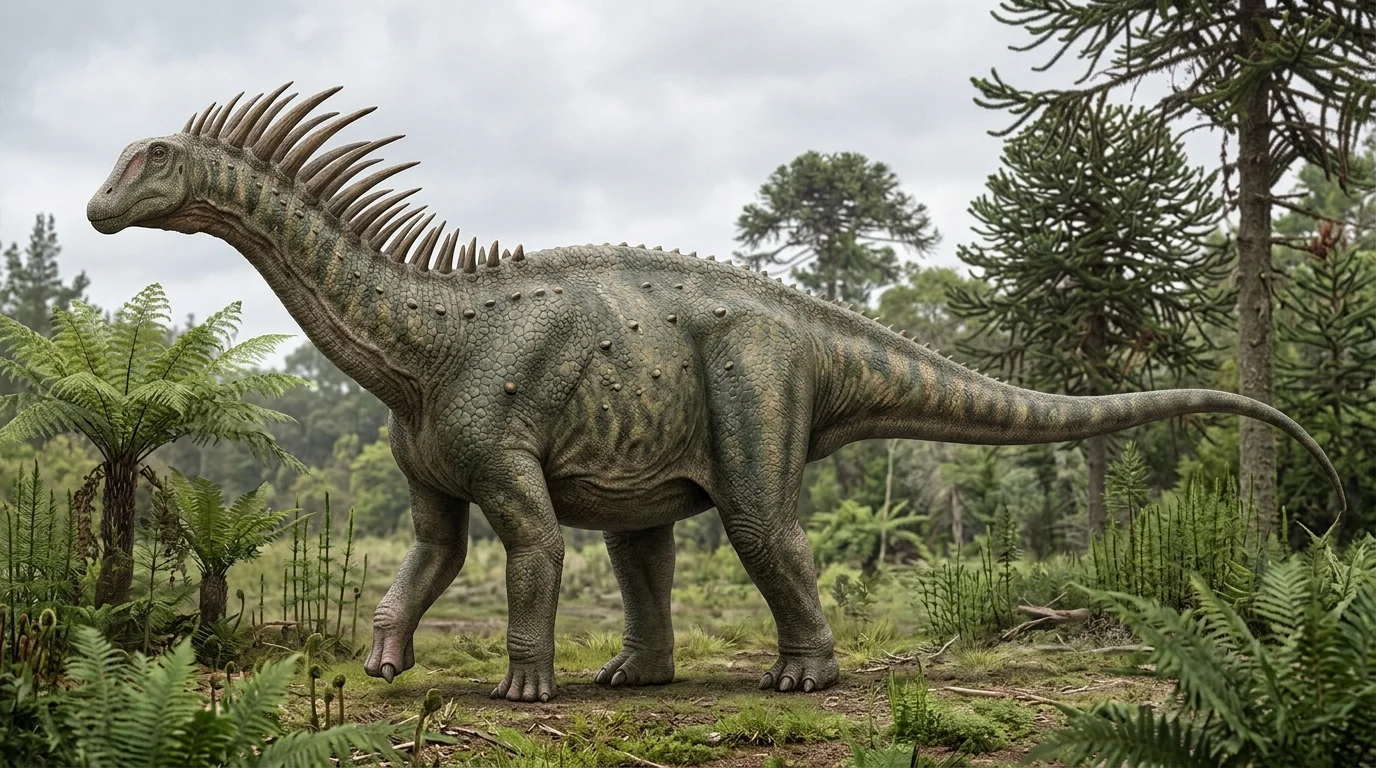
SauropodomorphaAmargasaurus cazaui Salgado & Bonaparte, 1991
A striking, double-sailed dicraeosaurid sauropod from Argentina sporting parallel rows of tall neck spines.
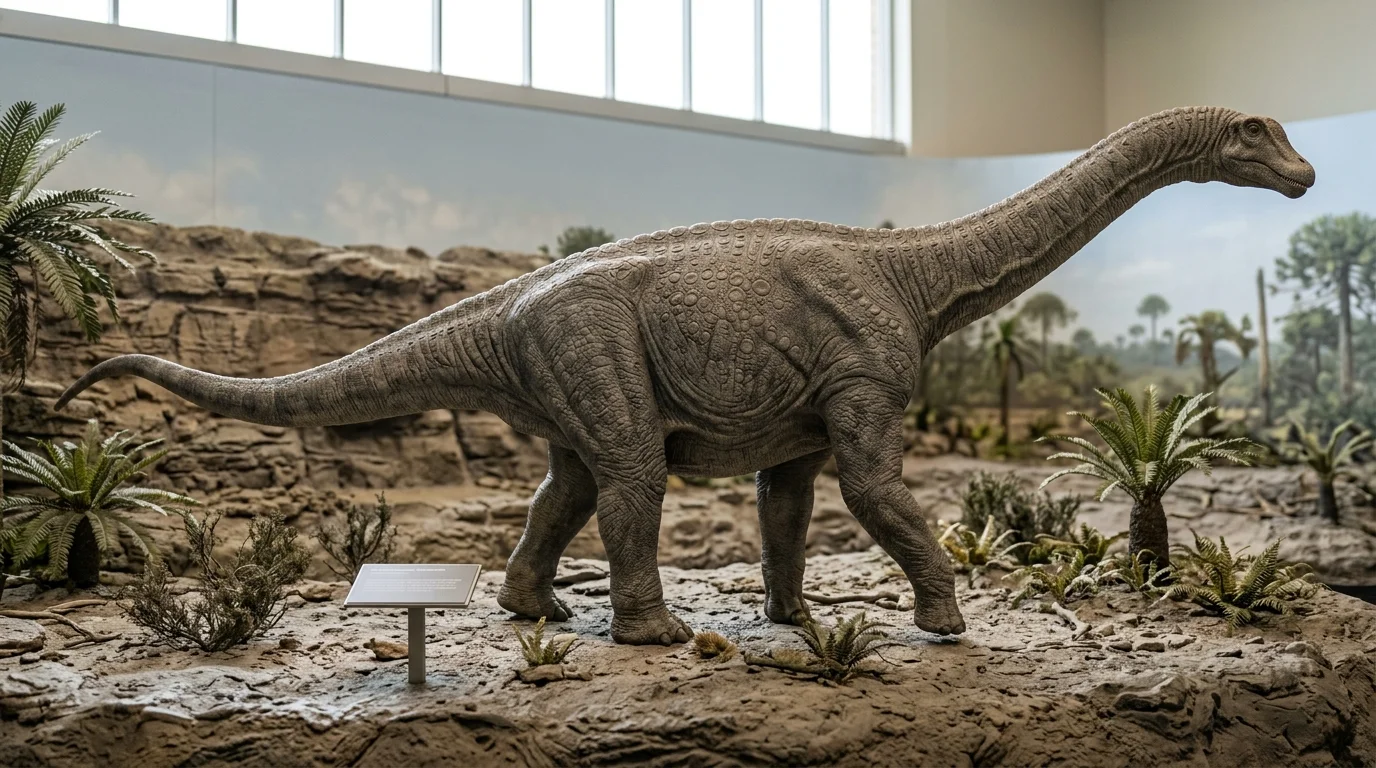
Featured SpecimenSauropodomorphaArgentinosaurus huinculensis Bonaparte & Coria, 1993
Among the largest and most massive terrestrial animals known to science, with scaled estimates reaching 65 to 80 metric tons based on fragmentary titanosaur remains.
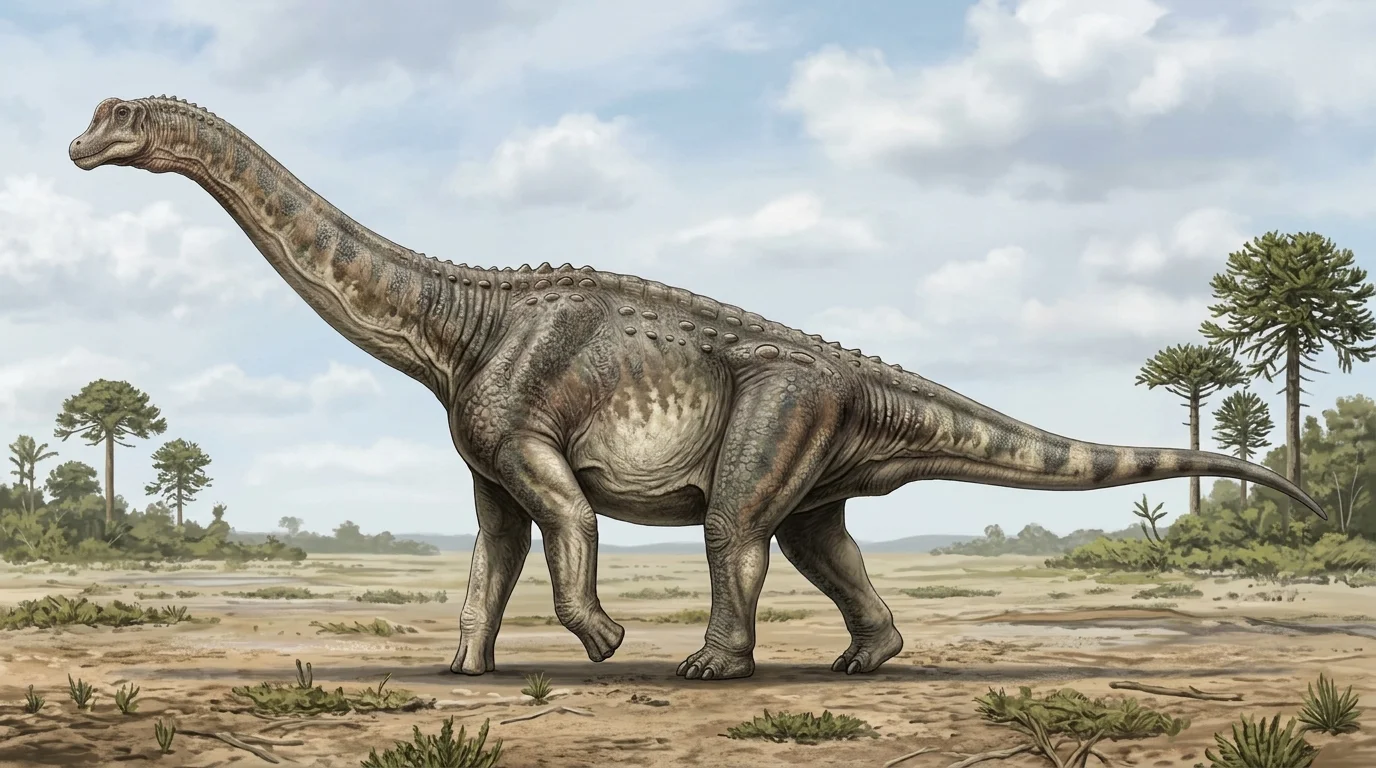
SauropodomorphaDreadnoughtus schrani Lacovara et al., 2014
The 'fearing nothing' super-titanosaur from Argentina, with the most complete skeleton of any giant titanosaur.