Sinraptor dongi Currie & Zhao, 1993
A large, agile metricanthosaurid theropod that was an apex predator of Late Jurassic China.

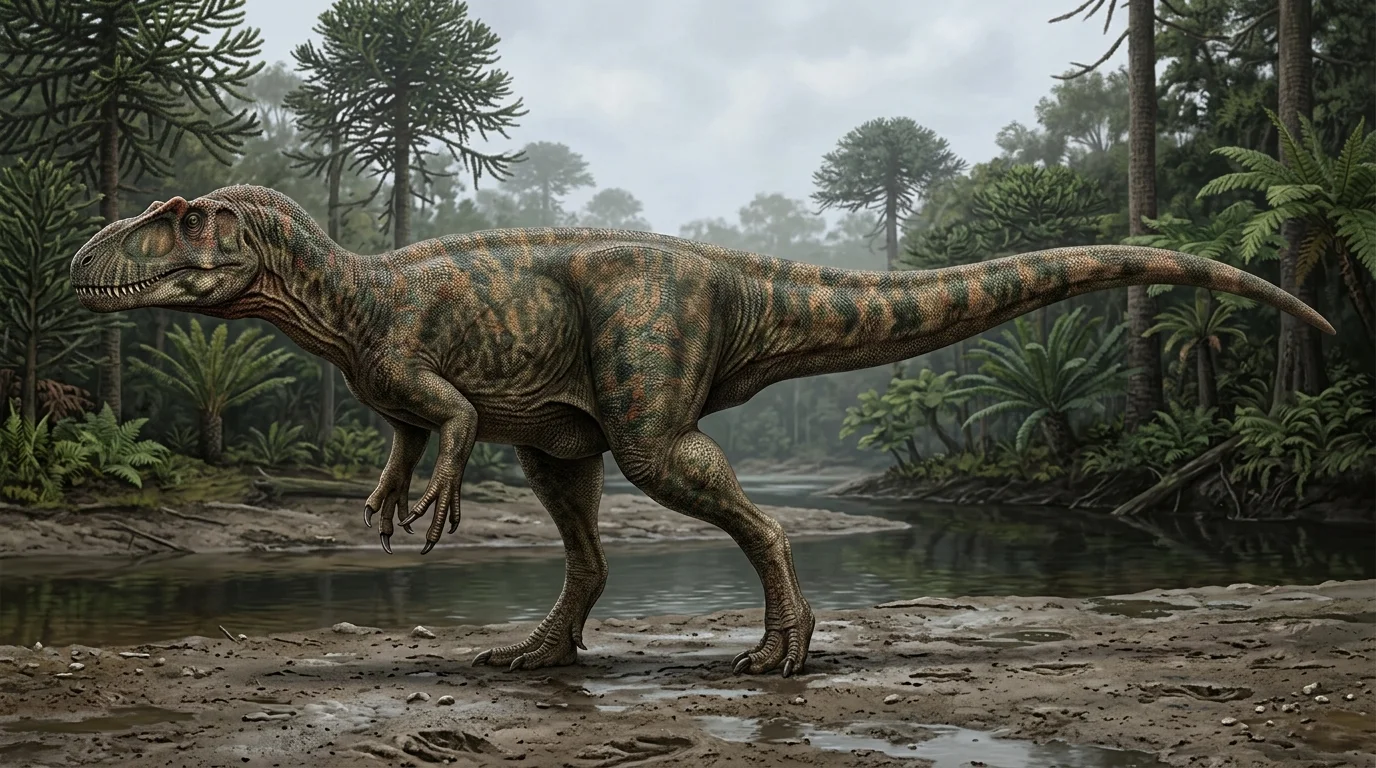
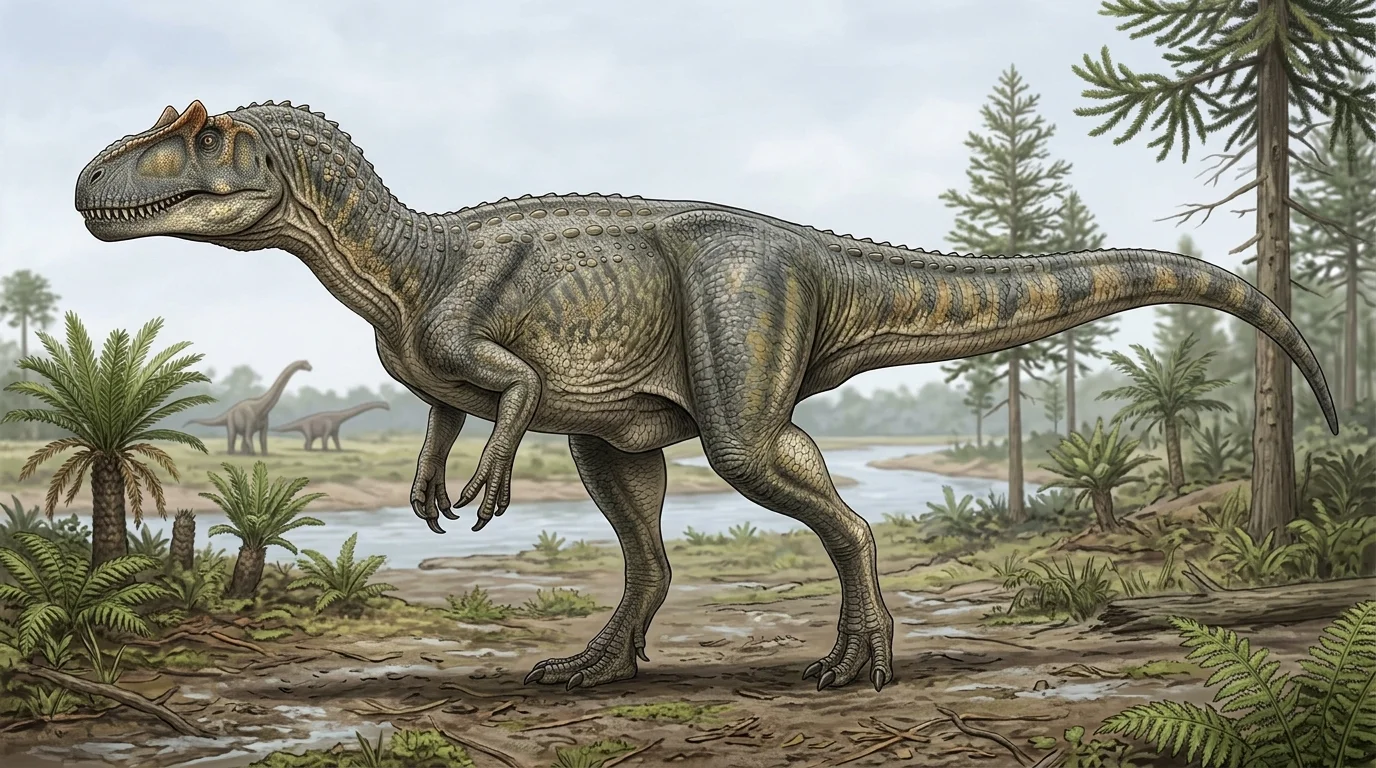
Scientific reconstruction of Sinraptor (Sinraptor dongi Currie & Zhao, 1993) in its native Geological period: Jurassic Period.
Image Credit: AI-generated scientific paleoart reconstruction synthesized from species-specific osteological profiles and peer-reviewed descriptions. (AI-Generated / Open Educational Media (DinoOrigin Spec))
Phylogenetic classification of Sinraptor dongi Currie & Zhao, 1993 based on peer-reviewed cladistic analyses of diagnostic skeletal synapomorphies.
| Taxonomic Rank | Taxon / Clade | Diagnostic Context |
|---|---|---|
| Kingdom | Animalia | Monophyletic prehistoric clade |
| Phylum | Chordata | Monophyletic prehistoric clade |
| Clade | Dinosauria | Monophyletic prehistoric clade |
| Order | Saurischia (Lizard-Hipped Dinosaurs) | Characterized ancestrally by a triradiate pelvis with an anteriorly pointing pubis. |
| Suborder | Theropoda | Bipedal saurischian dinosaurs, historically dominated by carnivores and including the avian lineage. |
| Genus | Sinraptor | Monophyletic prehistoric clade |
| Species | Sinraptor dongi Currie & Zhao, 1993 | Specific authority designation |
Despite its name, Sinraptor was not a dromaeosaurid 'raptor' but a magnificent 7.5-meter allosauroid closely related to Metriacanthosaurus and Yangchuanosaurus. Inhabiting the lush Shishugou forests, it possessed large eyes, an arched skull, and lightened vertebrae.
Trace fossils and pathologies on Sinraptor bones demonstrate aggressive interspecific face-biting with rival carnivores.
Deep, aerodynamic skull with large antorbital fenestrae, elongate limbs, and blade-like teeth.
Anatomical dimensions relative to an average adult human (1.8 m / 6 ft tall)
Preyed upon contemporary sauropods (Mamenchisaurus juveniles) and stegosaurs (Tuojiangosaurus).
Apex allosauroid predator that hunted large sauropods and ornithischians in Late Jurassic East Asia. Excavated from the Shishugou Formation of Xinjiang, Sinraptor was contemporary with crested theropods like Monolophosaurus and closely allied with European allosauroids like Metriacanthosaurus.
Wetland margins, seasonal floodplains, and dense gymnosperm woodlands.
Nearly complete skeleton with intact skull, cervical vertebrae, and pelvic girdle.
Found by Philip Currie and Dong Zhiming during the joint Sino-Canadian Dinosaur Project.
Marked by lush greenhouse climates, the breakup of Pangaea, and the evolutionary explosion of sauropods, plated stegosaurs, and apex megalosauroid and allosauroid theropods.
During the Mesozoic Era, continental drift progressively reconfigured land bridges, atmospheric currents, and regional precipitation regimes. Fossils of Sinraptor evidence its adaptation to the paleoenvironments of Asia.
Renowned for the exceptionally preserved feathered dinosaurs of Liaoning, China and the Cretaceous dune habitats of the Gobi Desert in Mongolia.
The anatomical architecture of Sinraptor serves as a crucial benchmark in vertebrate paleontology, illustrating key adaptive radiations within Theropoda.
Scientifically verified answers based on peer-reviewed paleontological evidence.
Sinraptor lived during the Jurassic Period Period, approximately 161–157 Ma (million years ago). This places it within the Mesozoic Era.
Paleontological estimates place Sinraptor at a length of 7–7.6 m (23.0–24.9 ft), a hip/standing height of 2.2–2.5 m (7.2–8.2 ft), and a body mass of 1.0–1.4 metric tons (2,205–3,086 lbs).
Classified as a carnivore, Sinraptor specialized in consuming Preyed upon contemporary sauropods (Mamenchisaurus juveniles) and stegosaurs (Tuojiangosaurus)..
Fossil specimens of Sinraptor have been recovered from Shishugou Formation, Xinjiang, China, with notable historic specimens documented in 1987. Found by Philip Currie and Dong Zhiming during the joint Sino-Canadian Dinosaur Project.
Authoritative citations establishing the factual taxonomy, biometrics, and anatomy of Sinraptor.
Currie, P. J., & Zhao, X.-J. (1993). A new carnosaur (Dinosauria, Theropoda) from the Jurassic of Xinjiang, People's Republic of China. Canadian Journal of Earth Sciences, 30(10), 2037-2081. https://doi.org/10.1139/e93-179
Curated & Verified: 2026-09-24Deposited in Mesozoic sedimentary strata preserving skeletal remains, teeth, or trace trackways.
Sinraptor provides critical insights into the evolutionary radiation of Theropoda. Holotypes and fossil evidence indicate: Nearly complete skeleton with intact skull, cervical vertebrae, and pelvic girdle.
TheropodaAllosaurus fragilis Marsh, 1877
The most abundant apex theropod of Late Jurassic North America, equipped with a kinetic skull and slashing serrated teeth.
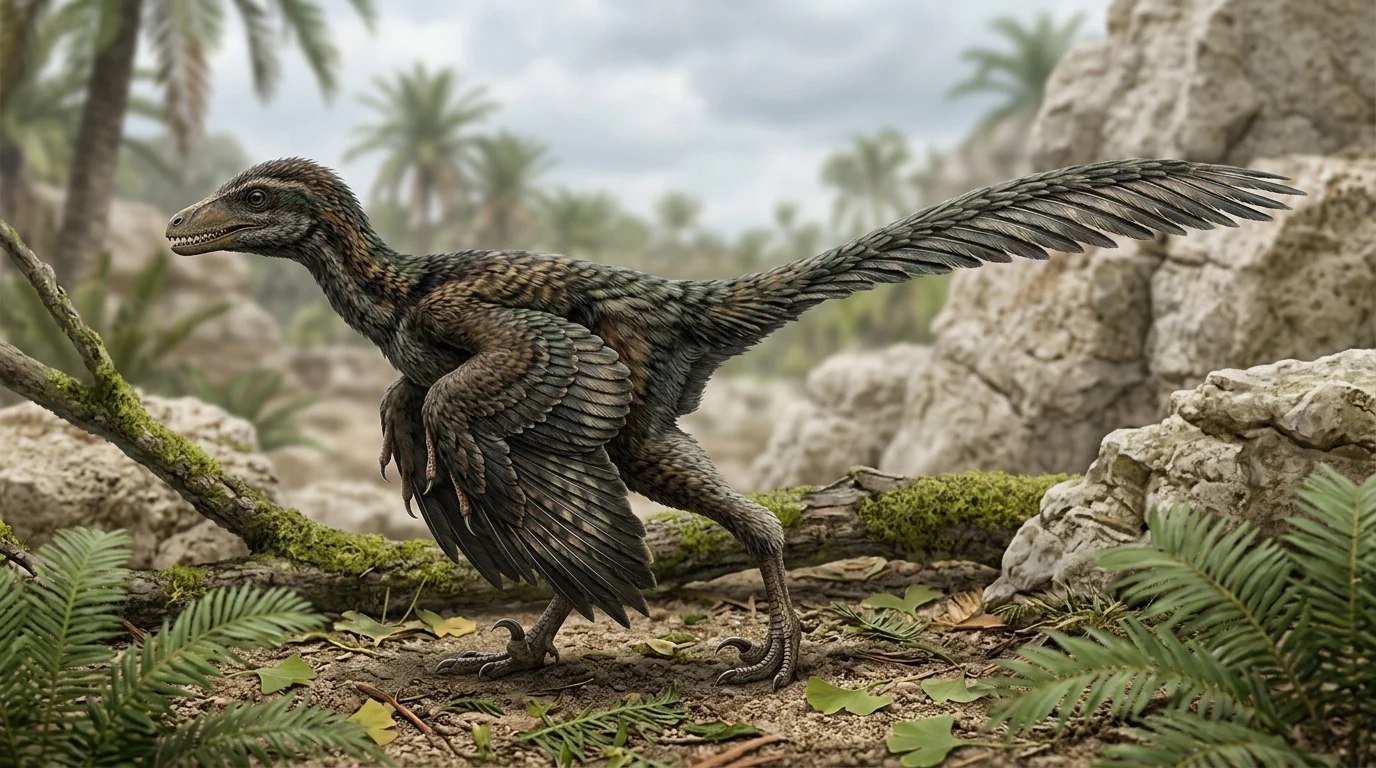
TheropodaArchaeopteryx lithographica von Meyer, 1861
An iconic stem-avialan from the Late Jurassic Solnhofen limestone exhibiting transitional features bridging non-avian theropods and birds.
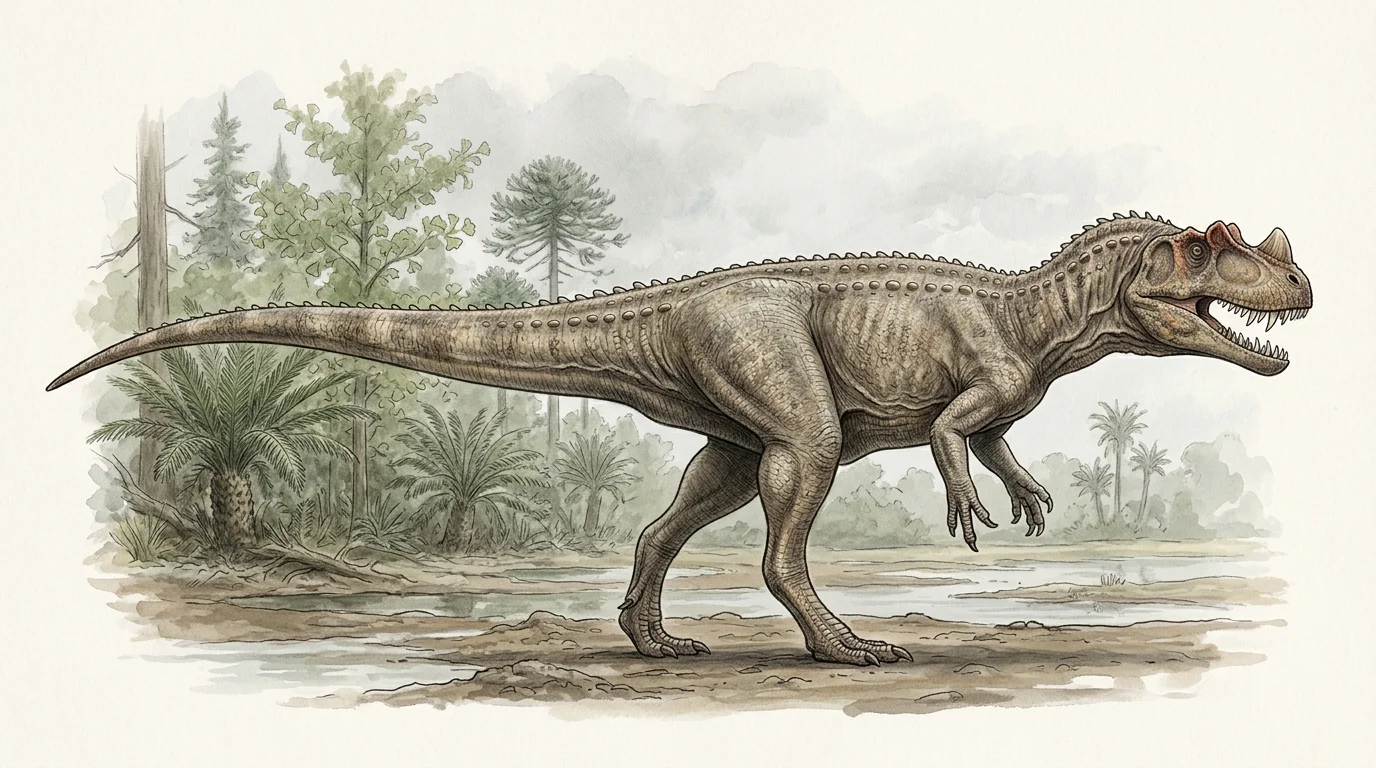
TheropodaCeratosaurus nasicornis Marsh, 1884
A distinctive Late Jurassic theropod sporting a prominent nasal horn core and a line of small osteoderms along its back.