Loading species comparison matrix...
Direct Paleobiological Analysis
Ankylosaurusvs.Stegosaurus
A side-by-side scientific comparison of physiological dimensions, biomechanics, temporal horizons, and anatomical specializations.
Comparing 2 of maximum 4 specimens
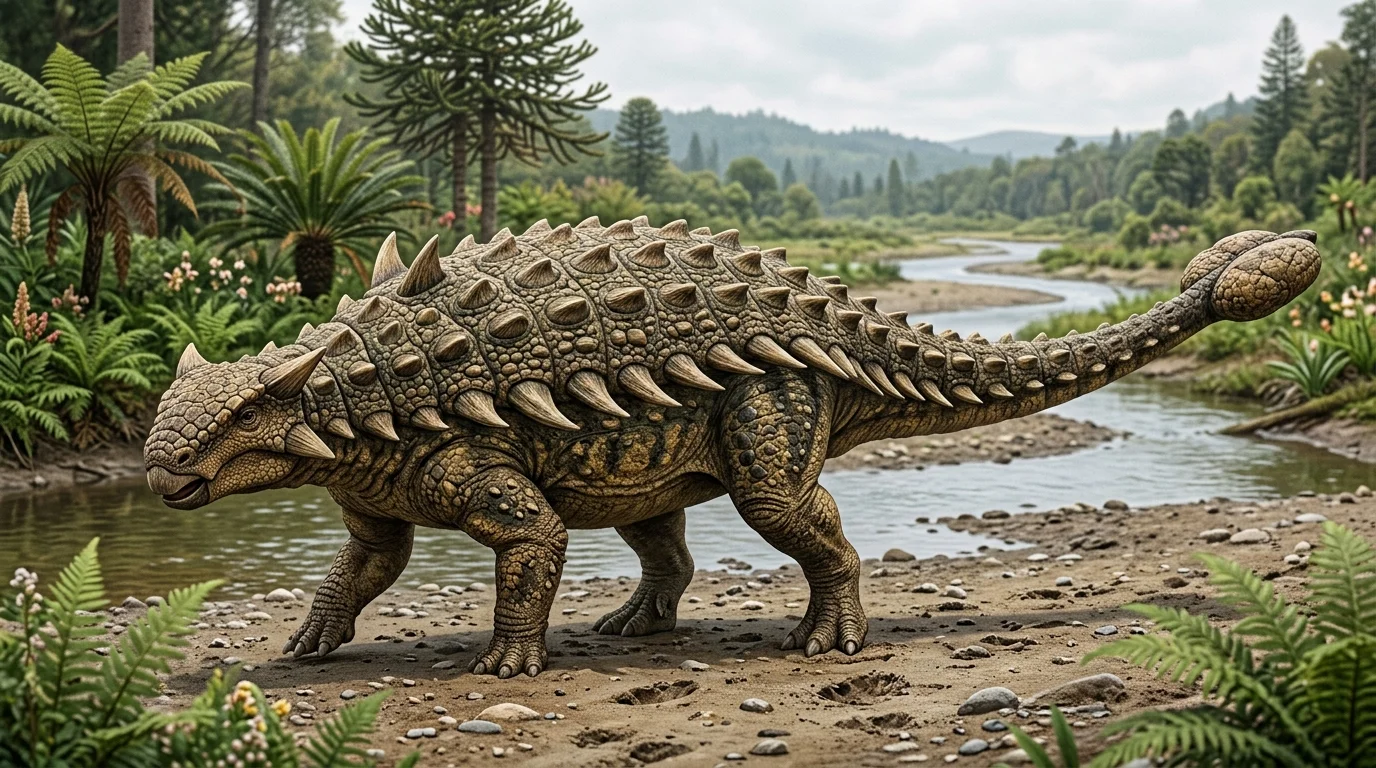 Ankylosauria
Ankylosaurus
Ankylosaurus magniventris Brown, 1908
The definitive armored dinosaur of the Late Cretaceous, encased in bony osteoderms and armed with an osseous tail club.
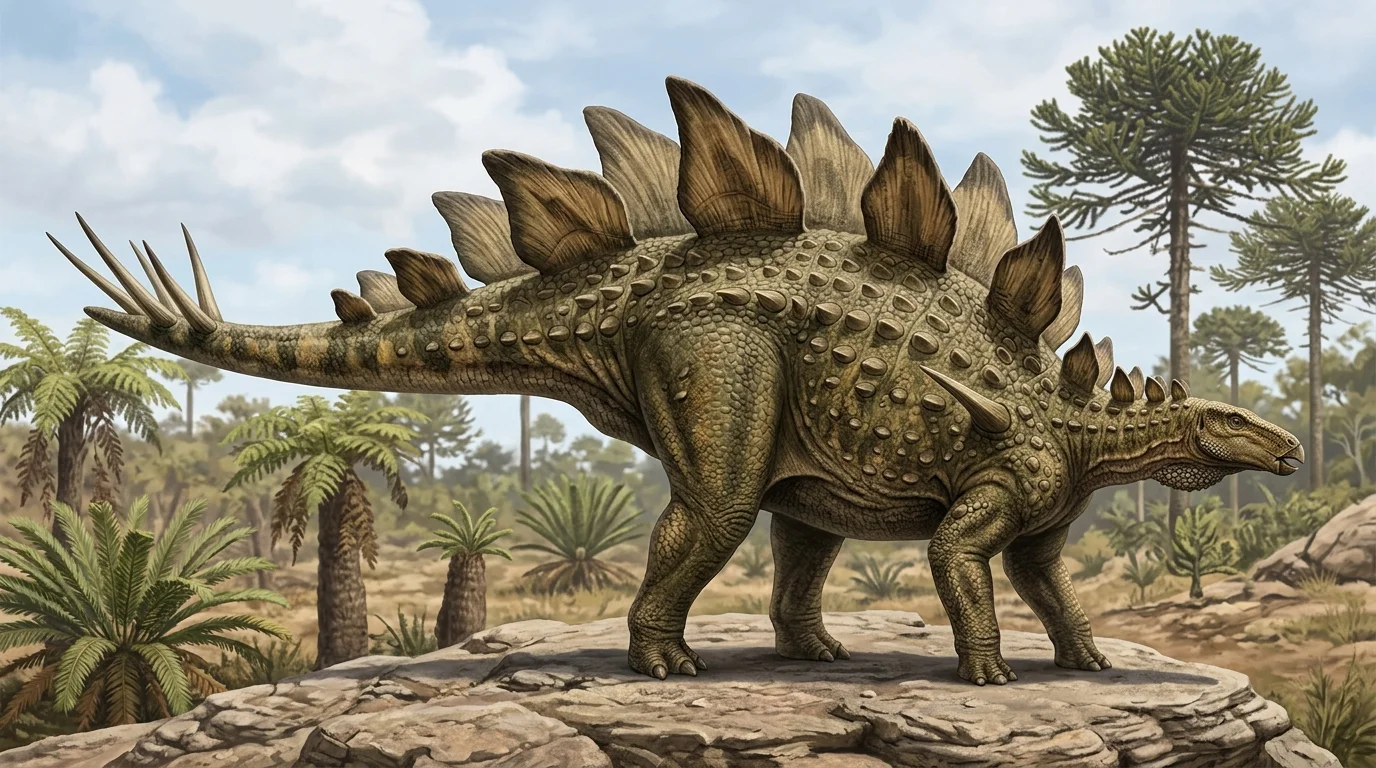 Stegosauria
Stegosaurus
Stegosaurus stenops Marsh, 1887
An iconic armored herbivore of the Late Jurassic with two alternating rows of vertical dorsal plates and a four-spiked tail thagomizer.
Comparative Paleobiological & Anatomical Matrix
| Feature / Trait | Ankylosaurus | Stegosaurus |
|---|---|---|
Total Length | 7.5–8 m (24.6–26.2 ft) Estimated maximum | 7–9 m (23.0–29.5 ft) Estimated maximum |
Hip Height | 1.7–2 m (5.6–6.6 ft) Model estimate | 3.5–4.2 m (11.5–13.8 ft) Model estimate |
Body Mass | 4.8–6.0 metric tons (10,582–13,228 lbs) Volumetric/allometric model | 3.8–5.5 metric tons (8,378–12,125 lbs) Volumetric/allometric model |
Epoch Horizon | Cretaceous Period 68–66 Ma (million years ago) | Jurassic Period 155–150 Ma (million years ago) |
Diet & Trophic Role | Herbivore Non-selective herbivore feeding on low shrubs, ferns, fibrous roots, and fallen fruit, processed by small phylliform teeth. | Herbivore Low-growing foliage such as mosses, ferns, horsetails, and cycad shoots, processed by simple triangular leaf-shaped teeth. |
Taxonomic Clade | Ankylosauria(Infraorder) | Stegosauria(Infraorder) |
Fossil Localities | Hell Creek Formation, Montana, United States Named: 1906 | Morrison, Colorado, United States Named: 1877 |
Locomotion & Behavior | Ankylosaurus was a specialized low-level browser, using its broad keratinous beak and small, fluted teeth to ingest non-selective ground vegetation, fruits, and fibrous shrubs. Finite element biomechanical analysis demonstrates that its rigid tail club could deliver impact forces exceeding 14,000 Newtons—easily sufficient to shatter the metatarsals or tibiae of contemporary macropredators such as [Tyrannosaurus rex](/dinosaurs/tyrannosaurus-rex). Fossil distribution suggests solitary or dispersed foraging rather than dense herd aggregations. | Operating as a low-to-medium tier browser, Stegosaurus cropped ferns, cycads, and horsetails with its toothless rhamphotheca (keratinous beak) and small serrated cheek teeth. At the terminus of its tail, four elongated bony spikes—colloquially named the 'thagomizer'—served as lethal defensive weaponry. Fossil evidence includes an [Allosaurus](/dinosaurs/allosaurus) tail vertebra pierced with a puncture matching the exact dimensions of a Stegosaurus thagomizer spike, demonstrating active defensive tail-striking in life. |
Holotype & Fossils | Fossils of Ankylosaurus magniventris are relatively scarce compared to contemporary ceratopsians and hadrosaurs. The species is known from Barnum Brown's 1906 holotype (AMNH 5895) from the Hell Creek Formation of Montana, which includes cranial fragments, vertebrae, and dermal armor, alongside referred partial skulls (AMNH 5214) and isolated tail clubs. | Documented by numerous specimens from the Morrison Formation of Wyoming, Colorado, and Utah. Material spans O. C. Marsh's 1887 descriptions to exceptionally complete, articulated skeletons such as NHMUK PV R36730 ('Sophie', ~85% complete), which preserves an intact skull, plates, and articulated postcranial elements. |
Paleontological Uncertainty Advisory: Anatomical dimensions, body masses, and metabolic rates are scientific estimates derived from volumetric scaling, laser scanning, and biomechanical limb bone allometry. Missing traits indicate non-preserved fossil elements rather than anatomical absence.