Loading species comparison matrix...
Direct Paleobiological Analysis
Australovenatorvs.Acrocanthosaurus
A side-by-side scientific comparison of physiological dimensions, biomechanics, temporal horizons, and anatomical specializations.
Comparing 2 of maximum 4 specimens
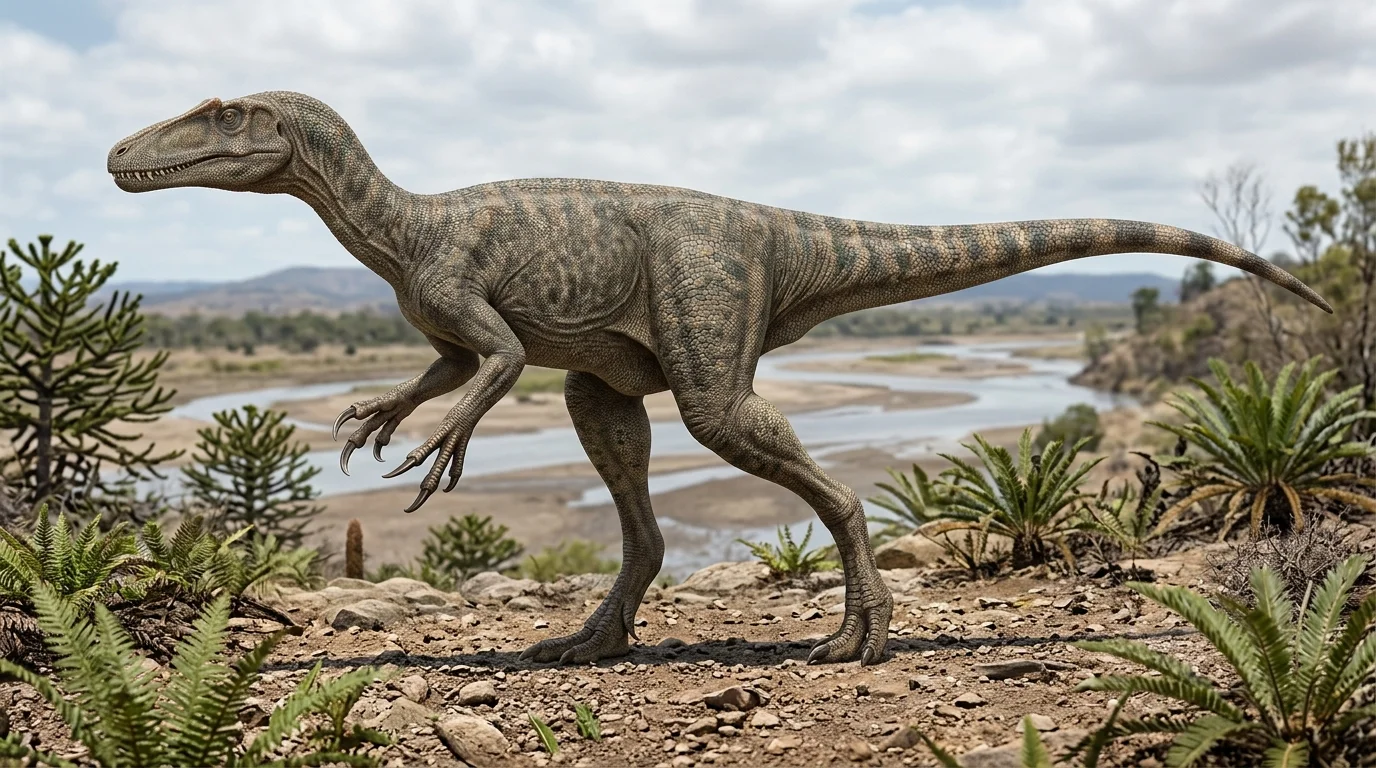 Theropoda
Australovenator
Australovenator wintonensis Hocknull et al., 2009
The 'cheetah of its time', a lightning-fast megaraptoran predator from the mid-Cretaceous of Australia.
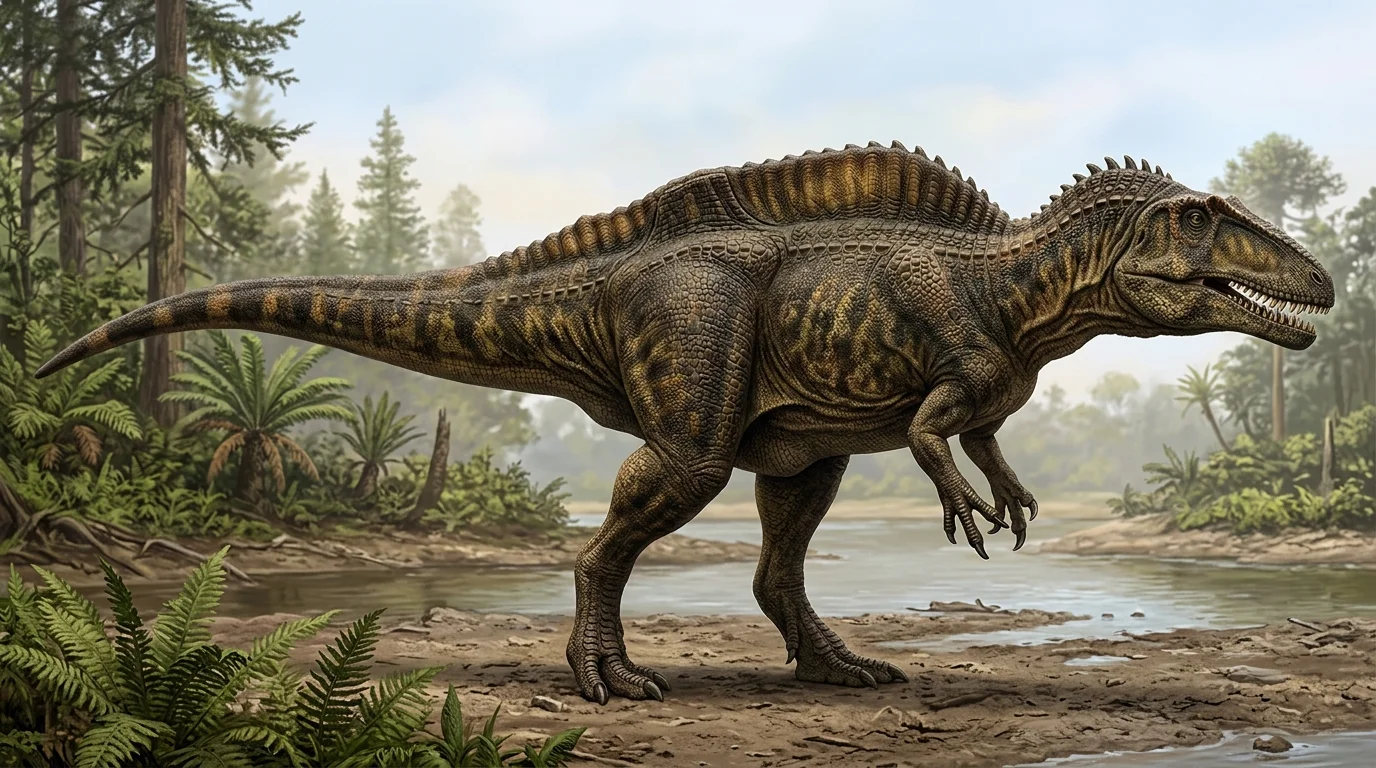 Theropoda
Acrocanthosaurus
Acrocanthosaurus atokensis Stovall & Langston, 1950
A high-spined North American apex predator famous for hunting sauropods across Early Cretaceous river valleys.
Comparative Paleobiological & Anatomical Matrix
| Feature / Trait | Australovenator | Acrocanthosaurus |
|---|---|---|
Total Length | 5.5–6 m (18.0–19.7 ft) Estimated maximum | 10–11.5 m (32.8–37.7 ft) Estimated maximum |
Hip Height | 1.8–2.1 m (5.9–6.9 ft) Model estimate | 3.4–4 m (11.2–13.1 ft) Model estimate |
Body Mass | 300–500 kg (661–1,102 lbs) Volumetric/allometric model | 4.5–6.5 metric tons (9,921–14,330 lbs) Volumetric/allometric model |
Epoch Horizon | Cretaceous Period 95–93 Ma (million years ago) | Cretaceous Period 113–110 Ma (million years ago) |
Diet & Trophic Role | Carnivore Hunted contemporary ornithopods (Muttaburrasaurus) and juvenile titanosaurs (Diamantinasaurus). | Carnivore Hunted sauropods like Sauroposeidon and ornithopods like Tenontosaurus. |
Taxonomic Clade | Theropoda(Suborder) | Theropoda(Suborder) |
Fossil Localities | Winton Formation, Queensland, Australia Named: 2006 | Antlers Formation, Atoka County, Oklahoma, United States Named: 1940 |
Locomotion & Behavior | High-speed cursorial ambush predator employing giant raptorial hand claws to restrain prey. In the mid-Cretaceous Winton Formation, Australovenator was the top terrestrial carnivore, coexisting with contemporary ornithopods like [Muttaburrasaurus](/dinosaurs/muttaburrasaurus) and early armored ankylosaurians like [Minmi](/dinosaurs/minmi). | Apex pursuit predator that shared the Early Cretaceous coastal plain ecosystem with contemporary dromaeosaurids like [Deinonychus](/dinosaurs/deinonychus) and large ornithopods like [Tenontosaurus](/dinosaurs/tenontosaurus). Trackway assemblages and body fossils indicate it operated as the dominant carnivore across these ancient river deltas. |
Holotype & Fossils | Partial skeleton preserving intact forelimb claws, leg bones, ribs, and lower jaw elements. | Spectacular complete specimen 'Fran' (NCSM 14345) mounted at the North Carolina Museum of Natural Sciences. |
Paleontological Uncertainty Advisory: Anatomical dimensions, body masses, and metabolic rates are scientific estimates derived from volumetric scaling, laser scanning, and biomechanical limb bone allometry. Missing traits indicate non-preserved fossil elements rather than anatomical absence.