Loading species comparison matrix...
Direct Paleobiological Analysis
Coelophysisvs.Chindesaurus
A side-by-side scientific comparison of physiological dimensions, biomechanics, temporal horizons, and anatomical specializations.
Comparing 2 of maximum 4 specimens
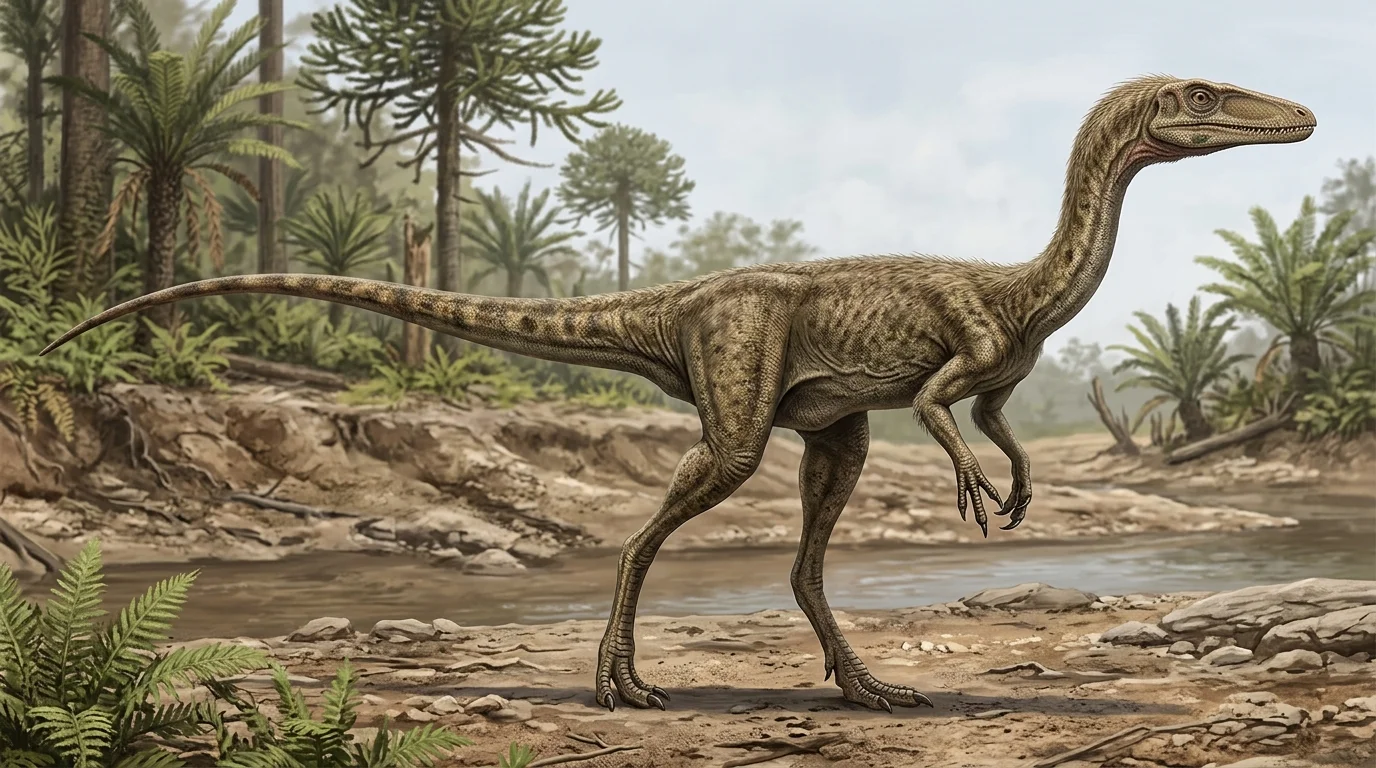 Theropoda
Coelophysis
Coelophysis bauri Cope, 1887
A slender, agile early theropod from the Late Triassic, known from hundreds of well-preserved skeletons at Ghost Ranch, New Mexico.
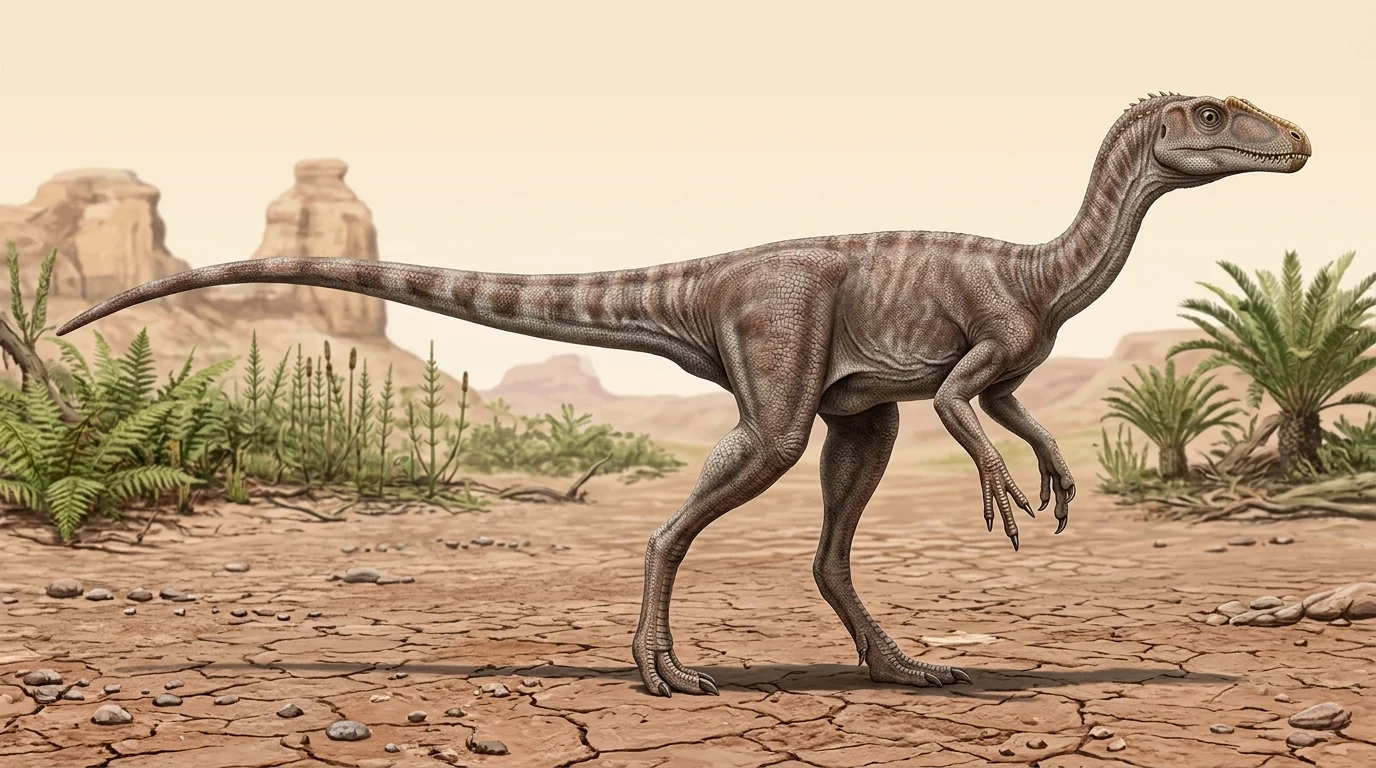 Theropoda
Chindesaurus
Chindesaurus bryansmalli Long & Murry, 1995
A basal carnivorous dinosaur from the Chinle Formation of the Petrified Forest National Park.
Comparative Paleobiological & Anatomical Matrix
| Feature / Trait | Coelophysis | Chindesaurus |
|---|---|---|
Total Length | 2.5–3 m (8.2–9.8 ft) Estimated maximum | 2–2.4 m (6.6–7.9 ft) Estimated maximum |
Hip Height | 0.8–1 m (2.6–3.3 ft) Model estimate | 0.7–0.9 m (2.3–3.0 ft) Model estimate |
Body Mass | 15–25 kg (33–55 lbs) Volumetric/allometric model | 20–35 kg (44–77 lbs) Volumetric/allometric model |
Epoch Horizon | Triassic Period 228–201.3 Ma (million years ago) | Triassic Period 221–210 Ma (million years ago) |
Diet & Trophic Role | Carnivore Small vertebrates, early synapsids, and insects, gripped with slender curved, blade-like serrated teeth. | Carnivore Small vertebrates, early lepidosaurs, and juvenile synapsids. |
Taxonomic Clade | Theropoda(Suborder) | Theropoda(Suborder) |
Fossil Localities | Chinle Formation, New Mexico, United States Named: 1881 | Petrified Forest National Park, Arizona, United States Named: 1984 |
Locomotion & Behavior | Highly gregarious small theropod that hunted small reptiles and invertebrates in pack or flock arrangements. Known from hundreds of articulated skeletons at Ghost Ranch, Coelophysis shared its Late Triassic Chinle habitat with early basal saurischians such as [Chindesaurus](/dinosaurs/chindesaurus). | Early bipedal saurischian predator that inhabited seasonal floodplains during the Late Triassic. Discovered in the Chinle Formation of the American Southwest, Chindesaurus coexisted alongside agile early coelophysoid hunters like [Coelophysis](/dinosaurs/coelophysis). |
Holotype & Fossils | Hundreds of complete articulated skeletons excavated from the Ghost Ranch quarry in 1947. | Incomplete postcranial skeleton including vertebrae, pelvic fragments, and limb bones. |
Paleontological Uncertainty Advisory: Anatomical dimensions, body masses, and metabolic rates are scientific estimates derived from volumetric scaling, laser scanning, and biomechanical limb bone allometry. Missing traits indicate non-preserved fossil elements rather than anatomical absence.