Loading species comparison matrix...
Direct Paleobiological Analysis
Gargoyleosaurusvs.Tyrannosaurus rex
A side-by-side scientific comparison of physiological dimensions, biomechanics, temporal horizons, and anatomical specializations.
Comparing 2 of maximum 4 specimens
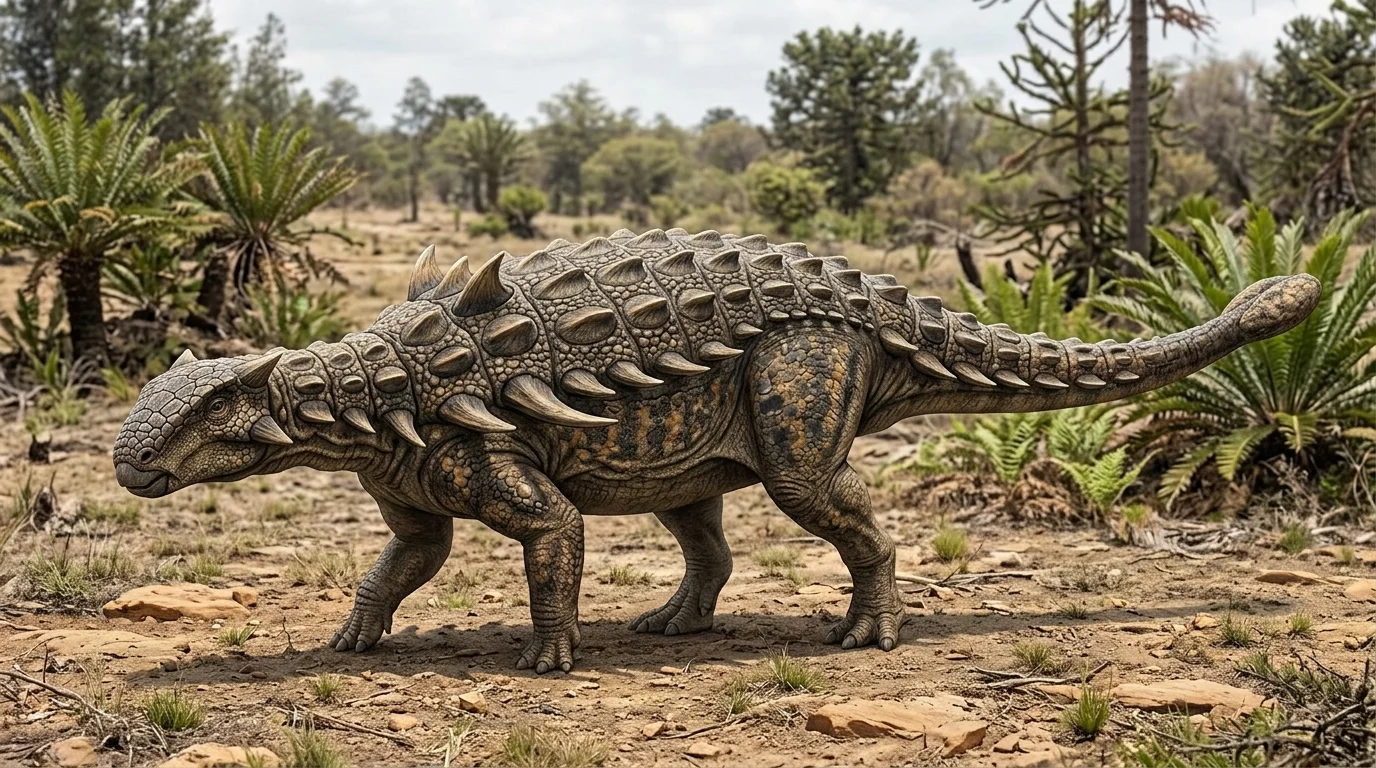 Ankylosauria
Gargoyleosaurus
Gargoyleosaurus parkpinorum Carpenter et al., 1998
One of the earliest and most complete ankylosaurs known, discovered in the Late Jurassic Morrison Formation.
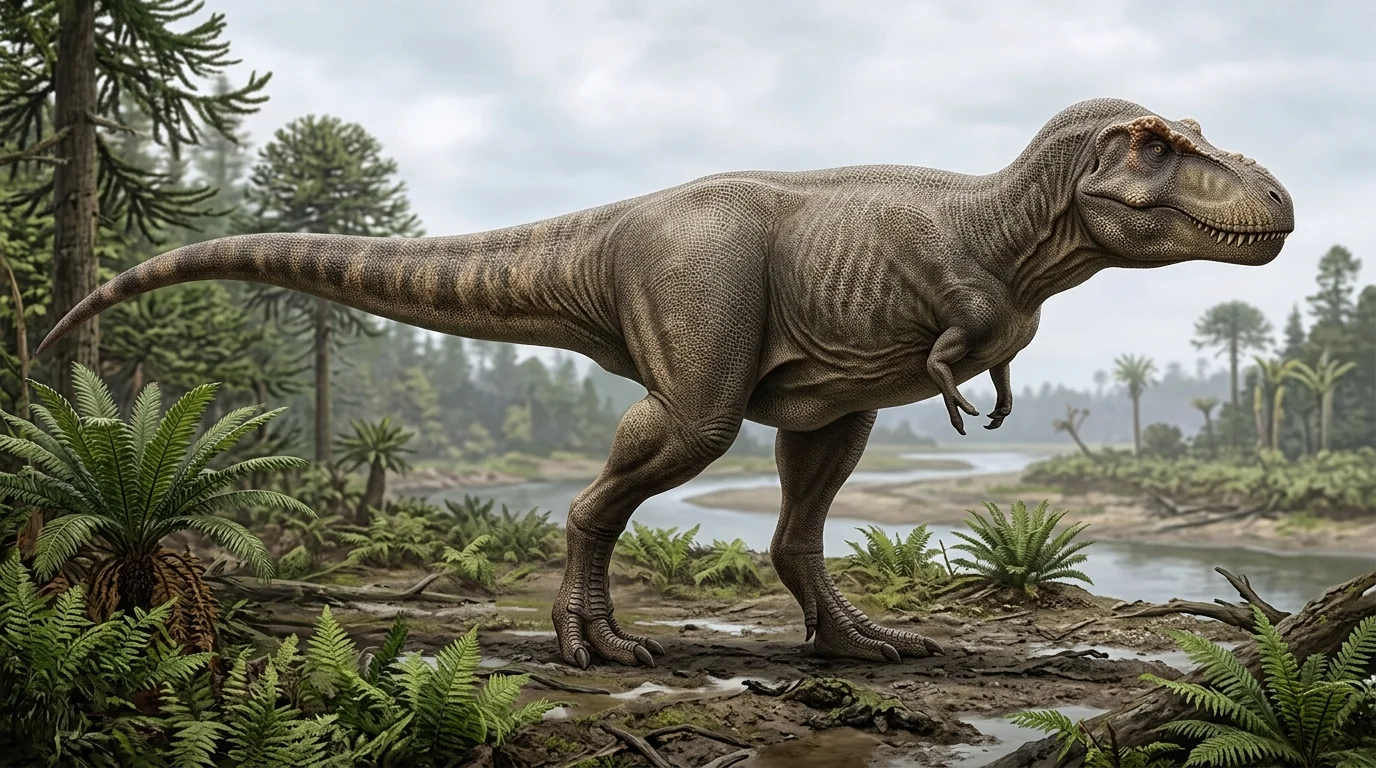 Theropoda
Tyrannosaurus rex
Tyrannosaurus rex Osborn, 1905
The apex macropredator of Late Cretaceous western North America, possessing bone-crushing jaws and acute stereoscopic vision.
Comparative Paleobiological & Anatomical Matrix
| Feature / Trait | Gargoyleosaurus | Tyrannosaurus rex |
|---|---|---|
Total Length | 3–3.8 m (9.8–12.5 ft) Estimated maximum | 11.8–12.8 m (38.7–42.0 ft) Estimated maximum |
Hip Height | 1–1.2 m (3.3–3.9 ft) Model estimate | 3.6–4 m (11.8–13.1 ft) Model estimate |
Body Mass | 500–800 kg (1,102–1,764 lbs) Volumetric/allometric model | 7.5–9.5 metric tons (16,535–20,944 lbs) Volumetric/allometric model |
Epoch Horizon | Jurassic Period 154–150 Ma (million years ago) | Cretaceous Period 68–66 Ma (million years ago) |
Diet & Trophic Role | Herbivore Low-growing ferns, cycads, and underground roots chipped with front teeth and ground with cheek teeth. | Carnivore Exclusively carnivorous. Ingested large herbivorous ornithischians such as Triceratops and Edmontosaurus, pulverizing bone for nutrient-dense marrow. |
Taxonomic Clade | Ankylosauria(Infraorder) | Theropoda(Suborder) |
Fossil Localities | Morrison Formation, Albany County, Wyoming, United States Named: 1995 | Hell Creek Formation, Montana, United States Named: 1902 |
Locomotion & Behavior | Small, basal ankylosaur shielded by cranial armor and lateral spines, representing an early radiation of armored thyreophorans. In the Late Jurassic Morrison Formation, Gargoyleosaurus coexisted with plated contemporaries like [Stegosaurus](/dinosaurs/stegosaurus) while avoiding apex predators like [Allosaurus](/dinosaurs/allosaurus). | Direct trace fossil evidence documents active predation and opportunistic scavenging on contemporary herbivorous dinosaurs. Healed puncture wounds matching T. rex dentition have been identified on the caudal vertebrae of [Edmontosaurus](/dinosaurs/edmontosaurus) and the squamosal frill of [Triceratops](/dinosaurs/triceratops), confirming non-fatal predatory strikes. While multiple-individual bonebeds exist for related tyrannosaurids, evidence for cooperative pack hunting in adult T. rex remains inconclusive, with interpretations varying between gregarious grouping, opportunistic aggregations around carcasses, and solitary territorial behavior. |
Holotype & Fossils | Nearly complete skeleton with intact skull, cervical rings, and extensive dermal armor. | Represented by more than 50 verified specimens across varying ontogenetic stages. These range from Barnum Brown's 1902 holotype (CM 9380) to exceptionally complete, articulated skeletons including FMNH PR 2081 ('Sue', ~90% complete by skeletal element) and RSM P2523.8 ('Scotty'). Isolated teeth, fragmentary skulls, and coprolites containing pulverized bone further enrich the taphonomic record. |
Paleontological Uncertainty Advisory: Anatomical dimensions, body masses, and metabolic rates are scientific estimates derived from volumetric scaling, laser scanning, and biomechanical limb bone allometry. Missing traits indicate non-preserved fossil elements rather than anatomical absence.