Albertosaurus sarcophagus Osborn, 1905
A fleet-footed, gracile tyrannosaurid from the Late Cretaceous of western Canada known from prominent multi-individual bonebed associations.

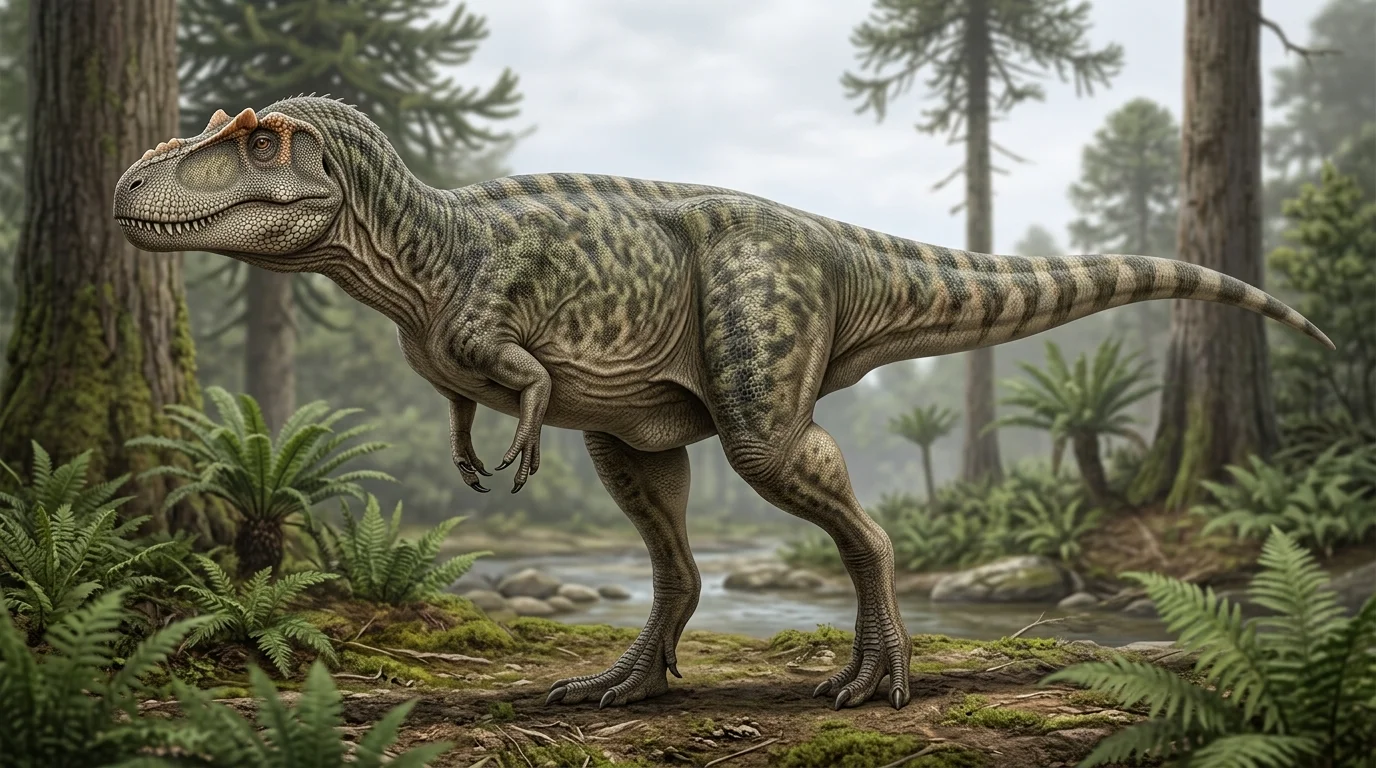
Scientific reconstruction of Albertosaurus (Albertosaurus sarcophagus Osborn, 1905) in its native Geological period: Cretaceous Period.
Image Credit: AI-generated scientific paleoart reconstruction synthesized from species-specific osteological profiles and peer-reviewed descriptions. (AI-Generated / Open Educational Media (DinoOrigin Spec))
Phylogenetic classification of Albertosaurus sarcophagus Osborn, 1905 based on peer-reviewed cladistic analyses of diagnostic skeletal synapomorphies.
| Taxonomic Rank | Taxon / Clade | Diagnostic Context |
|---|---|---|
| Kingdom | Animalia | Monophyletic prehistoric clade |
| Phylum | Chordata | Monophyletic prehistoric clade |
| Clade | Dinosauria | Monophyletic prehistoric clade |
| Order | Saurischia (Lizard-Hipped Dinosaurs) | Characterized ancestrally by a triradiate pelvis with an anteriorly pointing pubis. |
| Suborder | Theropoda | Bipedal saurischian dinosaurs, historically dominated by carnivores and including the avian lineage. |
| Genus | Albertosaurus | Monophyletic prehistoric clade |
| Species | Albertosaurus sarcophagus Osborn, 1905 | Specific authority designation |
Albertosaurus was a sleek, fast-running tyrannosaurid that lived slightly earlier than T. rex in Alberta, Canada. Weighing roughly two tons and growing up to nine meters, its gracile limb proportions made it one of the fastest large theropods known.
A famous bonebed discovered along the Red Deer River preserves the remains of over 26 individuals across multiple growth stages. While historically interpreted as evidence for coordinated pack hunting, paleontologists recognize that multi-individual bonebeds can also reflect seasonal drought aggregations, communal attraction to food, or uncoordinated feeding associations.
Slender tyrannosaurid build, short two-clawed arms, bony crests in front of the eyes, and long cursorial legs.
Anatomical dimensions relative to an average adult human (1.8 m / 6 ft tall)
Hunted hadrosaurs (Edmontosaurus) and ceratopsians with bone-crushing bites.
Gregarious theropod documented by multi-individual bonebed sites; researchers debate whether grouped fossil occurrences reflect coordinated pack hunting or opportunistic aggregations around resources. Taphonomic records from the Horseshoe Canyon Formation indicate it was the regional apex macropredator, coexisting alongside contemporary hadrosaurs like Edmontosaurus and horned ceratopsians like Pachyrhinosaurus.
Coastal river valleys, forested delta floodplains, and wetland borders.
Massive bonebed at Dry Island Buffalo Jump preserving dozens of individuals across multiple age stages.
Discovered by geologist Joseph Burr Tyrrell; named by Henry Fairfield Osborn in 1905.
The longest and final period of the Mesozoic Era, characterized by the rise of flowering plants, ceratopsians, hadrosaurs, tyrannosaurids, and concluding with the Chicxulub asteroid impact.
During the Mesozoic Era, continental drift progressively reconfigured land bridges, atmospheric currents, and regional precipitation regimes. Fossils of Albertosaurus evidence its adaptation to the paleoenvironments of North America.
Home to the fossil-rich Morrison Formation of the Late Jurassic and the Hell Creek and Dinosaur Park Formations of the Late Cretaceous.
The anatomical architecture of Albertosaurus serves as a crucial benchmark in vertebrate paleontology, illustrating key adaptive radiations within Theropoda.
Scientifically verified answers based on peer-reviewed paleontological evidence.
Albertosaurus lived during the Cretaceous Period Period, approximately 71–68 Ma (million years ago). This places it within the Mesozoic Era.
Paleontological estimates place Albertosaurus at a length of 8–9.5 m (26.2–31.2 ft), a hip/standing height of 2.8–3.3 m (9.2–10.8 ft), and a body mass of 1.8–2.5 metric tons (3,968–5,512 lbs).
Classified as a carnivore, Albertosaurus specialized in consuming Hunted hadrosaurs (Edmontosaurus) and ceratopsians with bone-crushing bites..
Fossil specimens of Albertosaurus have been recovered from Horseshoe Canyon Formation, Alberta, Canada, with notable historic specimens documented in 1884. Discovered by geologist Joseph Burr Tyrrell; named by Henry Fairfield Osborn in 1905.
Authoritative citations establishing the factual taxonomy, biometrics, and anatomy of Albertosaurus.
Currie, P. J. (2000). Possible evidence of gregarious behavior in tyrannosaurids. Gaia, 15, 271-277.
Curated & Verified: 2026-09-24Deposited in Mesozoic sedimentary strata preserving skeletal remains, teeth, or trace trackways.
Albertosaurus provides critical insights into the evolutionary radiation of Theropoda. Holotypes and fossil evidence indicate: Massive bonebed at Dry Island Buffalo Jump preserving dozens of individuals across multiple age stages.
Osborn, H. F. (1905). Tyrannosaurus and other Cretaceous carnivorous dinosaurs. Bulletin of the AMNH, 21(14), 259-265.
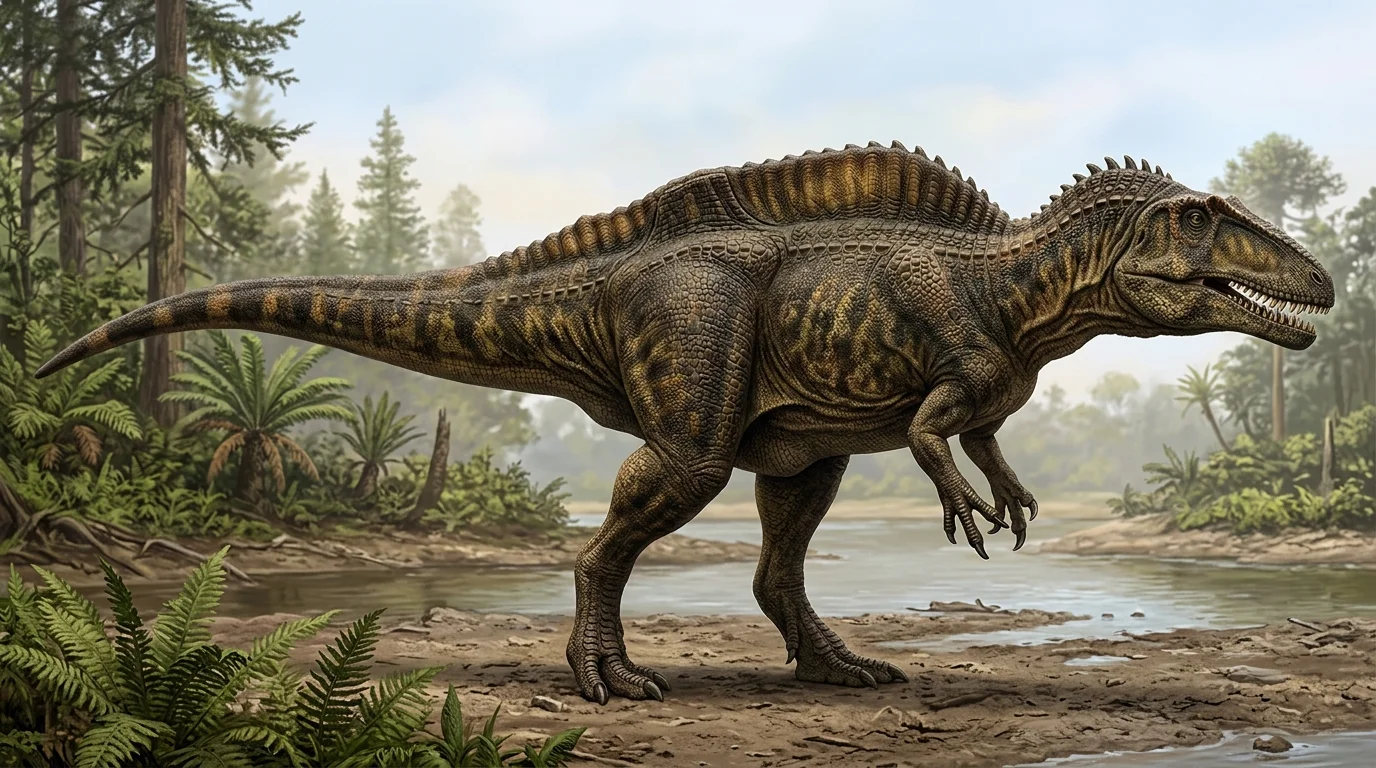
TheropodaAcrocanthosaurus atokensis Stovall & Langston, 1950
A high-spined North American apex predator famous for hunting sauropods across Early Cretaceous river valleys.
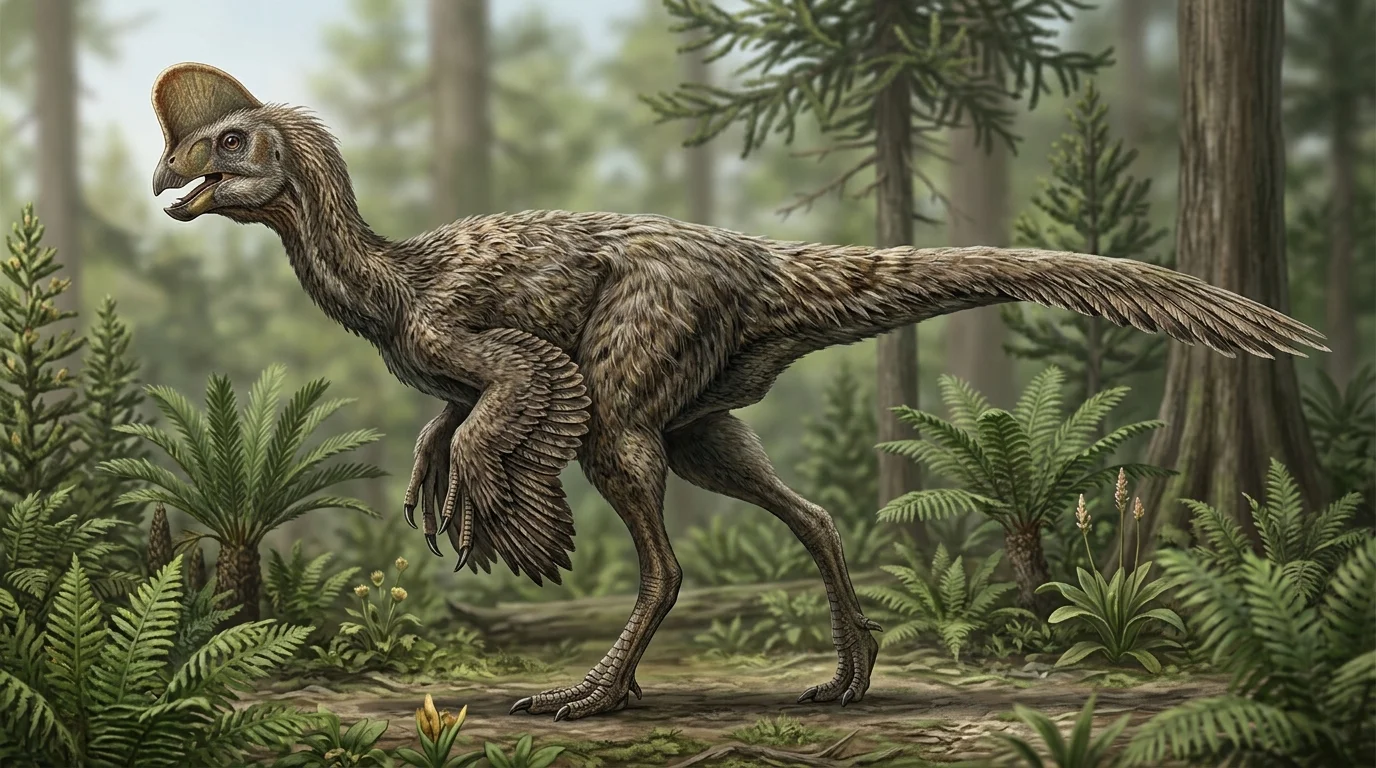
TheropodaAnzu wyliei Lamanna et al., 2014
The 'Chicken from Hell', a gigantic, crested caenagnathid oviraptorosaur from the Hell Creek Formation.
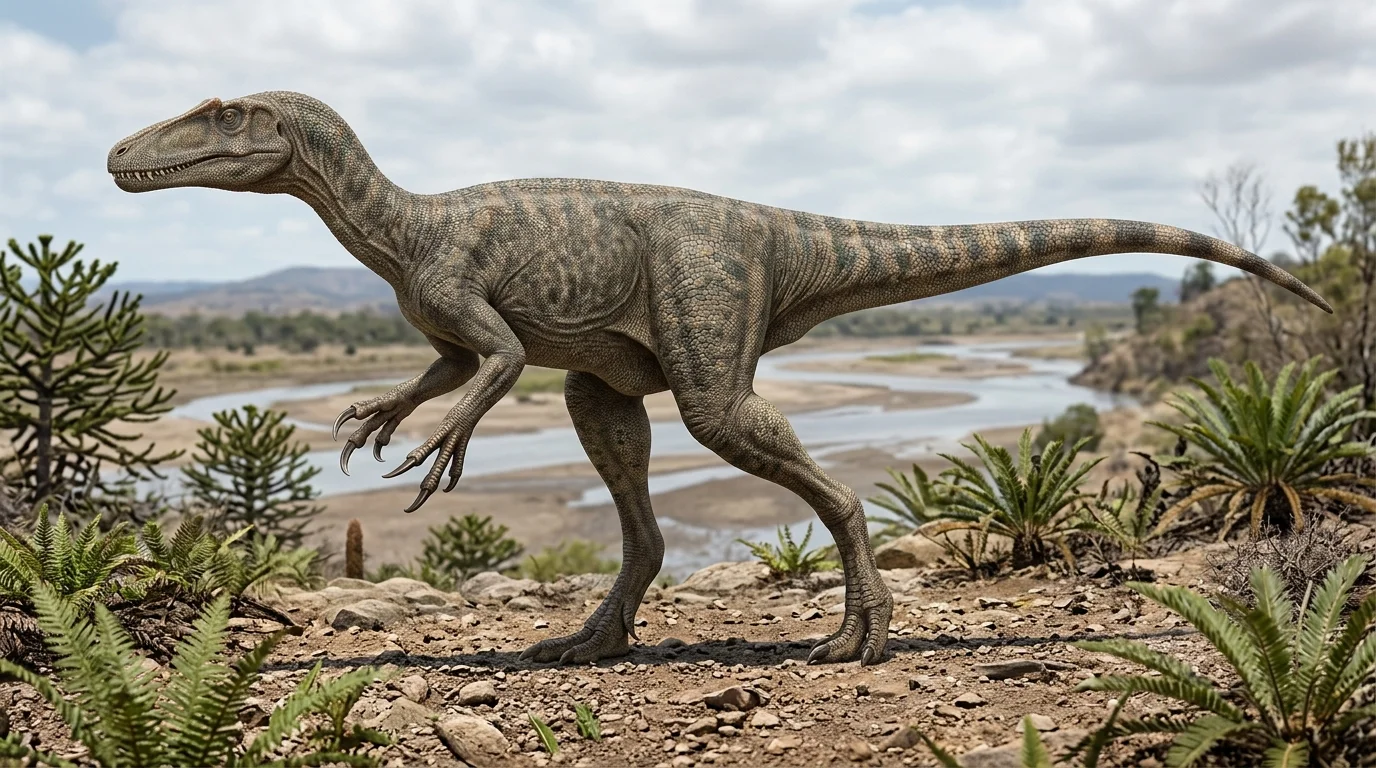
TheropodaAustralovenator wintonensis Hocknull et al., 2009
The 'cheetah of its time', a lightning-fast megaraptoran predator from the mid-Cretaceous of Australia.