Anzu wyliei Lamanna et al., 2014
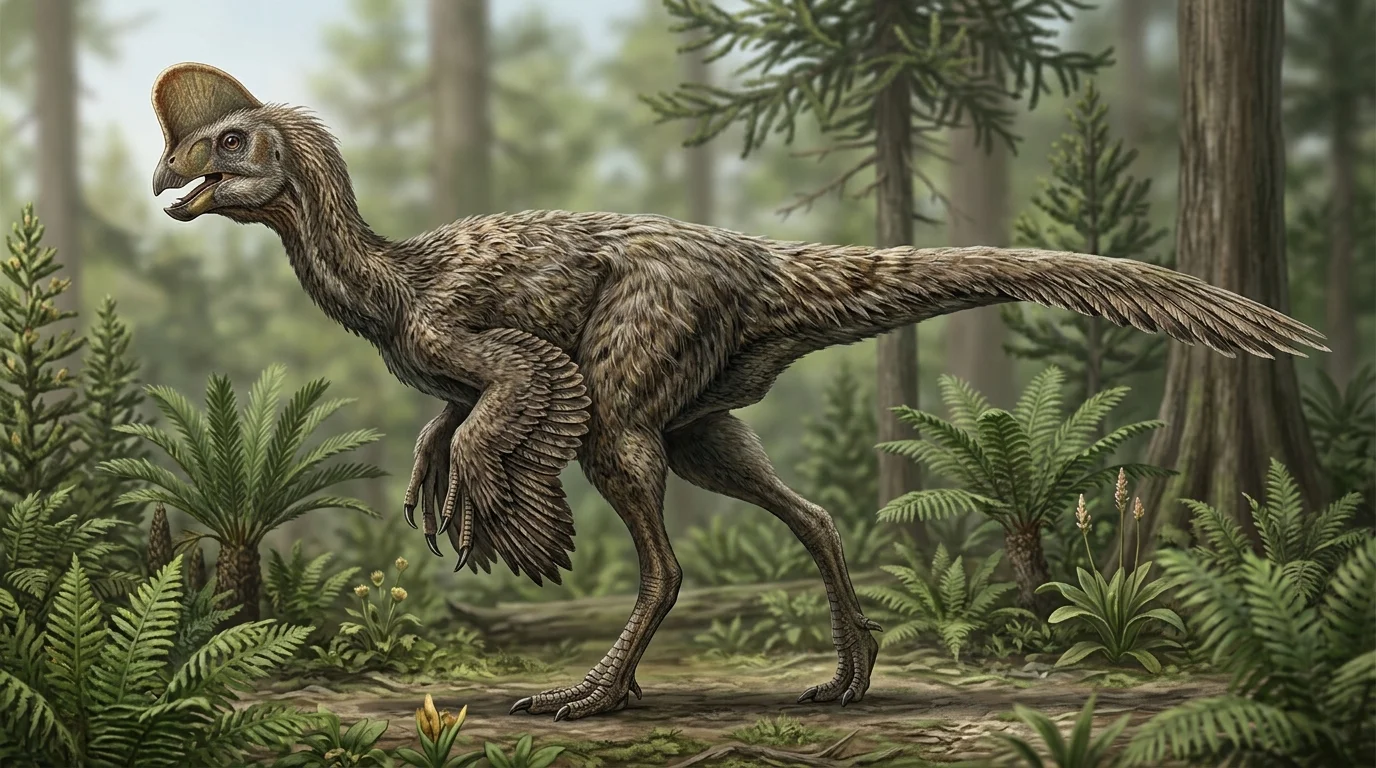
The 'Chicken from Hell', a gigantic, crested caenagnathid oviraptorosaur from the Hell Creek Formation.

Scientific reconstruction of Anzu (Anzu wyliei Lamanna et al., 2014) in its native Geological period: Cretaceous Period.
Image Credit: AI-generated scientific paleoart reconstruction synthesized from species-specific osteological profiles and peer-reviewed descriptions. (AI-Generated / Open Educational Media (DinoOrigin Spec))
Phylogenetic classification of Anzu wyliei Lamanna et al., 2014 based on peer-reviewed cladistic analyses of diagnostic skeletal synapomorphies.
| Taxonomic Rank | Taxon / Clade | Diagnostic Context |
|---|---|---|
| Kingdom | Animalia | Monophyletic prehistoric clade |
| Phylum | Chordata | Monophyletic prehistoric clade |
| Clade | Dinosauria | Monophyletic prehistoric clade |
| Order | Saurischia (Lizard-Hipped Dinosaurs) | Characterized ancestrally by a triradiate pelvis with an anteriorly pointing pubis. |
| Suborder | Theropoda | Bipedal saurischian dinosaurs, historically dominated by carnivores and including the avian lineage. |
| Genus | Anzu | Monophyletic prehistoric clade |
| Species | Anzu wyliei Lamanna et al., 2014 | Specific authority designation |
What was Anzu? Anzu wyliei was a gigantic, crested caenagnathid oviraptorosaur that lived in the humid river floodplains of the Hell Creek Formation (North and South Dakota) during the final two million years of the dinosaurian era. Colloquially nicknamed "the Chicken from Hell" by paleontologists Matthew Lamanna and colleagues in 2014, Anzu was one of the largest oviraptorosaurs in North America, measuring over 3 meters in length and standing shoulder-to-shoulder with an adult human.
Diet & Ecological Role: Anzu was an omnivore equipped with a toothless, keratinous beak featuring specialized shearing ridges on the palate. Its flexible feeding apparatus allowed it to consume plants, cycad seeds, small mammals, amphibians, and eggs, coexisting alongside apex predators like Tyrannosaurus rex and heavy armored herbivores like Ankylosaurus.
Anzu was a bizarre, bird-like oviraptorosaur that lived alongside Tyrannosaurus rex in the Late Cretaceous Hell Creek Formation. Nicknamed the 'Chicken from Hell', it measured over 3.5 meters long and weighed approximately 250 kilograms, making it one of the largest North American caenagnathids known.
Its skull bore a tall, paper-thin bony crest, while its jaws were toothless and covered in a keratinous beak with specialized shearing edges.
Large, tall-crested biped with long slender legs, feathered wings, toothless beak, and a short fan-tailed plumage.
Anatomical dimensions relative to an average adult human (1.8 m / 6 ft tall)
Omnivorous; consumed plants, seeds, small mammals, amphibians, and eggs.
Omnivorous forager utilizing its long legs to travel across floodplains while feeding on varied vegetation and small prey. Living in the Hell Creek ecosystem alongside colossal herbivores like Triceratops and apex predators like Tyrannosaurus rex, Anzu occupied a distinct mid-sized omnivorous ecological guild.
Humid lowland coastal floodplains, swamp forests, and subtropical river channels.
Three partial skeletons providing an almost complete picture of the skeletal anatomy.
Described by Matthew Lamanna, Hans-Dieter Sues, Emma Schachner, and Tyler Lyson in 2014.
The longest and final period of the Mesozoic Era, characterized by the rise of flowering plants, ceratopsians, hadrosaurs, tyrannosaurids, and concluding with the Chicxulub asteroid impact.
During the Mesozoic Era, continental drift progressively reconfigured land bridges, atmospheric currents, and regional precipitation regimes. Fossils of Anzu evidence its adaptation to the paleoenvironments of North America.
Home to the fossil-rich Morrison Formation of the Late Jurassic and the Hell Creek and Dinosaur Park Formations of the Late Cretaceous.
The anatomical architecture of Anzu serves as a crucial benchmark in vertebrate paleontology, illustrating key adaptive radiations within Theropoda.
Scientifically verified answers based on peer-reviewed paleontological evidence.
Anzu wyliei was one of the largest known caenagnathid oviraptorosaurs in North America, measuring approximately 3.0 to 3.5 meters (10 to 11.5 feet) in total length, standing 1.5 to 1.8 meters (5 to 6 feet) tall at the head/hips, and weighing an estimated 200 to 300 kg (440 to 660 lbs).
When described by paleontologists Matthew Lamanna, Hans-Dieter Sues, Emma Schachner, and Tyler Lyson in 2014, Anzu was colloquially nicknamed the 'Chicken from Hell' (reflecting its genus name after Anzû, a feathered demon in Mesopotamian mythology, and its recovery from the Hell Creek Formation). With its toothless beak, tall cranial crest, feathered wings, and large bird-like body, it presented a formidable appearance.
Anzu was an omnivore. Its jaws lacked teeth but featured a sharp, keratinous rhamphotheca (beak) with specialized shearing ridges on the palate, adapted for processing fibrous vegetation, seeds, fruits, small mammals, amphibians, and eggs.
Authoritative citations establishing the factual taxonomy, biometrics, and anatomy of Anzu.
Lamanna, M. C., Sues, H.-D., Schachner, E. R., & Lyson, T. R. (2014). A new large-bodied oviraptorosaurian theropod dinosaur from the latest Cretaceous of western North America. PLoS ONE, 9(3), e92022. https://doi.org/10.1371/journal.pone.0092022
Curated & Verified: 2026-09-24Deposited in Mesozoic sedimentary strata preserving skeletal remains, teeth, or trace trackways.
Anzu lived in the humid, subtropical coastal floodplains of the Hell Creek Formation across present-day North and South Dakota, United States, during the latest Cretaceous Period (Maastrichtian stage, ~68 to 66 million years ago), sharing its ecosystem with Tyrannosaurus rex, Triceratops, and Ankylosaurus.
Anzu is classified as a caenagnathid oviraptorosaur, a clade of highly bird-like theropods with hollow bones, fused wishbones, and pneumatic skeletal elements. Before the discovery of Anzu, North American caenagnathids were known mostly from fragmentary jaw or limb fragments.
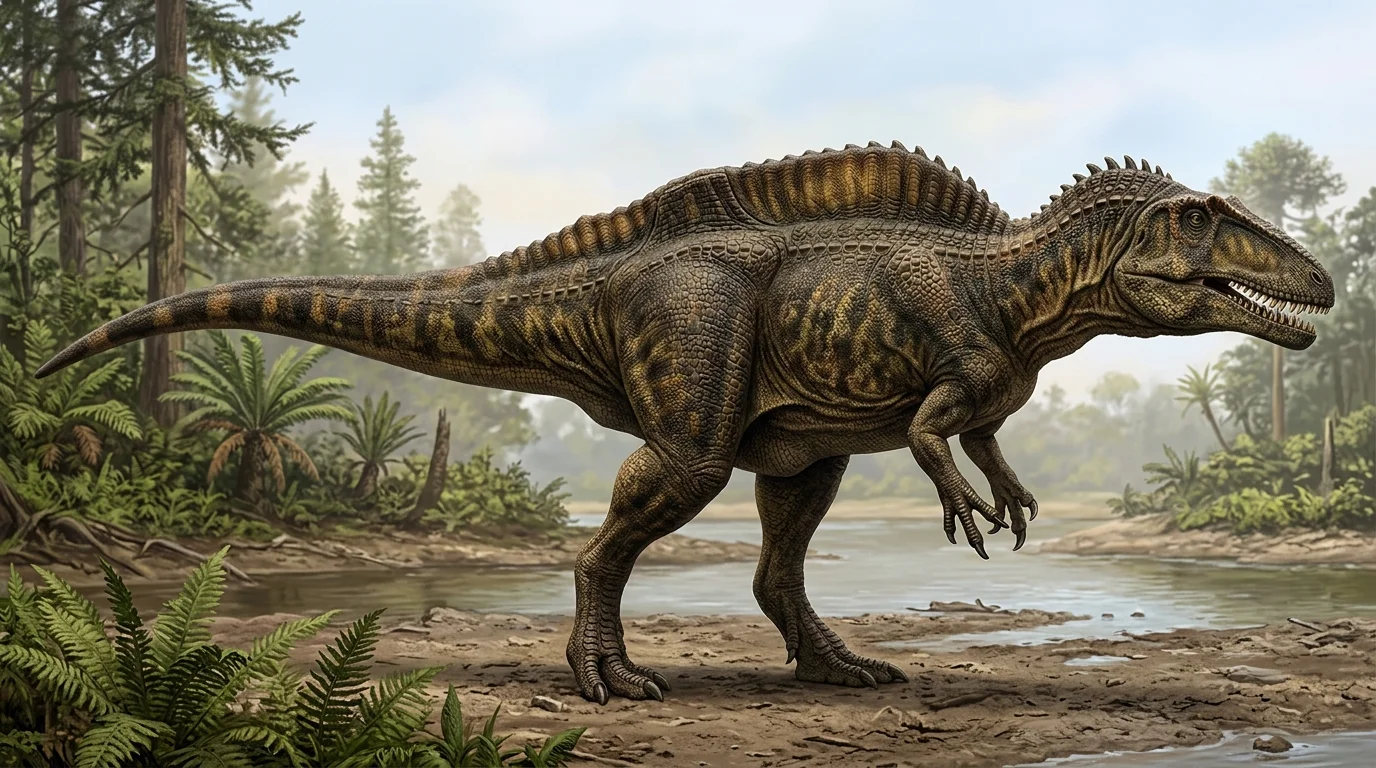
TheropodaAcrocanthosaurus atokensis Stovall & Langston, 1950
A high-spined North American apex predator famous for hunting sauropods across Early Cretaceous river valleys.
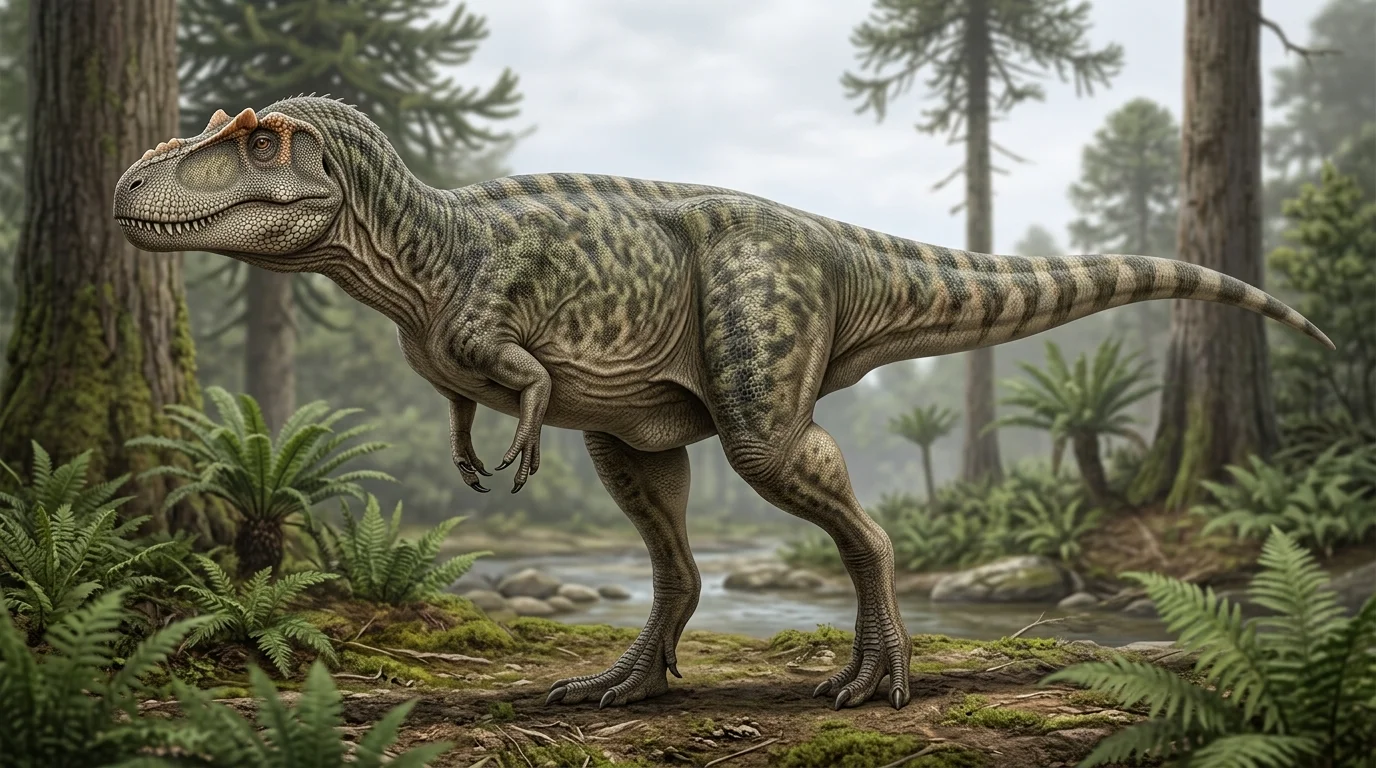
TheropodaAlbertosaurus sarcophagus Osborn, 1905
A fleet-footed, gracile tyrannosaurid from the Late Cretaceous of western Canada known from prominent multi-individual bonebed associations.
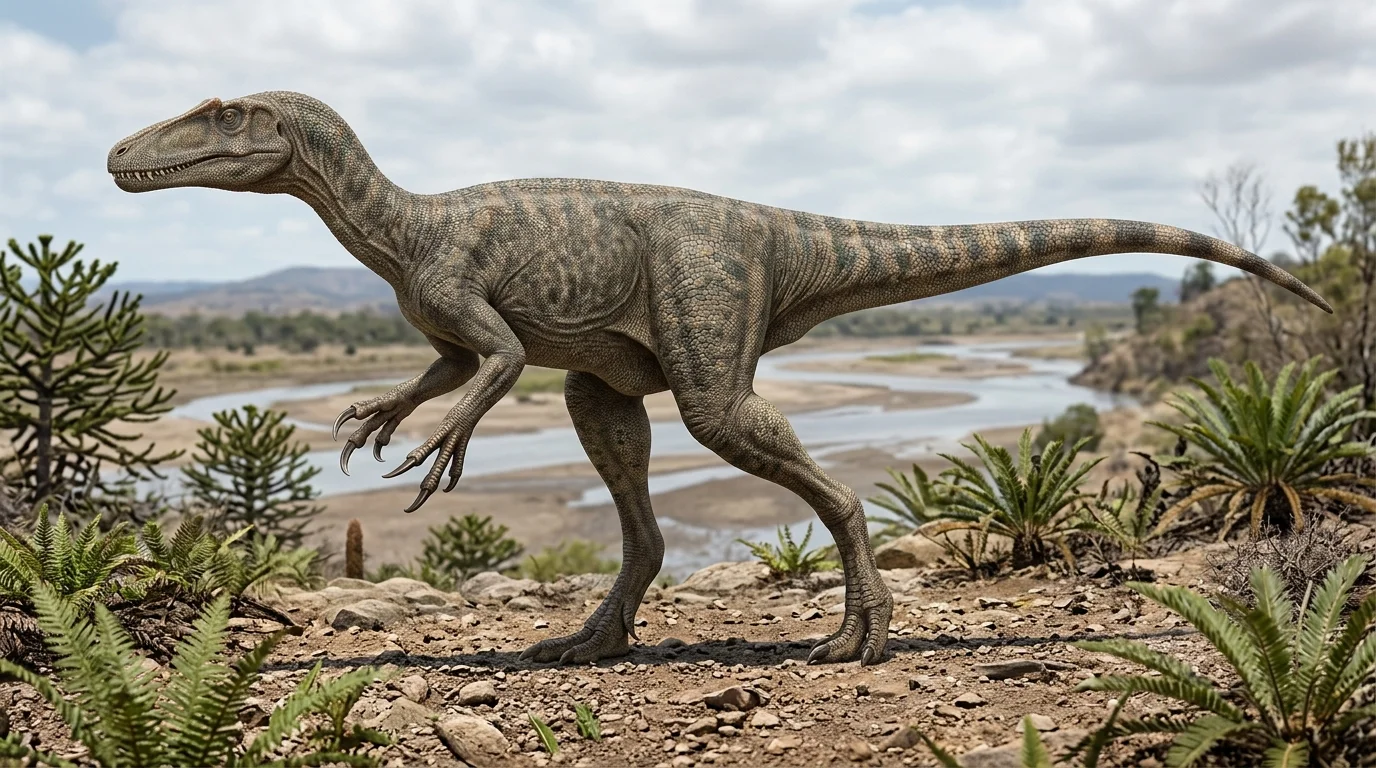
TheropodaAustralovenator wintonensis Hocknull et al., 2009
The 'cheetah of its time', a lightning-fast megaraptoran predator from the mid-Cretaceous of Australia.