Brontosaurus excelsus Marsh, 1879
The iconic 'thunder lizard', resurrected as a valid and distinct genus of diplodocid sauropod in 2015.

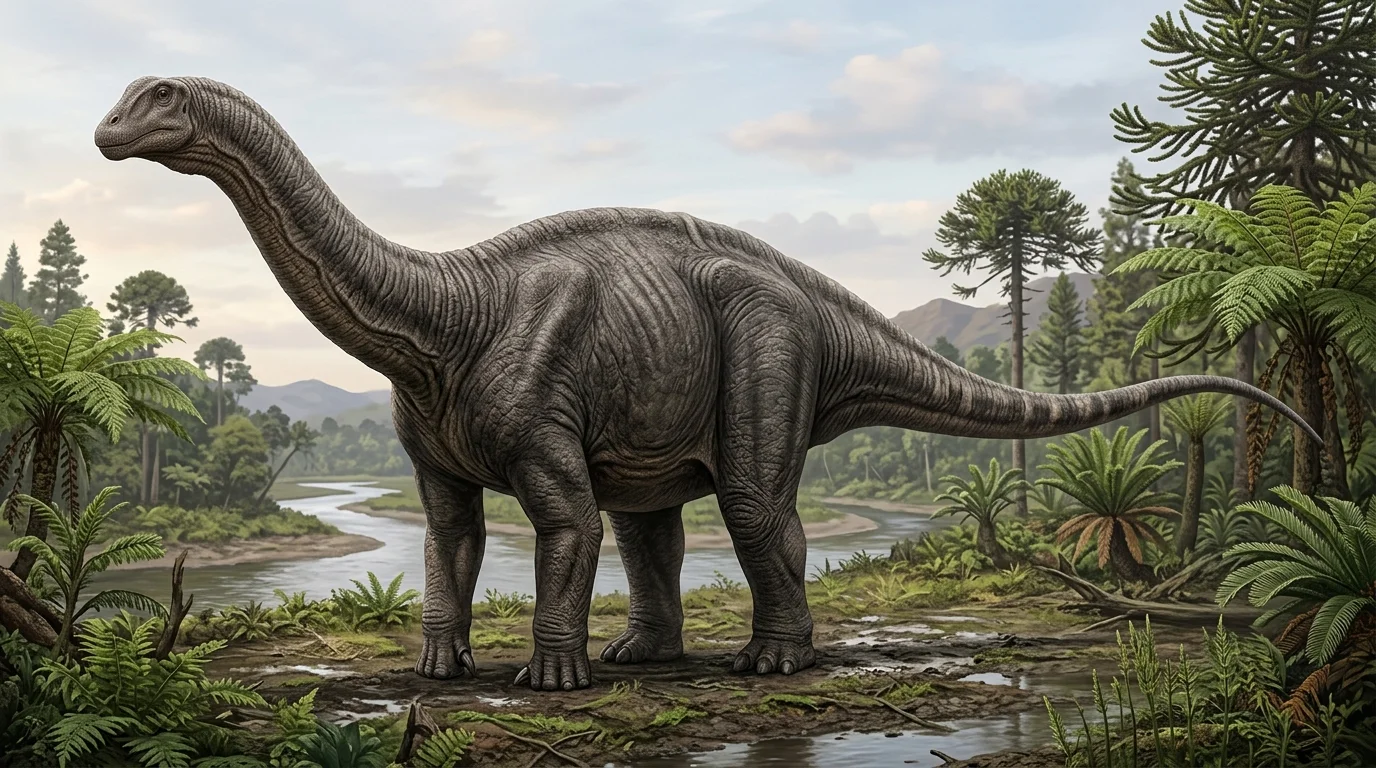
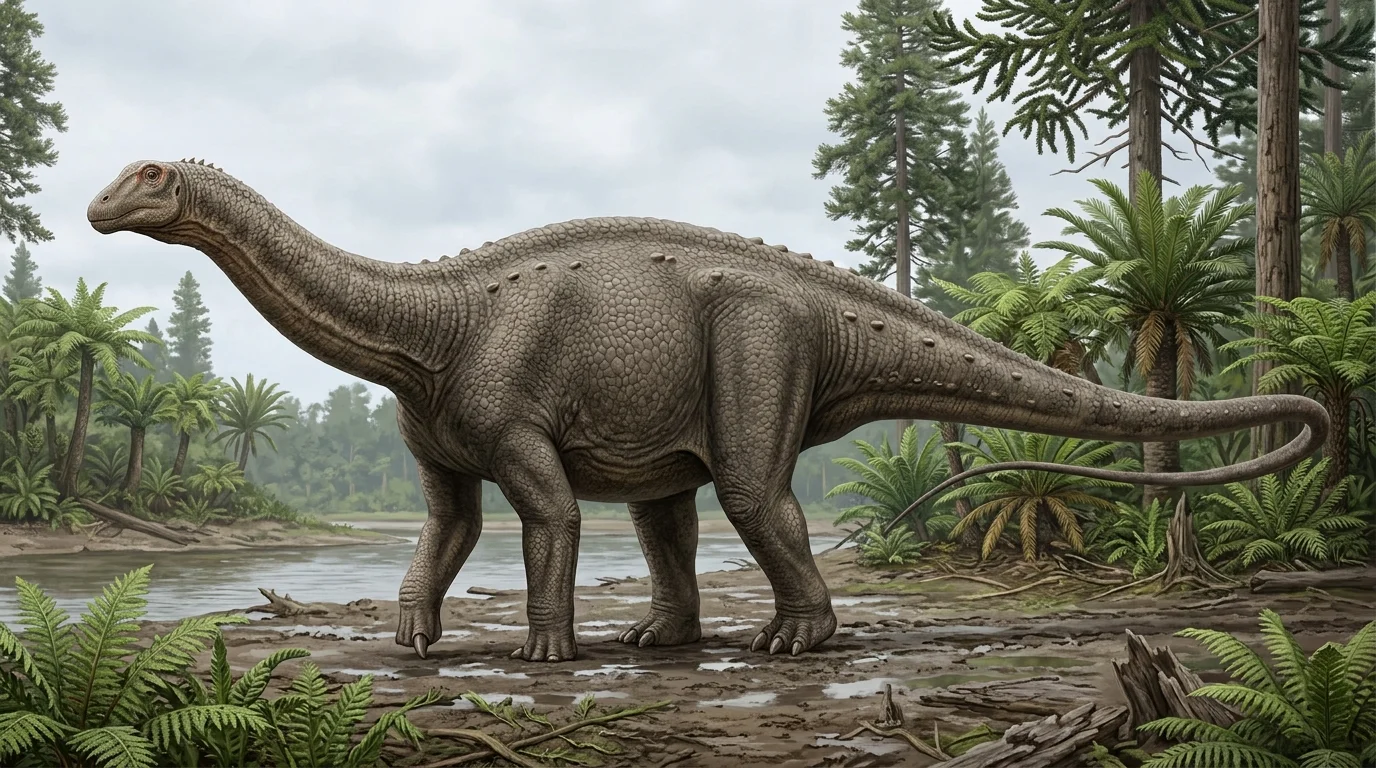
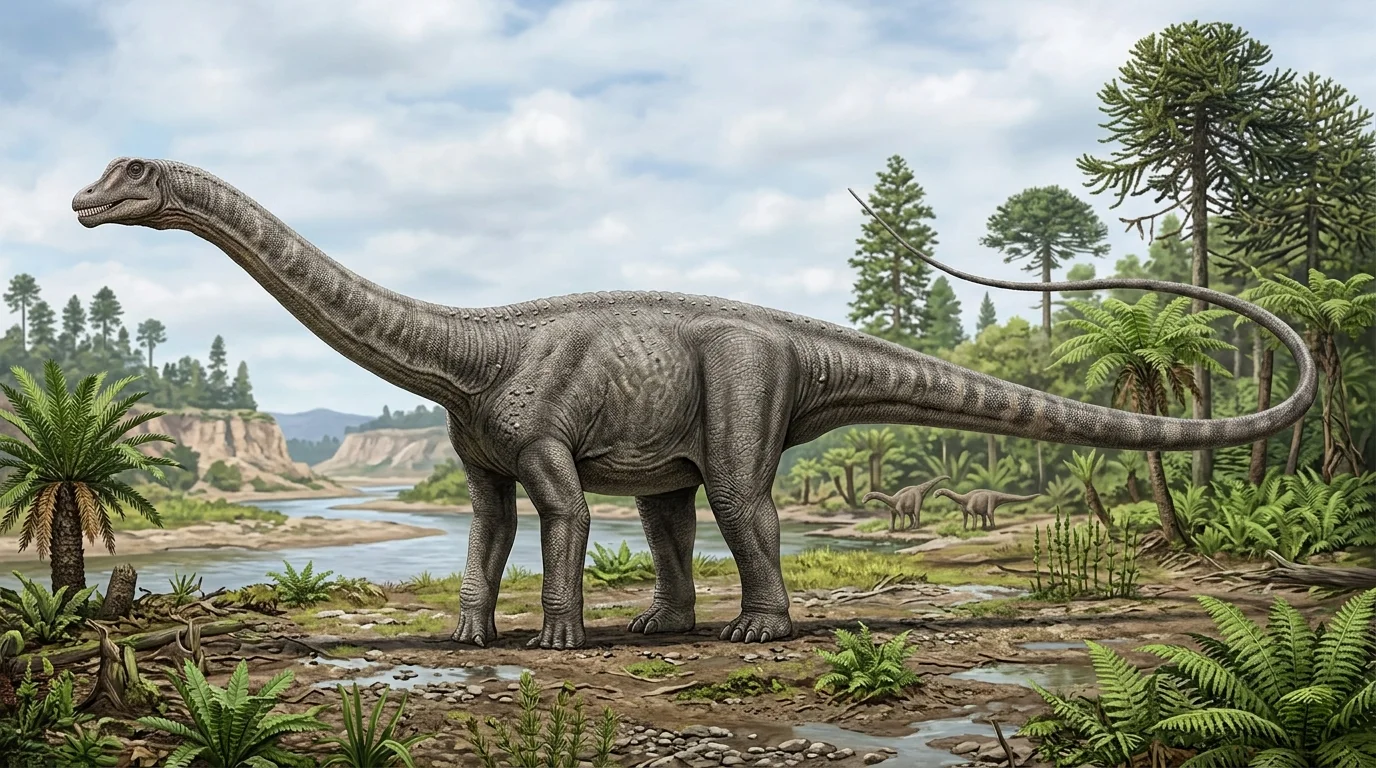
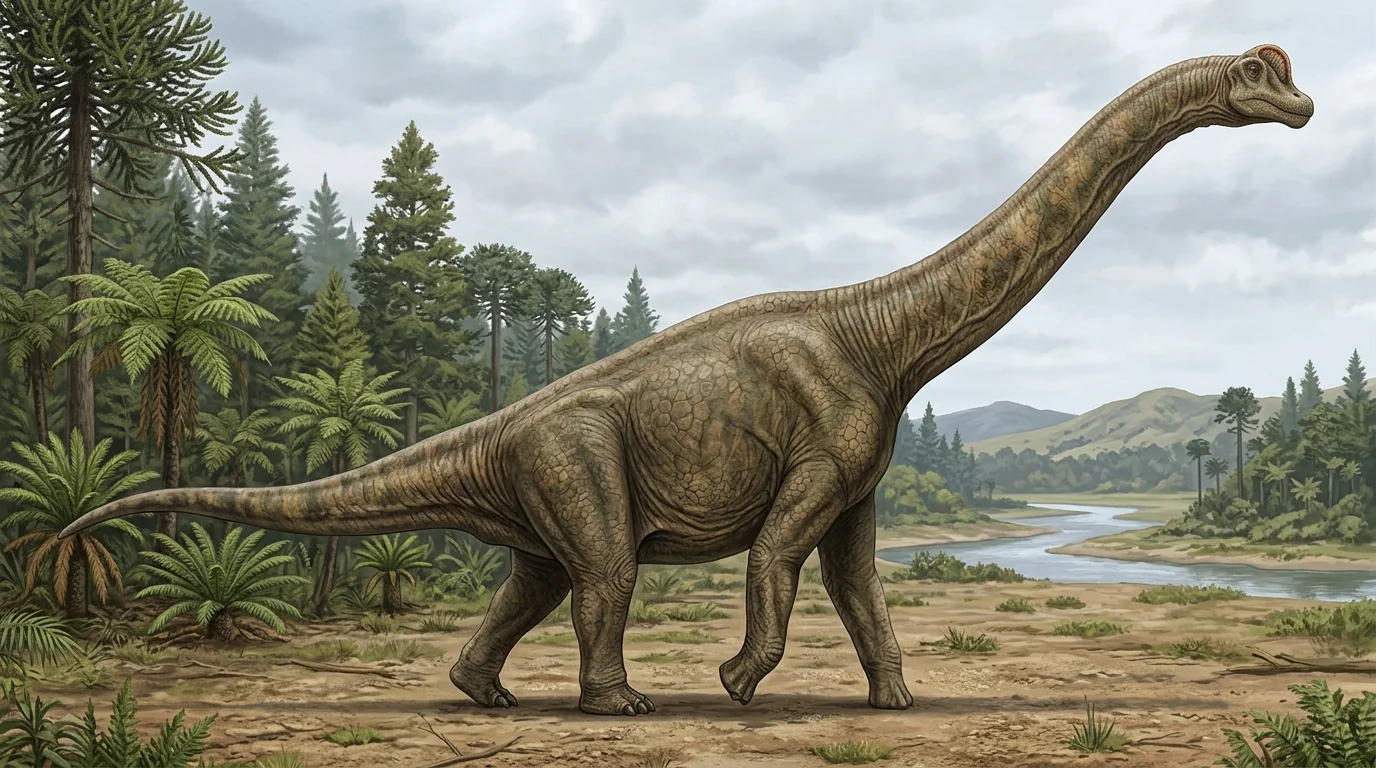
Scientific reconstruction of Brontosaurus (Brontosaurus excelsus Marsh, 1879) in its native Geological period: Jurassic Period.
Image Credit: AI-generated scientific paleoart reconstruction synthesized from species-specific osteological profiles and peer-reviewed descriptions. (AI-Generated / Open Educational Media (DinoOrigin Spec))
Phylogenetic classification of Brontosaurus excelsus Marsh, 1879 based on peer-reviewed cladistic analyses of diagnostic skeletal synapomorphies.
| Taxonomic Rank | Taxon / Clade | Diagnostic Context |
|---|---|---|
| Kingdom | Animalia | Monophyletic prehistoric clade |
| Phylum | Chordata | Monophyletic prehistoric clade |
| Clade | Dinosauria | Monophyletic prehistoric clade |
| Order | Saurischia (Lizard-Hipped Dinosaurs) | Characterized ancestrally by a triradiate pelvis with an anteriorly pointing pubis. |
| Suborder | Sauropodomorpha | Herbivorous saurischians characterized by elongated necks, columnar limbs, and enormous body volumes. |
| Genus | Brontosaurus | Monophyletic prehistoric clade |
| Species | Brontosaurus excelsus Marsh, 1879 | Specific authority designation |
Brontosaurus is one of the most culturally famous dinosaur names on Earth. For over a century, paleontologists considered it a junior synonym of Apatosaurus. However, a landmark 300-page phylogenetic study by Tschopp et al. in 2015 revealed numerous distinct morphological differences in the neck, shoulder girdle, and ankle, officially restoring Brontosaurus as a valid genus.
It was distinguished from Apatosaurus by its narrower vertebrae, taller neural spines, and distinct scapular morphology.
Heavy quadrupedal sauropod with high shoulder arches, stout neck, and an elongated whip tail.
Anatomical dimensions relative to an average adult human (1.8 m / 6 ft tall)
Herbivorous; utilized gastroliths and bacterial fermentation to digest tough gymnosperm foliage.
Heavy-set quadrupedal browser characterized by an exceptionally robust cervical vertebrae series. A prominent resident of the Morrison Formation, Brontosaurus shared foraging grounds with related sauropods like Apatosaurus and Diplodocus, navigating predatory threats from Allosaurus.
Semi-arid river basins and open conifer woodlands of western North America.
Famous holotype skeleton mounted at the Yale Peabody Museum (YPM 1980).
Discovered by William H. Reed; named by O.C. Marsh in 1879.
Marked by lush greenhouse climates, the breakup of Pangaea, and the evolutionary explosion of sauropods, plated stegosaurs, and apex megalosauroid and allosauroid theropods.
During the Mesozoic Era, continental drift progressively reconfigured land bridges, atmospheric currents, and regional precipitation regimes. Fossils of Brontosaurus evidence its adaptation to the paleoenvironments of North America.
Home to the fossil-rich Morrison Formation of the Late Jurassic and the Hell Creek and Dinosaur Park Formations of the Late Cretaceous.
The anatomical architecture of Brontosaurus serves as a crucial benchmark in vertebrate paleontology, illustrating key adaptive radiations within Sauropodomorpha.
Scientifically verified answers based on peer-reviewed paleontological evidence.
Brontosaurus lived during the Jurassic Period Period, approximately 155–152 Ma (million years ago). This places it within the Mesozoic Era.
Paleontological estimates place Brontosaurus at a length of 20–22 m (65.6–72.2 ft), a hip/standing height of 4.5–5 m (14.8–16.4 ft), and a body mass of 15.0–23.0 metric tons (33,069–50,706 lbs).
Classified as a herbivore, Brontosaurus specialized in consuming Herbivorous; utilized gastroliths and bacterial fermentation to digest tough gymnosperm foliage..
Fossil specimens of Brontosaurus have been recovered from Como Bluff, Wyoming, United States, with notable historic specimens documented in 1879. Discovered by William H. Reed; named by O.C. Marsh in 1879.
Authoritative citations establishing the factual taxonomy, biometrics, and anatomy of Brontosaurus.
Marsh, O. C. (1879). Notice of new Jurassic reptiles. American Journal of Science, 18(108), 501-505. https://doi.org/10.2475/ajs.s3-18.108.501
Curated & Verified: 2026-09-24Deposited in Mesozoic sedimentary strata preserving skeletal remains, teeth, or trace trackways.
Brontosaurus provides critical insights into the evolutionary radiation of Sauropodomorpha. Holotypes and fossil evidence indicate: Famous holotype skeleton mounted at the Yale Peabody Museum (YPM 1980).
Tschopp, E., Mateus, O., & Benson, R. B. J. (2015). A specimen-level phylogenetic analysis and taxonomic revision of Diplodocidae (Dinosauria, Sauropoda). PeerJ, 3, e857. https://doi.org/10.7717/peerj.857
SauropodomorphaApatosaurus ajax Marsh, 1877
A colossal, heavily built diplodocid sauropod characterized by thick cervical vertebrae and a whip-like tail.
SauropodomorphaBarosaurus lentus Marsh, 1890
A massive diplodocid with an extraordinarily long neck and shorter tail than Diplodocus.
Featured SpecimenSauropodomorphaBrachiosaurus altithorax Riggs, 1903
A monumental sauropod with forelimbs longer than hindlimbs, adapted for high-canopy browsing in Late Jurassic North America.