Diplodocus carnegii Hatcher, 1901
A slender, extremely elongated sauropod of Late Jurassic North America equipped with an 80-vertebra whip-like tail.

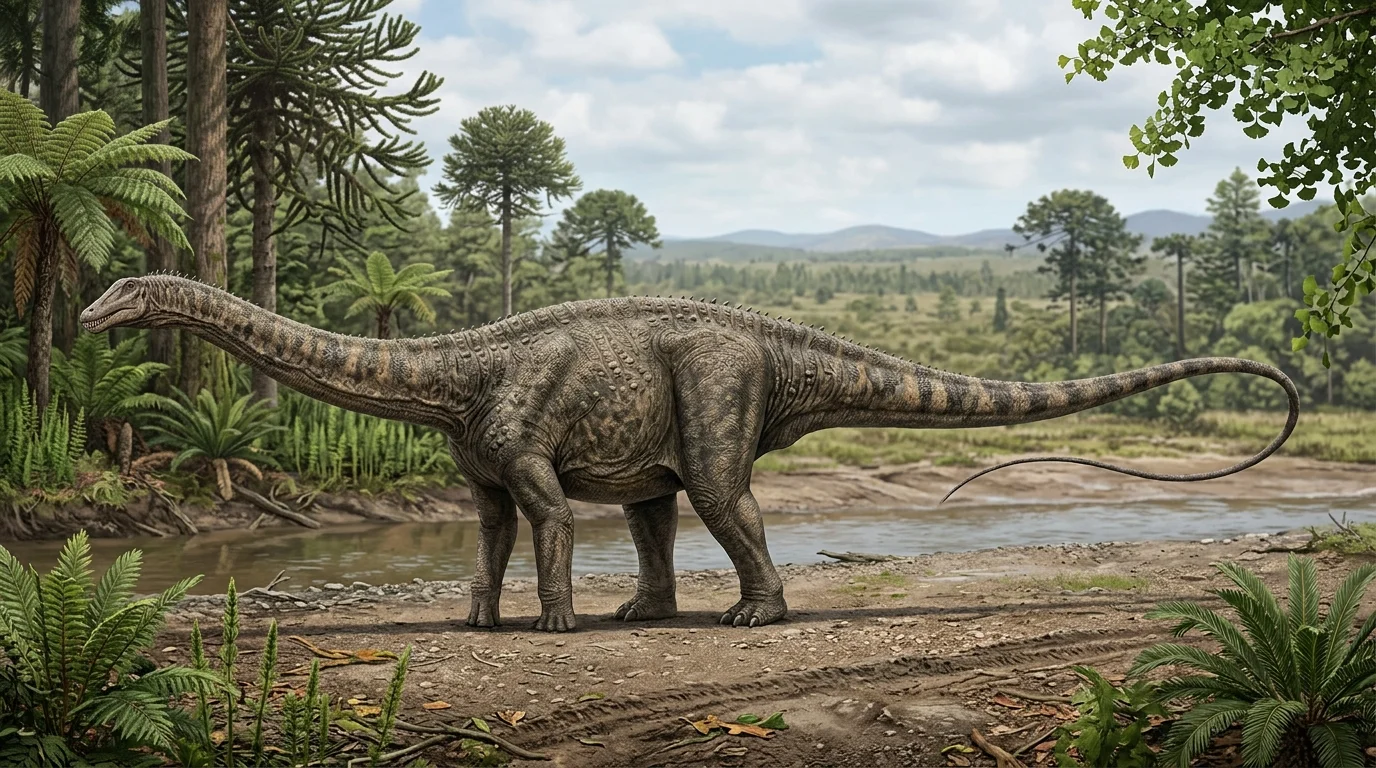
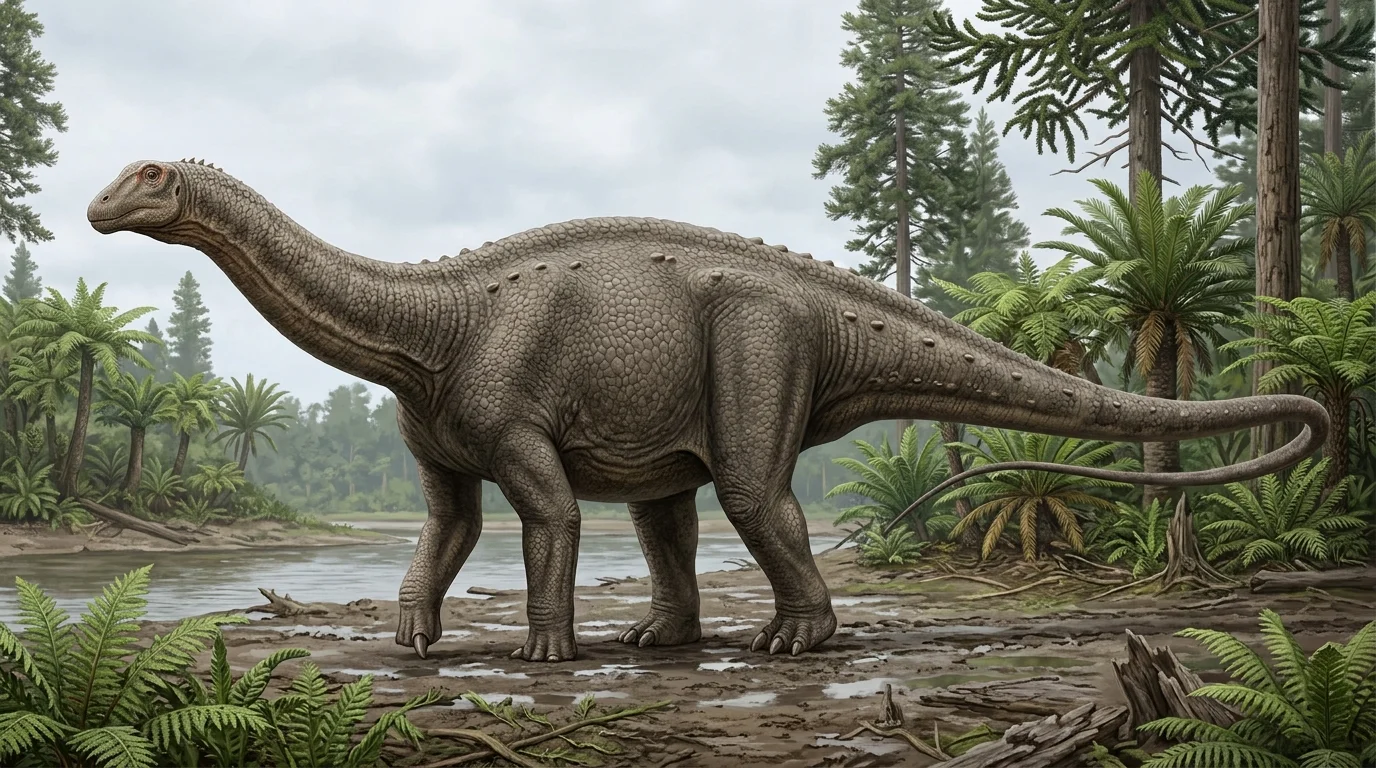
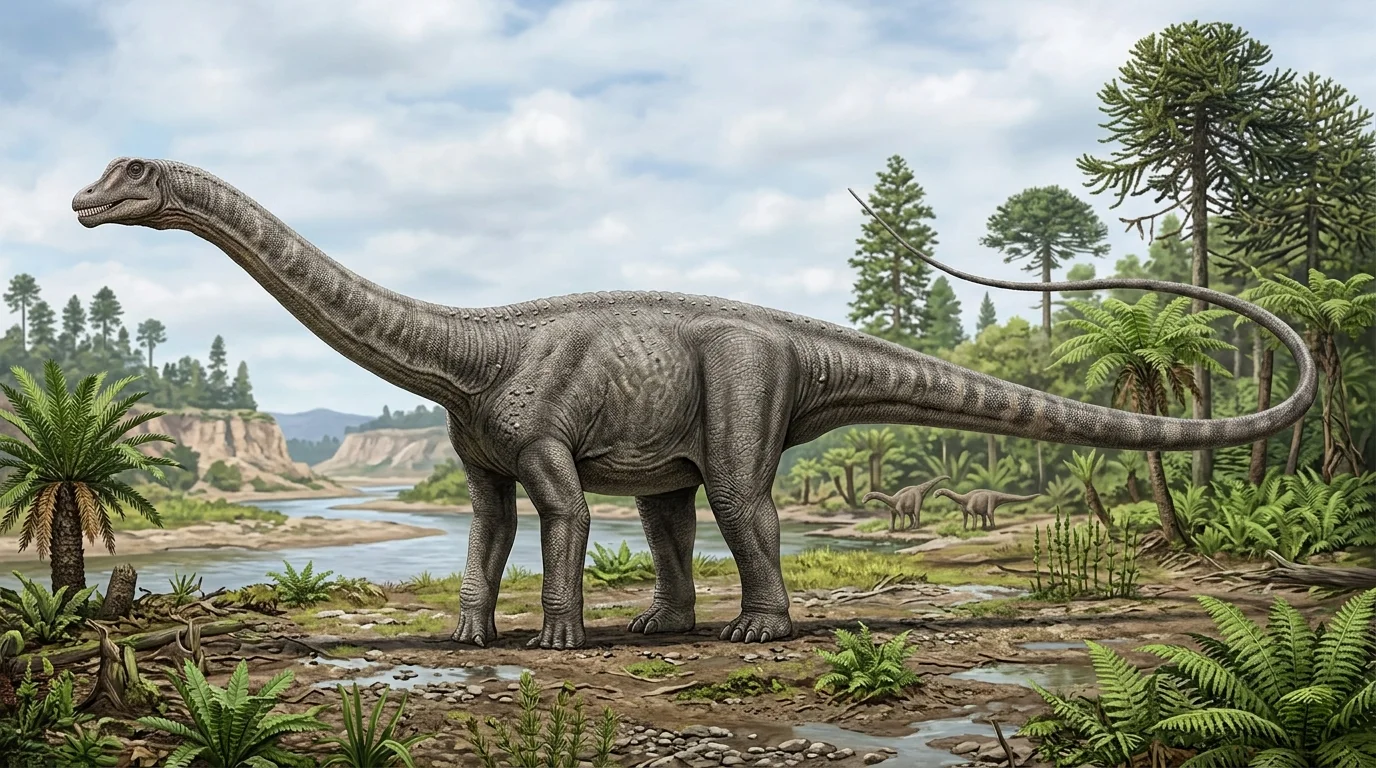
Scientific reconstruction of Diplodocus (Diplodocus carnegii Hatcher, 1901) in its native Geological period: Jurassic Period.
Image Credit: AI-generated scientific paleoart reconstruction synthesized from species-specific osteological profiles and peer-reviewed descriptions. (AI-Generated / Open Educational Media (DinoOrigin Spec))
Phylogenetic classification of Diplodocus carnegii Hatcher, 1901 based on peer-reviewed cladistic analyses of diagnostic skeletal synapomorphies.
| Taxonomic Rank | Taxon / Clade | Diagnostic Context |
|---|---|---|
| Kingdom | Animalia | Monophyletic prehistoric clade |
| Phylum | Chordata | Monophyletic prehistoric clade |
| Clade | Dinosauria | Monophyletic prehistoric clade |
| Order | Saurischia (Lizard-Hipped Dinosaurs) | Characterized ancestrally by a triradiate pelvis with an anteriorly pointing pubis. |
| Suborder | Sauropodomorpha | Herbivorous saurischians characterized by elongated necks, columnar limbs, and enormous body volumes. |
| Genus | Diplodocus | Monophyletic prehistoric clade |
| Species | Diplodocus carnegii Hatcher, 1901 | Specific authority designation |
Diplodocus carnegii is celebrated for its remarkable length and slender proportions relative to massive macronarians like Brachiosaurus. Measuring up to 26 meters in total length, over half of Diplodocus's span comprised an extraordinary whip-like tail containing approximately 80 caudal vertebrae.
Computer simulations demonstrate that the slender terminus of the tail could be cracked like a whip, generating supersonic booms in excess of 200 decibels for acoustic defense or intimidation. Its peg-like teeth were concentrated strictly at the anterior tip of the jaws, functioning like a comb to strip foliage from ferns and low conifers.
Long, low-slung sauropod with a tiny skull, nostrils positioned high on the forehead, and an extraordinarily long whip-like tail.
Anatomical dimensions relative to an average adult human (1.8 m / 6 ft tall)
Ferns, horsetails, mosses, and soft gymnosperm foliage stripped using pencil-like teeth.
Gregarious low-tier browser with an exceptionally long, whip-like tail capable of producing supersonic cracks for defense or intraspecific signaling. In the Morrison Formation, Diplodocus coexisted alongside high-browsing sauropods like Brachiosaurus and was actively hunted by Allosaurus.
Semi-arid floodplains and conifer river basins of the Morrison Formation.
Multiple articulated skeletons; casts of CM 84 ('Dippy') donated to major museums worldwide.
Named by Othniel Charles Marsh; D. carnegii discovered in 1899 and financed by industrialist Andrew Carnegie.
Marked by lush greenhouse climates, the breakup of Pangaea, and the evolutionary explosion of sauropods, plated stegosaurs, and apex megalosauroid and allosauroid theropods.
During the Mesozoic Era, continental drift progressively reconfigured land bridges, atmospheric currents, and regional precipitation regimes. Fossils of Diplodocus evidence its adaptation to the paleoenvironments of North America.
Home to the fossil-rich Morrison Formation of the Late Jurassic and the Hell Creek and Dinosaur Park Formations of the Late Cretaceous.
The anatomical architecture of Diplodocus serves as a crucial benchmark in vertebrate paleontology, illustrating key adaptive radiations within Sauropodomorpha.
Scientifically verified answers based on peer-reviewed paleontological evidence.
Diplodocus lived during the Jurassic Period Period, approximately 154–150 Ma (million years ago). This places it within the Mesozoic Era.
Paleontological estimates place Diplodocus at a length of 24–27 m (78.7–88.6 ft), a hip/standing height of 4–5 m (13.1–16.4 ft), and a body mass of 12.0–16.0 metric tons (26,455–35,274 lbs).
Classified as a herbivore, Diplodocus specialized in consuming Ferns, horsetails, mosses, and soft gymnosperm foliage stripped using pencil-like teeth..
Fossil specimens of Diplodocus have been recovered from Como Bluff, Albany County, Wyoming, United States, with notable historic specimens documented in 1878. Named by Othniel Charles Marsh; D. carnegii discovered in 1899 and financed by industrialist Andrew Carnegie.
Authoritative citations establishing the factual taxonomy, biometrics, and anatomy of Diplodocus.
Hatcher, J. B. (1901). Diplodocus (Marsh): Its osteology, taxonomy, and probable habits, with a restoration of the skeleton. Memoirs of the Carnegie Museum, 1(1), 1-63. https://doi.org/10.5962/bhl.title.46918
Curated & Verified: 2026-09-24Deposited in Mesozoic sedimentary strata preserving skeletal remains, teeth, or trace trackways.
Diplodocus provides critical insights into the evolutionary radiation of Sauropodomorpha. Holotypes and fossil evidence indicate: Multiple articulated skeletons; casts of CM 84 ('Dippy') donated to major museums worldwide.
SauropodomorphaApatosaurus ajax Marsh, 1877
A colossal, heavily built diplodocid sauropod characterized by thick cervical vertebrae and a whip-like tail.
SauropodomorphaBarosaurus lentus Marsh, 1890
A massive diplodocid with an extraordinarily long neck and shorter tail than Diplodocus.
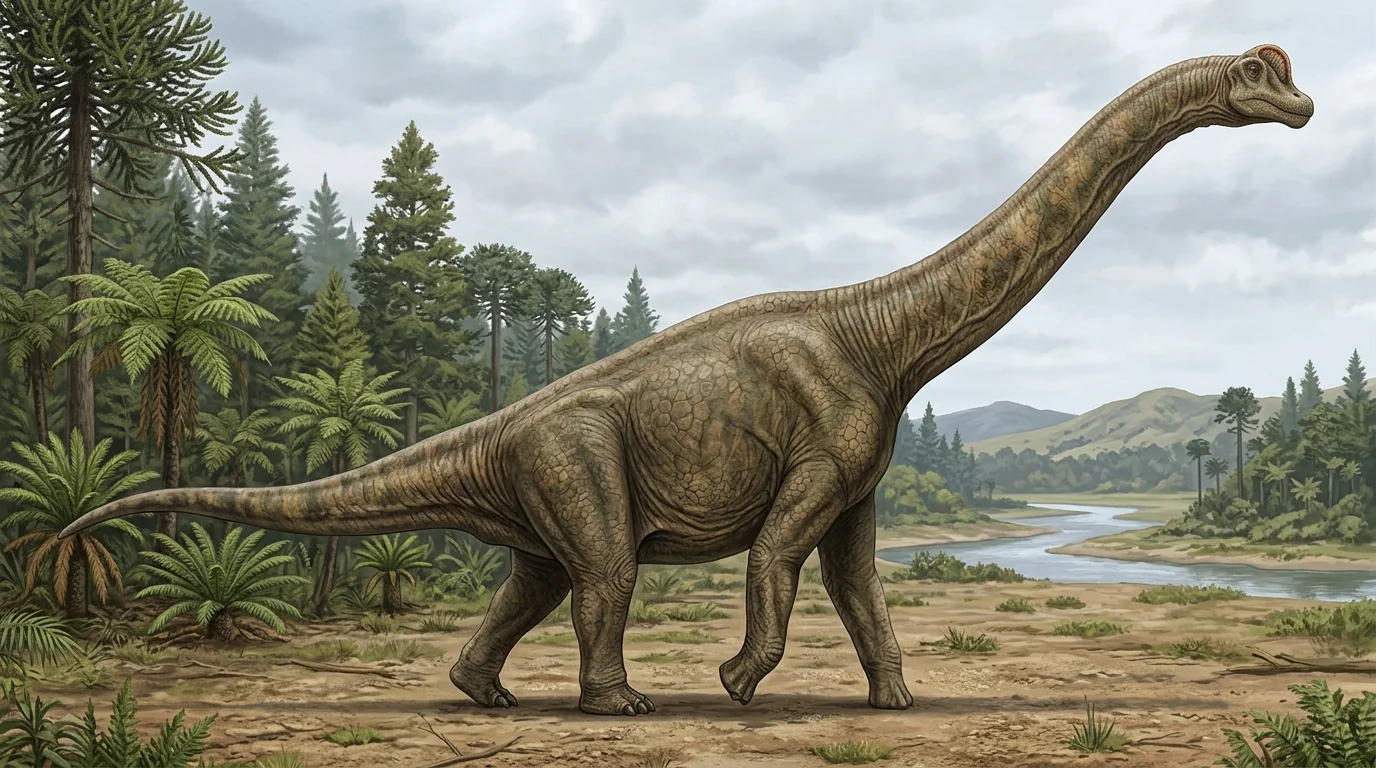
Featured SpecimenSauropodomorphaBrachiosaurus altithorax Riggs, 1903
A monumental sauropod with forelimbs longer than hindlimbs, adapted for high-canopy browsing in Late Jurassic North America.