Hesperosaurus mjosi Carpenter et al., 2001
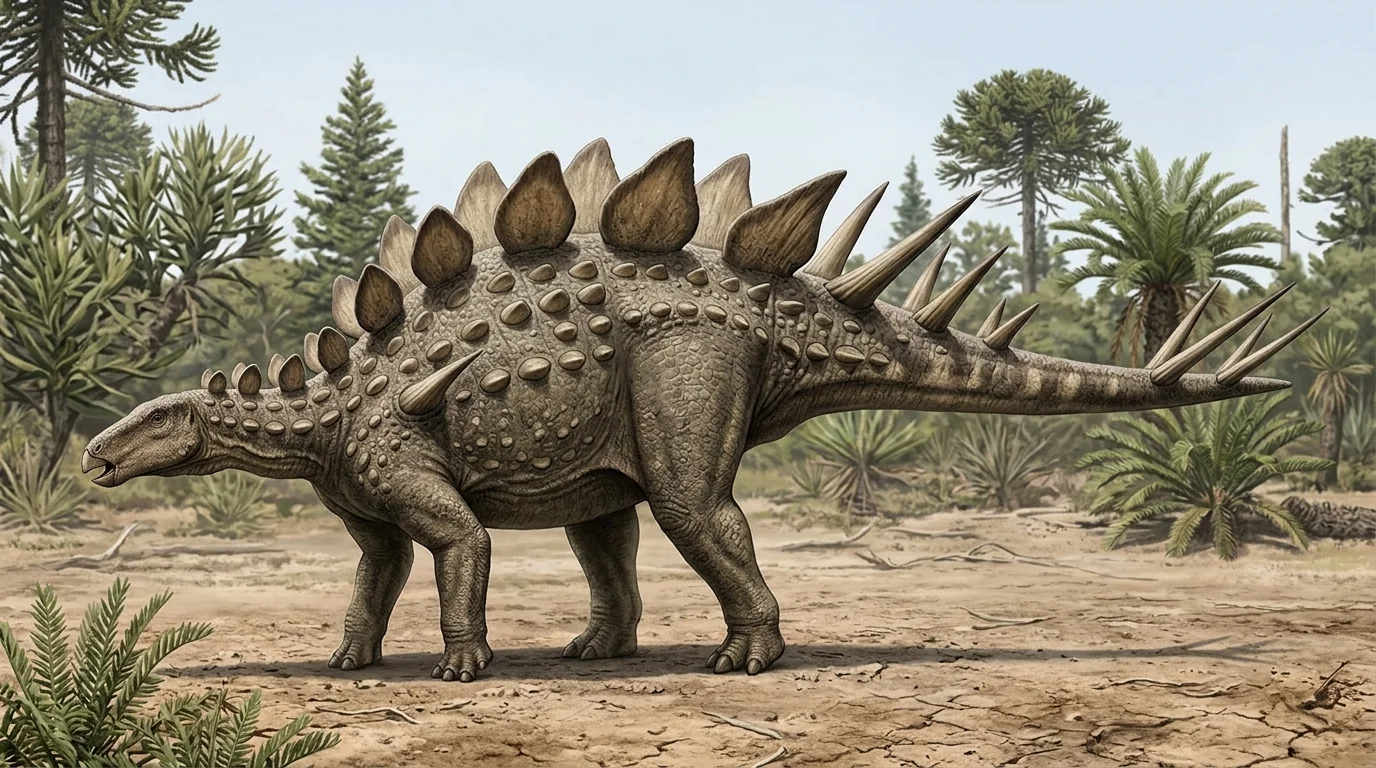
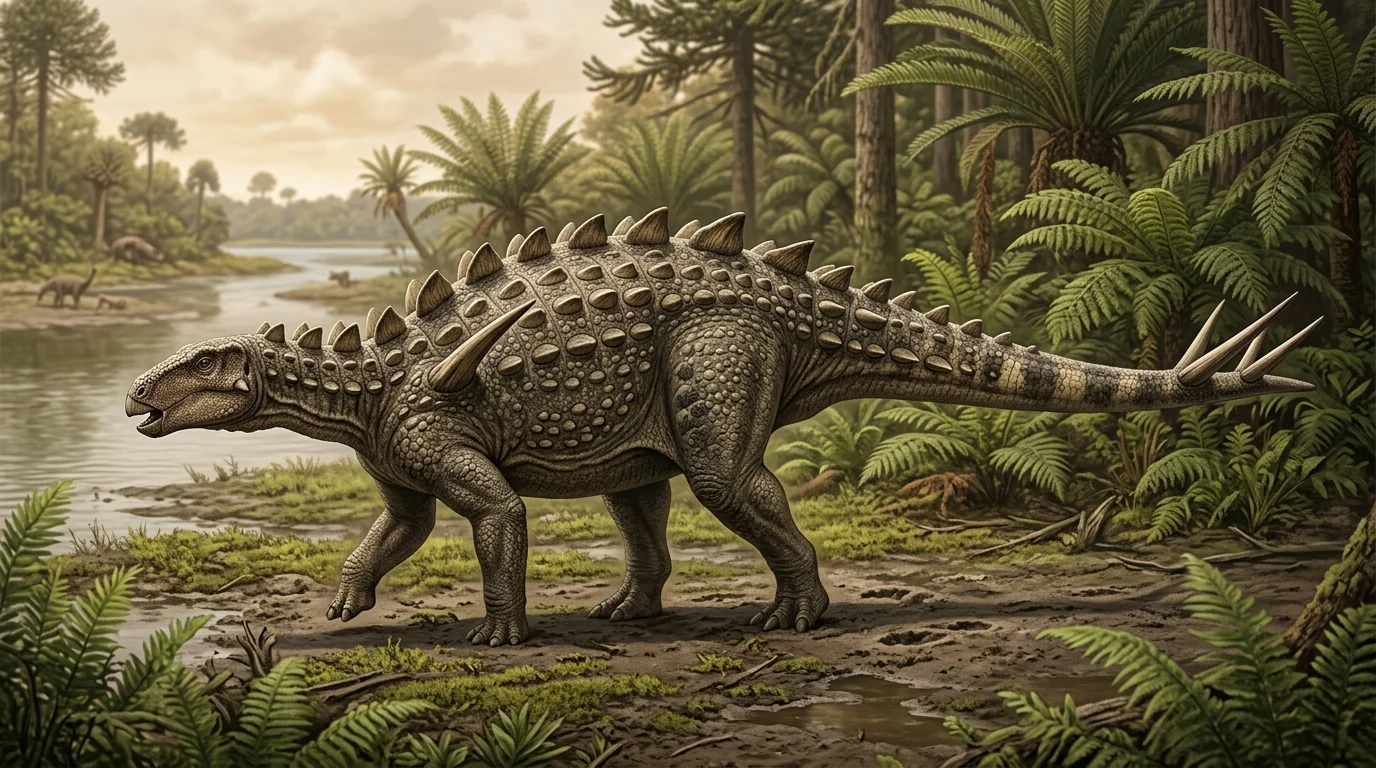
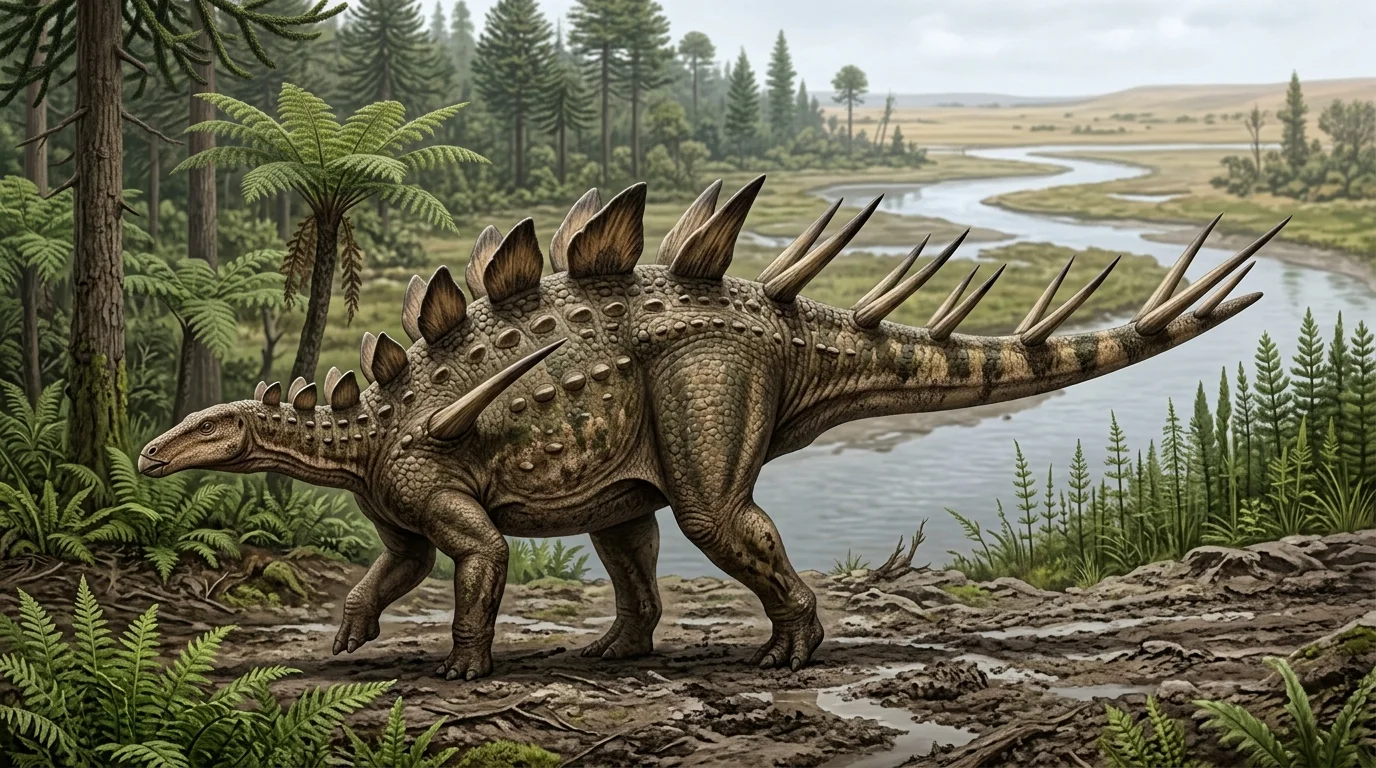
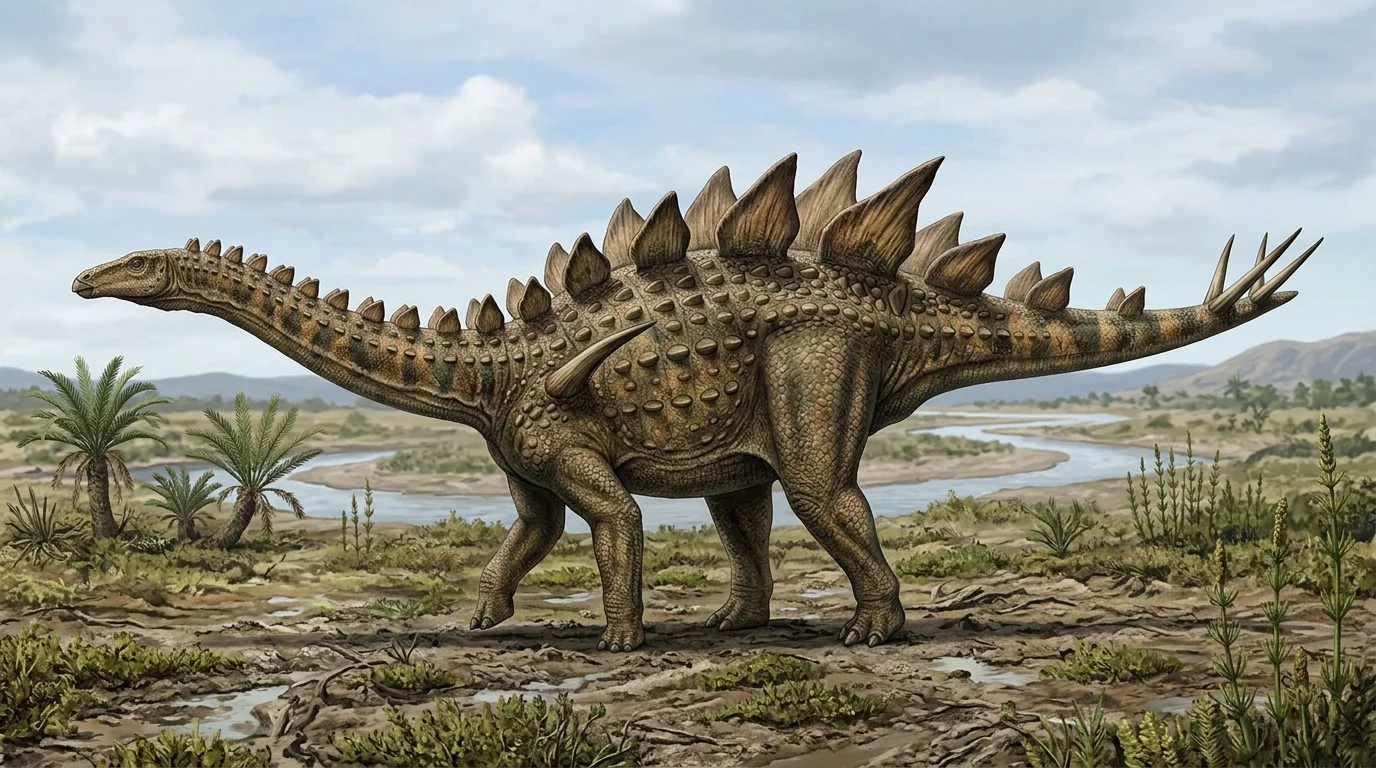
A Late Jurassic stegosaurid from Wyoming featuring wide, oval dorsal plates and a short, deep skull.

Scientific reconstruction of Hesperosaurus (Hesperosaurus mjosi Carpenter et al., 2001) in its native Geological period: Jurassic Period.
Image Credit: AI-generated scientific paleoart reconstruction synthesized from species-specific osteological profiles and peer-reviewed descriptions. (AI-Generated / Open Educational Media (DinoOrigin Spec))
Phylogenetic classification of Hesperosaurus mjosi Carpenter et al., 2001 based on peer-reviewed cladistic analyses of diagnostic skeletal synapomorphies.
| Taxonomic Rank | Taxon / Clade | Diagnostic Context |
|---|---|---|
| Kingdom | Animalia | Monophyletic prehistoric clade |
| Phylum | Chordata | Monophyletic prehistoric clade |
| Clade | Dinosauria | Monophyletic prehistoric clade |
| Order | Ornithischia (Bird-Hipped Dinosaurs) | Characterized by a pelvis with a backwards-pointing pubis parallel to the ischium. |
| Infraorder | Stegosauria | Quadrupedal herbivores distinguished by two rows of alternating dorsal plates and caudal tail spikes (thagomizers). |
| Genus | Hesperosaurus | Monophyletic prehistoric clade |
| Species | Hesperosaurus mjosi Carpenter et al., 2001 | Specific authority designation |
Hesperosaurus was a close relative of Stegosaurus that inhabited the older, lower levels of the Morrison Formation in Wyoming. It differed from its famous cousin by having an unusually short, broad skull and wide, oval-shaped dorsal plates that were broader than they were tall.
Exceptionally preserved impressions show that its plates were covered in an outer keratinous sheath that substantially extended their size and colorful display surface in life.
Deep skull, low front posture, rounded oval dorsal plates, and four sharp tail spikes.
Anatomical dimensions relative to an average adult human (1.8 m / 6 ft tall)
Low ferns, mosses, and horsetails cropped with a keratinous beak and ridged cheek teeth.
Plated stegosaurid herbivore possessing broad oval dorsal plates and tail spikes used for defense. Excavated from the northern Morrison Formation, Hesperosaurus was contemporary with the closely related Stegosaurus and shared its habitat with apex theropods like Allosaurus.
Semi-arid floodplains and savannah woodlands with seasonal watering holes.
Nearly complete articulated skeleton including complete skull and soft-tissue impressions.
Found by fossil collector Ronald Mjos; described by Kenneth Carpenter et al. in 2001.
Marked by lush greenhouse climates, the breakup of Pangaea, and the evolutionary explosion of sauropods, plated stegosaurs, and apex megalosauroid and allosauroid theropods.
During the Mesozoic Era, continental drift progressively reconfigured land bridges, atmospheric currents, and regional precipitation regimes. Fossils of Hesperosaurus evidence its adaptation to the paleoenvironments of North America.
Home to the fossil-rich Morrison Formation of the Late Jurassic and the Hell Creek and Dinosaur Park Formations of the Late Cretaceous.
The anatomical architecture of Hesperosaurus serves as a crucial benchmark in vertebrate paleontology, illustrating key adaptive radiations within Stegosauria.
Scientifically verified answers based on peer-reviewed paleontological evidence.
Hesperosaurus lived during the Jurassic Period Period, approximately 156–150 Ma (million years ago). This places it within the Mesozoic Era.
Paleontological estimates place Hesperosaurus at a length of 6–7 m (19.7–23.0 ft), a hip/standing height of 2–2.5 m (6.6–8.2 ft), and a body mass of 1.8–2.8 metric tons (3,968–6,173 lbs).
Classified as a herbivore, Hesperosaurus specialized in consuming Low ferns, mosses, and horsetails cropped with a keratinous beak and ridged cheek teeth..
Fossil specimens of Hesperosaurus have been recovered from Morrison Formation, Johnson County, Wyoming, United States, with notable historic specimens documented in 1985. Found by fossil collector Ronald Mjos; described by Kenneth Carpenter et al. in 2001.
Authoritative citations establishing the factual taxonomy, biometrics, and anatomy of Hesperosaurus.
Carpenter, K., Miles, C. A., & Cloward, K. (2001). New primitive stegosaur from the Morrison Formation, Wyoming. The Armored Dinosaurs, Indiana University Press, 55-75.
Curated & Verified: 2026-09-24Deposited in Mesozoic sedimentary strata preserving skeletal remains, teeth, or trace trackways.
Hesperosaurus provides critical insights into the evolutionary radiation of Stegosauria. Holotypes and fossil evidence indicate: Nearly complete articulated skeleton including complete skull and soft-tissue impressions.
StegosauriaHuayangosaurus taibaii Dong et al., 1982
One of the most primitive known stegosaurs, retaining premaxillary teeth and spike-like shoulder armor.
StegosauriaKentrosaurus aethiopicus Hennig, 1915
A spiky East African stegosaur equipped with dermal plates along its neck and long sharp spikes along its back and hips.
StegosauriaMiragaia longicollum Mateus et al., 2009
A long-necked European stegosaur from Portugal possessing at least 17 neck vertebrae.