Staurikosaurus pricei Colbert, 1970
An early predatory dinosaur from the Late Triassic Santa Maria Formation of Brazil, often placed within Herrerasauridae with debated phylogenetic affinities.

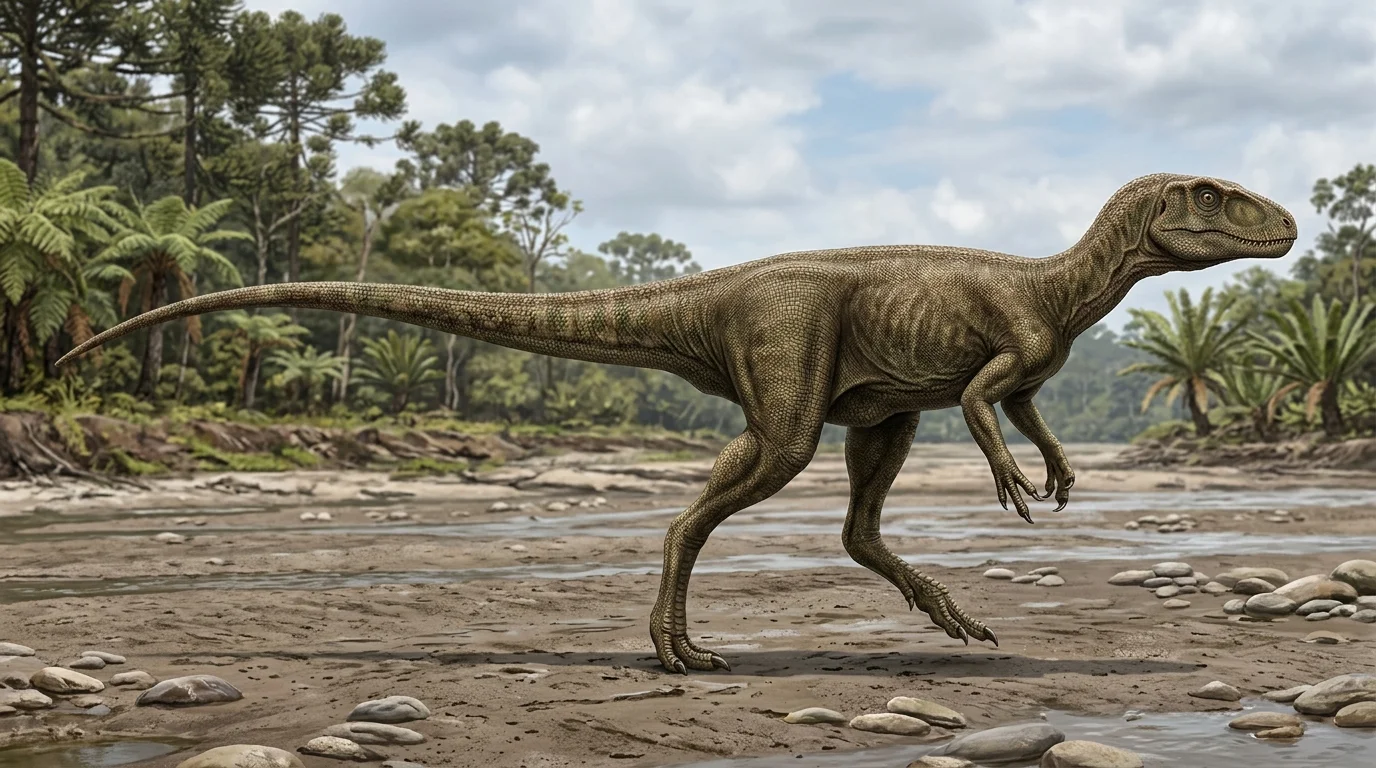
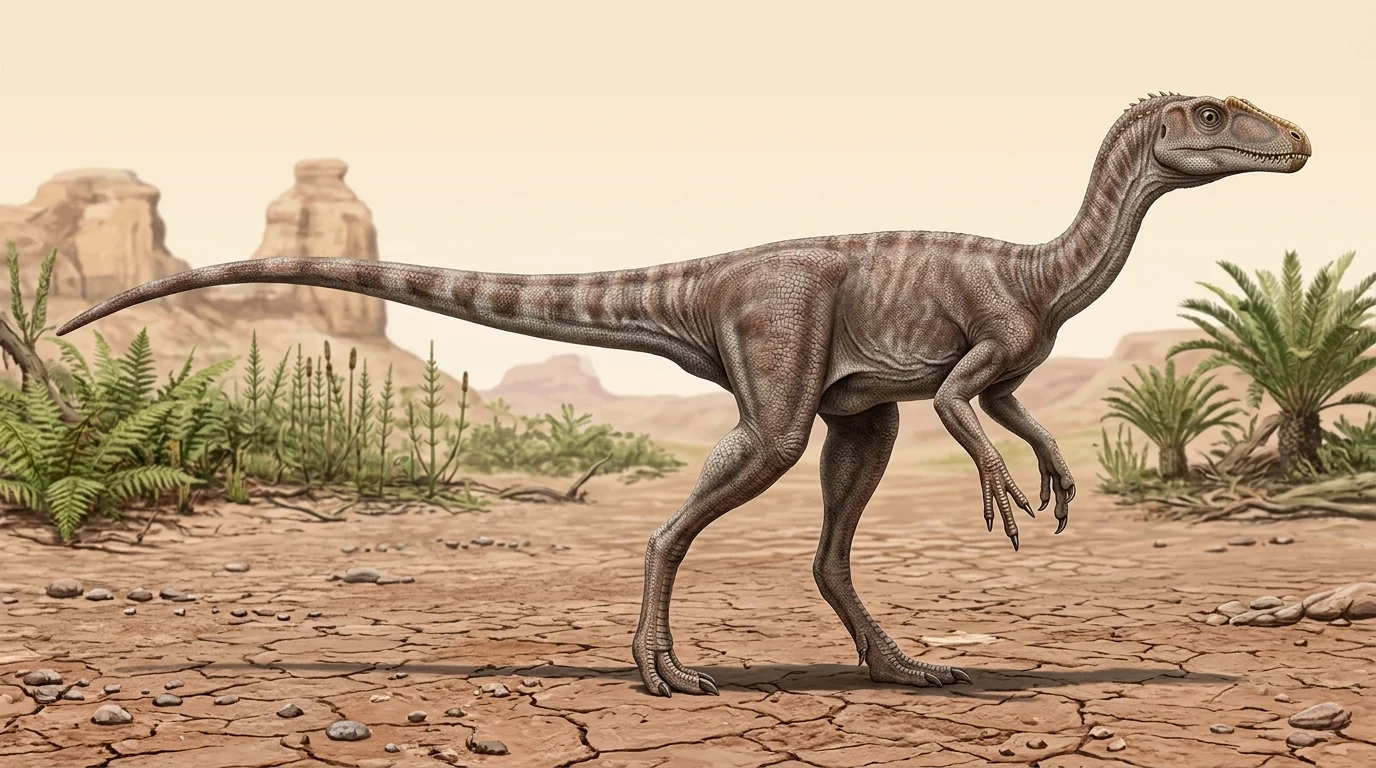
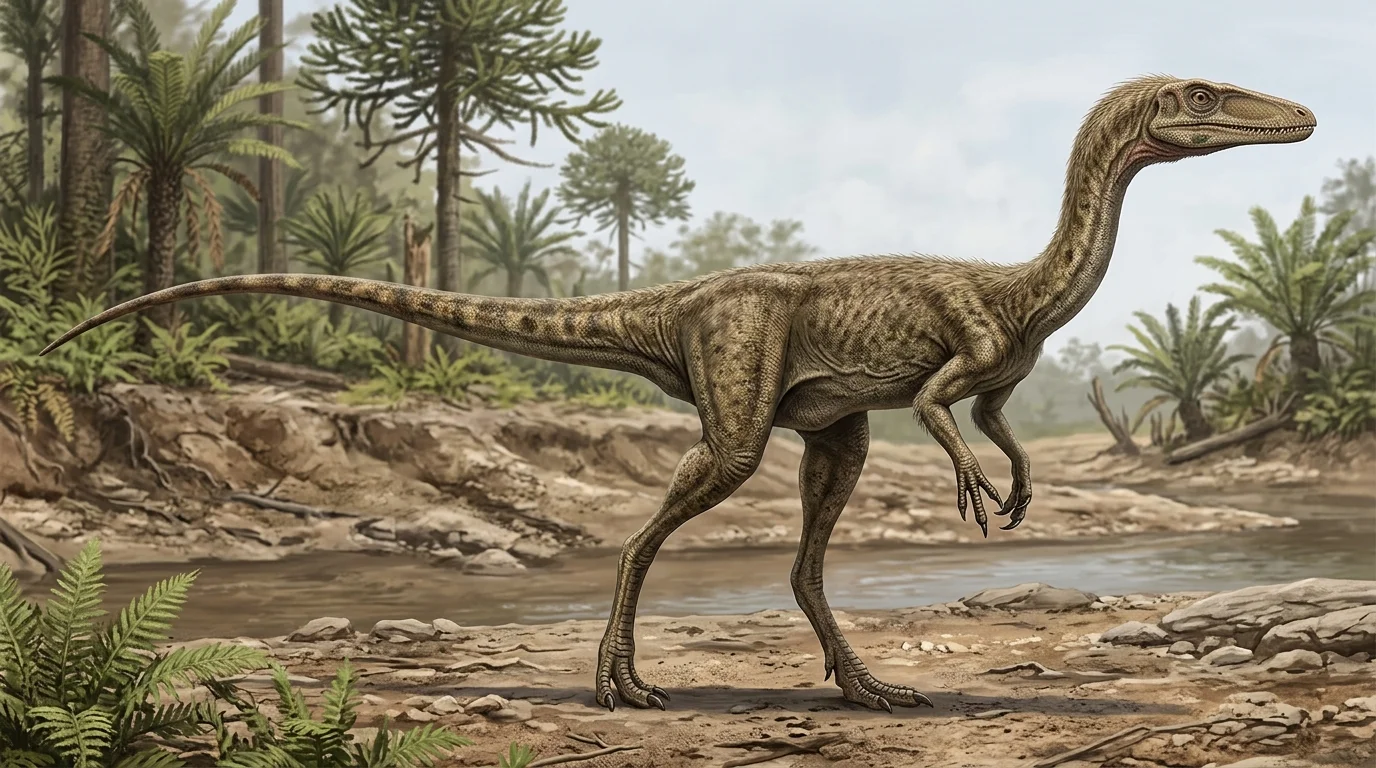
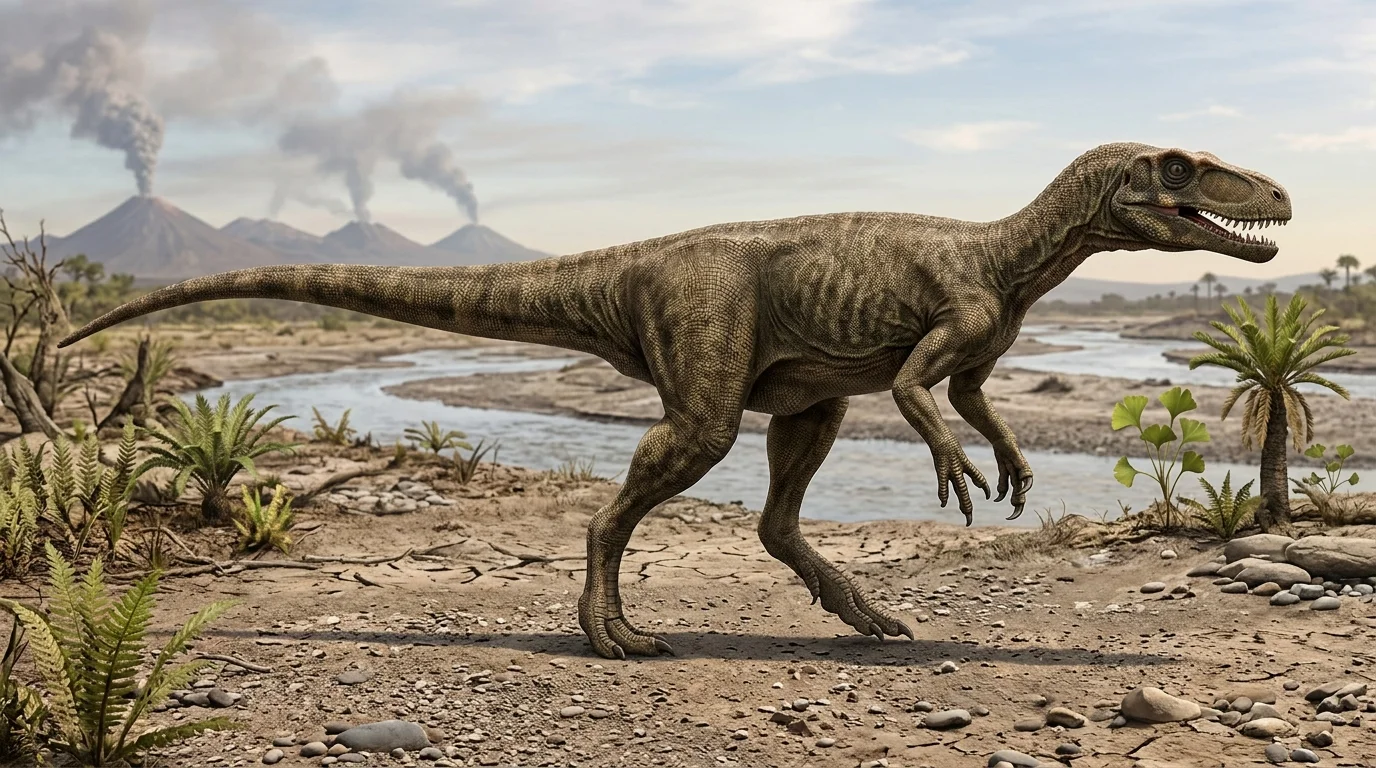
Scientific reconstruction of Staurikosaurus (Staurikosaurus pricei Colbert, 1970) in its native Geological period: Triassic Period.
Image Credit: AI-generated scientific paleoart reconstruction synthesized from species-specific osteological profiles and peer-reviewed descriptions. (AI-Generated / Open Educational Media (DinoOrigin Spec))
Phylogenetic classification of Staurikosaurus pricei Colbert, 1970 based on peer-reviewed cladistic analyses of diagnostic skeletal synapomorphies.
| Taxonomic Rank | Taxon / Clade | Diagnostic Context |
|---|---|---|
| Kingdom | Animalia | Monophyletic prehistoric clade |
| Phylum | Chordata | Monophyletic prehistoric clade |
| Clade | Dinosauria | Monophyletic prehistoric clade |
| Order | Saurischia (Lizard-Hipped Dinosaurs) | Characterized ancestrally by a triradiate pelvis with an anteriorly pointing pubis. |
| Suborder | Theropoda | Bipedal saurischian dinosaurs, historically dominated by carnivores and including the avian lineage. |
| Genus | Staurikosaurus | Monophyletic prehistoric clade |
| Species | Staurikosaurus pricei Colbert, 1970 | Specific authority designation |
Staurikosaurus is an early carnivorous dinosaur known from the Carnian beds of the Santa Maria Formation of southern Brazil. Bearing a lightly constructed skeleton with primitive pelvic and vertebral architecture, it was a swift cursorial predator adapted to hunting small vertebrates.
Phylogenetically, Staurikosaurus is often grouped within Herrerasauridae, but whether this family represents an early-diverging theropod lineage or a more basal branch of Saurischia outside eusaurischians remains debated among paleontologists.
Lightly constructed body, deep lower jaw, elongate slender legs, and long stiffening tail.
Anatomical dimensions relative to an average adult human (1.8 m / 6 ft tall)
Carnivorous; consumed small cynodonts, rhynchosaurs, and archosauromorphs.
Small, agile predatory dinosaur representing one of the earliest known branches of Saurischia. Preserved in the Late Triassic Santa Maria Formation of Brazil, Staurikosaurus was ecologically and phylogenetically comparable to Argentine contemporaries like Herrerasaurus.
Seasonal tropical woodland and braided river floodplains.
Partial skeleton consisting of vertebrae, pelvis, and hind limbs housed at Harvard MCZ.
Found by Brazilian paleontologist Llewellyn Ivor Price; formally described by Edwin H. Colbert in 1970.
The dawn of the Mesozoic Era. Dinosaurs first emerged in the Late Triassic following the catastrophic Permian-Triassic extinction event, initially occupying modest niches alongside crurotarsan archosaurs.
During the Mesozoic Era, continental drift progressively reconfigured land bridges, atmospheric currents, and regional precipitation regimes. Fossils of Staurikosaurus evidence its adaptation to the paleoenvironments of South America.
Preserved within the Huincul, Candeleros, and Ischigualasto formations, hosting colossal titanosaurs and specialized abelisaurid and carcharodontosaurid apex predators.
The anatomical architecture of Staurikosaurus serves as a crucial benchmark in vertebrate paleontology, illustrating key adaptive radiations within Theropoda.
Scientifically verified answers based on peer-reviewed paleontological evidence.
Staurikosaurus lived during the Triassic Period Period, approximately 233.2–225 Ma (million years ago). This places it within the Mesozoic Era.
Paleontological estimates place Staurikosaurus at a length of 2–2.5 m (6.6–8.2 ft), a hip/standing height of 0.7–0.9 m (2.3–3.0 ft), and a body mass of 25–40 kg (55–88 lbs).
Classified as a carnivore, Staurikosaurus specialized in consuming Carnivorous; consumed small cynodonts, rhynchosaurs, and archosauromorphs..
Fossil specimens of Staurikosaurus have been recovered from Santa Maria Formation, Rio Grande do Sul, Brazil, with notable historic specimens documented in 1936. Found by Brazilian paleontologist Llewellyn Ivor Price; formally described by Edwin H. Colbert in 1970.
Authoritative citations establishing the factual taxonomy, biometrics, and anatomy of Staurikosaurus.
Colbert, E. H. (1970). A saurischian dinosaur from the Triassic of Brazil. American Museum Novitates, 2405, 1-39.
Curated & Verified: 2026-09-24Deposited in Mesozoic sedimentary strata preserving skeletal remains, teeth, or trace trackways.
Staurikosaurus provides critical insights into the evolutionary radiation of Theropoda. Holotypes and fossil evidence indicate: Partial skeleton consisting of vertebrae, pelvis, and hind limbs housed at Harvard MCZ.
TheropodaChindesaurus bryansmalli Long & Murry, 1995
A basal carnivorous dinosaur from the Chinle Formation of the Petrified Forest National Park.
TheropodaCoelophysis bauri Cope, 1887
A slender, agile early theropod from the Late Triassic, known from hundreds of well-preserved skeletons at Ghost Ranch, New Mexico.
TheropodaHerrerasaurus ischigualastensis Reig, 1963
An early predatory dinosaur from the Late Triassic Ischigualasto Formation of Argentina whose precise phylogenetic position near the root of Saurischia remains debated.