Loading species comparison matrix...
Direct Paleobiological Analysis
Allosaurusvs.Archaeopteryx
A side-by-side scientific comparison of physiological dimensions, biomechanics, temporal horizons, and anatomical specializations.
Comparing 2 of maximum 4 specimens
 Theropoda
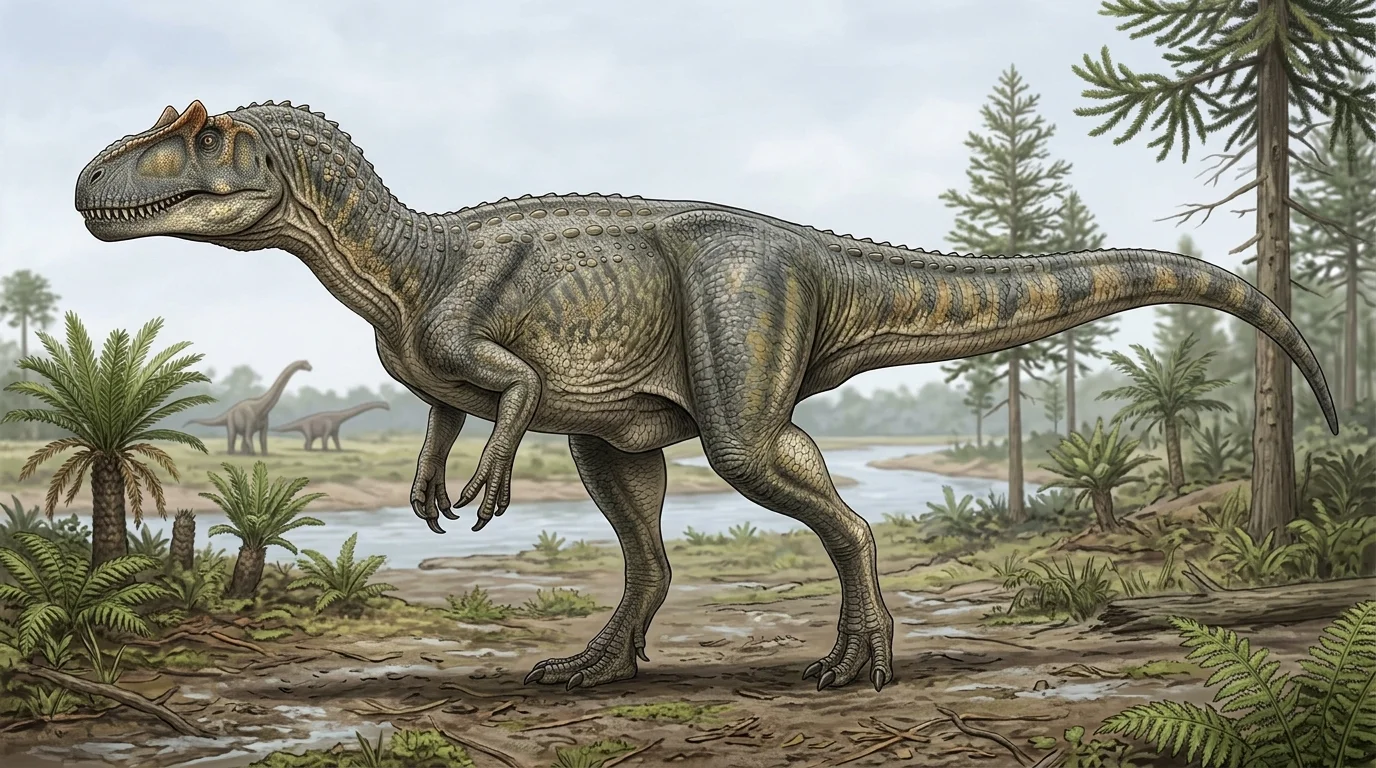
Allosaurus
Allosaurus fragilis Marsh, 1877
The most abundant apex theropod of Late Jurassic North America, equipped with a kinetic skull and slashing serrated teeth.
 Theropoda
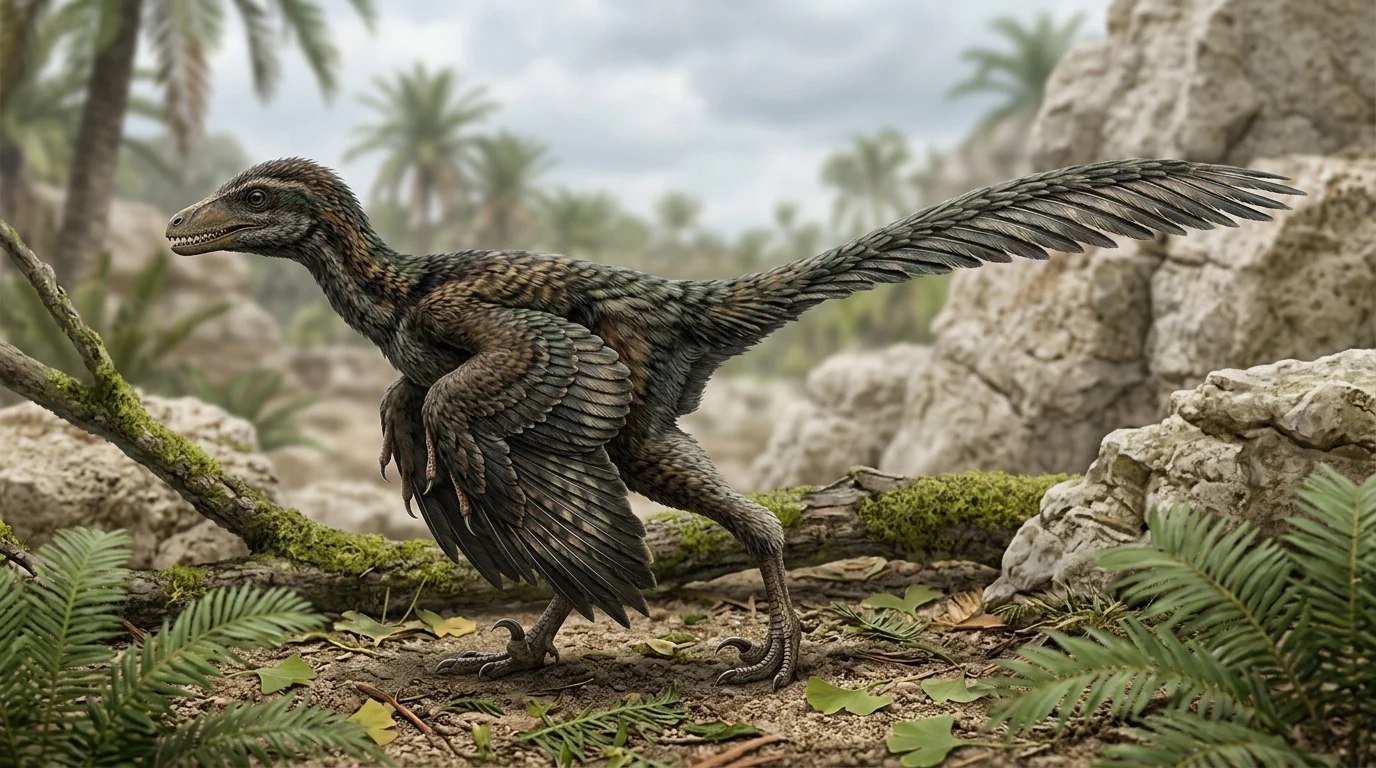
Archaeopteryx
Archaeopteryx lithographica von Meyer, 1861
An iconic stem-avialan from the Late Jurassic Solnhofen limestone exhibiting transitional features bridging non-avian theropods and birds.
Comparative Paleobiological & Anatomical Matrix
| Feature / Trait | Allosaurus | Archaeopteryx |
|---|---|---|
Total Length | 8.5–9.7 m (27.9–31.8 ft) Estimated maximum | 0.4–0.5 m (1.3–1.6 ft) Estimated maximum |
Hip Height | 2.8–3.3 m (9.2–10.8 ft) Model estimate | 0.25–0.35 m (0.8–1.1 ft) Model estimate |
Body Mass | 1.8–2.7 metric tons (3,968–5,952 lbs) Volumetric/allometric model | 0.5–1 kg (1–2 lbs) Volumetric/allometric model |
Epoch Horizon | Jurassic Period 155–145 Ma (million years ago) | Jurassic Period 150–148 Ma (million years ago) |
Diet & Trophic Role | Carnivore Sauropods (Diplodocus, Camarasaurus), stegosaurs, and ornithopods (Dryosaurus, Camptosaurus). | Carnivore Carnivorous/insectivorous; small lizards, crustaceans, and insects. |
Taxonomic Clade | Theropoda(Suborder) | Theropoda(Suborder) |
Fossil Localities | Garden Park, Canon City, Colorado, United States Named: 1877 | Solnhofen Limestone, Bavaria, Germany Named: 1861 |
Locomotion & Behavior | Bonebed accumulations such as the Cleveland-Lloyd Dinosaur Quarry, where over 40 individual Allosaurus specimens were recovered, have sparked intense scientific discussion. Hypotheses range from catastrophic predator traps around toxic waterholes to drought-driven feeding aggregations. Bone pathologies show frequent fractures and healed injuries, indicating aggressive predatory life encounters and intraspecific fighting. | Inhabiting a semi-arid subtropical archipelago of lagoonal islands, Archaeopteryx likely foraged along limestone coastlines and scrub conifer thickets for insects, small crustaceans, and small terrestrial reptiles. Claw curvature analyses suggest both cursorial ground foraging and perching or climbing capabilities in low arborescent vegetation. |
Holotype & Fossils | One of the richest fossil records of any large dinosaur, with thousands of bones and dozens of complete or near-complete skeletons known. Iconic specimens include O. C. Marsh's 1877 holotype (YPM 1930) and the subadult specimen MOR 693 ('Big Al'), which preserves 95% of its skeleton alongside 19 distinct bone pathologies. | Represented by exactly 12 body fossil specimens and one isolated feather impression recovered from the Solnhofen limestone. Notable specimens include the London specimen holotype (NHMUK PV OR 37001), the exquisitely articulated Berlin specimen (HMN 1880/81) preserving clear feather tracts and skull, and the Maxberg and Eichstätt specimens. |
Paleontological Uncertainty Advisory: Anatomical dimensions, body masses, and metabolic rates are scientific estimates derived from volumetric scaling, laser scanning, and biomechanical limb bone allometry. Missing traits indicate non-preserved fossil elements rather than anatomical absence.