Compsognathus longipes Wagner, 1859
A petite, nimble Late Jurassic coelurosaur about the size of a chicken, historically famous as one of the smallest known dinosaurs.

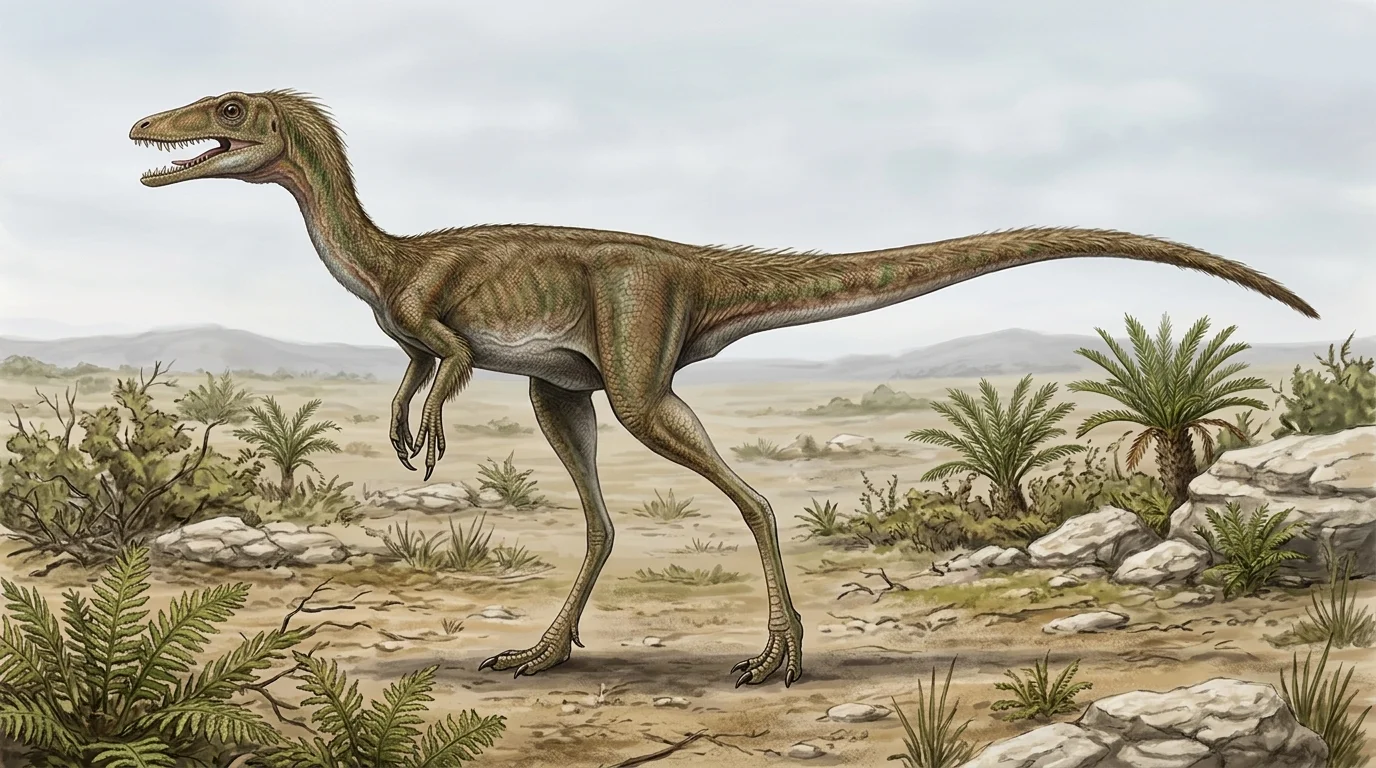
Scientific reconstruction of Compsognathus (Compsognathus longipes Wagner, 1859) in its native Geological period: Jurassic Period.
Image Credit: AI-generated scientific paleoart reconstruction synthesized from species-specific osteological profiles and peer-reviewed descriptions. (AI-Generated / Open Educational Media (DinoOrigin Spec))
Phylogenetic classification of Compsognathus longipes Wagner, 1859 based on peer-reviewed cladistic analyses of diagnostic skeletal synapomorphies.
| Taxonomic Rank | Taxon / Clade | Diagnostic Context |
|---|---|---|
| Kingdom | Animalia | Monophyletic prehistoric clade |
| Phylum | Chordata | Monophyletic prehistoric clade |
| Clade | Dinosauria | Monophyletic prehistoric clade |
| Order | Saurischia (Lizard-Hipped Dinosaurs) | Characterized ancestrally by a triradiate pelvis with an anteriorly pointing pubis. |
| Suborder | Theropoda | Bipedal saurischian dinosaurs, historically dominated by carnivores and including the avian lineage. |
| Genus | Compsognathus | Monophyletic prehistoric clade |
| Species | Compsognathus longipes Wagner, 1859 | Specific authority designation |
Compsognathus longipes ('elegant jaw') was a small, bipedal carnivorous theropod of the Late Jurassic European archipelago. Reaching roughly 1 meter in length and weighing just 2 to 3.5 kg, Compsognathus served historically as a pivotal specimen demonstrating the structural similarities between reptiles and Archaeopteryx.
Exceptionally preserved stomach contents in the German holotype reveal the articulated skeleton of the fast-running squamate Bavarisaurus, proving that Compsognathus was an agile predator with sharp reflexes capable of catching swift lizards.
Slender, delicate bipedal theropod with long cursorial hind legs, a very long balance tail, and sharp recurved teeth.
Anatomical dimensions relative to an average adult human (1.8 m / 6 ft tall)
Small squamates (Bavarisaurus), rhynchocephalians, and Mesozoic insects.
Small, agile carnivore preying on lizards and fast-moving invertebrates on dry scrub islands. Excavated from the fine-grained Solnhofen limestone of Bavaria, Compsognathus lived in the exact same subtropical lagoonal ecosystem as the stem-bird Archaeopteryx.
Arid limestone lagoon islands and scrubby littoral woodlands of the Solnhofen archipelago.
Two well-preserved complete skeletons: the German holotype (BSP AS I 563) and a larger French specimen (MNHN CNJ 79).
Discovered by fossil collector Joseph Oberndorfer; described by Johann A. Wagner in 1859.
Marked by lush greenhouse climates, the breakup of Pangaea, and the evolutionary explosion of sauropods, plated stegosaurs, and apex megalosauroid and allosauroid theropods.
During the Mesozoic Era, continental drift progressively reconfigured land bridges, atmospheric currents, and regional precipitation regimes. Fossils of Compsognathus evidence its adaptation to the paleoenvironments of Europe.
During the Mesozoic, Europe was largely an archipelago of islands, resulting in unique insular dwarf species and classic historical fossil discoveries.
The anatomical architecture of Compsognathus serves as a crucial benchmark in vertebrate paleontology, illustrating key adaptive radiations within Theropoda.
Scientifically verified answers based on peer-reviewed paleontological evidence.
Compsognathus lived during the Jurassic Period Period, approximately 150.8–145.5 Ma (million years ago). This places it within the Mesozoic Era.
Paleontological estimates place Compsognathus at a length of 0.9–1.1 m (3.0–3.6 ft), a hip/standing height of 0.3–0.4 m (1.0–1.3 ft), and a body mass of 2–3.5 kg (4–8 lbs).
Classified as a carnivore, Compsognathus specialized in consuming Small squamates (Bavarisaurus), rhynchocephalians, and Mesozoic insects..
Fossil specimens of Compsognathus have been recovered from Solnhofen, Bavaria, Germany, with notable historic specimens documented in 1859. Discovered by fossil collector Joseph Oberndorfer; described by Johann A. Wagner in 1859.
Authoritative citations establishing the factual taxonomy, biometrics, and anatomy of Compsognathus.
Ostrom, J. H. (1978). The osteology of Compsognathus longipes Wagner. Zitteliana, 4, 73-118.
Curated & Verified: 2026-09-24Deposited in Mesozoic sedimentary strata preserving skeletal remains, teeth, or trace trackways.
Compsognathus provides critical insights into the evolutionary radiation of Theropoda. Holotypes and fossil evidence indicate: Two well-preserved complete skeletons: the German holotype (BSP AS I 563) and a larger French specimen (MNHN CNJ 79).
Wagner, J. A. (1859). Vorläufige Mittheilung über ein neues kriechendes Thier (Reptil) aus den lithographischen Schiefern von Solenhofen. Gelehrte Anzeigen der Königlich Bayerischen Akademie der Wissenschaften, 49, 550-552.
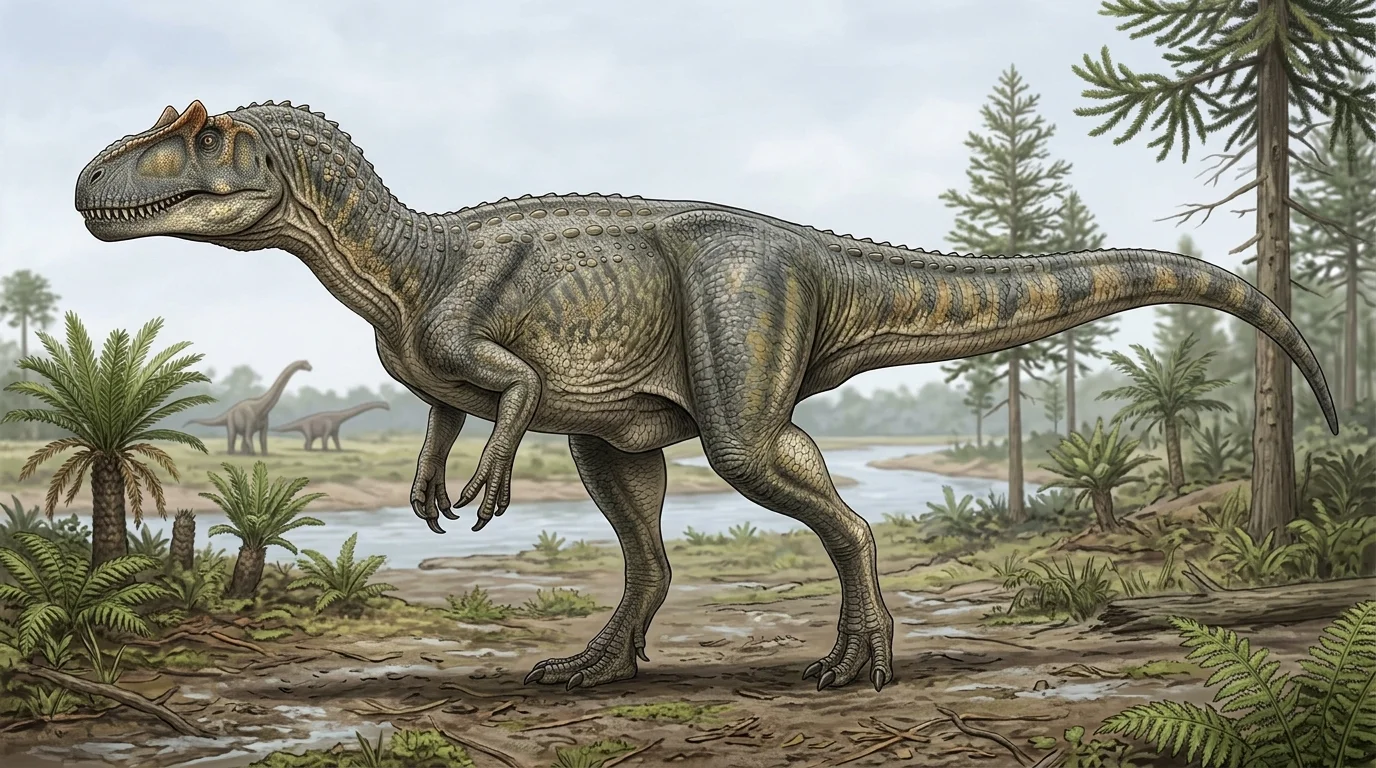
TheropodaAllosaurus fragilis Marsh, 1877
The most abundant apex theropod of Late Jurassic North America, equipped with a kinetic skull and slashing serrated teeth.
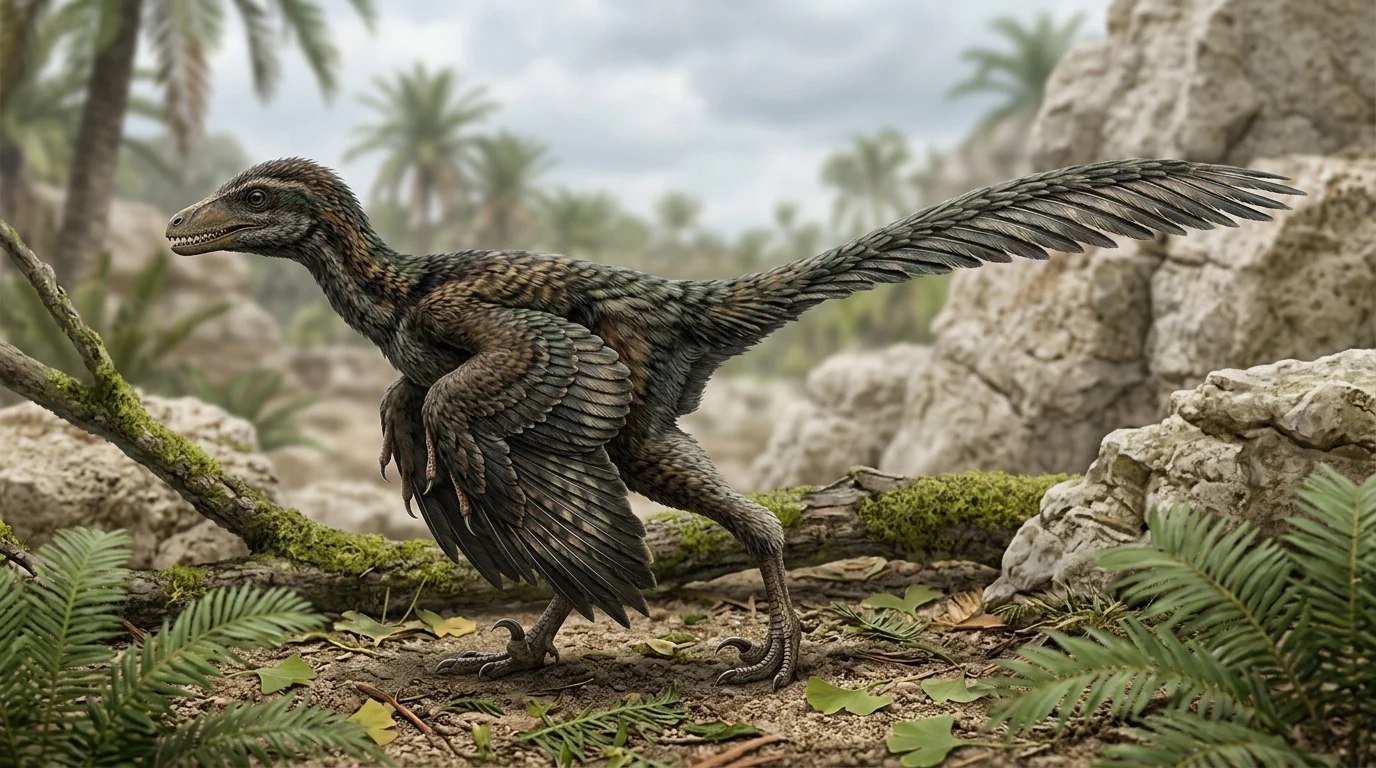
TheropodaArchaeopteryx lithographica von Meyer, 1861
An iconic stem-avialan from the Late Jurassic Solnhofen limestone exhibiting transitional features bridging non-avian theropods and birds.
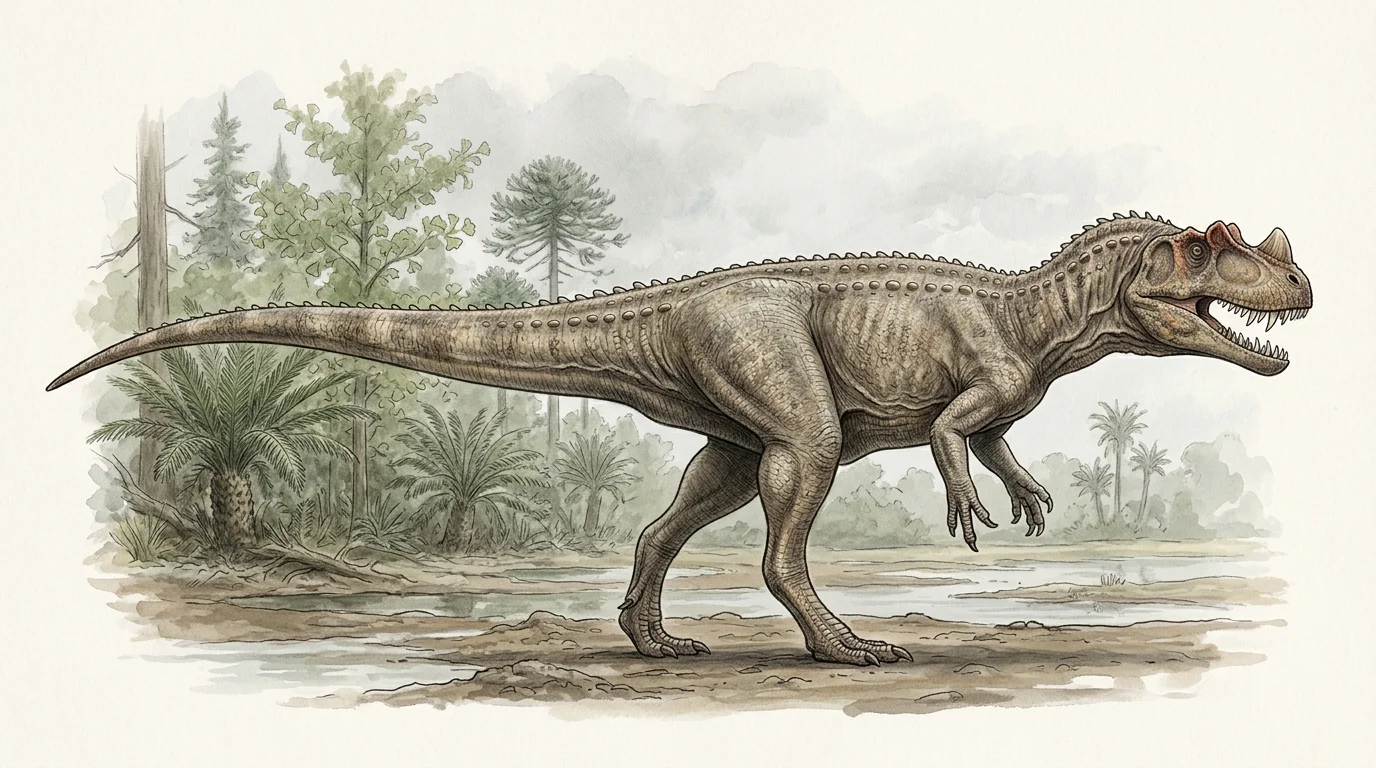
TheropodaCeratosaurus nasicornis Marsh, 1884
A distinctive Late Jurassic theropod sporting a prominent nasal horn core and a line of small osteoderms along its back.