Phylogenetic classification of Torvosaurus tanneri Galton & Jensen, 1979 based on peer-reviewed cladistic analyses of diagnostic skeletal synapomorphies.
Bipedal saurischian dinosaurs, historically dominated by carnivores and including the avian lineage.
Genus
Torvosaurus
Monophyletic prehistoric clade
Species
Torvosaurus tanneri Galton & Jensen, 1979
Specific authority designation
Anatomy & Physical Characteristics
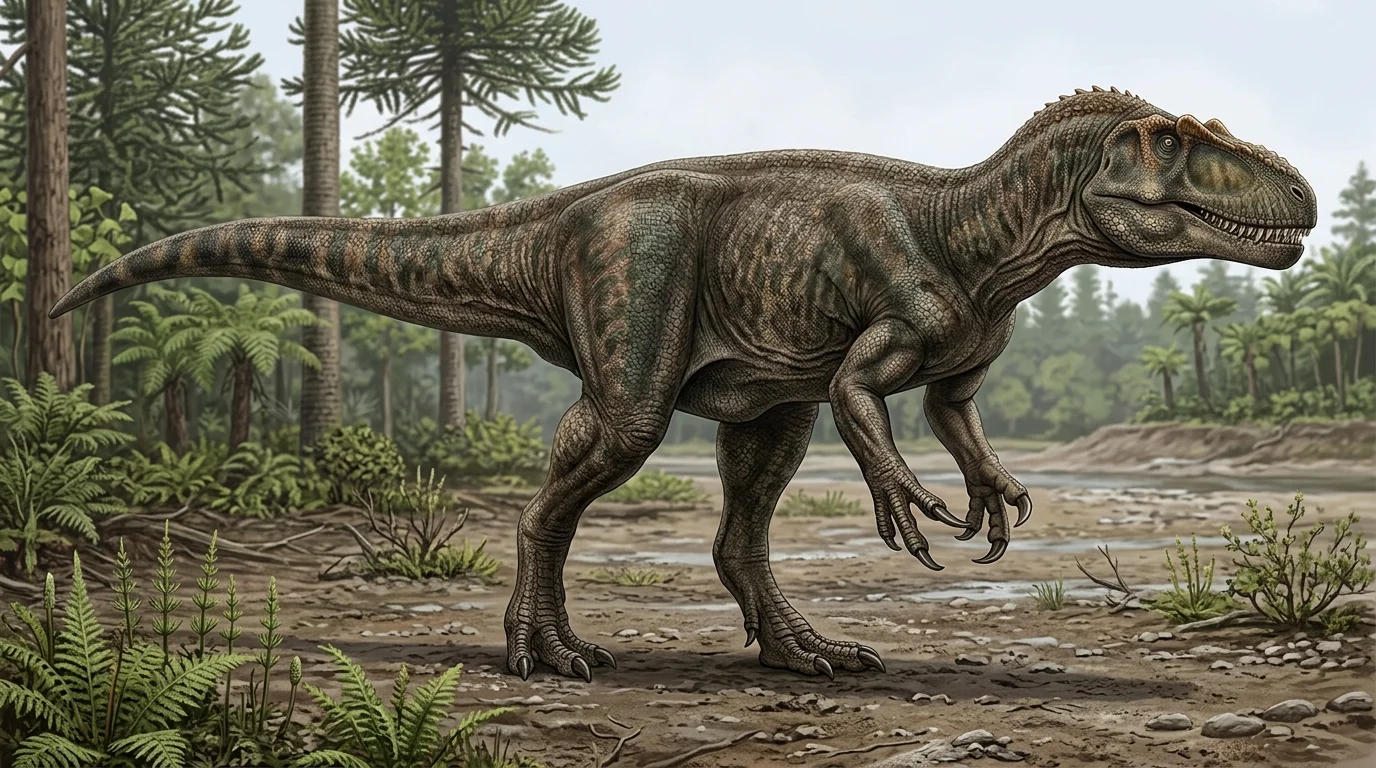
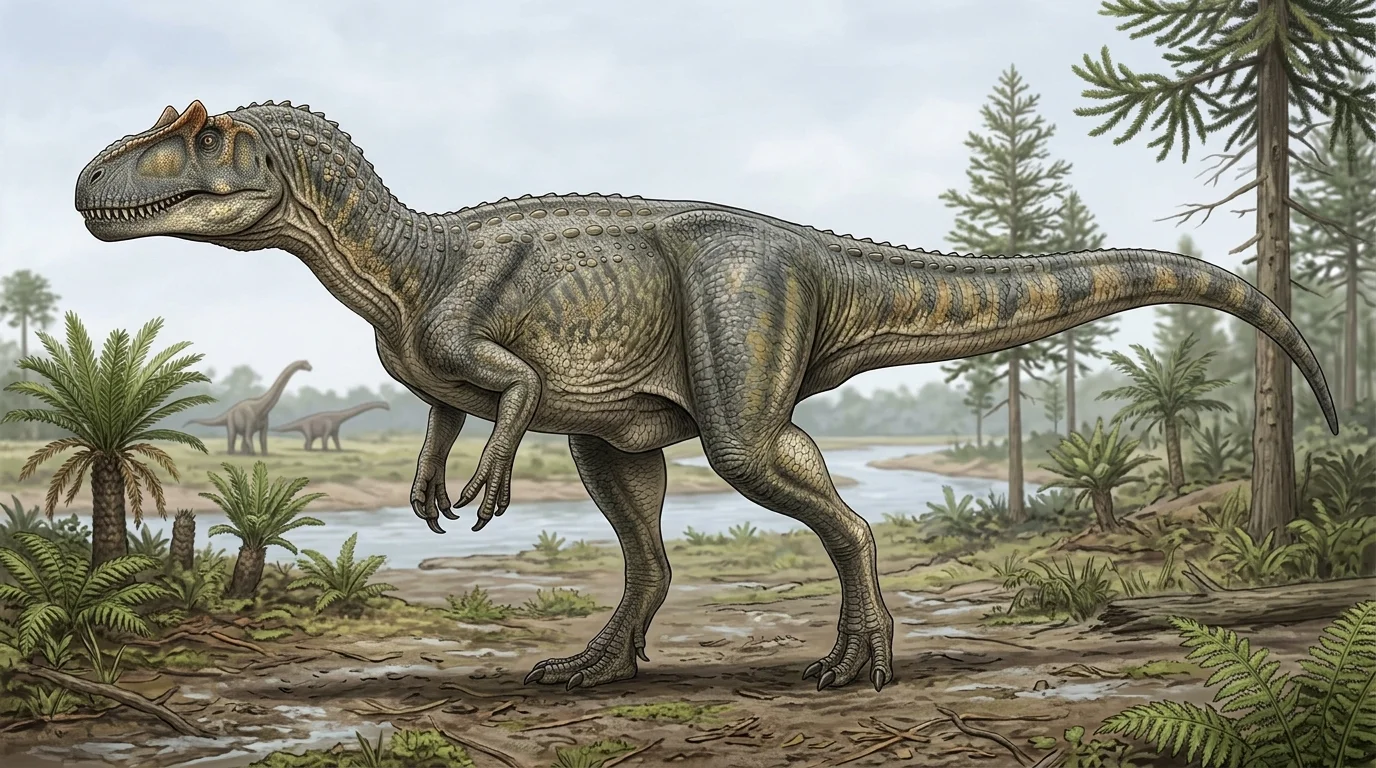
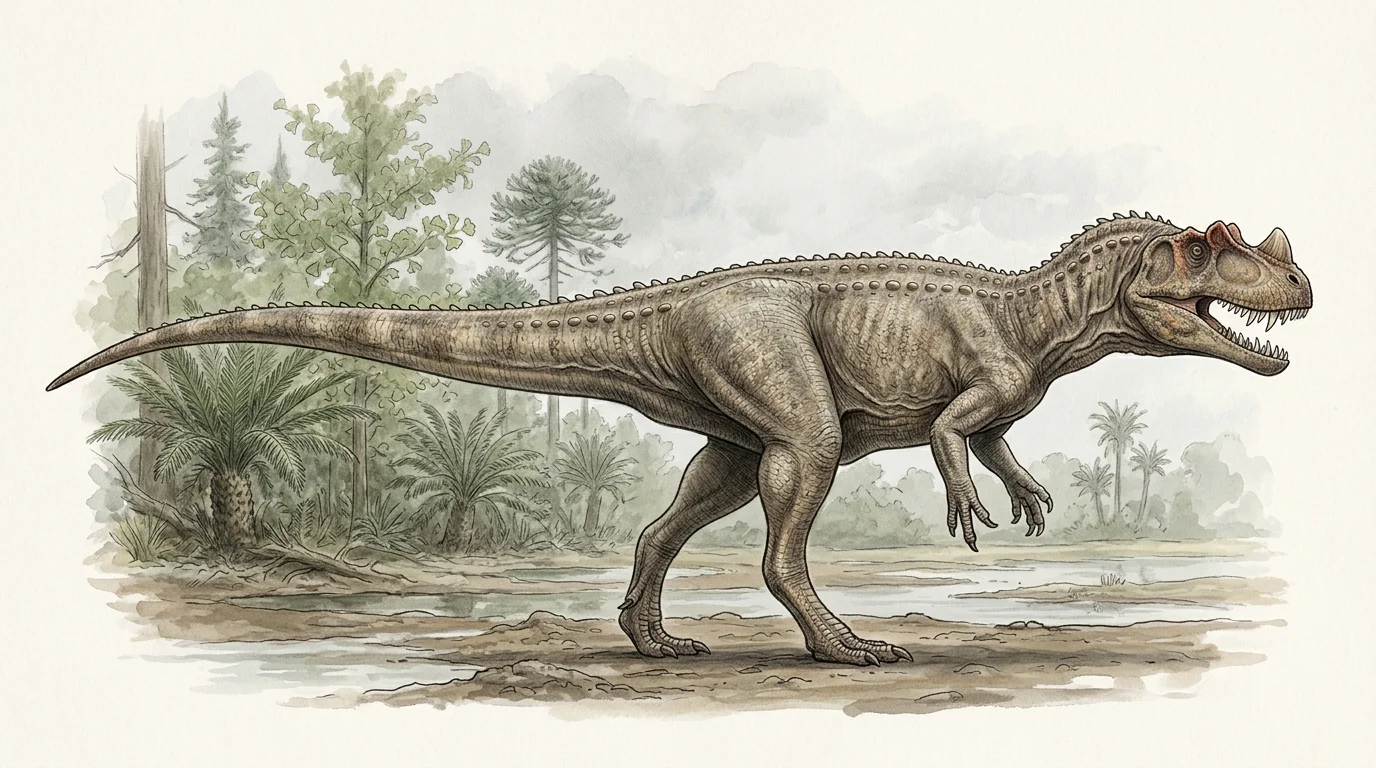
Torvosaurus was an immense apex predator that prowled the Late Jurassic landscapes of North America and Europe (Torvosaurus gurneyi). Reaching lengths up to 10 meters and weights exceeding two metric tons, it was significantly bulkier than contemporary Allosaurus.
Its massive, elongated skull bore formidable 10-centimeter teeth designed for delivering devastating crushing and slicing wounds to large sauropods and armored stegosaurs.
Diagnostic Morphological Traits
Exceptionally massive skull exceeding 1.2 meters, robust neck and shoulder girdle, heavy forelimbs with an enormous thumb claw.
Comparative Scale & Biometrics
Anatomical dimensions relative to an average adult human (1.8 m / 6 ft tall)
Macropredator targeting large sauropods (Camarasaurus, Apatosaurus) and stegosaurs.
Paleobiology & Behavior
Massive megalosauroid theropod with robust bone-crushing skull architecture, representing one of the largest predators of the Jurassic. In the Morrison Formation, Torvosaurus competed for sauropod prey against contemporary apex carnivores like Allosaurus and Ceratosaurus.
Habitat & Ecological Biome
Prehistoric Depositional Setting
Forested floodplains and semi-arid inland basins with seasonal river systems.
Fossil Evidence & Specimen Records
Preserved Skeletal Material & Bonebeds
Large cranial elements, teeth, and massive limb bones from Colorado, Wyoming, and Portugal.
Discovery & Taxonomic Naming History
Year of Discovery / Description1971
Type Specimen Locality & FormationDry Mesa Quarry, Colorado, United States
Discovered by James A. Jensen and Kenneth Stadtman; described by Peter Galton and Jensen in 1979.
Jurassic Period PeriodTemporal Interval: 153–148 Ma (million years ago)
Marked by lush greenhouse climates, the breakup of Pangaea, and the evolutionary explosion of sauropods, plated stegosaurs, and apex megalosauroid and allosauroid theropods.
During the Mesozoic Era, continental drift progressively reconfigured land bridges, atmospheric currents, and regional precipitation regimes. Fossils of Torvosaurus evidence its adaptation to the paleoenvironments of North America.
Paleogeographic RealmNorth America (North America)
Home to the fossil-rich Morrison Formation of the Late Jurassic and the Hell Creek and Dinosaur Park Formations of the Late Cretaceous.
Fossil Discovery Locality
Scientific Significance & Evolutionary Impact
The anatomical architecture of Torvosaurus serves as a crucial benchmark in vertebrate paleontology, illustrating key adaptive radiations within Theropoda.
Phylogenetic Placement: Informs cladistic debates concerning the divergence, skull biomechanics, and skeletal evolution of Jurassic Period fauna.
Paleoecological Guild: Documents trophic specialization (Carnivore) and predator-prey dynamics across its regional ecosystem.
Taphonomic Record: Large cranial elements, teeth, and massive limb bones from Colorado, Wyoming, and Portugal.
Frequently Asked Questions About Torvosaurus
Scientifically verified answers based on peer-reviewed paleontological evidence.
Q1.When did Torvosaurus live?
Torvosaurus lived during the Jurassic Period Period, approximately 153–148 Ma (million years ago). This places it within the Mesozoic Era.
Q2.How big was Torvosaurus?
Paleontological estimates place Torvosaurus at a length of 9–10.5 m (29.5–34.4 ft), a hip/standing height of 2.8–3.5 m (9.2–11.5 ft), and a body mass of 2.0–3.5 metric tons (4,409–7,716 lbs).
Q3.What was the diet of Torvosaurus?
Classified as a carnivore, Torvosaurus specialized in consuming Macropredator targeting large sauropods (Camarasaurus, Apatosaurus) and stegosaurs..
Q4.Where were Torvosaurus fossils discovered?
Fossil specimens of Torvosaurus have been recovered from Dry Mesa Quarry, Colorado, United States, with notable historic specimens documented in 1971. Discovered by James A. Jensen and Kenneth Stadtman; described by Peter Galton and Jensen in 1979.
Academic Literature & Peer-Reviewed References
Authoritative citations establishing the factual taxonomy, biometrics, and anatomy of Torvosaurus.
Galton, P. M., & Jensen, J. A. (1979). A new large theropod dinosaur from the Upper Jurassic of Colorado. Brigham Young University Geology Studies, 26(2), 1-12.
Deposited in Mesozoic sedimentary strata preserving skeletal remains, teeth, or trace trackways.
Q5.What makes Torvosaurus scientifically significant?
Torvosaurus provides critical insights into the evolutionary radiation of Theropoda. Holotypes and fossil evidence indicate: Large cranial elements, teeth, and massive limb bones from Colorado, Wyoming, and Portugal.
Hendrickx, C., & Mateus, O. (2014). Torvosaurus gurneyi n. sp., the largest terrestrial predator from Europe, and a proposed terminology of the maxilla anatomy in nonavian theropods. PLoS ONE, 9(3), e88905. https://doi.org/10.1371/journal.pone.0088905