Torosaurus latus Marsh, 1891
A Late Cretaceous ceratopsid that possessed one of the largest and longest skulls of any land animal in history.

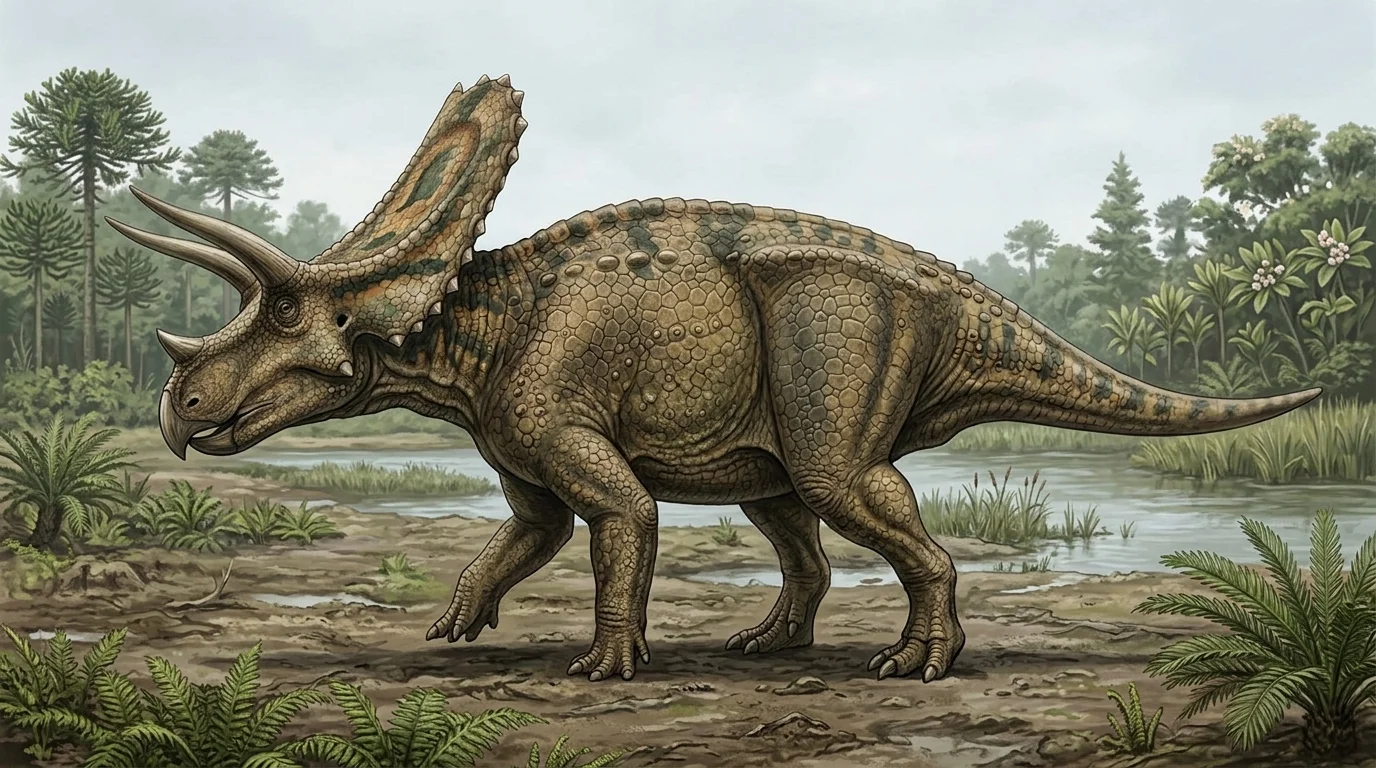
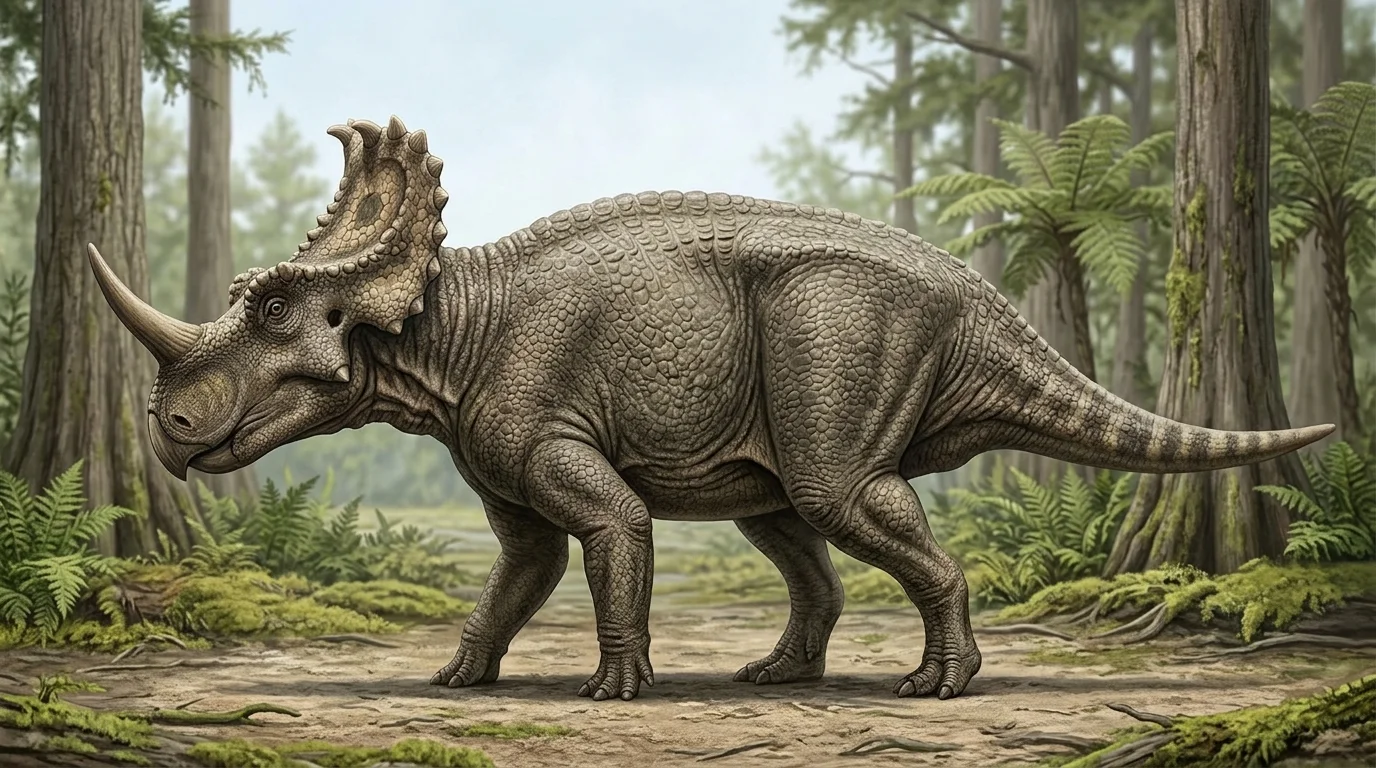
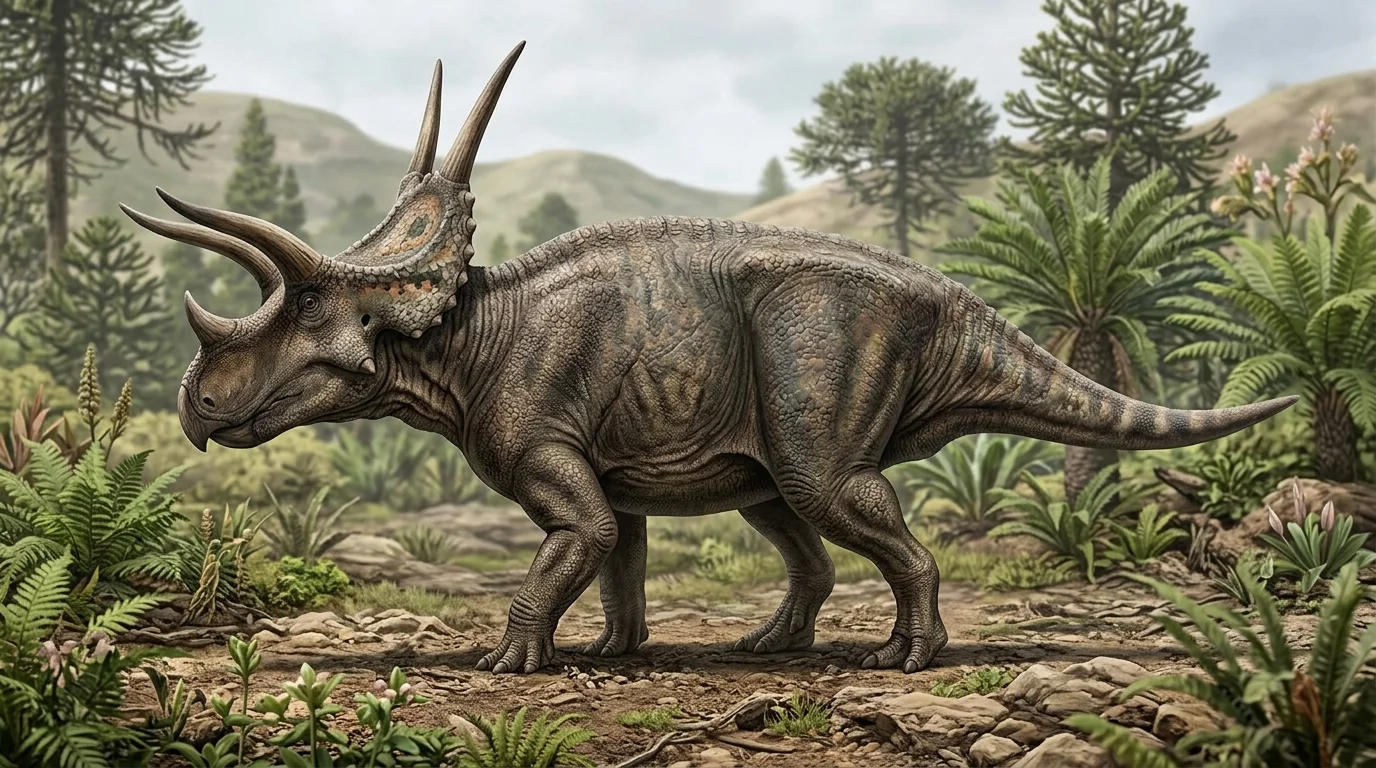
Scientific reconstruction of Torosaurus (Torosaurus latus Marsh, 1891) in its native Geological period: Cretaceous Period.
Image Credit: AI-generated scientific paleoart reconstruction synthesized from species-specific osteological profiles and peer-reviewed descriptions. (AI-Generated / Open Educational Media (DinoOrigin Spec))
Phylogenetic classification of Torosaurus latus Marsh, 1891 based on peer-reviewed cladistic analyses of diagnostic skeletal synapomorphies.
| Taxonomic Rank | Taxon / Clade | Diagnostic Context |
|---|---|---|
| Kingdom | Animalia | Monophyletic prehistoric clade |
| Phylum | Chordata | Monophyletic prehistoric clade |
| Clade | Dinosauria | Monophyletic prehistoric clade |
| Order | Ornithischia (Bird-Hipped Dinosaurs) | Characterized by a pelvis with a backwards-pointing pubis parallel to the ischium. |
| Infraorder | Ceratopsia | Ornithischian dinosaurs characterized by beaks, rostral bones, facial horns, and elaborate neck frills. |
| Genus | Torosaurus | Monophyletic prehistoric clade |
| Species | Torosaurus latus Marsh, 1891 | Specific authority designation |
Torosaurus ('perforated lizard') possessed an extraordinarily expansive skull that reached over 2.7 meters (9 feet) in length, making it a candidate for the longest skull of any known terrestrial animal. Its immense neck frill was characterized by two large circular openings (fenestrae) that lightened its weight.
While a controversial 2010 hypothesis proposed that Torosaurus was merely the mature adult growth stage of Triceratops, extensive histological and stratigraphic studies have confirmed it as a distinct, valid genus.
Immense ceratopsid with two long pointed brow horns, a small nasal horn, and a giant elongated thin-boned neck frill.
Anatomical dimensions relative to an average adult human (1.8 m / 6 ft tall)
Fibrous palms, cycads, and flowering plants cropped with its hooked beak and sheared with cheek teeth.
Massive horned ceratopsian featuring one of the largest skulls of any land animal, with an expansive frill bearing large circular fenestrae. Inhabiting the Hell Creek and Lance Formations, Torosaurus lived sympatrically with its close relative Triceratops and contemporary apex predator Tyrannosaurus rex.
Inland subtropical river basins and coastal swamp plains along the Western Interior Seaway.
Multiple gigantic articulated skulls and postcrania from Wyoming, Montana, and South Dakota.
Discovered by John Bell Hatcher; described by Othniel Charles Marsh in 1891.
The longest and final period of the Mesozoic Era, characterized by the rise of flowering plants, ceratopsians, hadrosaurs, tyrannosaurids, and concluding with the Chicxulub asteroid impact.
During the Mesozoic Era, continental drift progressively reconfigured land bridges, atmospheric currents, and regional precipitation regimes. Fossils of Torosaurus evidence its adaptation to the paleoenvironments of North America.
Home to the fossil-rich Morrison Formation of the Late Jurassic and the Hell Creek and Dinosaur Park Formations of the Late Cretaceous.
The anatomical architecture of Torosaurus serves as a crucial benchmark in vertebrate paleontology, illustrating key adaptive radiations within Ceratopsia.
Scientifically verified answers based on peer-reviewed paleontological evidence.
Torosaurus lived during the Cretaceous Period Period, approximately 68–66 Ma (million years ago). This places it within the Mesozoic Era.
Paleontological estimates place Torosaurus at a length of 7.5–9 m (24.6–29.5 ft), a hip/standing height of 2.5–3 m (8.2–9.8 ft), and a body mass of 4.5–6.5 metric tons (9,921–14,330 lbs).
Classified as a herbivore, Torosaurus specialized in consuming Fibrous palms, cycads, and flowering plants cropped with its hooked beak and sheared with cheek teeth..
Fossil specimens of Torosaurus have been recovered from Lance Formation, Niobrara County, Wyoming, United States, with notable historic specimens documented in 1891. Discovered by John Bell Hatcher; described by Othniel Charles Marsh in 1891.
Authoritative citations establishing the factual taxonomy, biometrics, and anatomy of Torosaurus.
Farke, A. A. (2011). Anatomy and taxonomic status of the chasmosaurine ceratopsid Nedoceratops prostatus from the Upper Cretaceous Lance Formation of Wyoming, U.S.A.. PLoS ONE, 6(1), e16196. https://doi.org/10.1371/journal.pone.0016196
Curated & Verified: 2026-09-24Deposited in Mesozoic sedimentary strata preserving skeletal remains, teeth, or trace trackways.
Torosaurus provides critical insights into the evolutionary radiation of Ceratopsia. Holotypes and fossil evidence indicate: Multiple gigantic articulated skulls and postcrania from Wyoming, Montana, and South Dakota.
Marsh, O. C. (1891). Notice of new vertebrate fossils. American Journal of Science, 42(249), 265-269. https://doi.org/10.2475/ajs.s3-42.249.265
CeratopsiaCentrosaurus apertus Lambe, 1904
A prominent centrosaurine ceratopsid from Alberta featuring a forward-curved nasal horn and hooked frill spikes.
CeratopsiaDiabloceratops eatoni Kirkland & DeBlieux, 2010
The 'devil-horned face', a basal centrosaurine featuring long curved brow horns and majestic frill spikes.
CeratopsiaPachyrhinosaurus canadensis Sternberg, 1950
The 'thick-nosed lizard', an Arctic-adapted ceratopsid that replaced horns with massive bony bosses.