Biggest Dinosaurs: The Largest Dinosaurs Ever Known
A Scientific Analysis of Terrestrial Physical Extremes: Maximum Body Mass, Snout-to-Tail Length, and Skeletal Heights
Key Scientific Assessment
The biggest dinosaurs ever discovered were titanosaurian sauropods from the Cretaceous Period. By body mass, Argentinosaurus huinculensis (estimated at 65–85 metric tons) and Patagotitan mayorum (55–75 metric tons) represent the heaviest terrestrial animals backed by multiple verified fossil skeletal elements. By total snout-to-tail length, diplodocid sauropods like Supersaurus vivianae (33–35 meters baseline, with 2021 SVP studies proposing 39–42 meters) and Diplodocus hallorum (30–33 meters) exceeded all other animals in axial length. Vertical reach peaked in macronarians such as Sauroposeidon proteles (16.5–18 meters head height) and Brachiosaurus altithorax (12–13 meters).
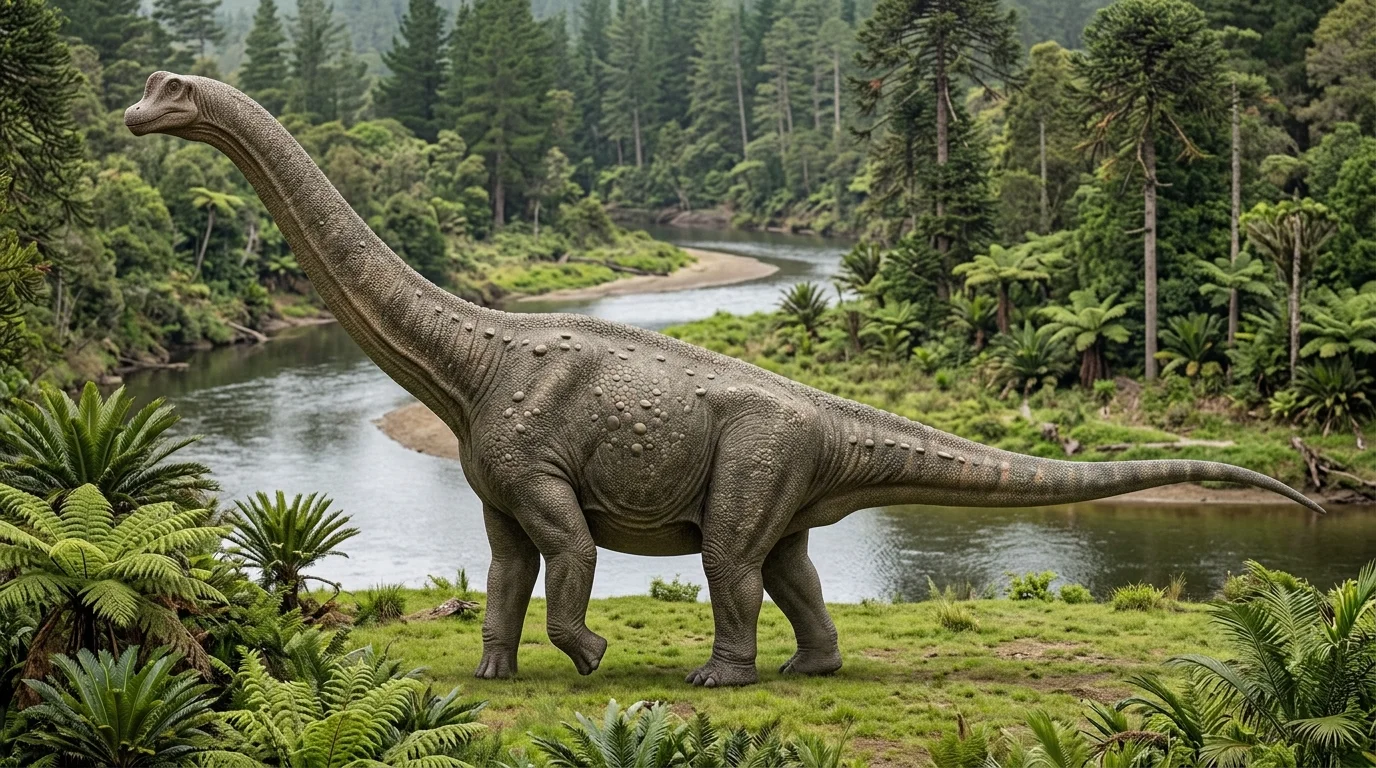
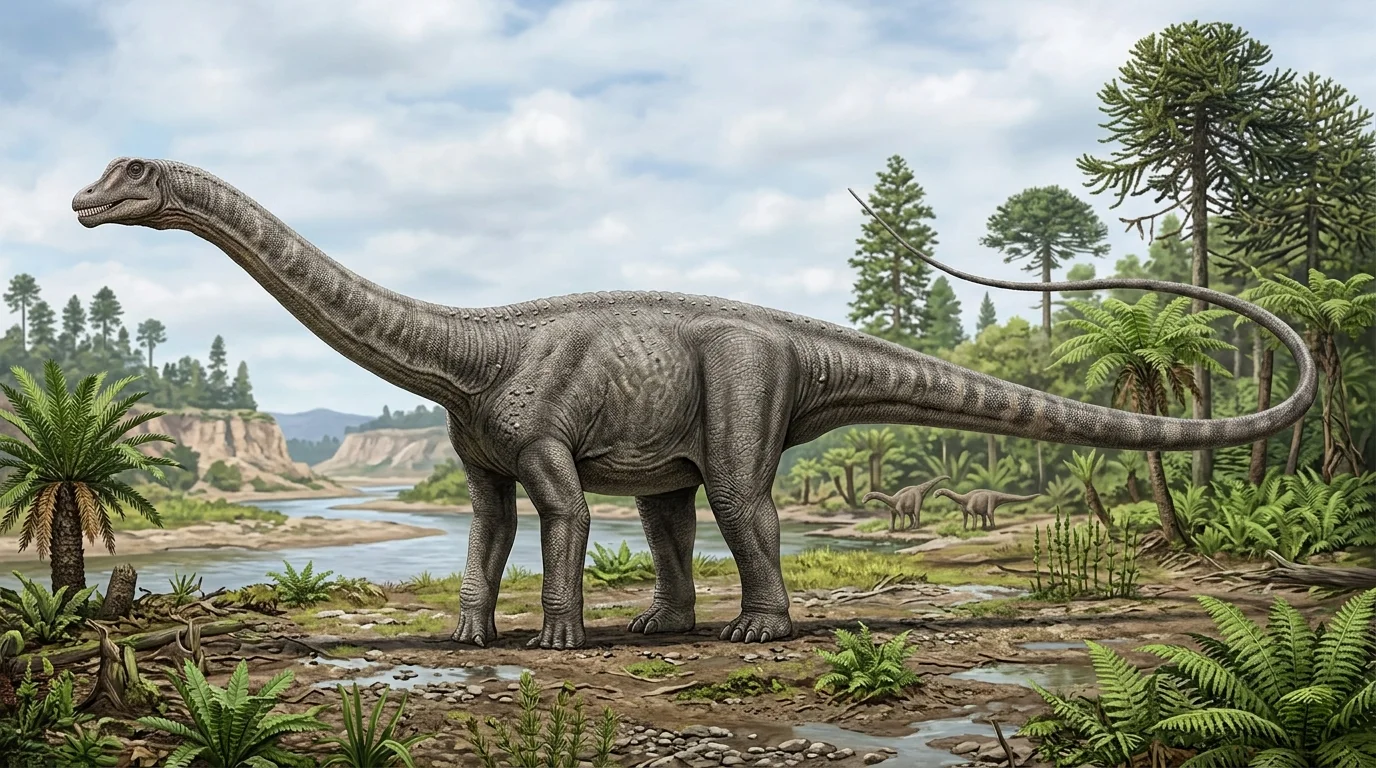
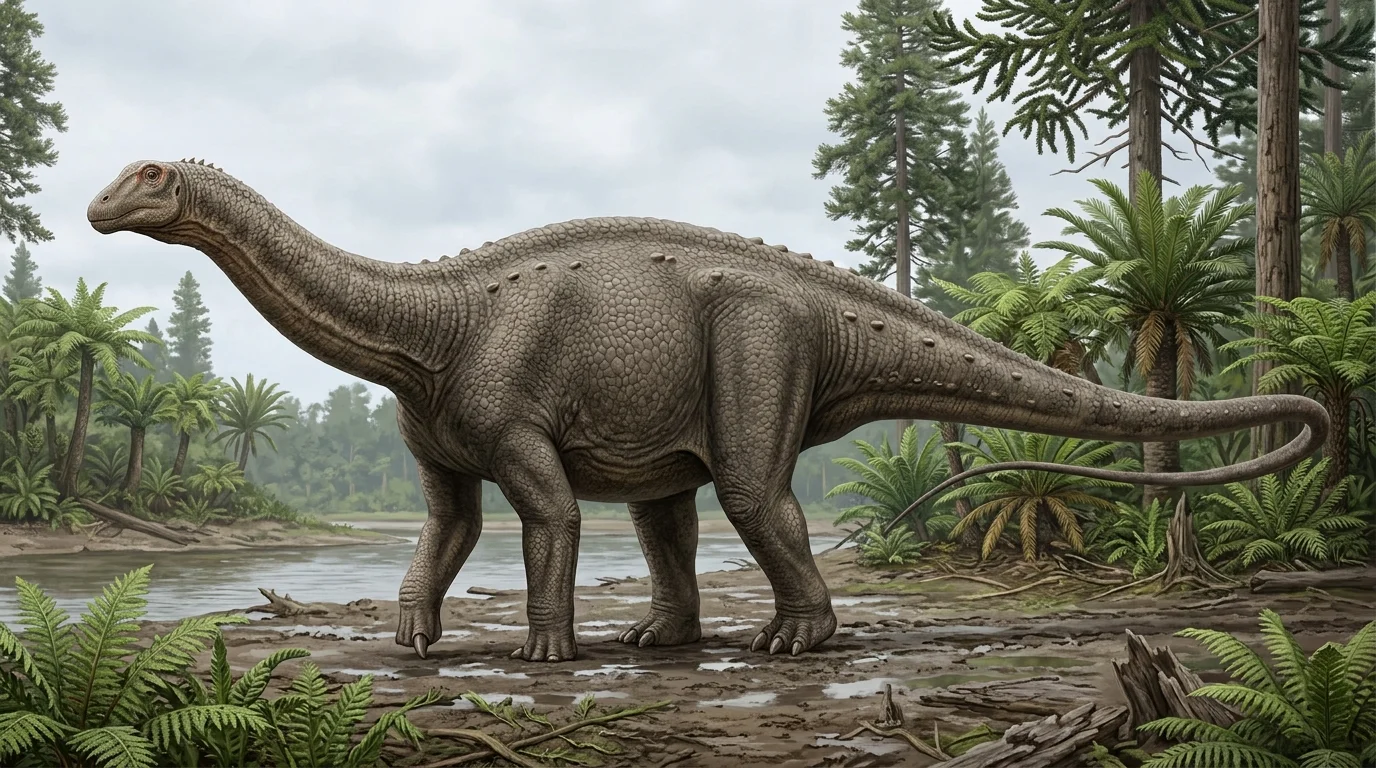
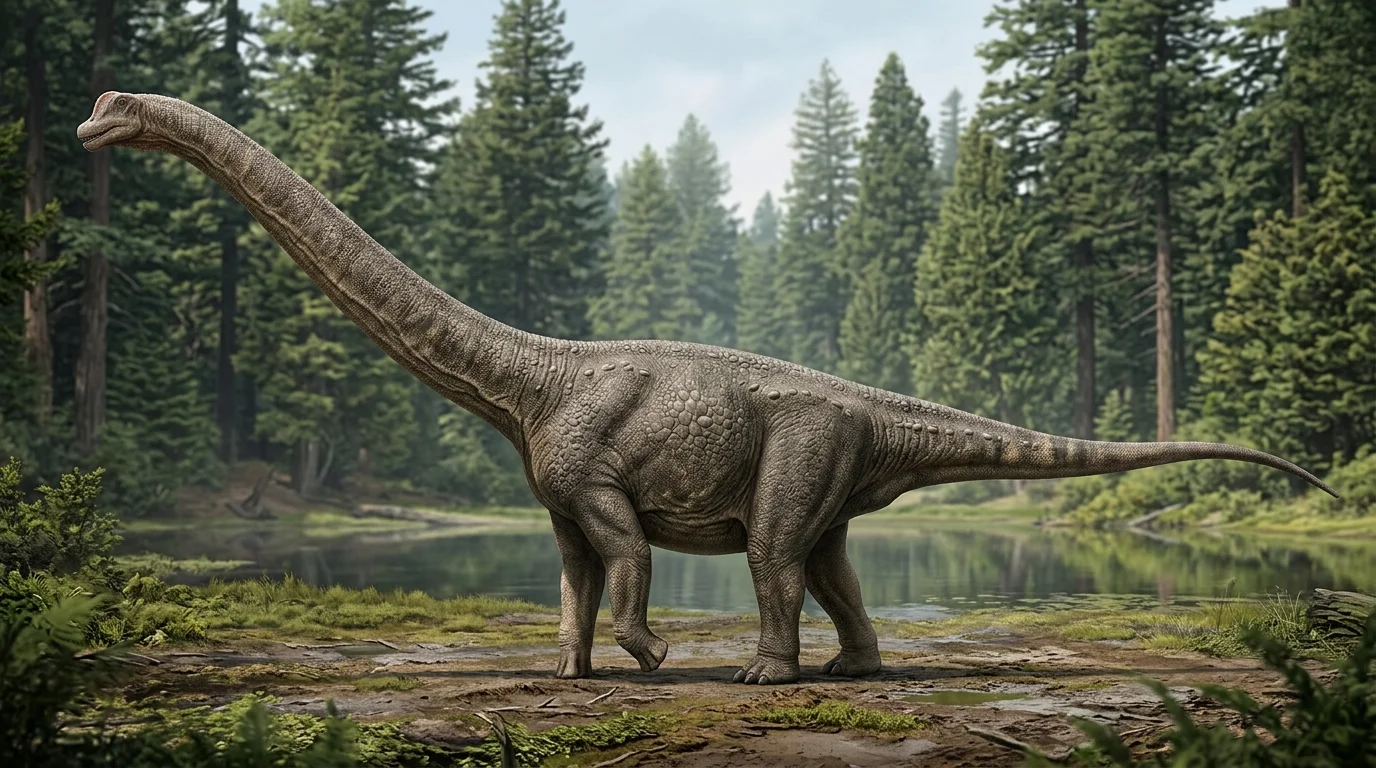
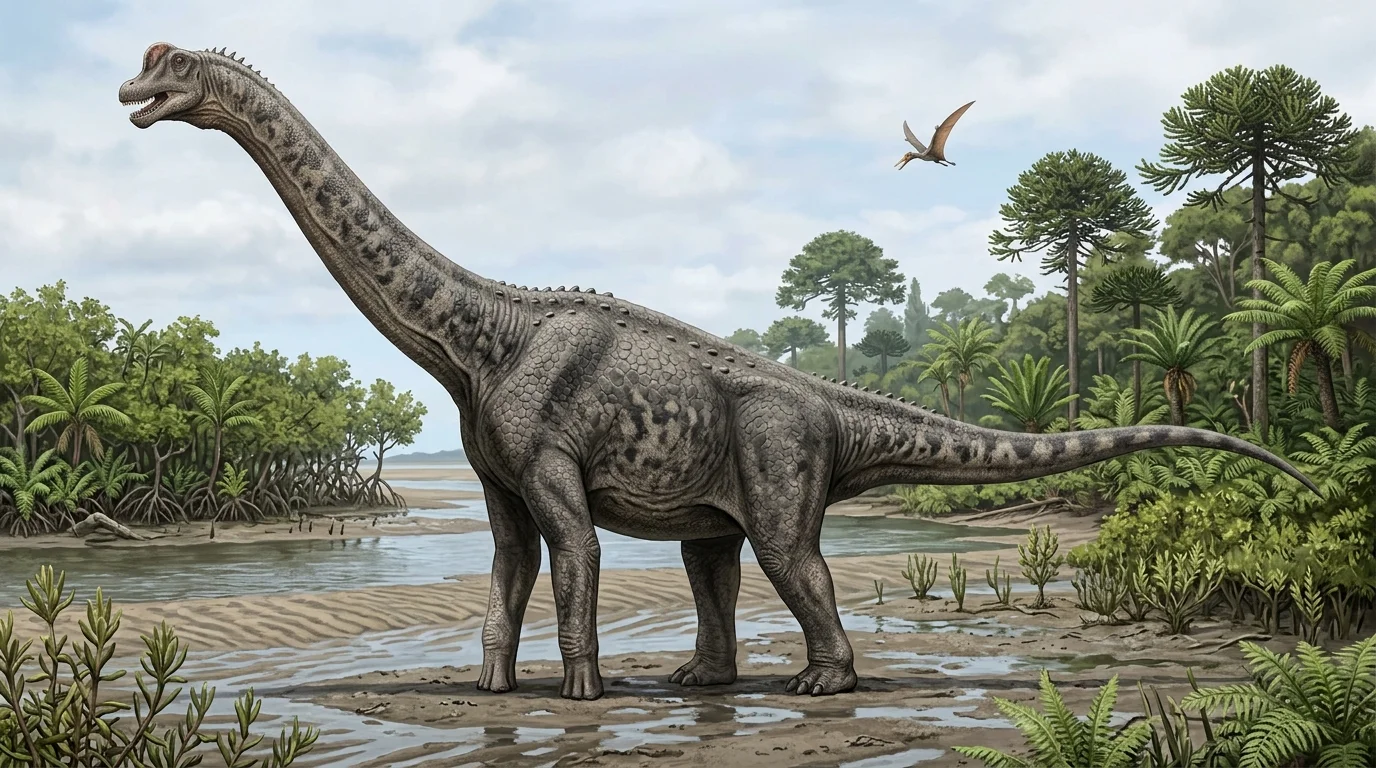
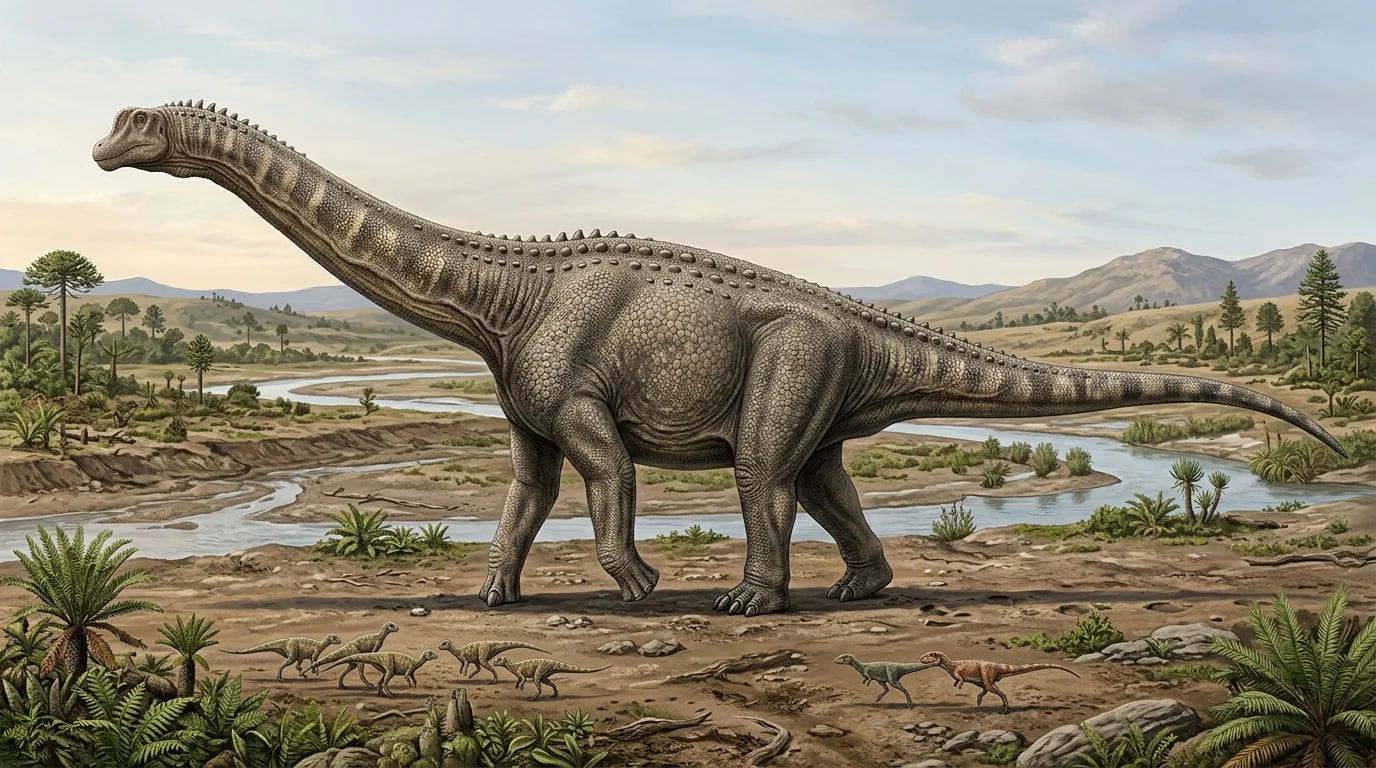
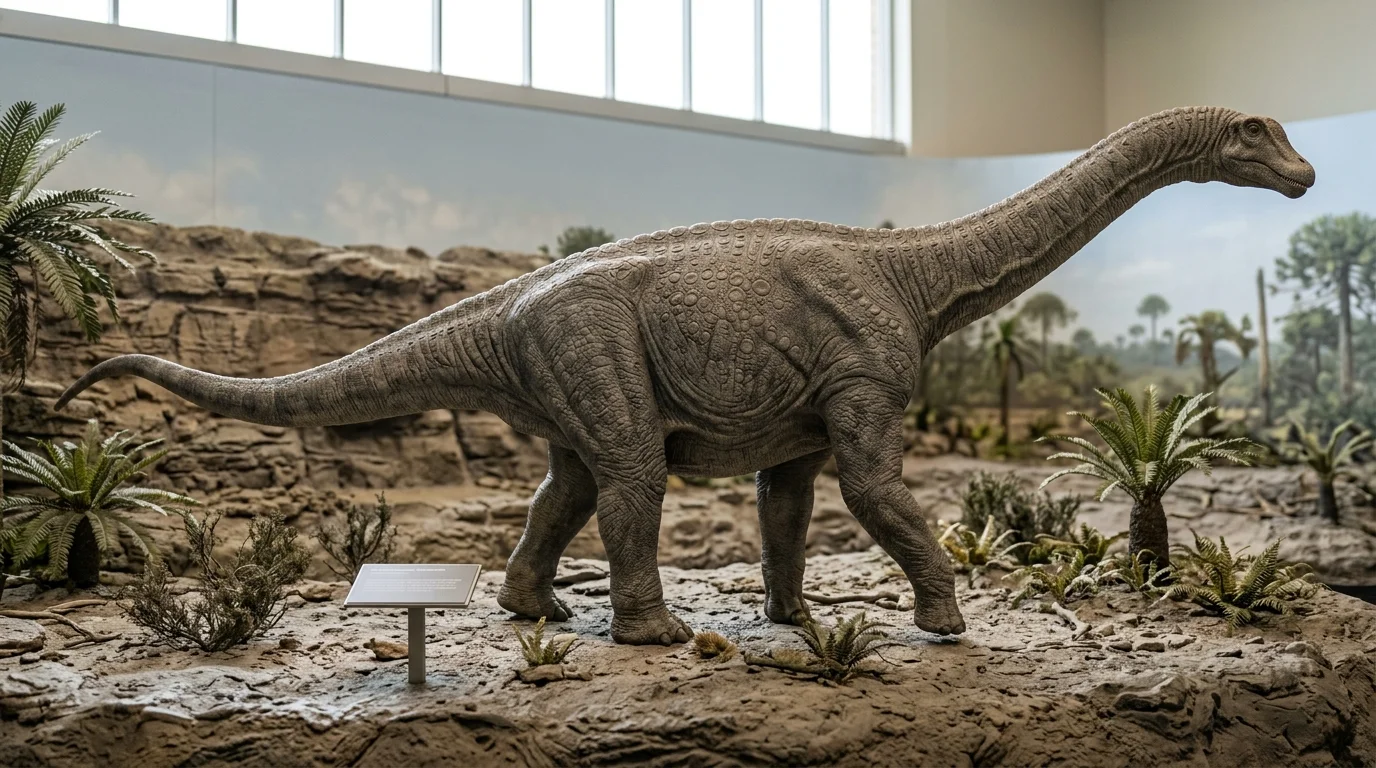
Scientific paleoart reconstruction of a colossal titanosaur in a South American Cretaceous river basin.Visual Reconstruction: DinoOrigin Scientific Paleoart Studio
Key Scientific Takeaways
Body mass and axial length do not peak in the same animal: wide-gauge Titanosaurs were the heaviest, while slender Diplodocids were the longest.
In vertebrate paleontology, 'biggest' strictly refers to total body mass (gravitational weight), whereas 'largest' can encompass volumetric mass, total length, or vertical reach.
Calculations of prehistoric weight rely primarily on stylopodial bone circumference formulas established by Campione & Evans (2012) and 3D volumetric convex hulls.
Extensive skeletal air sacs (pneumatization) lightened vertebral columns by up to 35%, permitting immense reach without catastrophic skeletal load failure.
Direct Paleontological Assessment
1. What Was the Biggest Dinosaur?
Determining the single 'biggest dinosaur' requires defining whether size is measured by gravitational weight, head-to-tail length, or standing height.
Among all vertebrates that ever walked on land, the titanosaurian sauropods of the Cretaceous Period attained physical dimensions that dwarf every other terrestrial creature. By total body mass—the universal scientific metric for physical size—the consensus choice among vertebrate paleontologists is Argentinosaurus huinculensis, an enormous titanosaur discovered in Cenomanian deposits of Neuquén Province, Argentina.
Discovered in 1987 by Guillermo Heredia and scientifically described by José Bonaparte and Rodolfo Coria in 1993, *Argentinosaurus* is known from colossal dorsal vertebrae measuring up to 1.59 meters tall, an incomplete tibia of 1.55 meters, and fragmentary limb elements. Rigorous biomechanical simulations (Sellers et al. 2013) and bivariate stylopodial scaling (Campione & Evans 2012) place its living weight between 65,000 and 85,000 kilograms (65 to 85 metric tons), with a total length of 30 to 36 meters.
However, close contenders such as Patagotitan mayorum (discovered with over 130 preserved bones from six individuals) and Dreadnoughtus schrani (preserving over 70% of its postcranial skeleton) demonstrate that several titanosaur lineages converged on this monumental scale during the mid-to-late Cretaceous.
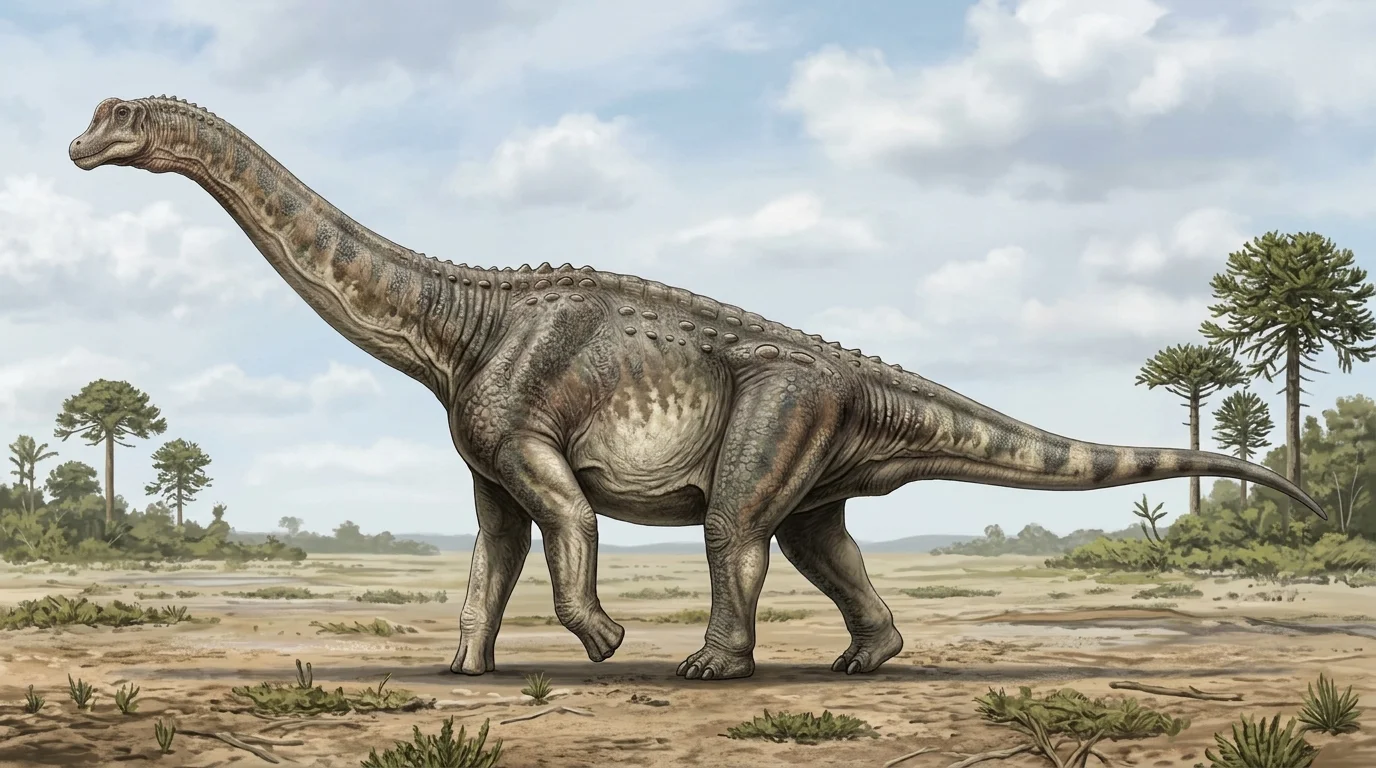
Current Consensus Heaviest Dinosaur: Argentinosaurus huinculensis
With dorsal vertebrae standing over 1.5 meters tall and an estimated mass of 70–85 metric tons, *Argentinosaurus* remains the heaviest reliably verified land animal known to paleontology.
Semantic & Methodological Nuance
2. Biggest vs Largest — What Do These Terms Mean in Paleontology?
In conversational English, 'biggest' and 'largest' are treated as interchangeable synonyms. In vertebrate morphology, they encompass three distinct physical dimensions.
When lay searchers query 'biggest dinosaur' or 'largest dinosaur', they are seeking the absolute titans of prehistoric life. However, physical magnitude in biomechanics cannot be reduced to a single linear number. Paleontologists evaluate dinosaur scale across three distinct biological axes:
1. **Volumetric Body Mass (Weight in metric tons):** This represents the gravitational force an animal exerted on the ground and the biological cost of its metabolism. In terrestrial vertebrate biology, mass is the primary metric defining size. The heaviest animals were the wide-gauge titanosaurs.
2. **Axial Length (Snout-to-tail tip in meters):** This measures total skeletal span. Because long, whiplash tails and elongated necks add immense length with relatively little mass, the longest dinosaurs were slender diplodocids rather than the heaviest titanosaurs.
3. **Vertical Head Reach (Ground-to-crown height in meters):** This measures how high an animal could extend its sensory organs and jaws. High vertical reach required longer forelimbs than hindlimbs, as seen in macronarians like Brachiosaurus and Sauroposeidon.
Critical Takeaways
Biggest / Heaviest: Dictated by visceral volume, ribcage width, and limb bone circumference (Titanosauria).
Longest: Dictated by number and elongation of cervical and caudal vertebrae (Diplodocidae).
Tallest: Dictated by shoulder inclination, forelimb elongation, and dorsal vertebral angle (Brachiosauridae).
Gravitational Body Mass Rankings
3. Biggest Dinosaurs by Mass
Body mass dictates an animal's metabolic demands, locomotion speed, bone stress, and cardiovascular architecture.
The heaviest dinosaurs belonged exclusively to the clade Titanosauria, a derived branch of sauropods that flourished in Gondwana during the Cretaceous Period. Titanosaurs featured extremely wide-gauge limb spacing, solid limb bone cortices, and broad ribcages that housed massive digestive fermentation vats.
Leading the mass rankings is Argentinosaurus huinculensis (65–85 tonnes), followed closely by Patagotitan mayorum (55–75 tonnes). *Patagotitan*, described in 2017 from Chubut, Argentina, preserves an extraordinary 2.38-meter femur and humerus that allow direct bone circumference measurements rather than hypothetical scaling.
Other titanic contenders include Dreadnoughtus schrani (38–48 tonnes), Puertasaurus reuili (~60–75 tonnes, known from giant cervical and dorsal vertebrae), and Australotitan cooperensis (50–65 tonnes) from Queensland, Australia. The sheer mass of these animals pushed vertebrate bone and cartilage to their absolute mechanical load thresholds.
Axial Snout-to-Tail Span
4. Longest Dinosaurs (Snout-to-Tail Length)
The longest animals to walk the Earth were not the massive titanosaurs, but the slender, whip-tailed diplodocid sauropods.
While titanosaurs dominated body mass, the record for total axial length belongs to the family Diplodocidae. These Late Jurassic herbivores evolved extraordinarily long, low-slung necks countered by equally long, tapering whiplash tails containing up to 80 caudal vertebrae.
The leading candidate for longest dinosaur known from substantial fossil skeletal material is **Supersaurus vivianae**, an immense diplodocid discovered in the Morrison Formation of Colorado and Wyoming. Conservative peer-reviewed osteological descriptions (Lovelace, Hartman, & Wahl, 2007) estimate adult body length at **33 to 35 meters (108 to 115 feet)** based on articulated quarry material. In a comprehensive re-evaluation presented at the 2021 Society of Vertebrate Paleontology (SVP) meeting, paleontologist Brian Curtice proposed that re-associating disparate Dry Mesa Quarry elements (formerly assigned to 'Ultrasauros' and *Dystylosaurus*) extends *Supersaurus* to **39 to 42 meters (128 to 138 feet)**. While this extreme length awaits formal monographic peer review, even at conservative baseline dimensions, *Supersaurus* ranks among the longest terrestrial vertebrates known. Despite exceeding a commercial airliner in length, its slender diplodocid bauplan kept adult mass modest at an estimated 35 to 40 metric tons—less than half the weight of *Argentinosaurus*.
Other champions of axial length include Diplodocus hallorum (formerly known as *Seismosaurus*), which measured 30 to 33 meters (98 to 108 feet), and Barosaurus lentus, whose colossal BYU 9024 cervical vertebra indicates exceptional individuals may have exceeded 35 meters in total span.
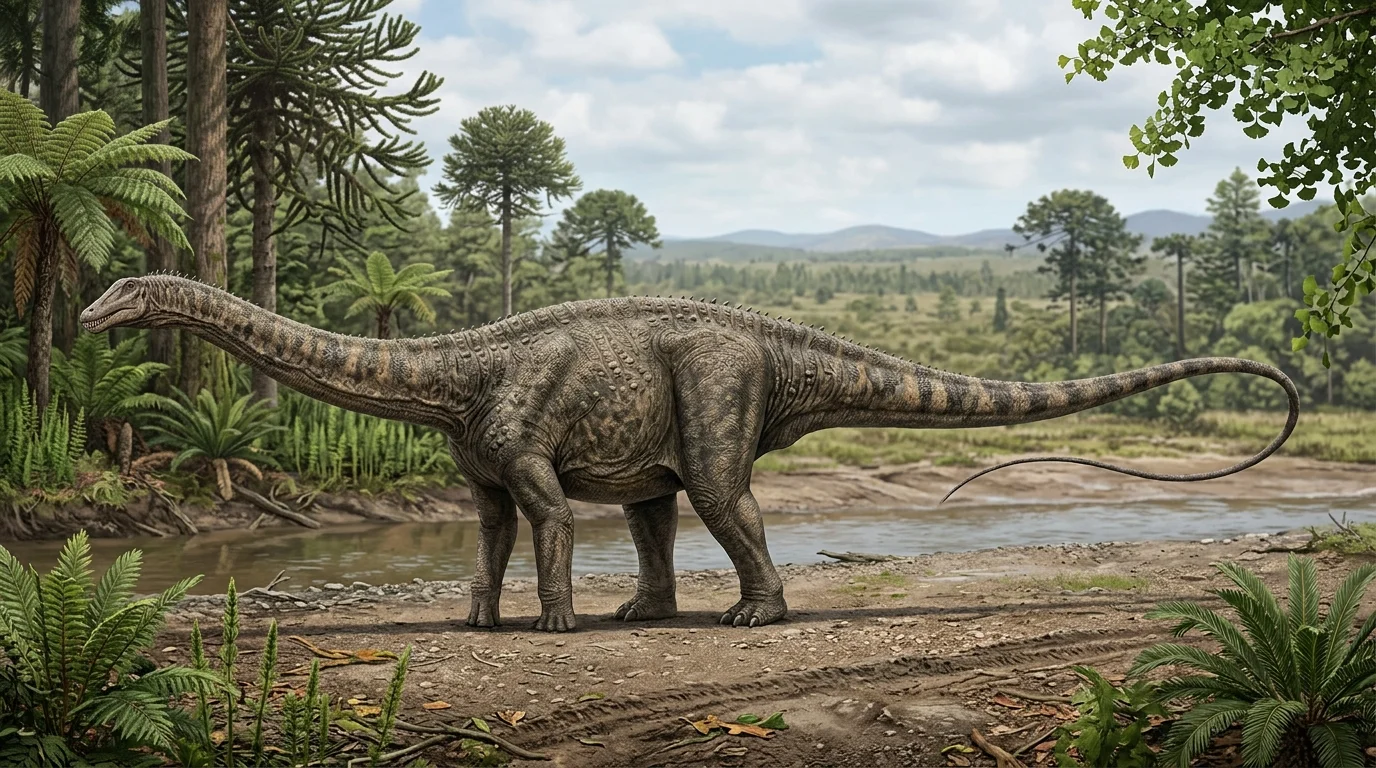
Candidate Longest Dinosaur: Supersaurus vivianae (33–35m baseline; up to 39–42m via 2021 SVP study)
Supersaurus leads axial length estimates with a 14–15 meter neck and an elongated whiplash tail. Conservative descriptions establish 33–35 meters (Lovelace et al. 2007), while 2021 SVP conference re-evaluations propose up to 39–42 meters.
Vertical Browse Ceiling
5. Tallest Dinosaurs (Vertical Head Reach)
Vertical head reach allowed specialized sauropods to exploit high conifer canopies unreachable by any contemporary herbivores.
While diplodocids swept their necks in wide horizontal arcs near ground level, macronarian sauropods—specifically the families Brachiosauridae and Somphospondyli—evolved a completely different body plan built for vertical reach. Their forelimbs were significantly longer than their hindlimbs, creating a sloping back and an naturally elevated shoulder joint.
The tallest known dinosaur is **Sauroposeidon proteles**, an Early Cretaceous titanosauriform discovered in the Antlers Formation of Atoka County, Oklahoma. Described by Wedel, Cifelli, and Sanders in 2000, *Sauroposeidon* is known from four giant mid-cervical vertebrae (C5 to C8). Vertebra C8 measures an astonishing 1.4 meters (4.6 feet) in length. Paleontologists calculate that *Sauroposeidon* could elevate its head **16.5 to 18 meters (54 to 59 feet)** above the ground—tall enough to peer into a six-story building.
The most complete tall giant is Giraffatitan brancai (formerly *Brachiosaurus brancai*) from the Tendaguru Formation of Tanzania. The famous mounted skeleton in the Museum für Naturkunde in Berlin stands 12.0 to 13.3 meters (40 to 44 feet) tall, with its shoulders 6 meters off the ground. Its North American relative, Brachiosaurus altithorax, was slightly more robust, reaching head heights of 12 to 13 meters.
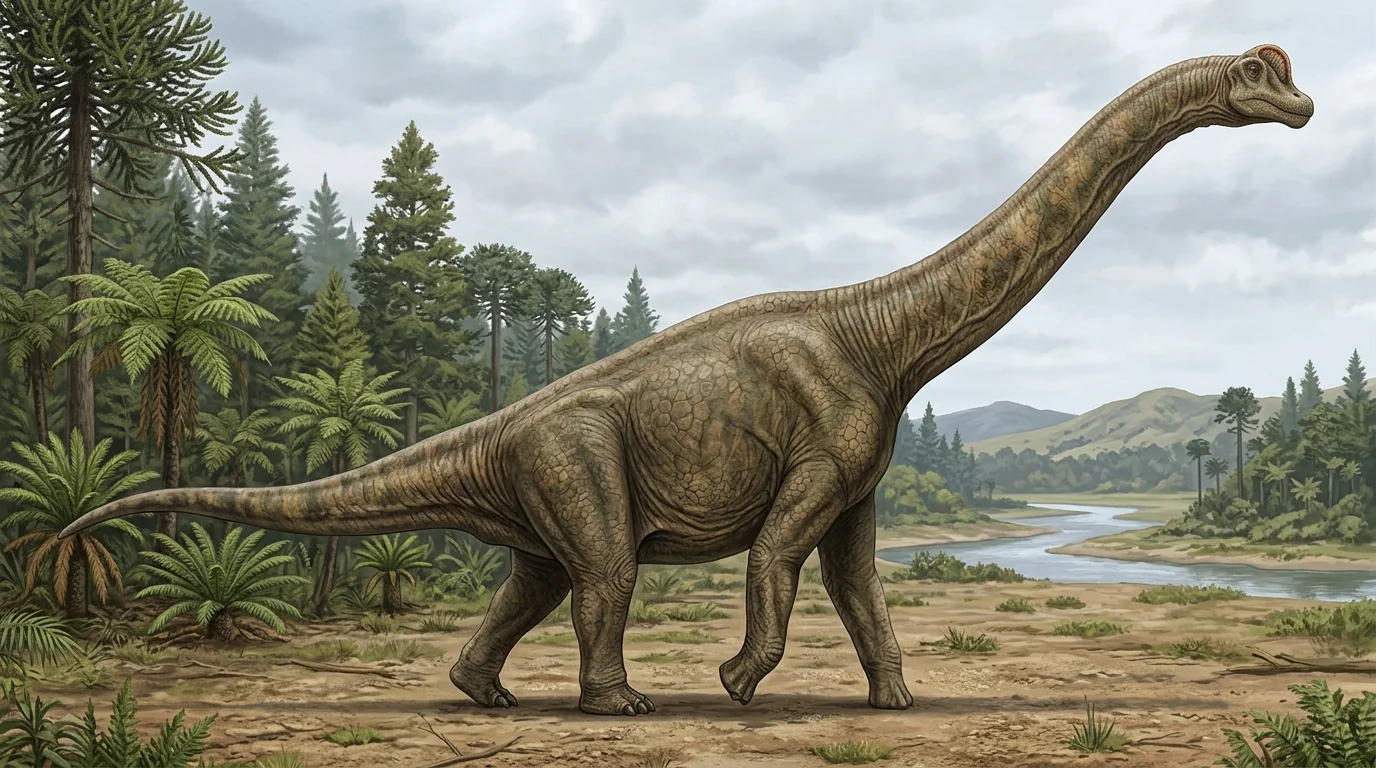
Tallest Known Dinosaur: Sauroposeidon proteles (16.5–18 meters / 55–60 ft)
With internal camellate vertebrae that were up to 89% air by volume, Sauroposeidon achieved a vertical head reach over 16 meters above the Cretaceous floodplain.
Gravitational Load & Stylopodial Scaling
6. Heaviest Dinosaurs: Titanosaur Mass and Gravitational Physics
Supporting 70+ metric tons on four legs required an evolutionary restructuring of vertebrate limb mechanics.
Why could dinosaurs grow to 80 metric tons while land mammals capped out at ~15–20 tons (such as the giant rhinoceros *Paraceratherium*)? The answer lies in the synergistic combination of lightened bone architecture and graviportal limb design.
In titanosaurs like Argentinosaurus and Patagotitan, the limbs functioned as rigid, vertical weight-bearing columns. The long bones (femur, humerus, tibia) lost the flexed articulation seen in running animals and locked into a straight, columnar stance where body weight was transmitted directly down the mineralized bone axis into wide, shock-absorbing cartilaginous foot pads.
Furthermore, titanosaur bone histology reveals dense Haversian remodeling and thickened cortical walls that resisted monumental compressive forces. Combined with extensive pneumatic air sacs that hollowed out the dorsal and cervical vertebrae, these animals maximized body volume while minimizing dead skeletal mass.
Direct comparative metrics based on peer-reviewed volumetric estimates, limb circumference scaling, and museum holotypes. Ranges reflect published scientific uncertainty.
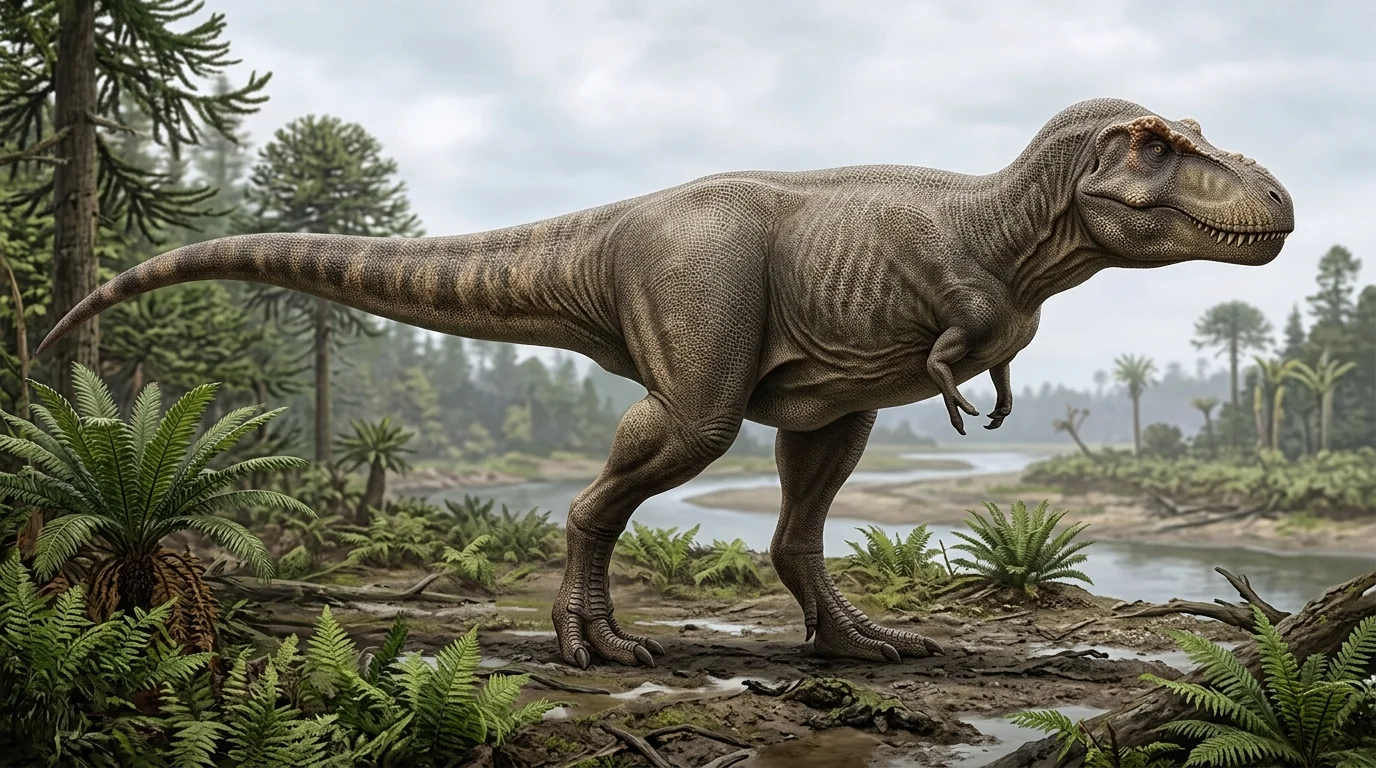
Heaviest known bipedal carnivore; massive skull & devastating bite force
Mathematical Methodologies
7. How Scientists Estimate Dinosaur Size
Without complete living specimens or scales, paleontologists deploy two primary quantitative methodologies to reconstruct dinosaur dimensions.
The science of dinosaur mass estimation has undergone a revolution over the past two decades. Rather than relying on artistic intuition, researchers use mathematical scaling formulas and high-resolution 3D computer models.
Bivariate Stylopodial Bone Allometry
Formalized by Anderson et al. (1985) and refined into universal tetrapod equations by Campione & Evans (2012), this method measures the minimum combined circumference of the femur and humerus. Because quadrupeds support their entire mass through these four bone pillars, bone thickness scales with mathematical precision across all living tetrapods. Log-transformed equations yield mass estimates with quantifiable 95% confidence intervals.
Campione & Evans (2012) Formula
3D Volumetric Convex Hull Reconstructions
Using LiDAR surface scanners and computed tomography (CT), paleontologists generate photogrammetric 3D models of articulated fossil skeletons. Computer algorithms then compute the minimum convex hull that wraps tightly around the skeleton (Bates et al. 2015). Soft tissue, muscle, and visceral mass are added based on living avian and crocodilian anatomy, and internal respiratory air sacs (up to 30% volume) are subtracted to compute total body density.
LiDAR & CT Digital Modeling
Axial Vertebral Scaling
For axial length, missing vertebrae are mathematically interpolated from related complete sister taxa. For example, cervical and caudal lengths in fragmentary titanosaurs are reconstructed by cross-referencing proportional series in more complete taxa like Dreadnoughtus and Futalognkosaurus.
Cladistic Morphometrics
Taphonomic Challenges
8. Why Identifying the Biggest Dinosaur Is Difficult
Colossal dinosaurs present the most extreme preservation challenges in vertebrate paleontology.
When a 70-ton titanosaur died, scavengers, river floods, and weathering scattered its massive bones long before sediment could bury them. Consequently, complete skeletons of giant dinosaurs are virtually non-existent. Paleontologists must frequently work from isolated vertebrae, limb bones, or pelvic girdles.
A classic illustration of taphonomic difficulty is *Maraapunisaurus fragillimus* (originally *Amphicoelias*). Described in 1878 by Edward Drinker Cope based on an enormous fragmentary vertebra estimated at 2.4 meters tall, the specimen crumbled and was lost in transport. Modern analyses by Kenneth Carpenter suggest it was a giant rebbachisaurid rather than a diplodocid, highlighting how easily fragmentary evidence can distort historical size claims.
Additionally, dinosaurs grew continuously throughout their lives (indeterminate growth). Even the largest known specimen of *Argentinosaurus* or *Patagotitan* may represent an animal that was still growing, meaning an even larger individual could have existed in the same ecosystem.
Evolutionary Morphology
9. Giant Sauropods: Evolutionary Anatomy of Colossal Bauplans
Sauropodomorphs did not achieve gigantism by simply getting bigger; they possessed a unique evolutionary toolkit.
In a landmark biological review, Sander et al. (2011) identified the cascade of evolutionary innovations that enabled sauropod gigantism while mammal lineages were constrained to much smaller sizes:
1. **No Chewing (Small Head on a Long Neck):** Mammals must chew their food, requiring massive jaw muscles, robust teeth, and heavy skulls. Sauropods swallowed plant matter whole, allowing their skulls to remain tiny and lightweight (often under 60 cm long). This enabled the evolution of extraordinarily long necks.
2. **Avian Flow-Through Respiratory System:** Sauropods possessed bird-like respiratory air sacs that actively ventilated the lungs during both inhalation and exhalation. This system delivered high oxygen volumes and provided vital internal evaporative cooling to prevent overheating.
3. **Oviparity (Egg Laying):** Unlike placental mammals that endure long, physiologically draining pregnancies carrying a few heavy embryos, giant sauropods laid dozens of small eggs, enabling rapid population recovery without maternal mortality risks.
Non-Sauropod Champions
10. Important Non-Sauropod Size Extremes
While sauropods held all terrestrial records, predatory theropods and ornithischian herbivores evolved monumental body sizes within their own structural limits.
Understanding dinosaur gigantism requires examining how non-sauropod groups approached the biophysical limits of bipedal and quadrupedal locomotion.
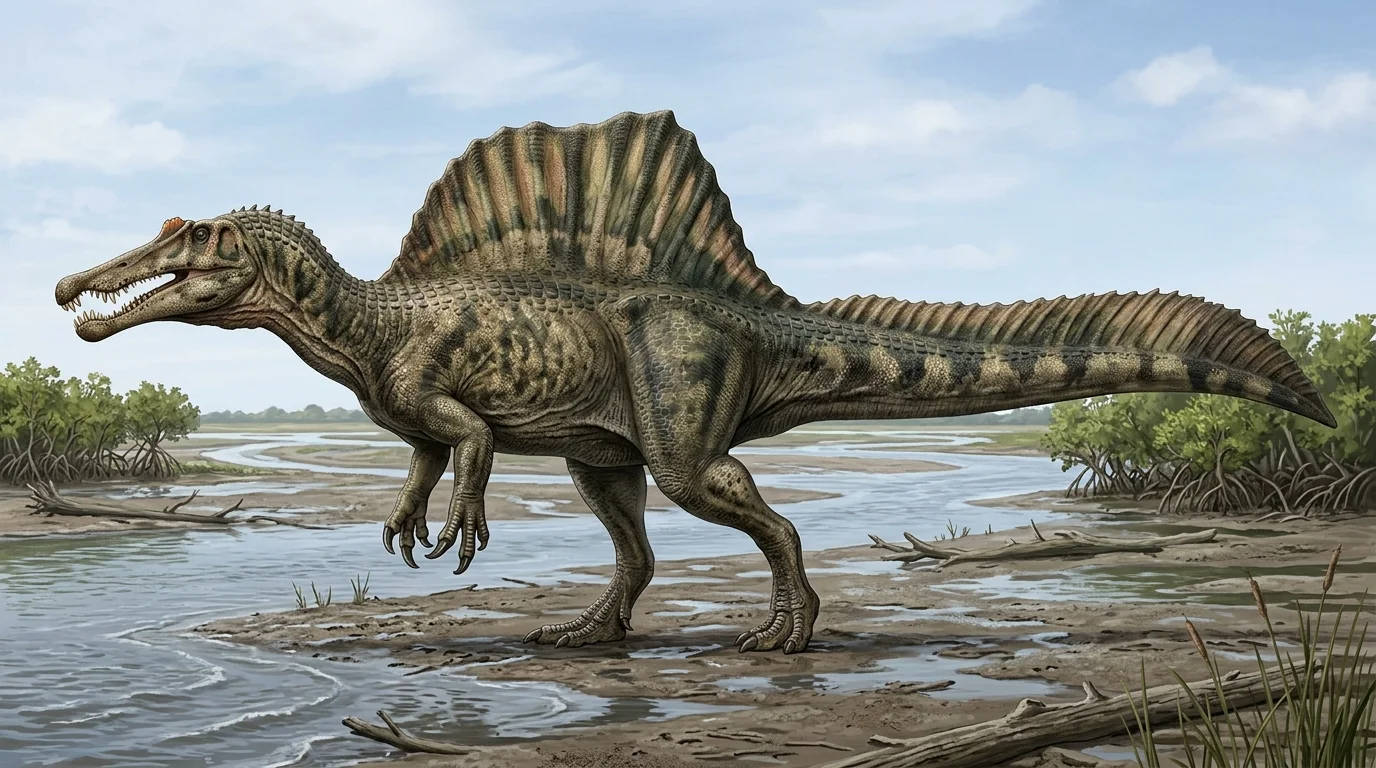
**Largest Predatory Theropods:** Predatory dinosaurs were strictly constrained by bipedal locomotion, as walking on two legs concentrated enormous gravitational stress onto the pelvic girdle and hindlimbs. Spinosaurus aegyptiacus was the longest known carnivore at 14 to 15 meters (46 to 49 feet), supported by semi-aquatic buoyancy in river systems. However, Tyrannosaurus rex was significantly more robust; specimens like 'Scotty' (RSM P2523.8) and 'Sue' (FMNH PR 2081) reached masses of 8,400 to 8,870 kilograms (8.4 to 8.9 metric tons), making *T. rex* the heaviest bipedal carnivore known from nearly complete skeletons.
**Largest Non-Sauropod Herbivores:** Among ornithischians, hadrosaurids (duck-billed dinosaurs) achieved staggering sizes. **Shantungosaurus giganteus**, discovered in Late Cretaceous deposits of Shandong, China, reached lengths of 15.0 to 16.6 meters (49 to 54 feet) and body masses between 13,000 and 16,000 kilograms (13 to 16 metric tons). *Shantungosaurus* was heavier than many contemporary sauropods, wielding massive dental batteries containing over 1,500 self-sharpening teeth.
Scientific Nuance & Rigor
11. Fossil Completeness and Measurement Uncertainty
Honest scientific evaluation requires transparently acknowledging the confidence intervals inherent in paleontological estimates.
Every numerical estimate for dinosaur weight represents a statistical range rather than an immutable physical fact. Volumetric models and stylopodial circumference regressions carry inherent uncertainty margins of ±15% to ±25%.
For example, initial volumetric modeling for *Dreadnoughtus* in 2014 suggested a weight of 59.3 metric tons. However, subsequent 3D convex hull modeling by Bates et al. (2015) demonstrated that this model had over-inflated muscle volumes; their revised estimate settled on a realistic range of 38 to 48 tonnes.
Similarly, claims of 100-ton titanosaurs (such as 'Bruhathkayosaurus' or 'Maraapunisaurus') are based on lost or misidentified fossils that cannot be verified by modern scientific methods. DinoOrigin adheres strictly to peer-reviewed, specimen-backed measurements.
Why Size Estimates Vary Across Studies
Dinosaur size estimates are frequently revised as methodologies advance. In 2014, initial volumetric models for Dreadnoughtus suggested a mass exceeding 65 tonnes, but subsequent 2015 convex hull modeling by Bates et al. established a realistic range between 38 and 48 tonnes. Similarly, historic 19th-century taxa like Maraapunisaurus (formerly Amphicoelias fragillimus) were estimated at over 50 meters based on a single giant vertebra that was subsequently lost, leaving its true scale a subject of continuing academic debate. DinoOrigin presents peer-reviewed ranges rather than invented exact numbers.
Featured Catalog Species
Peer-reviewed profiles from DinoOrigin's verified species database.
Among the largest and most massive terrestrial animals known to science, with scaled estimates reaching 65 to 80 metric tons based on fragmentary titanosaur remains.
A giant sail-backed theropod possessing anatomical specializations associated with riparian ecosystems, with its aquatic locomotion subject to ongoing scientific debate.
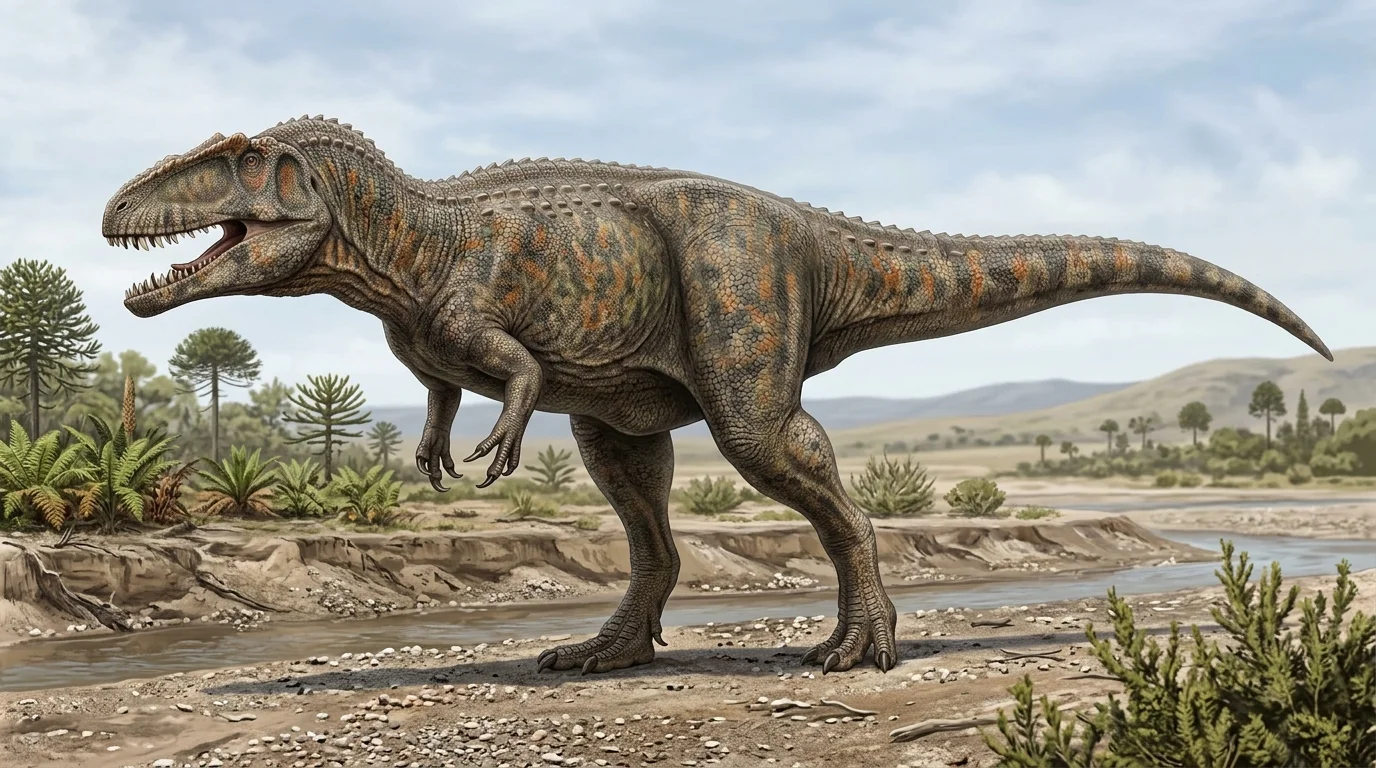
A titanic South American carcharodontosaurid apex carnivore rivaling Tyrannosaurus in overall body length.
12.2–13 m (40.0–42.7 ft)
7.0–8.8 metric tons (15,432–19,401 lbs)
Frequently Asked Paleontological Questions
Evidence-based answers addressing common questions and misconceptions.
What was the biggest dinosaur ever discovered?
Argentinosaurus huinculensis is currently considered the heaviest dinosaur backed by verified fossil remains, with peer-reviewed mass estimates ranging between 65 and 85 metric tons (70–93 US tons). For skeletal length, diplodocids like Supersaurus vivianae reached an estimated 33 to 35 meters in conservative peer-reviewed literature (Lovelace et al. 2007), with 2021 SVP conference re-evaluations proposing up to 39 to 42 meters.
What is the difference between the 'biggest' and 'largest' dinosaur?
In vertebrate paleontology, 'biggest' refers strictly to total body mass (weight in metric tons), held by colossal titanosaurs like Argentinosaurus (65–85 t). 'Largest' can also describe axial length (held by diplodocids like Supersaurus at 33–35 m baseline, up to 39–42 m via Curtice's 2021 SVP abstract) or vertical standing height (held by Sauroposeidon at 16.5–18 m).
What was the largest carnivorous dinosaur?
Spinosaurus aegyptiacus was the longest known carnivorous dinosaur at approximately 14 to 15 meters (46 to 49 feet). However, Tyrannosaurus rex was significantly more massive, reaching an estimated weight of up to 8.87 metric tons, making T. rex the heaviest bipedal predator in Earth's history.
Could a dinosaur ever grow larger than a blue whale?
No. The modern blue whale (Balaenoptera musculus) reaches up to 150 to 190 metric tons. Water provides continuous buoyant support, whereas terrestrial dinosaurs were strictly constrained by the structural load limits of vertebrate bone, articular cartilage, and terrestrial cardiovascular pressure gradients.
How accurate are dinosaur weight estimates?
Dinosaur weight estimates carry typical scientific uncertainty margins of ±15% to ±20%. Estimates are calculated using two primary methods: bivariate stylopodial limb bone circumference equations (Campione & Evans 2012) and 3D digital convex hull volume modeling (Bates et al. 2015).
Campione, N. E., & Evans, D. C. (2012). A universal scaling relationship between body mass and proximal limb bone dimensions in quadrupedal terrestrial tetrapods. BMC Biology, 10(1), 60.[10.1186/1741-7007-10-60]
Carballido, J. L., et al. (2017). A new giant titanosaur sheds light on body mass evolution among sauropod dinosaurs. Proceedings of the Royal Society B: Biological Sciences, 284(1860), 20171219.[10.1098/rspb.2017.1219]
Bates, K. T., et al. (2015). Downsizing a giant? Determining the mass of Dreadnoughtus schrani. Biology Letters, 11(6), 20150215.[10.1098/rsbl.2015.0215]
Curtice, B. (2021). New data on Supersaurus vivianae, the longest dinosaur. Society of Vertebrate Paleontology 81st Annual Meeting, Virtual Conference Abstract.
Lovelace, D. M., Hartman, S. A., & Wahl, W. R. (2007). Morphology of a specimen of Supersaurus (Dinosauria, Sauropoda) from the Morrison Formation of Wyoming, and a re-evaluation of diplodocid phylogeny. Arquivos do Museu Nacional, Rio de Janeiro, 65(4), 527-544.
Sander, P. M., et al. (2011). Biology of the sauropod dinosaurs: the evolution of gigantism. Biological Reviews, 86(1), 117-155.[10.1111/j.1469-185X.2010.00137.x]
Sellers, W. I., et al. (2013). March of the titans: the locomotor capabilities of sauropod dinosaurs. PLoS ONE, 8(10), e78733.[10.1371/journal.pone.0078733]
Wedel, M. J., Cifelli, R. L., & Sanders, R. K. (2000). Sauroposeidon proteles, a new sauropod from the Early Cretaceous of Oklahoma. Journal of Vertebrate Paleontology, 20(1), 109-114.
 Featured SpecimenSauropodomorpha