Phylogenetic classification of Therizinosaurus cheloniformis Maleev, 1954 based on peer-reviewed cladistic analyses of diagnostic skeletal synapomorphies.
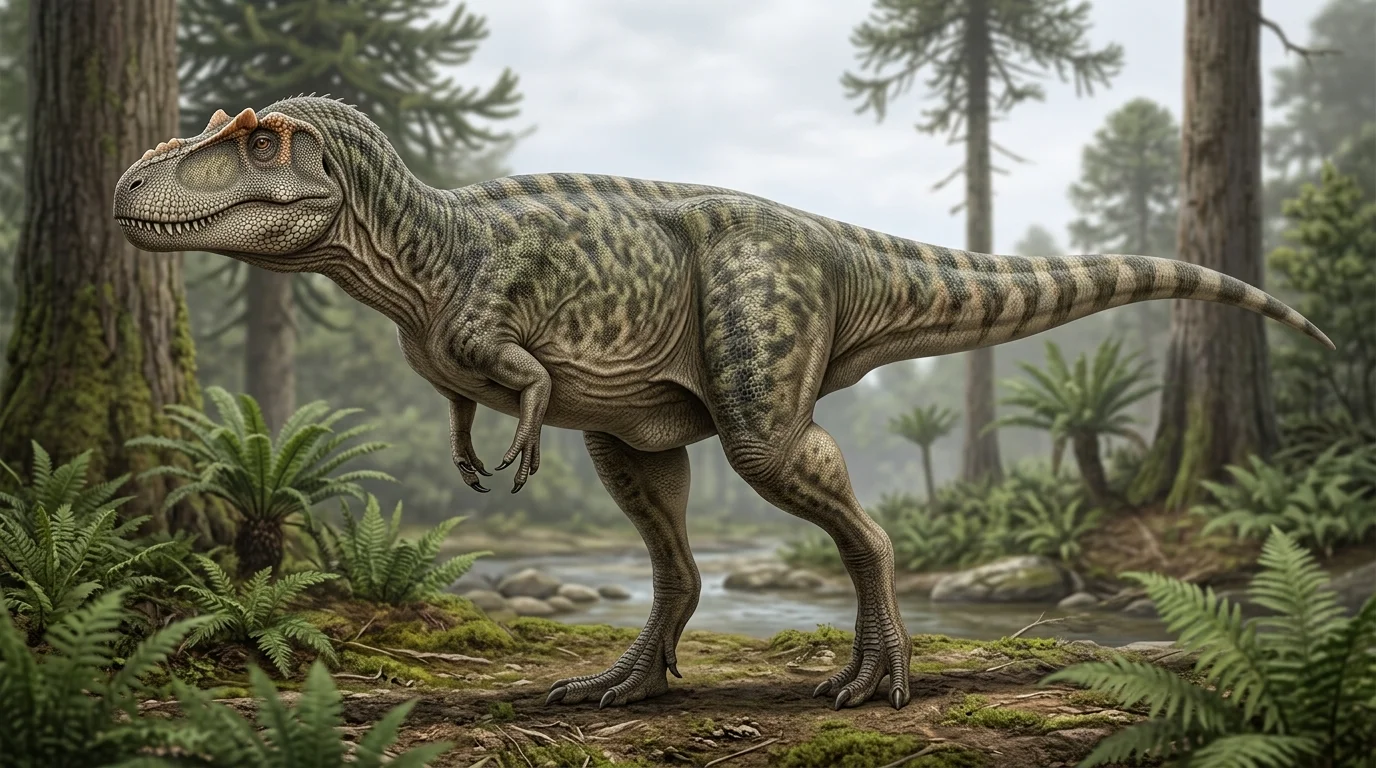
Bipedal saurischian dinosaurs, historically dominated by carnivores and including the avian lineage.
Genus
Therizinosaurus
Monophyletic prehistoric clade
Species
Therizinosaurus cheloniformis Maleev, 1954
Specific authority designation
At a Glance & Anatomical Dimensions
How Big Was Therizinosaurus?
Aberrant Herbivorous Theropod
Estimated Length9–10 m30–33 ft (Modeled)
Estimated Mass3–5 tonnes3,000–5,000 kg
Standing Height4–5 m13–16 ft
Longest ClawsUp to 1.0 m3.3 ft outer curve
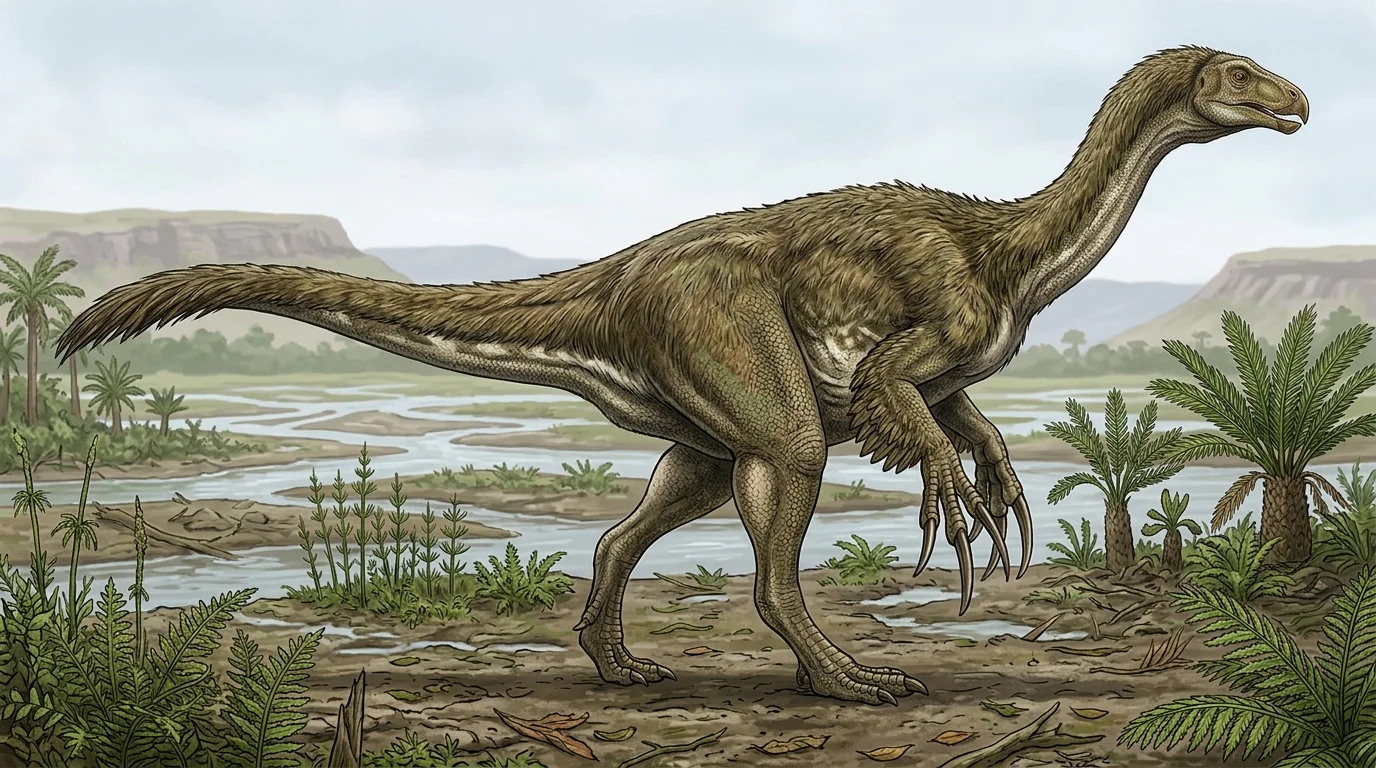
What was Therizinosaurus?Therizinosaurus cheloniformis was a colossal, aberrant coelurosaurian theropod that lived approximately 70 million years ago during the Late Cretaceous in the ancient floodplains of the Nemegt Basin in Mongolia. Unlike iconic predatory theropods such as Tyrannosaurus rex and Allosaurus, Therizinosaurus abandoned carnivory to become a specialized high-browsing herbivore.
What did Therizinosaurus eat? It possessed a long, flexible neck, small leaf-shaped (lanceolate) teeth suited for cropping leafy foliage, and an exceptionally flared pelvis designed to house a massive microbial fermentation gut. Its bizarre, pot-bellied profile allowed it to ferment tough Cretaceous vegetation that other theropods could not digest.
How long were its claws? Therizinosaurus possessed the longest manual ungual claws of any known animal in Earth history, reaching up to 1 meter (3.3 feet) along their outer curve. While early researchers in 1954 initially mistook these claws for the ribs of a giant sea turtle, modern biomechanical analysis shows they were covered in keratinous sheaths and served to hook high tree branches, deter apex predators like contemporary tyrannosaurid Tarbosaurus, or signal in intraspecific display.
Paleontological Evidence & Model Uncertainty
Because Therizinosaurus is known primarily from forelimb elements, shoulder girdles, giant manual unguals, and isolated hindlimb bones (holotype PIN 551-483 and referred specimens), complete skull and body dimensions remain model-dependent estimates scaled from more complete relatives like Erlikosaurus and Segnosaurus.
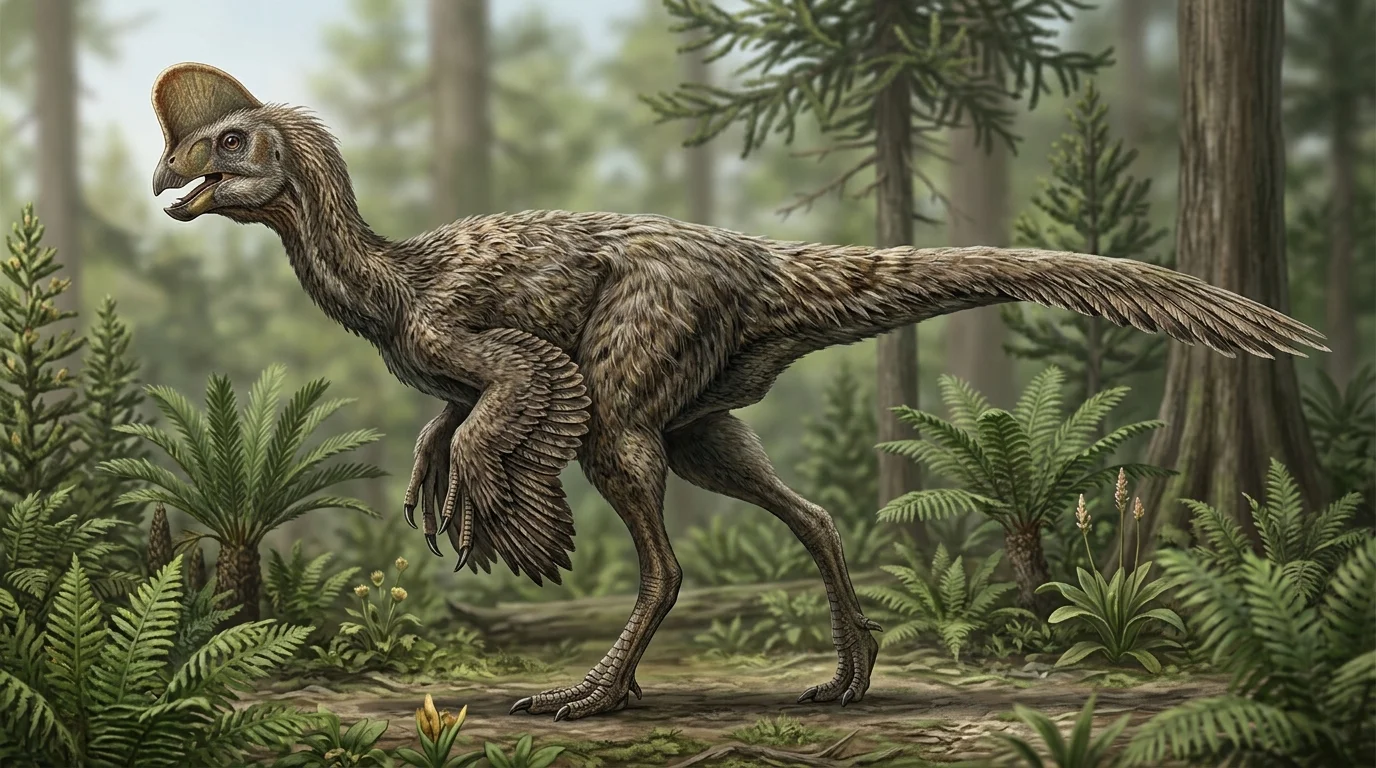
Therizinosaurus cheloniformis was an astonishing, aberrant maniraptoran theropod that abandoned carnivory in favor of an herbivorous lifestyle. Reaching lengths of 10 meters and weighing around 5 metric tons, Therizinosaurus resembled an immense, pot-bellied, feathered creature with a long neck, small leaf-shaped teeth, and an exceptionally broad pelvis to accommodate an extensive fermentation gut.
Its most extraordinary feature was its manual unguals: each hand bore three enormous, gently curved scythe-like claws measuring up to 1 meter along the outer curve. These immense claws were used to hook and pull high leafy branches down to its mouth, as well as to deter contemporary apex predators like Tarbosaurus.
Diagnostic Morphological Traits
Bizarre giant bipedal dinosaur with a rotund torso, feather coat, long neck, tiny head, and hands with three 1-meter long scythe claws.
Comparative Scale & Biometrics
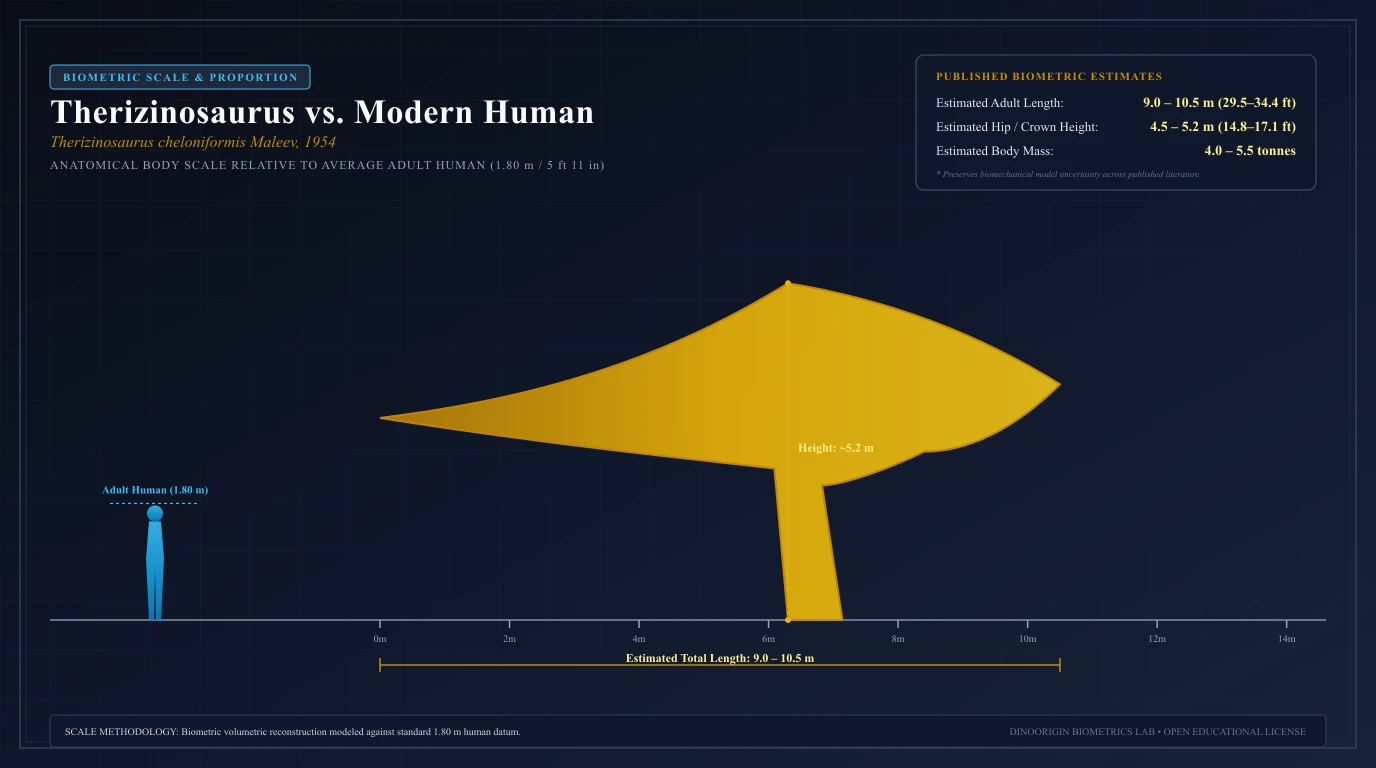
Anatomical dimensions relative to an average adult human (1.8 m / 6 ft tall)
Tree leaves, shrubs, and high conifer foliage gathered with hooked claws and clipped with a small beak.
Paleobiology & Behavior
Colossal, bizarre herbivorous theropod armed with enormous, meter-long scythe-like hand claws used to strip high foliage. In the Nemegt Formation of Mongolia, Therizinosaurus lived alongside fast ornithomimids like Gallimimus and faced predatory threats from the apex tyrannosaurid Tarbosaurus.
Habitat & Ecological Biome
Prehistoric Depositional Setting
Wetland deltas and seasonal river corridors of the Nemegt Formation.
Fossil Evidence & Specimen Records
Preserved Skeletal Material & Bonebeds
Known from several complete forelimbs, gigantic claws, shoulder girdles, hindlimb elements, and partial ribs (PIN 551-483).
Anatomical Osteology & Skeletal Reconstruction
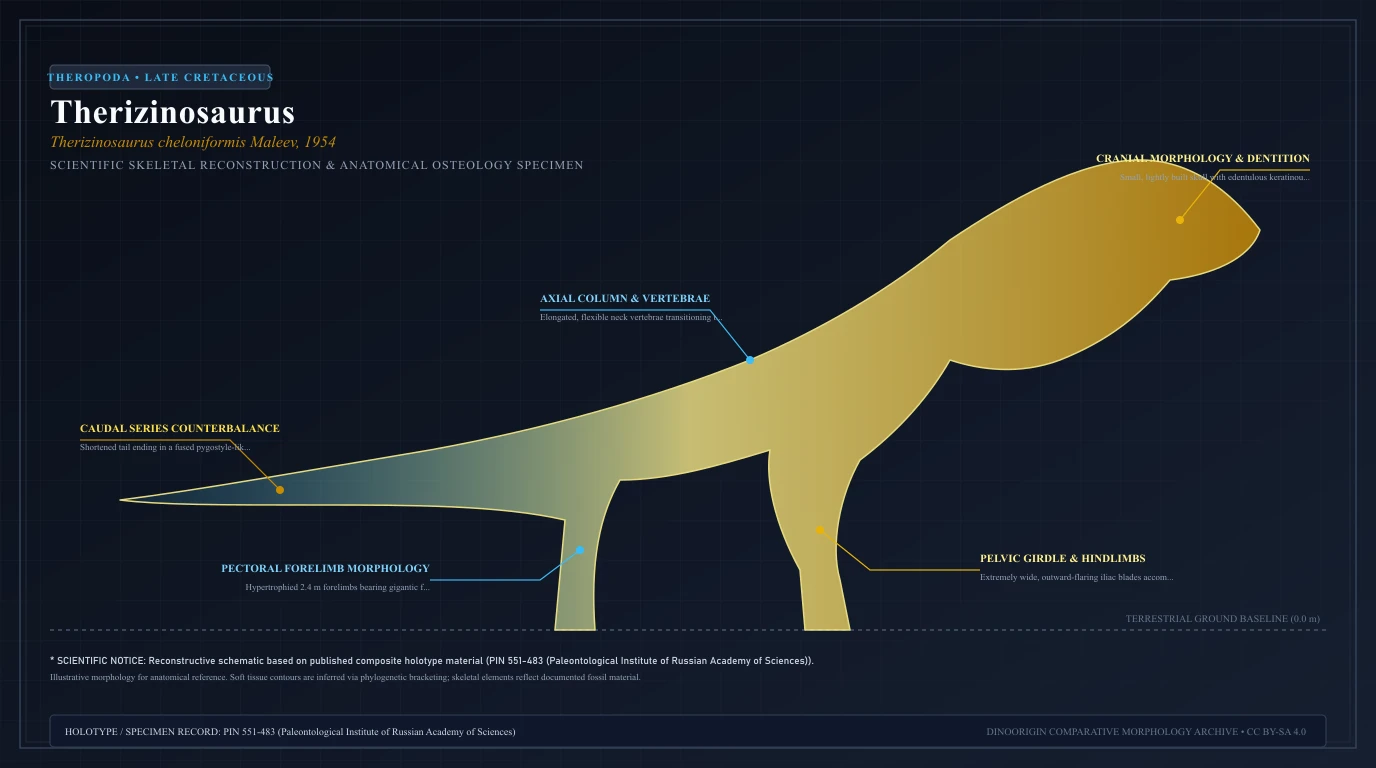
Anatomical skeletal reconstruction of Therizinosaurus (Therizinosaurus cheloniformis Maleev, 1954) illustrating cranial fenestrae, vertebral column, and appendicular proportions based on composite fossil material.
Discovery & Taxonomic Naming History
Year of Discovery / Description1948
Type Specimen Locality & FormationNemegt Basin, Omnogov, Mongolia
Discovered during a Soviet-Mongolian expedition; initially misidentified by Evgeny Maleev as a giant sea turtle claw.
Cretaceous Period PeriodTemporal Interval: 70–66 Ma (million years ago)
The longest and final period of the Mesozoic Era, characterized by the rise of flowering plants, ceratopsians, hadrosaurs, tyrannosaurids, and concluding with the Chicxulub asteroid impact.
During the Mesozoic Era, continental drift progressively reconfigured land bridges, atmospheric currents, and regional precipitation regimes. Fossils of Therizinosaurus evidence its adaptation to the paleoenvironments of Asia.
Paleogeographic RealmAsia (Asia)
Renowned for the exceptionally preserved feathered dinosaurs of Liaoning, China and the Cretaceous dune habitats of the Gobi Desert in Mongolia.
Fossil Discovery Locality
Scientific Significance & Evolutionary Impact
The anatomical architecture of Therizinosaurus serves as a crucial benchmark in vertebrate paleontology, illustrating key adaptive radiations within Theropoda.
Phylogenetic Placement: Informs cladistic debates concerning the divergence, skull biomechanics, and skeletal evolution of Cretaceous Period fauna.
Paleoecological Guild: Documents trophic specialization (Herbivore) and predator-prey dynamics across its regional ecosystem.
Taphonomic Record: Known from several complete forelimbs, gigantic claws, shoulder girdles, hindlimb elements, and partial ribs (PIN 551-483).
Frequently Asked Questions About Therizinosaurus
Scientifically verified answers based on peer-reviewed paleontological evidence.
Q1.How big was Therizinosaurus?
Paleontological estimates place adult Therizinosaurus at a total body length of approximately 9 to 10 meters (30–33 feet), a standing height of 4 to 5 meters (13–16 feet), and an estimated body mass between 3,000 and 5,000 kg (3 to 5 metric tons). Because fossil remains are incomplete, these dimensions are model-dependent estimates derived from comparative scaling with related therizinosaurids.
Q2.How long were Therizinosaurus claws?
Therizinosaurus bore the longest known claws (manual unguals) of any terrestrial animal in Earth history, measuring up to 1 meter (3.3 feet) along the outer curvature. These gently curved, blade-like claws were covered in keratinous sheaths in life and were likely used to hook and pull down tree branches, deter apex predators like Tarbosaurus, or engage in intraspecific display.
Q3.What did Therizinosaurus eat?
Despite descending from theropod carnivores, Therizinosaurus was an herbivore. It possessed small, lanceolate (leaf-shaped) teeth suited for slicing coarse vegetation, a long neck to reach mid-tier foliage, and an exceptionally broad pelvis accommodating an expansive microbial fermentation gut.
Was Therizinosaurus a carnivore?
Academic Literature & Peer-Reviewed References
Authoritative citations establishing the factual taxonomy, biometrics, and anatomy of Therizinosaurus.
Transactions of the Joint Soviet-Mongolian Paleontological ExpeditionView Publication
Barsbold, R. (1976). New data on Therizinosaurus (Therizinosauridae, Theropoda). Transactions of the Joint Soviet-Mongolian Paleontological Expedition, 3, 76-92.
Comparative size scale of Therizinosaurus relative to a 1.8-meter adult human, illustrating an estimated length of 9.0–10.5 m and height of 4.5–5.2 m (preserving model uncertainty).
Nemegt Basin, Omnogov, Mongolia
Deposited in Mesozoic sedimentary strata preserving skeletal remains, teeth, or trace trackways.
Q4.
No. While phylogenetically nested within the clade Theropoda—which contains predatory carnivores like Tyrannosaurus and Allosaurus—Therizinosaurus belongs to the specialized maniraptoran family Therizinosauridae, which transitioned to an entirely herbivorous foliage diet.
Q5.When and where did Therizinosaurus live?
Therizinosaurus lived during the Late Cretaceous Period (Campanian to early Maastrichtian stages, approximately 70 million years ago) in what is now the Nemegt Basin of the Gobi Desert in Mongolia. It inhabited braided river floodplains and temperate river woodlands alongside fellow dinosaurs such as Tarbosaurus, Gallimimus, and Saurolophus.