OrnithopodaParasaurolophus
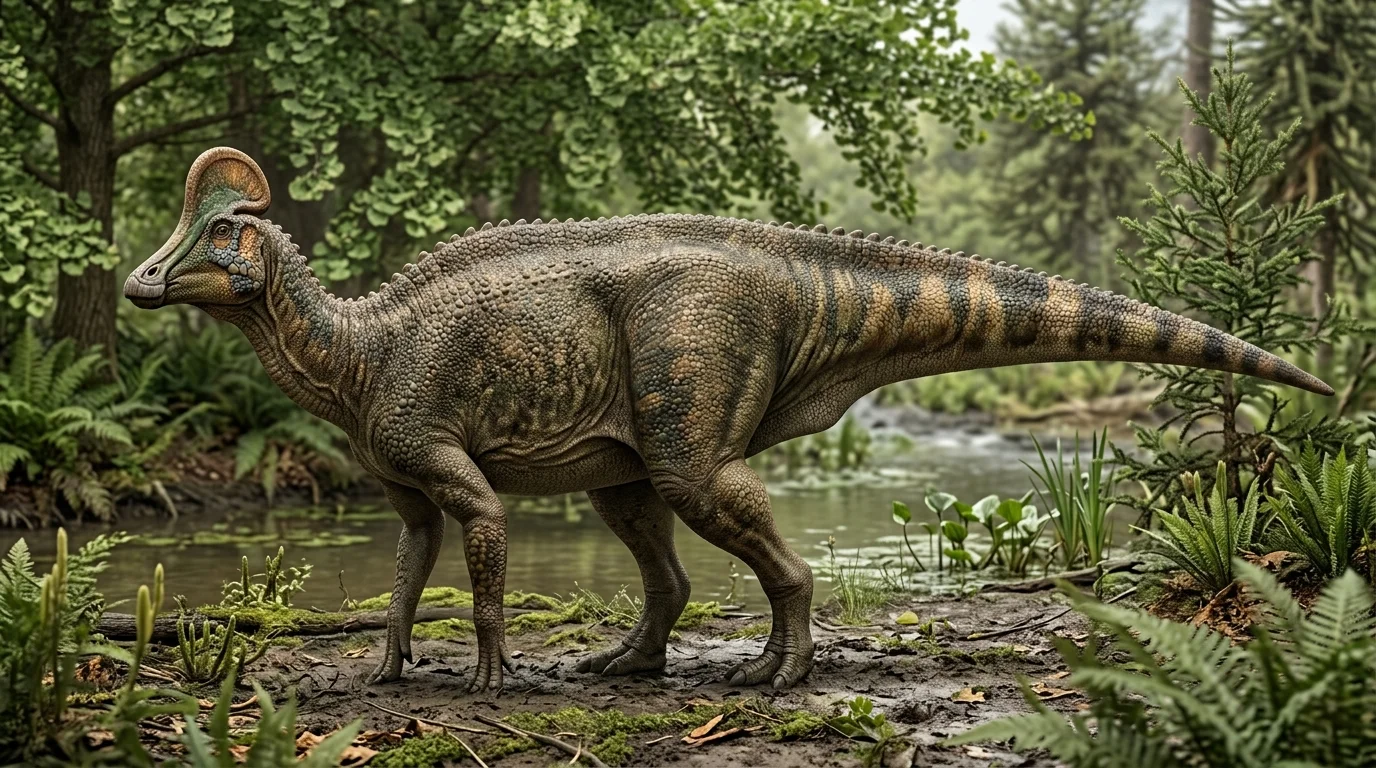
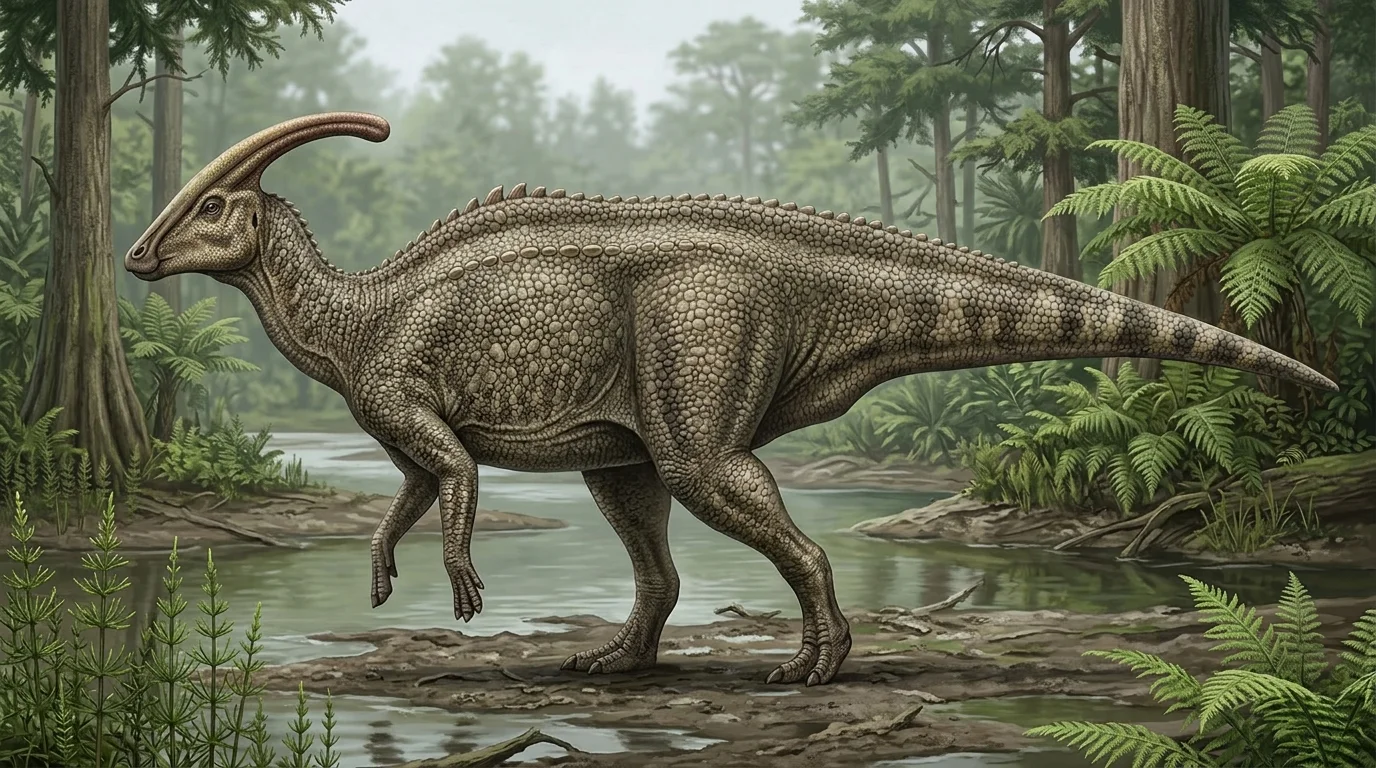
Parasaurolophus walkeri Parks, 1922
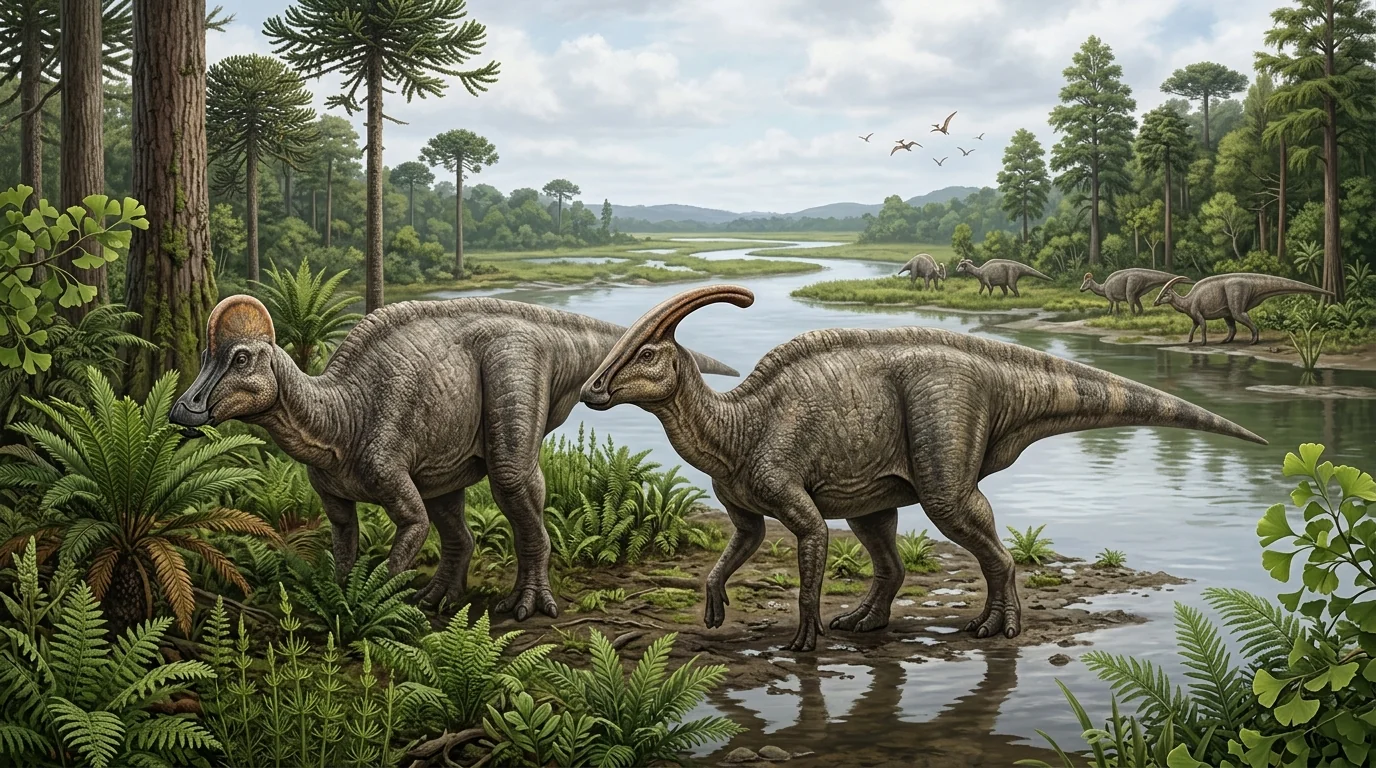
A crested hadrosaurid dinosaur renowned for its elongated, hollow cranial crest used for acoustic resonance and visual signaling.
Cranial Resonators, Dental Batteries, and the Evolutionary Triumph of Cretaceous Herbivores
Duck-billed dinosaurs are scientifically known as hadrosaurids (family Hadrosauridae). Thriving during the Late Cretaceous across North America, Asia, and Europe, they are characterized by their broad, keratin-sheathed dental beaks resembling a duck's bill, complex self-sharpening dental batteries of up to 1,400 teeth, and elaborate hollow or solid cranial crests used for acoustic vocalization and species recognition.

Hadrosaurs are divided into two primary subfamilies: hollow-crested Lambeosaurinae and flat-headed/solid-crested Hadrosaurinae.
The 'duck bill' was only the front cropping mechanism; behind it lay interlocking dental batteries containing hundreds of replacement teeth.
CT scanning of Parasaurolophus crests proved they housed convoluted nasal sound tubes capable of low-frequency acoustic honking.
Fossilized skin impressions and mummies (such as 'Dakota' and 'Leonardo') reveal that hadrosaurs had thick, pebbled scales and fleshy hooves.
Hadrosaurs were among the most ecologically successful herbivores in terrestrial vertebrate history. Often referred to as the 'cattle of the Cretaceous', these ornithopods achieved unprecedented chewing efficiency through specialized pleurokinetic jaw mechanics, enabling lateral grinding of abrasive conifers, horsetails, and flowering angiosperms.
The evolutionary dominance of duck-billed dinosaurs was driven by three revolutionary physical adaptations that outcompeted other contemporary herbivores.
Unlike mammals that possess single sets of replacement teeth, hadrosaurs stacked up to six replacement teeth beneath each active tooth position. As teeth wore down against fibrous woody vegetation, new diamond-hard enamel surfaces continually shifted into the chewing plane, creating an unbreakable grinding surface.
In lambeosaurines like Parasaurolophus and Corythosaurus, the external nostrils migrated to the summit of the skull. Inhaled air traveled through up to 2.5 meters of looped internal piping inside the crest before reaching the lungs. Computer simulations by Weishampel (1981) demonstrated these crests functioned as brass-instrument-like acoustic resonators emitting low-frequency calls that traveled miles through dense forests.
Hadrosaurs could switch smoothly between bipedal locomotion when sprinting to escape predators and quadrupedal browsing postures when feeding. Forelimbs ended in fused fleshy mittens that functioned as load-bearing pads.
Morphological and acoustic adaptations across key hadrosaurid genera.
| Specimen | Subfamily | Period | Length | Estimated Mass | Crest Architecture | Primary Function |
|---|---|---|---|---|---|---|
| Parasaurolophus | Hadrosauridae (Lambeosaurinae) | Late Cretaceous | 10.0 m (33 ft) | 3,600 kg | Tubular, backward-sweeping 1.8m acoustic crest | |
| Corythosaurus | Hadrosauridae (Lambeosaurinae) | Late Cretaceous | 9.0 m (30 ft) | 3,100 kg | Tall, helmet-shaped circular display crest | |
| Edmontosaurus | Hadrosauridae (Hadrosaurinae) | Late Cretaceous | 12.0 m (39 ft) | 7,000 kg | Flat-headed; possessed fleshy cockscomb soft tissue crest | |
| Maiasaura | Hadrosauridae (Hadrosaurinae) | Late Cretaceous | 9.0 m (30 ft) | 3,000 kg | Solid crest; famous for communal colonial nesting beds | |
| Ouranosaurus | Iguanodontia (Hadrosauroidea) | Early Cretaceous | 8.3 m (27 ft) | 2,200 kg | Tall dorsal neural spines forming a back sail | |
| Iguanodon | Iguanodontia (Ankylopollexia) | Early Cretaceous | 10.0 m (33 ft) | 4,000 kg | Basal duckbill ancestor with specialized defensive thumb spike |
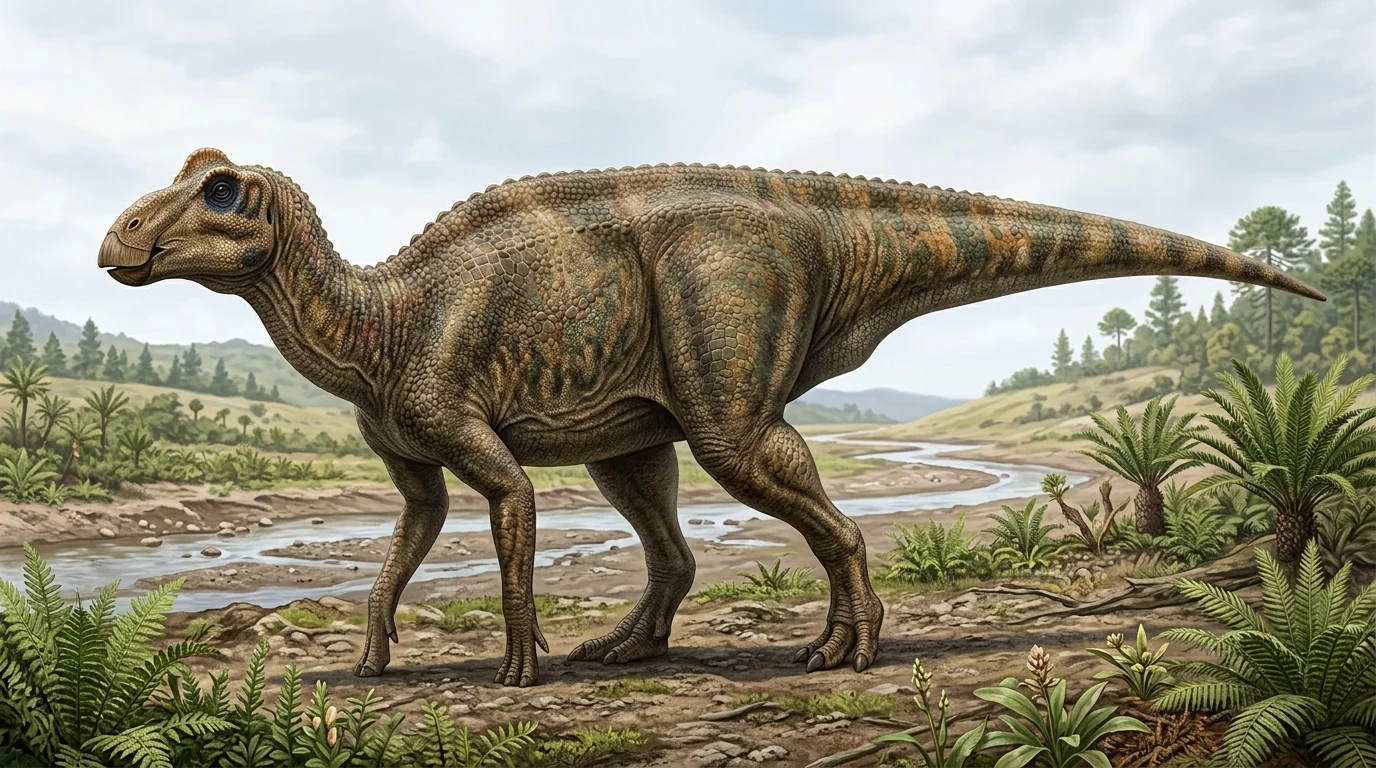
For over a century, paleontologists classified hadrosaurines like Edmontosaurus as strictly 'flat-headed' dinosaurs because their fossil skulls lacked bony crests. However, in 2013, Bell et al. described an exceptional mummified specimen from Alberta that preserved a fleshy, rooster-like cockscomb atop its head. This discovery confirmed that even hadrosaurs without bony crests utilized soft-tissue display structures that leave zero trace in typical skeletal fossils.
Peer-reviewed profiles from DinoOrigin's verified species database.
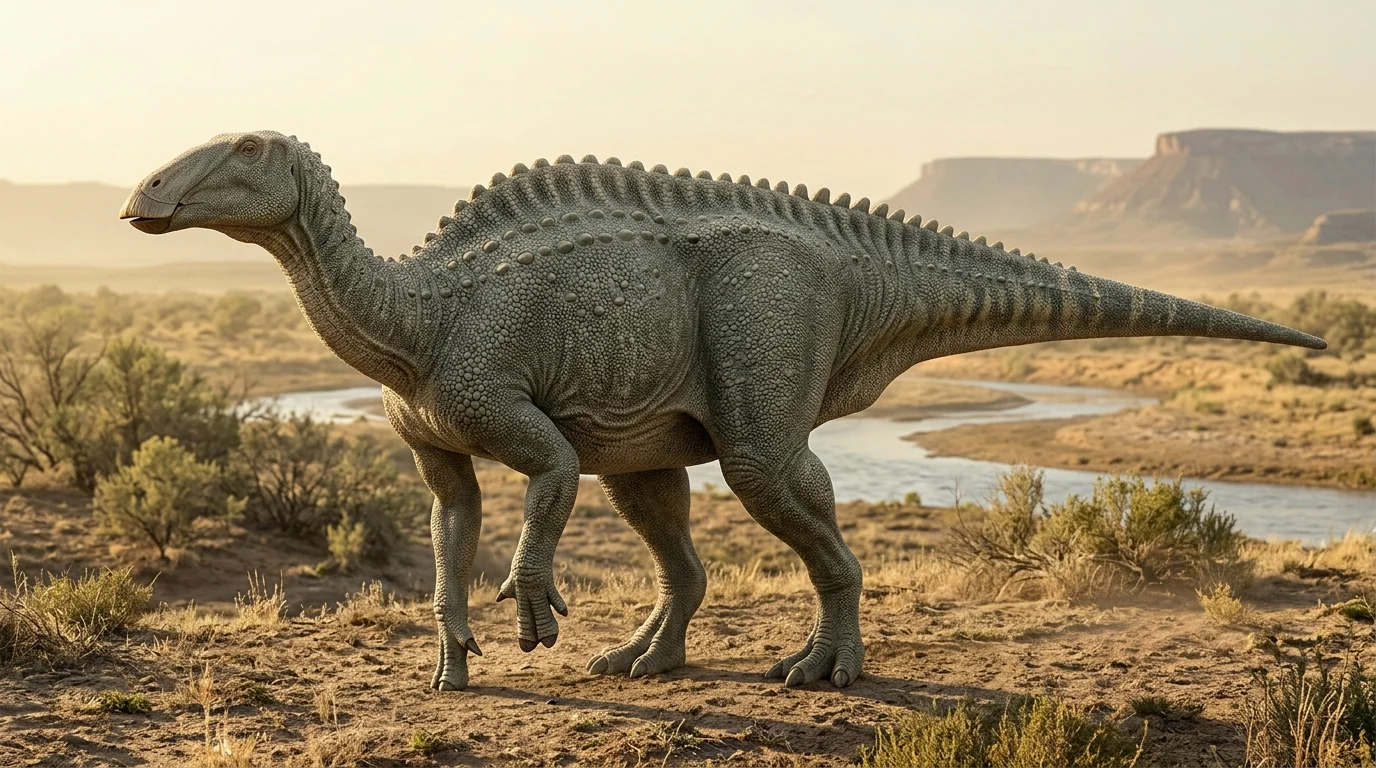
OrnithopodaParasaurolophus walkeri Parks, 1922
A crested hadrosaurid dinosaur renowned for its elongated, hollow cranial crest used for acoustic resonance and visual signaling.
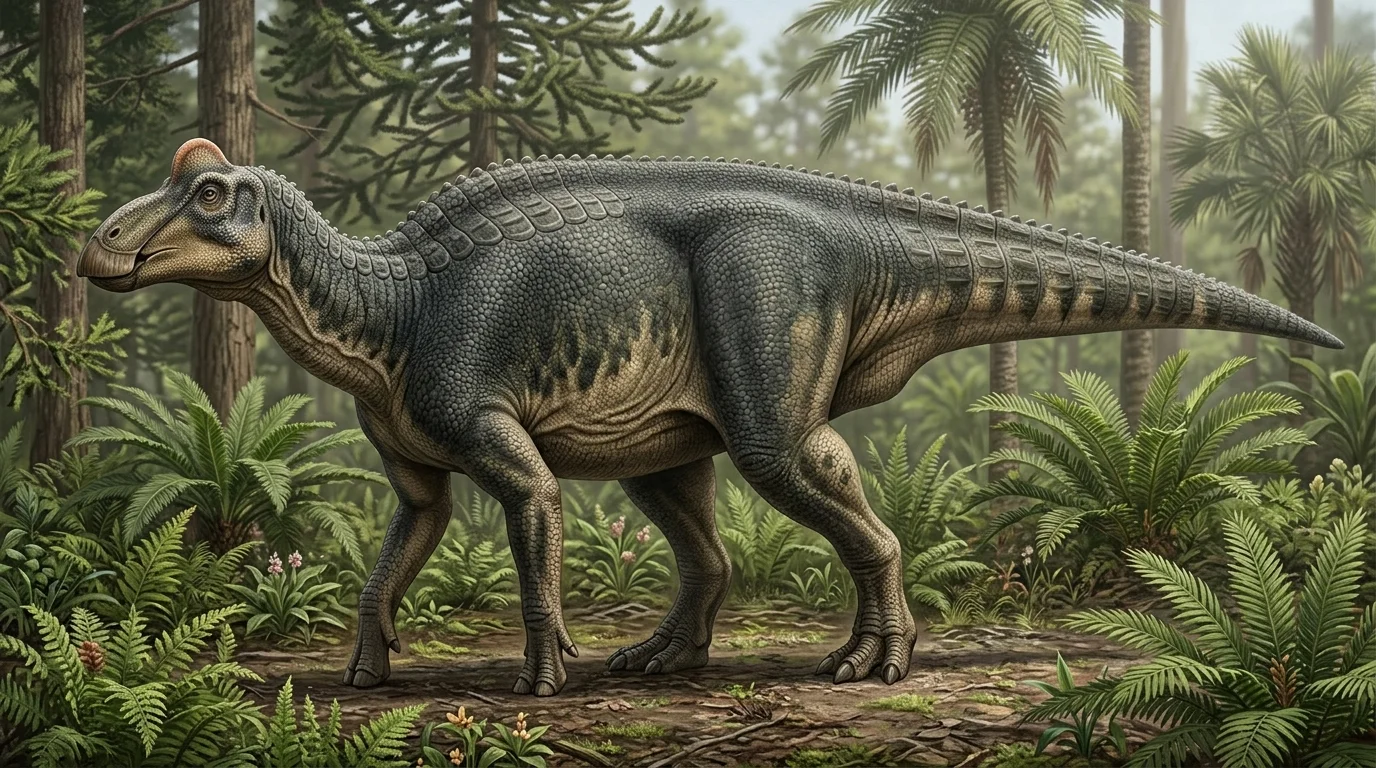
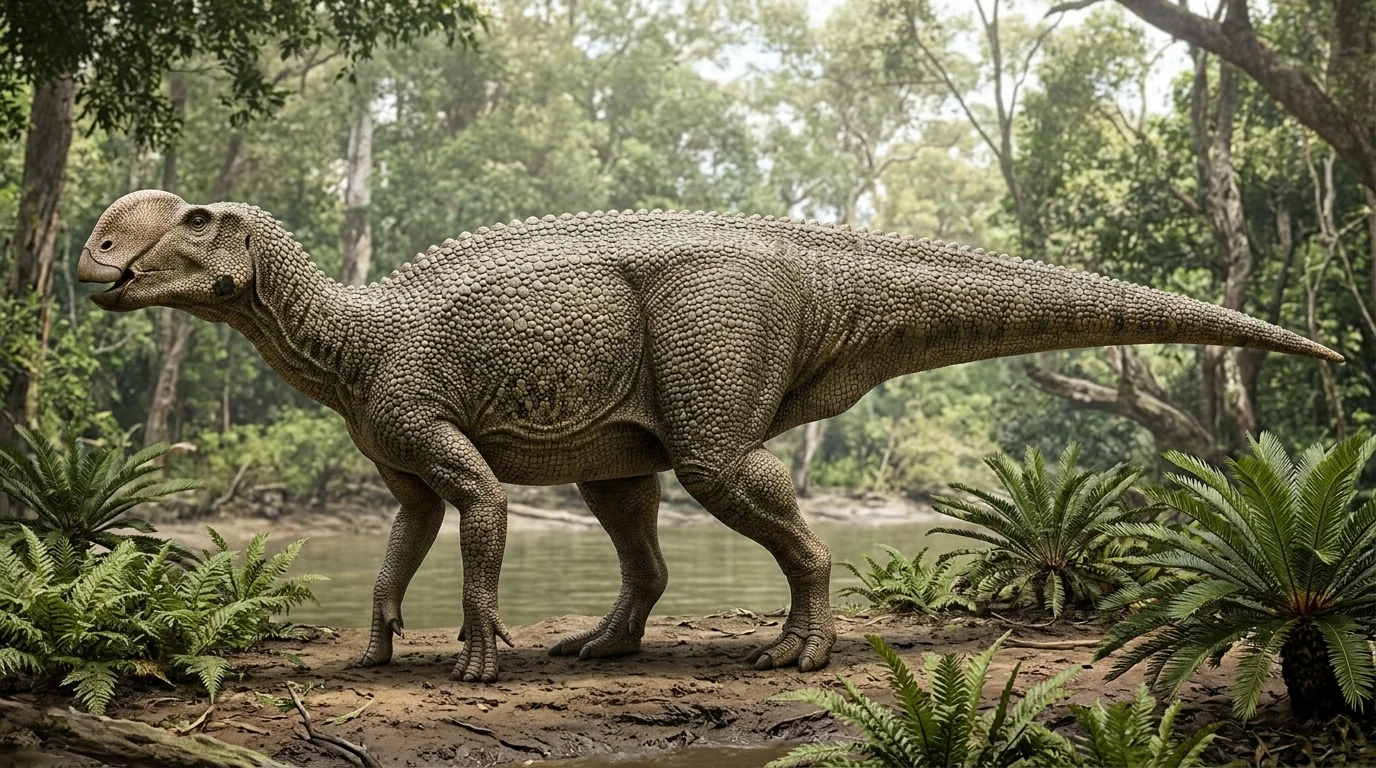
OrnithopodaCorythosaurus casuarius Brown, 1914
A hollow-crested hadrosaurid from Alberta possessing a tall, semicircular helmet crest for sound resonance.
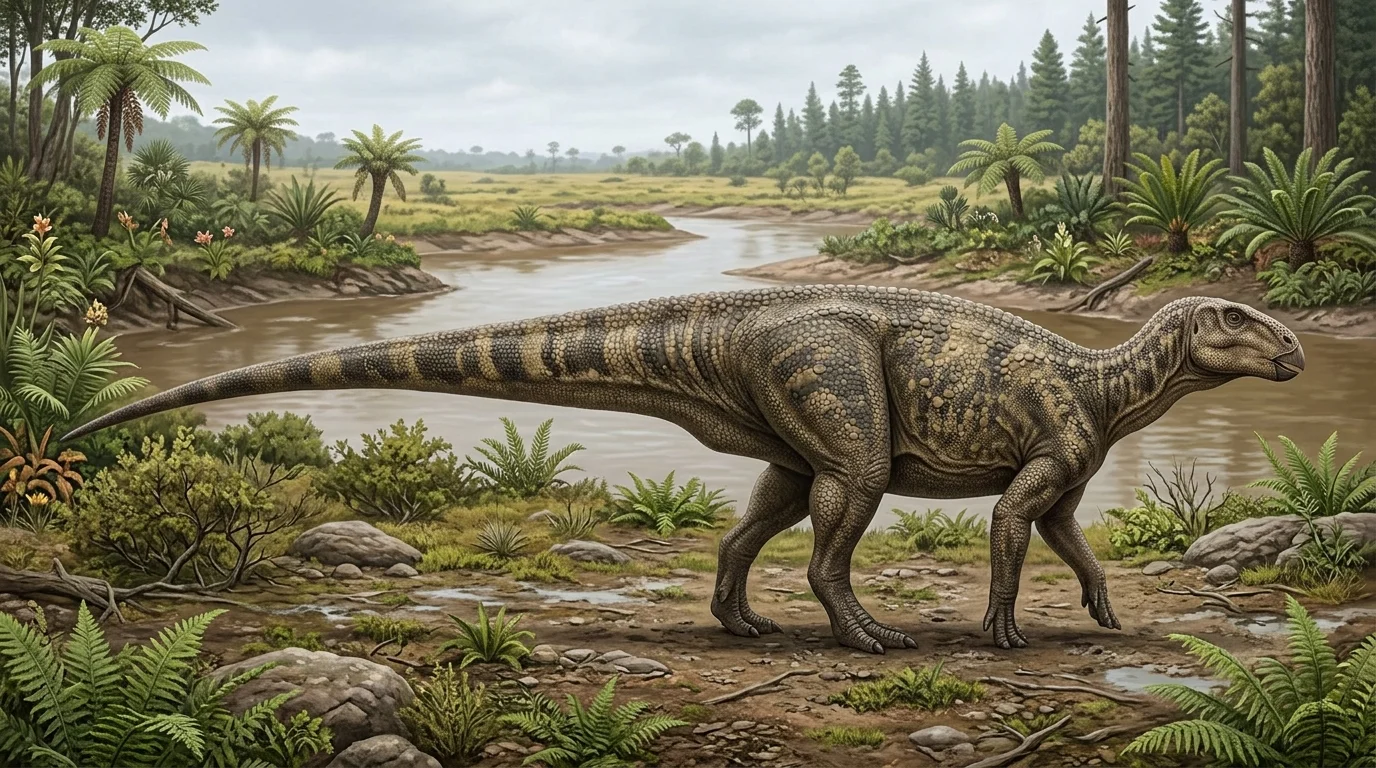
OrnithopodaEdmontosaurus regalis Lambe, 1917
A colossal duck-billed hadrosaurid that was the primary herbivore of Late Cretaceous North America.
OrnithopodaMaiasaura peeblesorum Horner & Makela, 1979
The 'good mother lizard', the first dinosaur proven to provide intensive parental care to its hatched young.
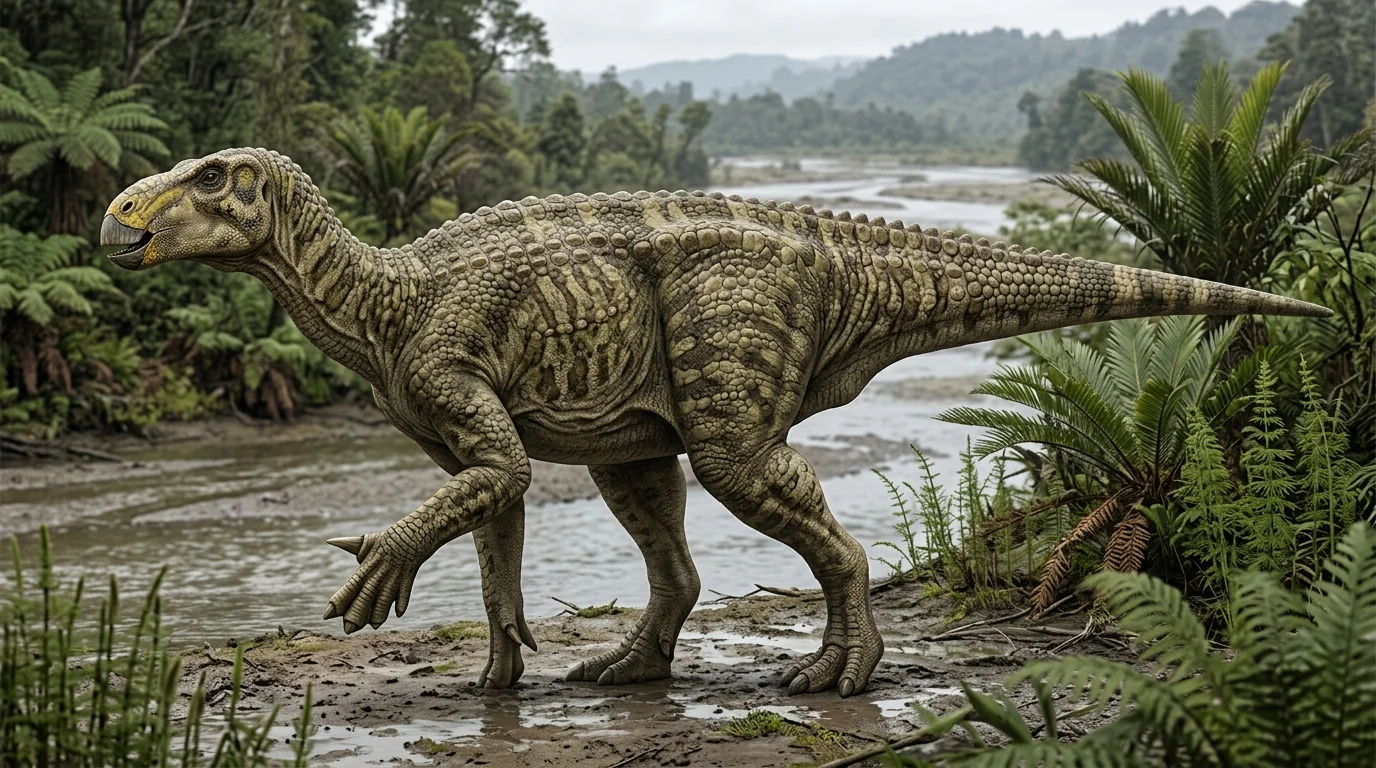
OrnithopodaIguanodon bernissartensis Boulenger, 1881
A foundational Early Cretaceous ornithopod possessing a specialized conical thumb spike and facultative quadrupedal gait.
OrnithopodaOuranosaurus nigeriensis Taquet, 1976
The 'brave lizard', an unusual African iguanodontian bearing a high dorsal sail and camel-like fat hump.
OrnithopodaMuttaburrasaurus langdoni Bartholomai & Molnar, 1981
A large Australian ornithopod equipped with a prominent bulbous, hollow nasal muzzle for vocal displays.
OrnithopodaTenontosaurus tilletti Ostrom, 1970
A muscular Early Cretaceous ornithopod with an exceptionally long, deep tail, famous as the prey of Deinonychus.
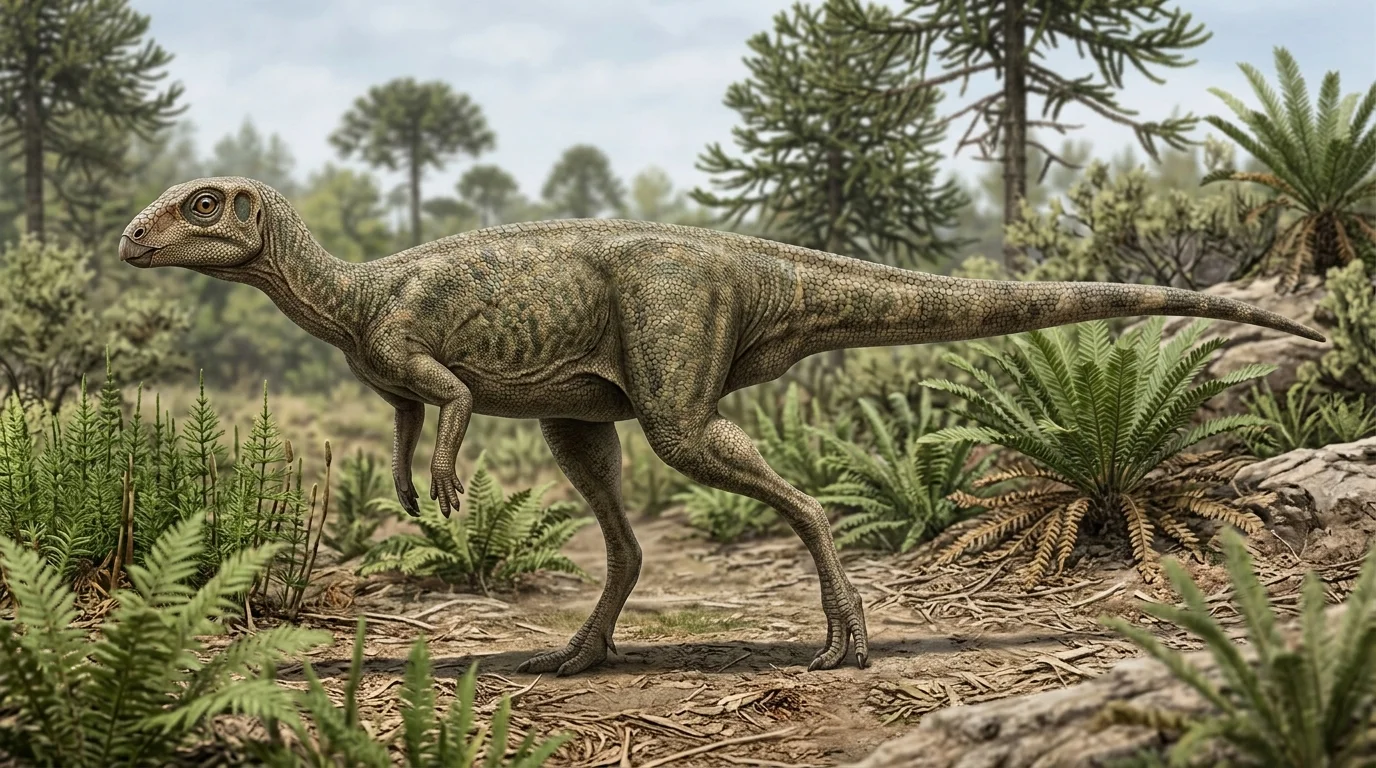
OrnithopodaDryosaurus altus Marsh, 1878
A swift, bipedal ornithopod with large eyes and stiffened tail that dashed across Late Jurassic North America.
Evidence-based answers addressing common questions and misconceptions.
The front of their snout was broad, flattened, and covered in a keratinous rhamphotheca (beak sheath) that closely resembled the bill of a modern duck. However, their mouths contained hundreds of grinding teeth, unlike modern birds.
By creating 3D computer models of the hollow internal airway tubes inside the crest of Parasaurolophus, acoustic engineers simulated air flow, revealing it emitted a deep, low-frequency resonance resembling a foghorn or French horn (roughly 30–120 Hz).
Early 20th-century paleontologists incorrectly believed hadrosaurs were aquatic animals that hid in deep swamps. Modern biomechanical and sedimentary evidence proves they were fully terrestrial animals that lived in herds in floodplains, coastal plains, and forests.