AnkylosauriaAnkylosaurus
Ankylosaurus magniventris Brown, 1908
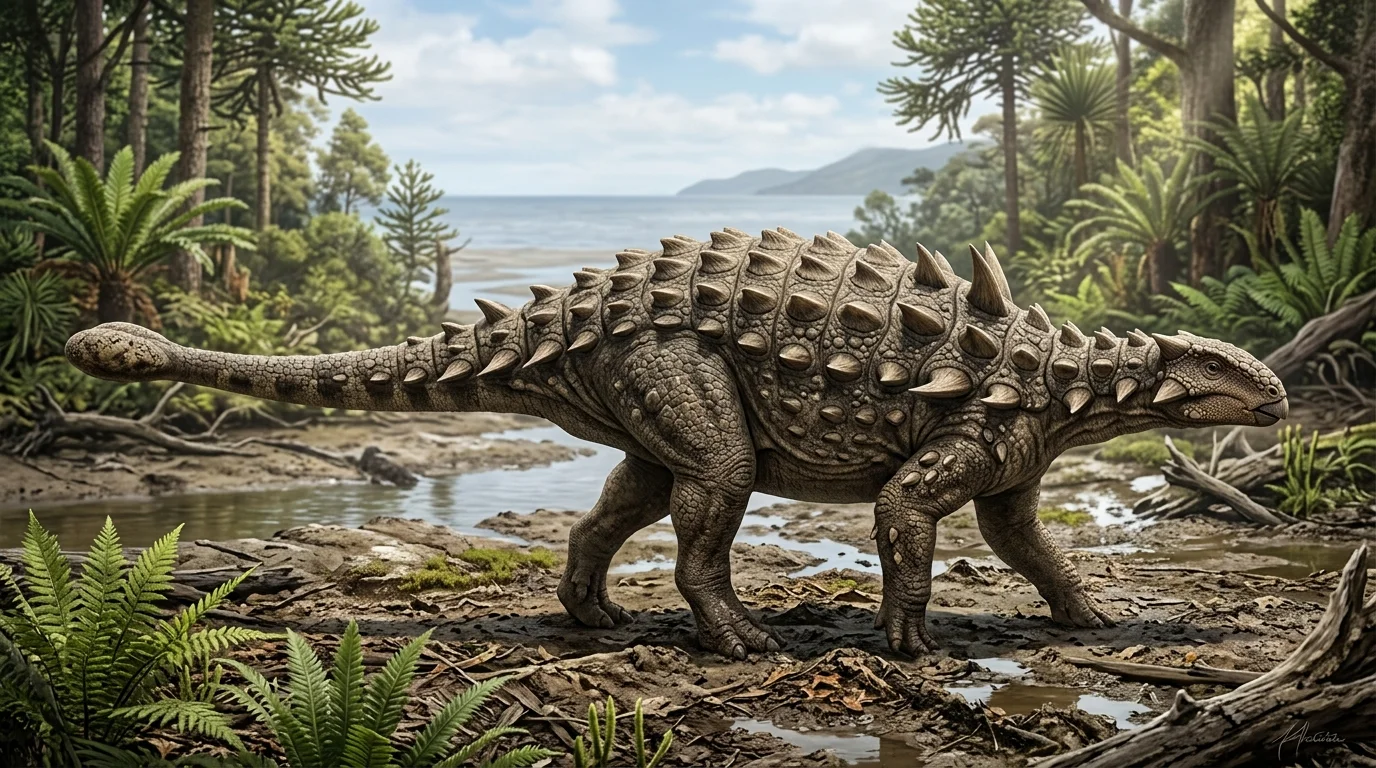
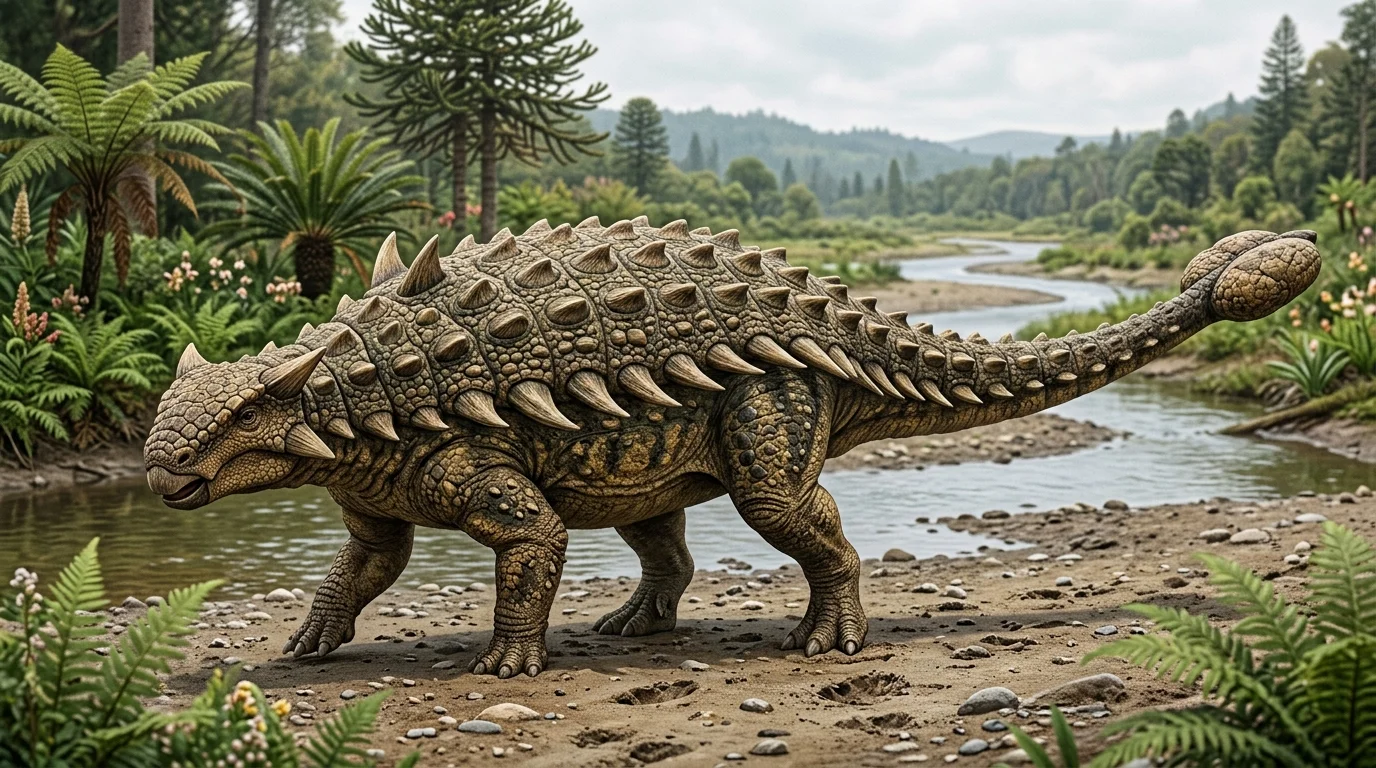
The definitive armored dinosaur of the Late Cretaceous, encased in bony osteoderms and armed with an osseous tail club.
Osteoderm Shields, Vascularized Dorsal Plates, and Distal Tail Weapons Across the Mesozoic
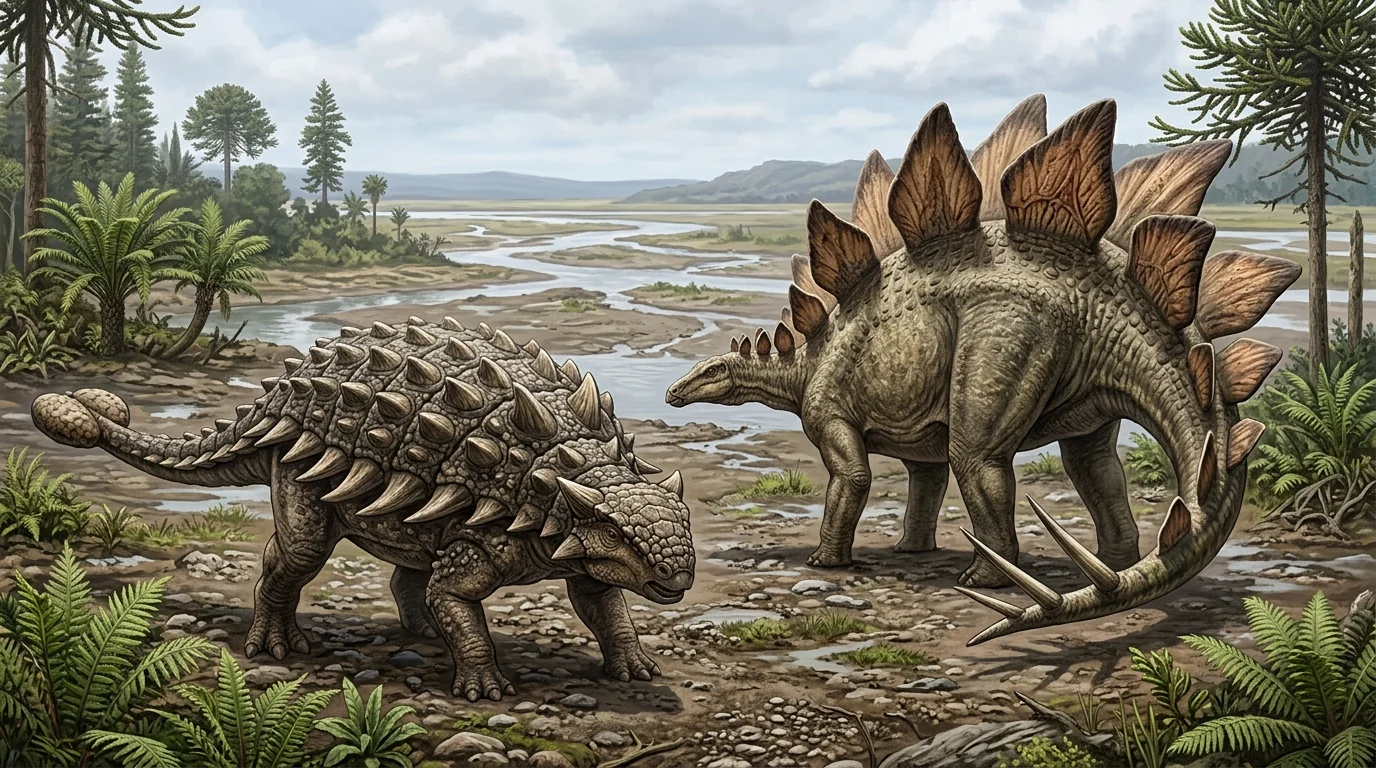
Armored dinosaurs belong to the clade Thyreophora ('shield bearers'). Divided into two primary groups—the plate-backed Stegosauria of the Jurassic and the heavily armored, club-tailed Ankylosauria of the Cretaceous—they are distinguished by dermal osteoderms: specialized bony plates, spikes, and scutes embedded directly into the skin.

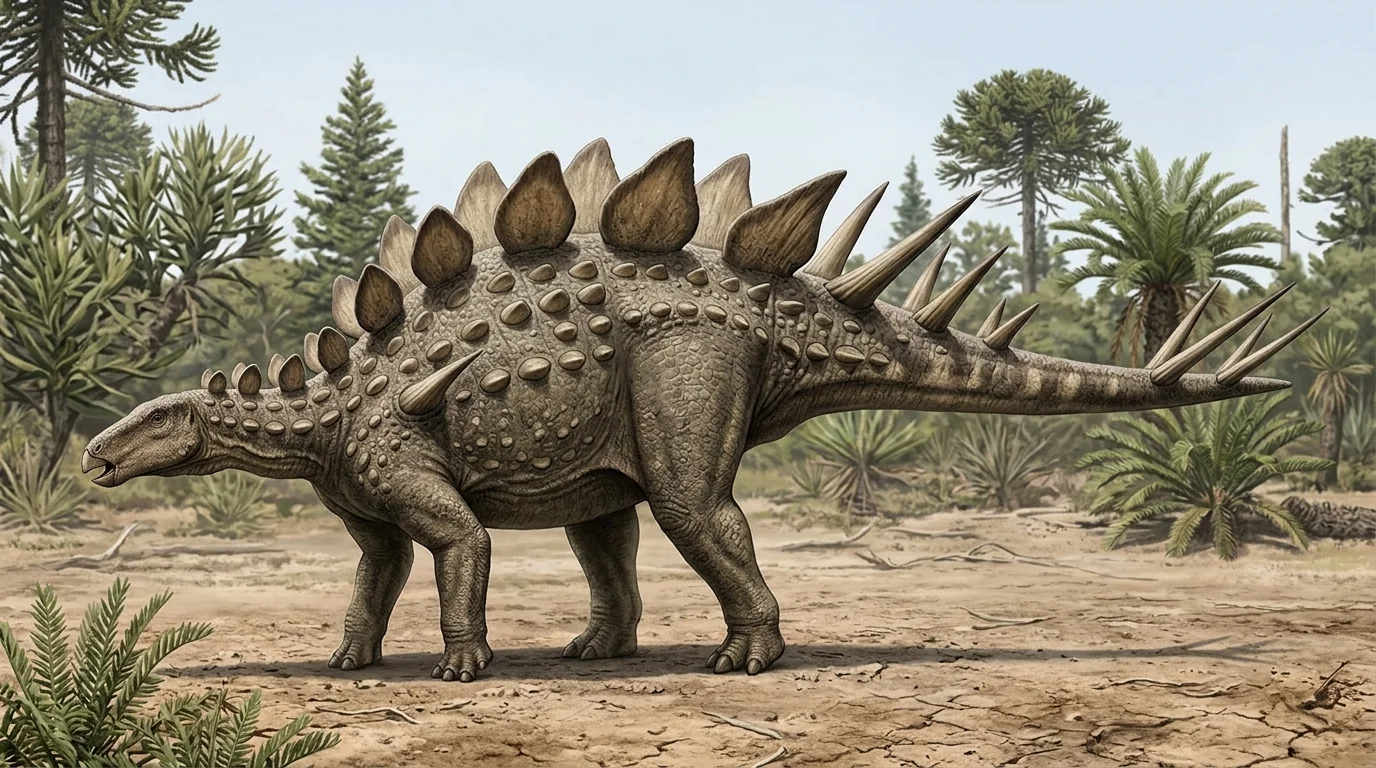
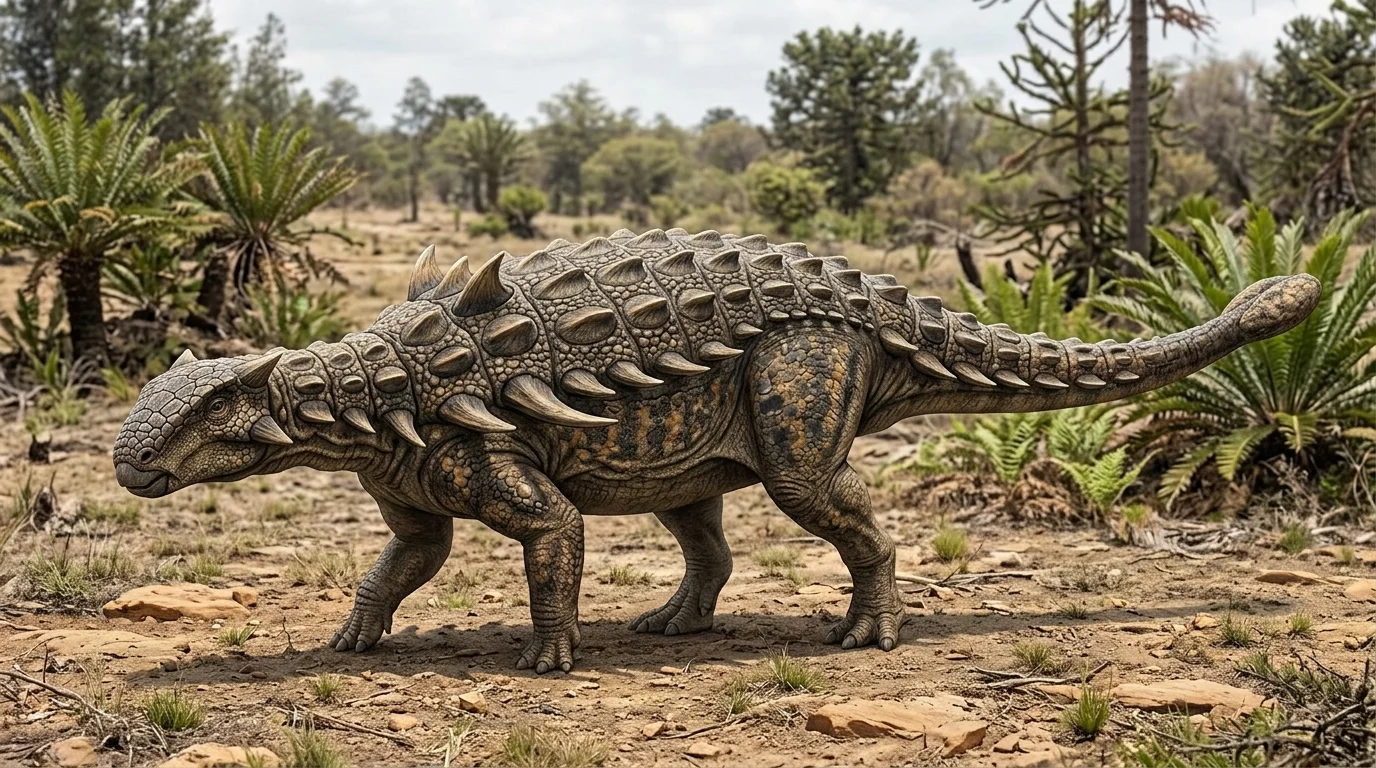
Thyreophora unites two distinct body plans: dorsal-plated Stegosaurs and tank-like Ankylosaurs.
Osteoderms are not part of the internal skeleton; they form within the dermis layer of the skin (like crocodile scutes and armadillo armor).
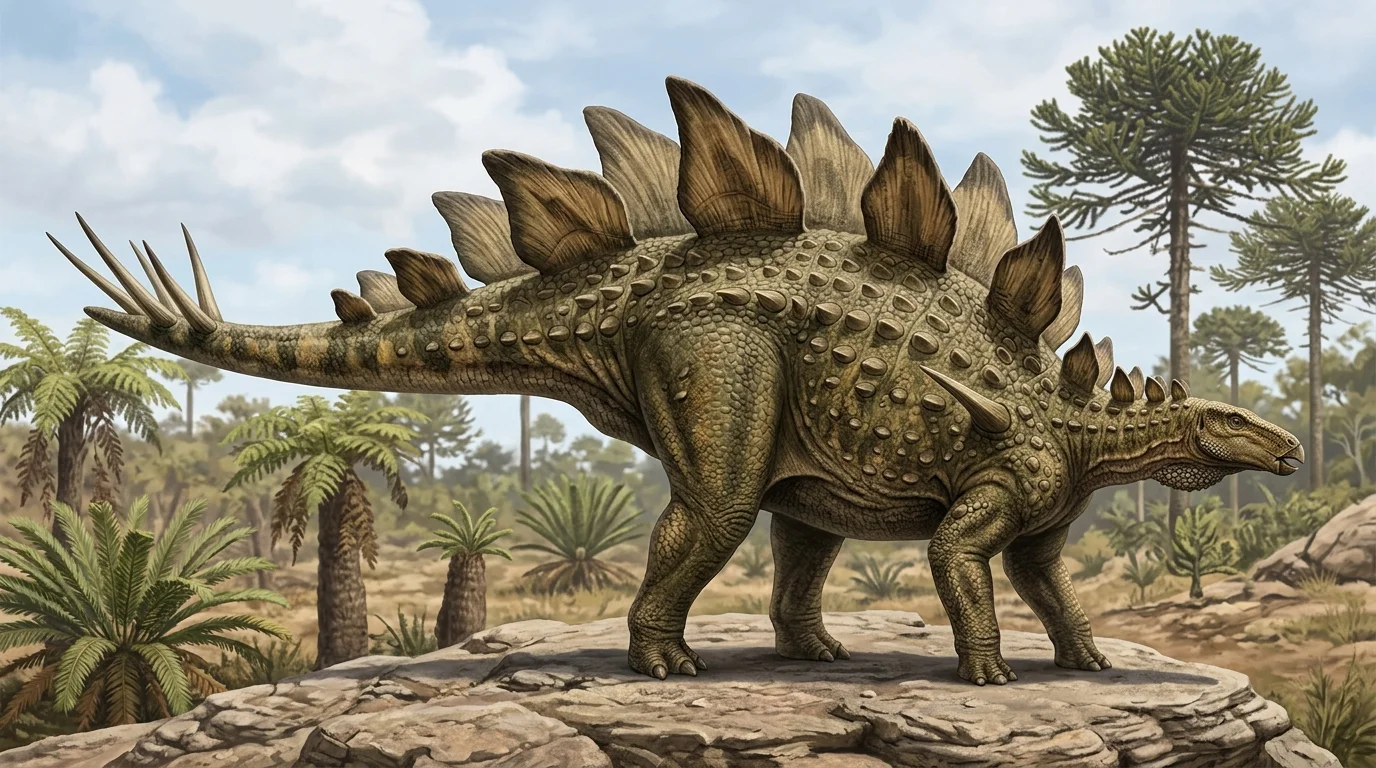
Stegosaurus tail spikes (the 'thagomizer') were active piercing weapons, with impact trauma proven by puncture holes in Allosaurus vertebrae.
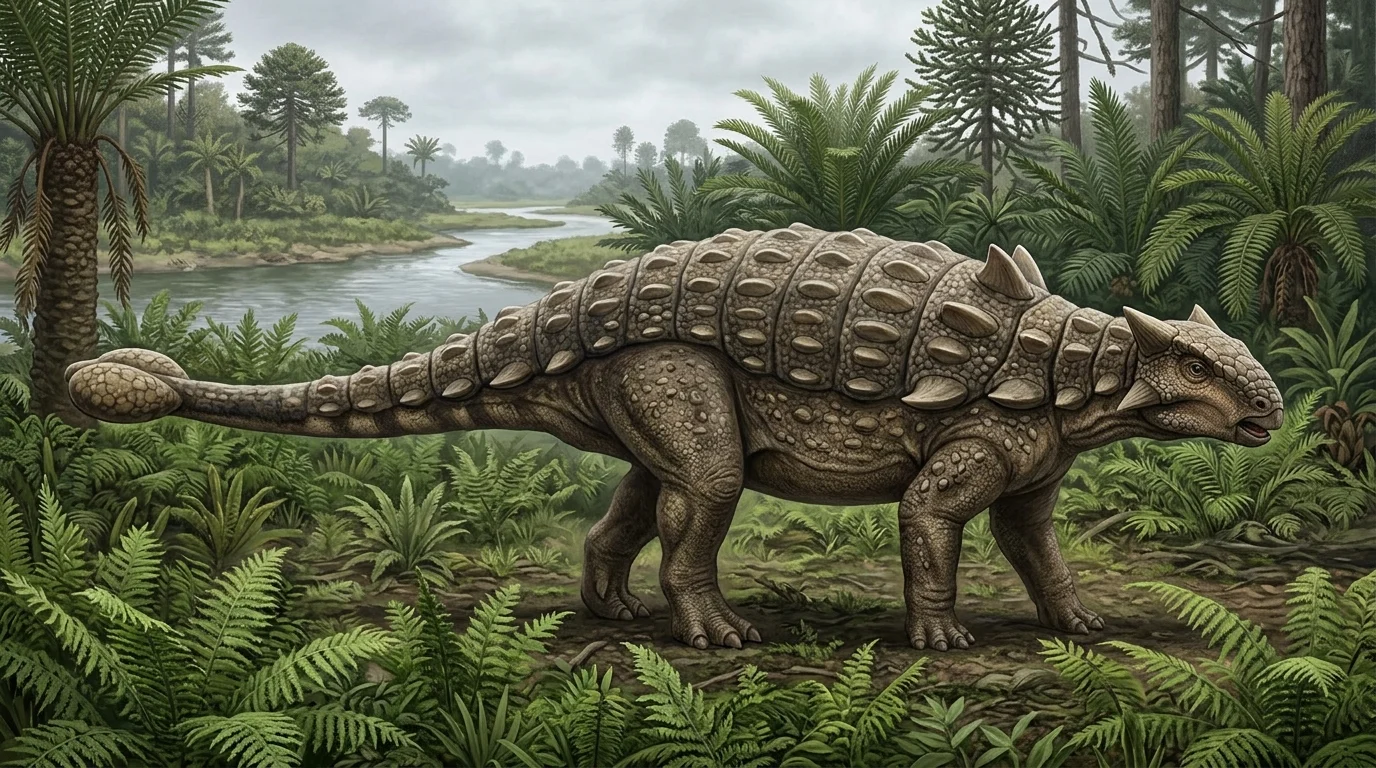
Ankylosaur tail clubs evolved from fused vertebrae and ossified tendons, delivering impact forces exceeding 14,000 Newtons—enough to shatter theropod leg bones.
Thyreophorans solved the challenge of surviving giant apex carnivores by becoming living tanks. While other dinosaur lineages relied on speed or sheer body mass to deter predators, armored dinosaurs invested their metabolic energy into biological ballistics: interlocking armor plating, lateral defensive spikes, and terminal tail weapons capable of breaking predatory bone.
The evolutionary transition from basal armored runners to heavily fortified quadrupeds represents one of paleontology's most thorough morphological adaptations.
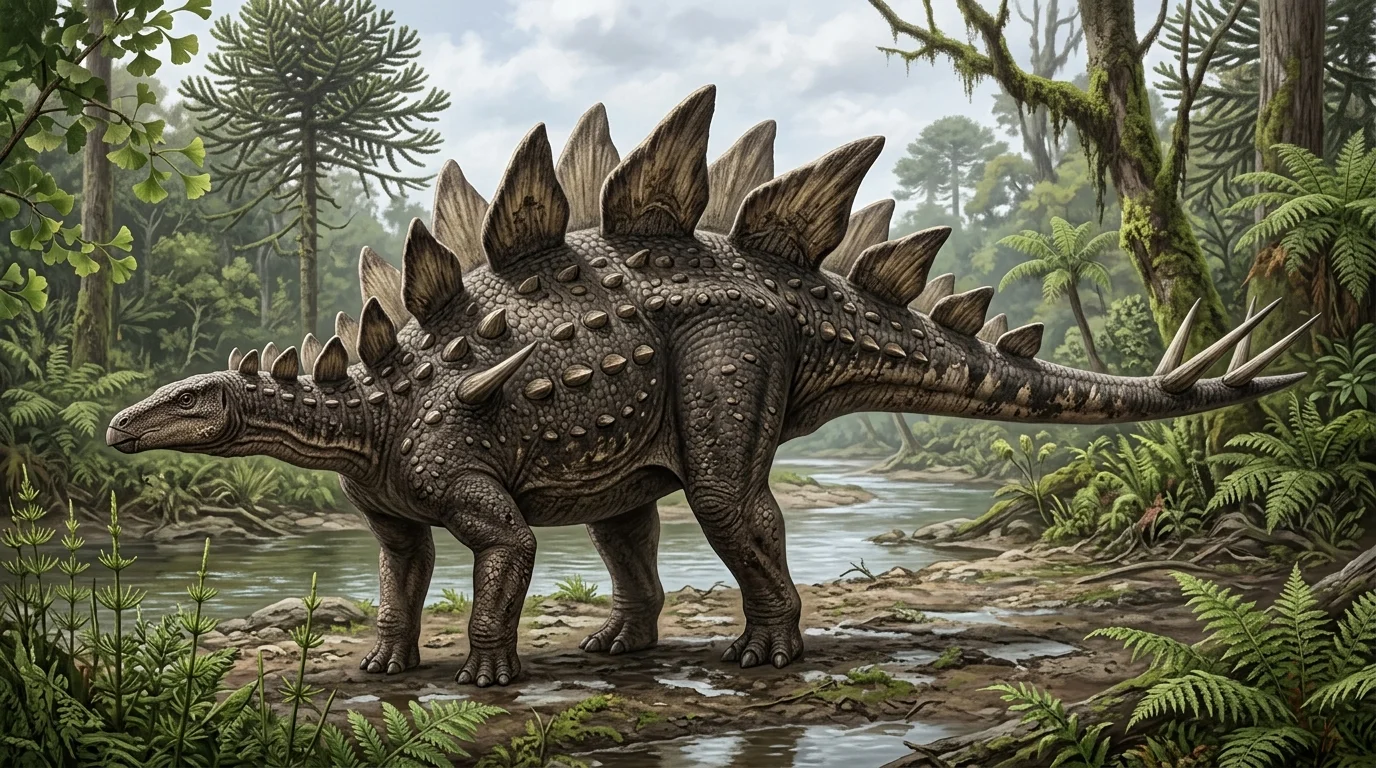
Contrary to 20th-century assumptions, Stegosaurus plates were relatively thin and filled with dense networks of microscopic vascular canals. Rather than serving as brute-force bulletproof shields, histological studies indicate they functioned primarily as visual dominance displays and vascular radiators for shedding or absorbing heat, while the four 1-meter terminal tail spikes ('thagomizer') served as the primary active weapon.
Arbour and Snively (2009) modeled the kinetic energy of an Ankylosaurus tail swing. The distal vertebrae were fused into a rigid handle, and tendons ossified into stiff cables. When swung horizontally, the terminal bone knob could generate impact stresses capable of pulverizing bone and rupturing internal organs.
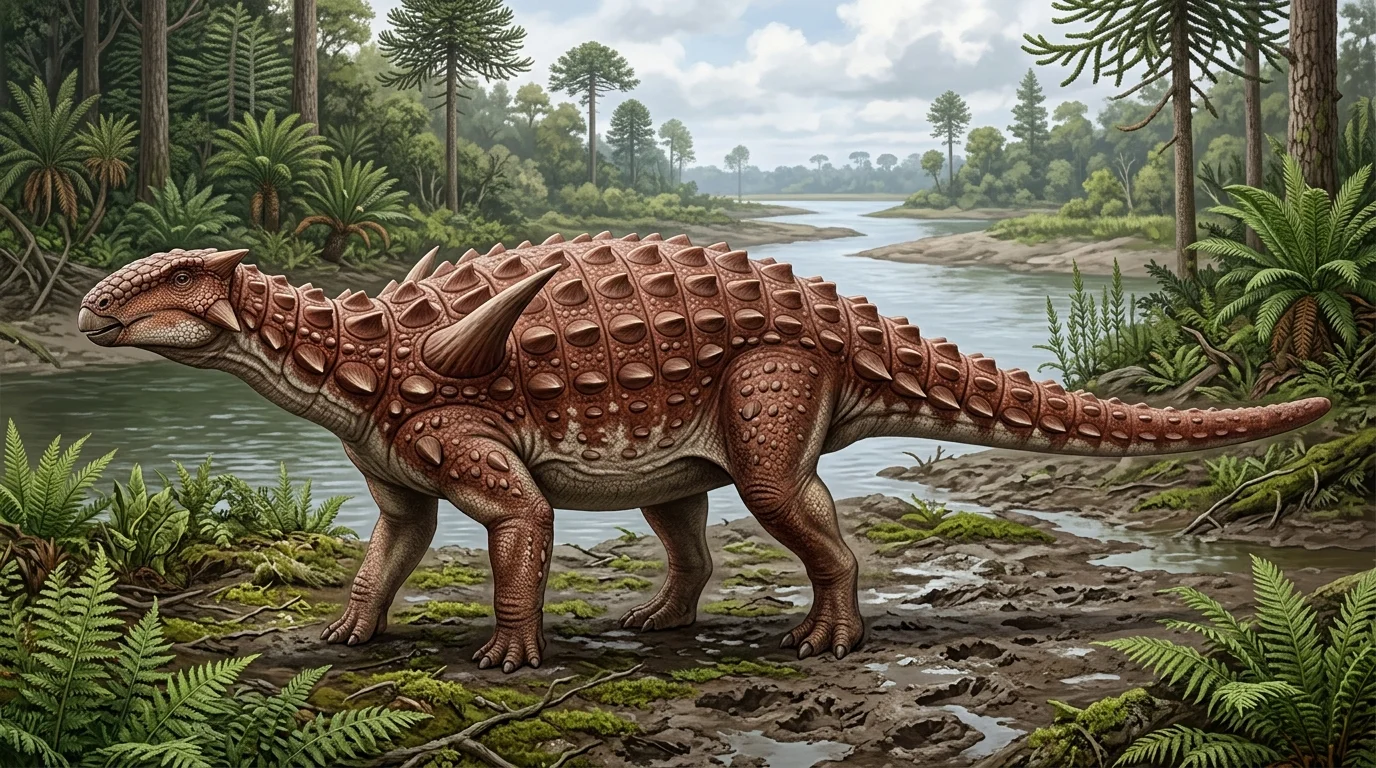
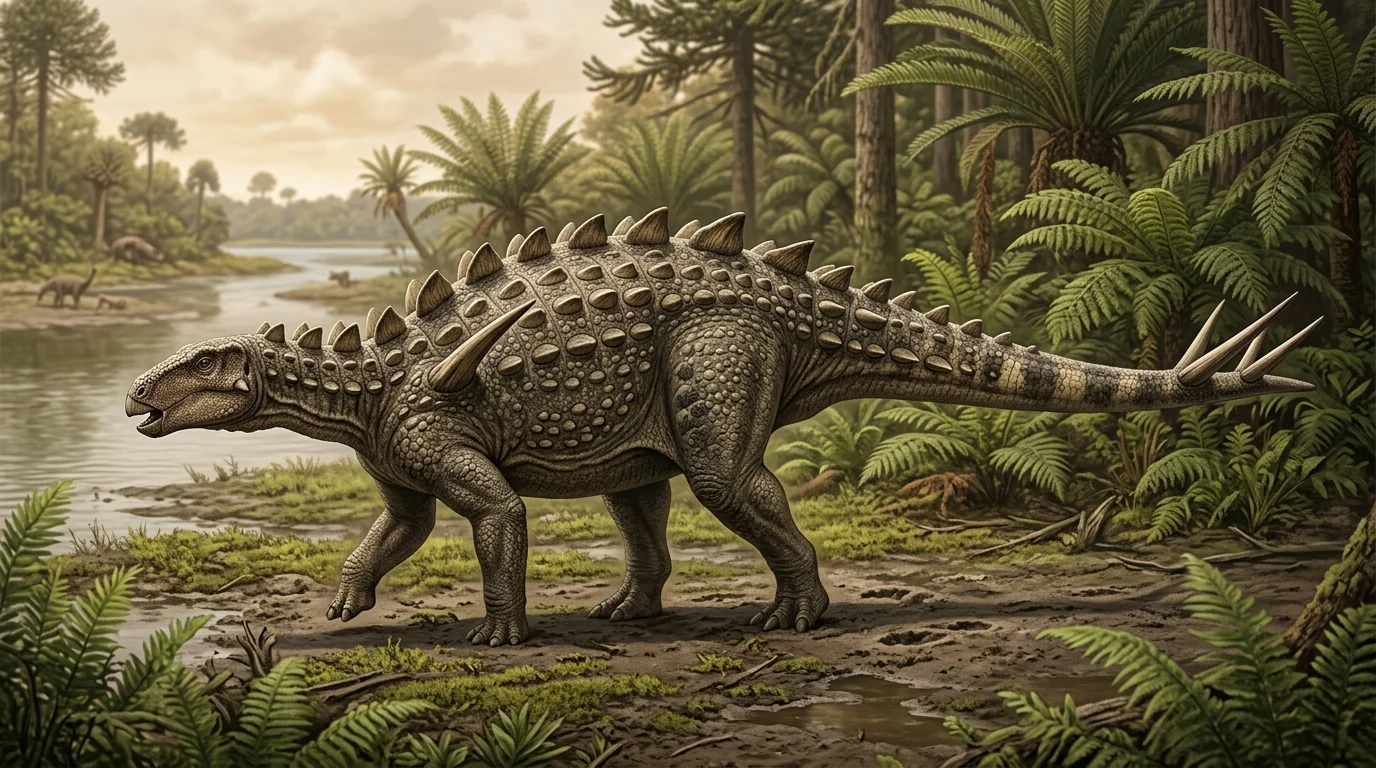
Ankylosauria is divided into two distinct lineages: Ankylosauridae (possessing wide skulls and heavy tail clubs) and Nodosauridae (possessing narrower snouts, huge outward-projecting shoulder spikes, and no tail club). The spectacularly preserved Canadian fossil Borealopelta proved nodosaurs utilized reddish-brown countershading camouflage alongside armor.
Biomechanical comparison of plates, scutes, spikes, and tail weapons across key thyreophorans.
| Specimen | Suborder / Family | Period | Length | Estimated Mass | Primary Armor System | Terminal Weapon |
|---|---|---|---|---|---|---|
| Ankylosaurus | Thyreophora (Ankylosauridae) | Late Cretaceous | 8.0 m (26 ft) | 6,000 kg | Interlocking dorsal osteoderms; triangular cranial hornlets; 60kg distal tail club | |
| Stegosaurus | Thyreophora (Stegosauridae) | Late Jurassic | 9.0 m (30 ft) | 4,500 kg | Alternating double row of 17 vascularized plates; 4 tail thagomizer spikes | |
| Borealopelta | Thyreophora (Nodosauridae) | Early Cretaceous | 5.5 m (18 ft) | 1,500 kg | Massive outward shoulder spikes; intact keratinous scales and countershading | |
| Euoplocephalus | Thyreophora (Ankylosauridae) | Late Cretaceous | 6.0 m (20 ft) | 2,500 kg | Armored eyelids; keeled oval scutes; reinforced tail club | |
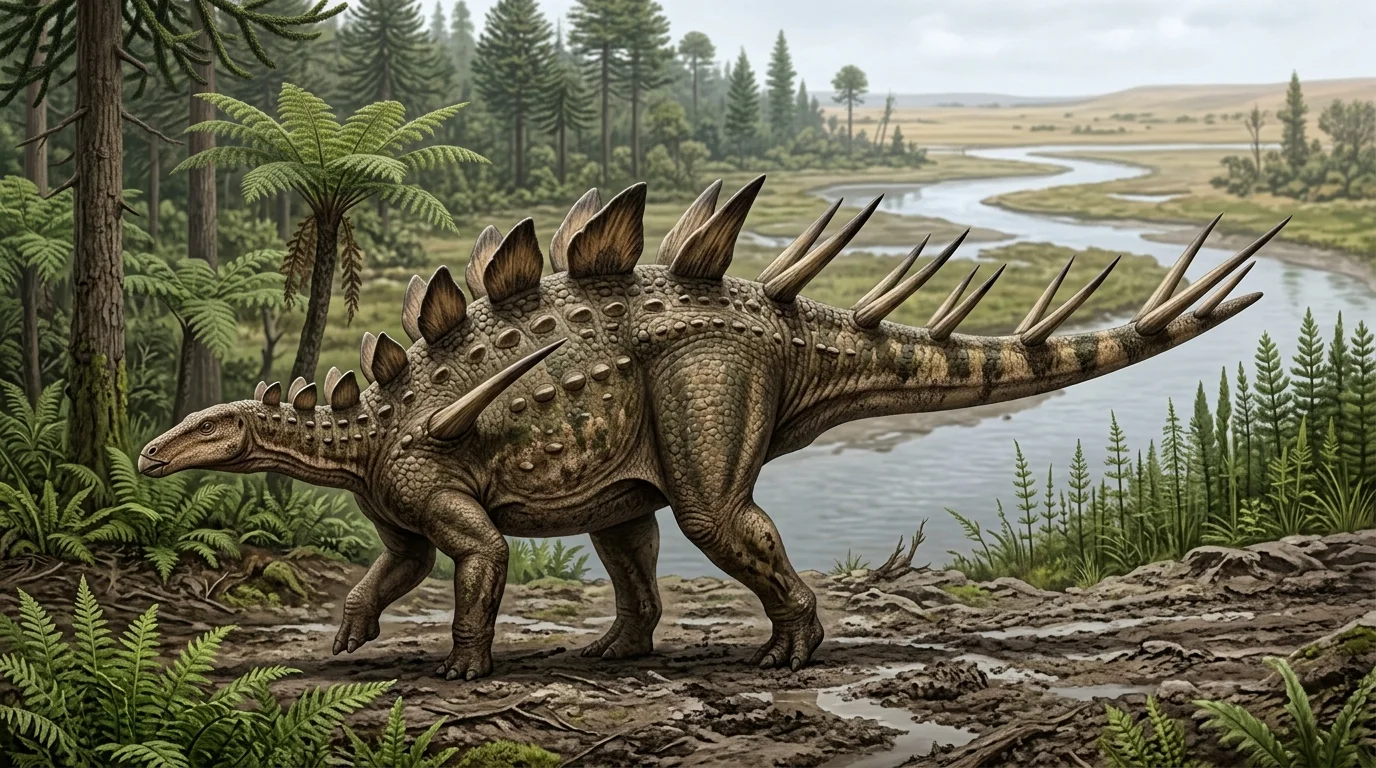
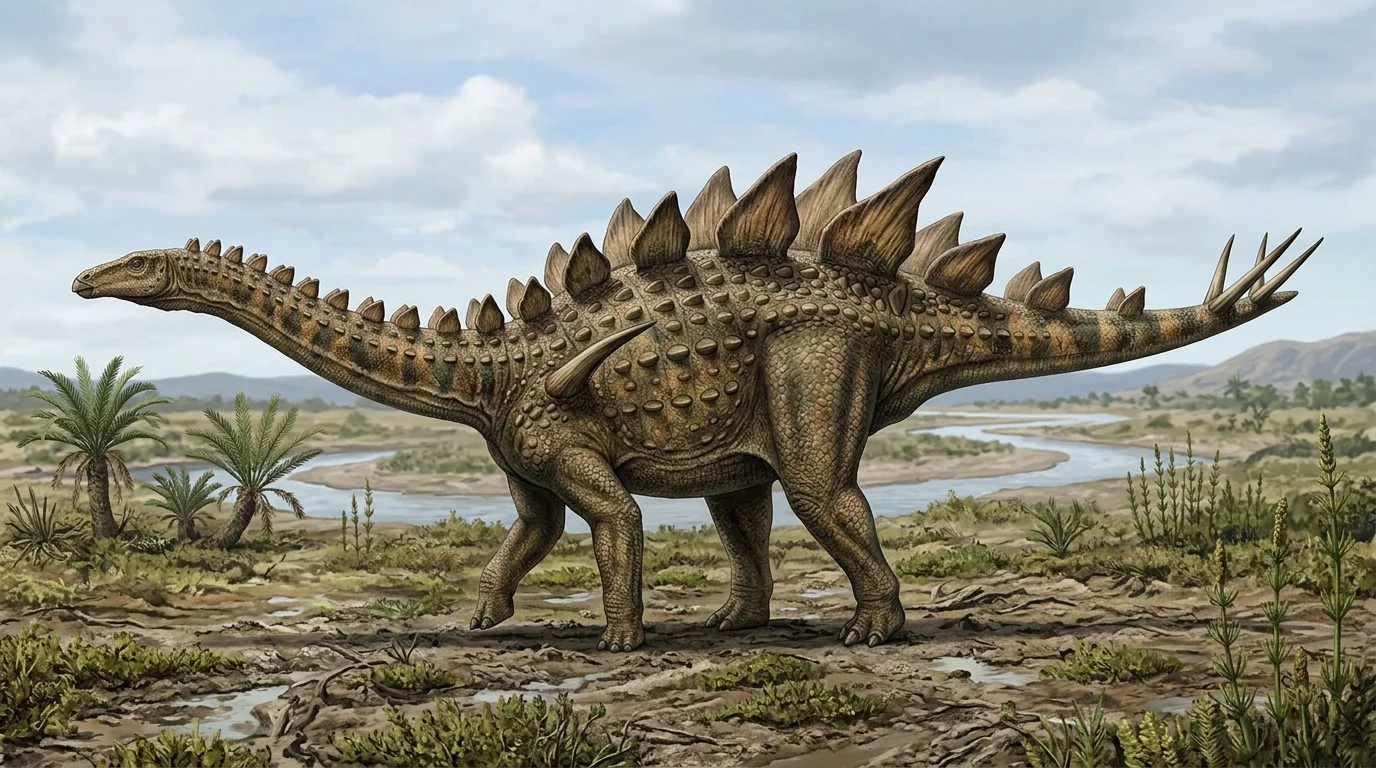
| Kentrosaurus | Thyreophora (Stegosauridae) | Late Jurassic | 4.5 m (15 ft) | 1,100 kg | Small neck plates transitioning to sharp dorsal and lateral hip spines | |
| Minmi | Thyreophora (Ankylosauria) | Early Cretaceous | 3.0 m (10 ft) | 300 kg | Unique horizontal paravertebral ossicles along spine; agile Australian runner |
When Othniel Charles Marsh first described Stegosaurus in 1877, he believed the plates lay flat across its back like shingles on a roof (hence the name 'roof lizard'). Subsequent fossil discoveries proved the plates stood vertically along the spine, but debate persisted for decades whether they sat in single rows or paired parallel columns. The discovery of the exceptional 'Sophie' specimen at the London Natural History Museum confirmed they were arranged in a staggered, alternating double row.
Peer-reviewed profiles from DinoOrigin's verified species database.
AnkylosauriaAnkylosaurus magniventris Brown, 1908
The definitive armored dinosaur of the Late Cretaceous, encased in bony osteoderms and armed with an osseous tail club.
Featured SpecimenStegosauriaStegosaurus stenops Marsh, 1887
An iconic armored herbivore of the Late Jurassic with two alternating rows of vertical dorsal plates and a four-spiked tail thagomizer.
AnkylosauriaBorealopelta markmitchelli Brown et al., 2017
The world's best-preserved dinosaur fossil, a 110-million-year-old nodosaur with intact skin, armor, and stomach contents.
AnkylosauriaEuoplocephalus tutus Lambe, 1910
A heavily armored, tank-like ankylosaurid with armored eyelids and a massive bone-crushing tail club.
StegosauriaKentrosaurus aethiopicus Hennig, 1915
A spiky East African stegosaur equipped with dermal plates along its neck and long sharp spikes along its back and hips.
AnkylosauriaMinmi paravertebra Molnar, 1980
A small, agile Australian ankylosaur featuring unique horizontal 'paravertebra' bone plates along its spine.
StegosauriaHuayangosaurus taibaii Dong et al., 1982
One of the most primitive known stegosaurs, retaining premaxillary teeth and spike-like shoulder armor.
StegosauriaTuojiangosaurus multispinus Dong et al., 1977
A large, iconic Late Jurassic Chinese stegosaur with tall pointed plates and sharp tail thagomizers.
StegosauriaMiragaia longicollum Mateus et al., 2009
A long-necked European stegosaur from Portugal possessing at least 17 neck vertebrae.
StegosauriaHesperosaurus mjosi Carpenter et al., 2001
A Late Jurassic stegosaurid from Wyoming featuring wide, oval dorsal plates and a short, deep skull.
AnkylosauriaGargoyleosaurus parkpinorum Carpenter et al., 1998
One of the earliest and most complete ankylosaurs known, discovered in the Late Jurassic Morrison Formation.
Evidence-based answers addressing common questions and misconceptions.
A Tyrannosaurus rex could deliver bite forces up to 35,000 Newtons, but biting an Ankylosaurus directly on its dorsal armor was dangerous, as the osteoderms were fused with collagen fiber weaves. To kill an Ankylosaurus, a predator had to flip it over to expose its unarmored, soft belly.
The four sharp spikes on the end of a Stegosaurus tail are called the thagomizer. The term originated in a famous 1982 Gary Larson 'Far Side' cartoon and was subsequently formally adopted by paleontologists to describe stegosaurid tail spines.
No. The enlarged canal in the sacral vertebrae of Stegosaurus was once thought to house a 'second brain'. Paleontologists now know it housed a glycogen body (a nutrient-rich energy storage organ similar to those in modern birds) or a nerve junction controlling tail reflexes.