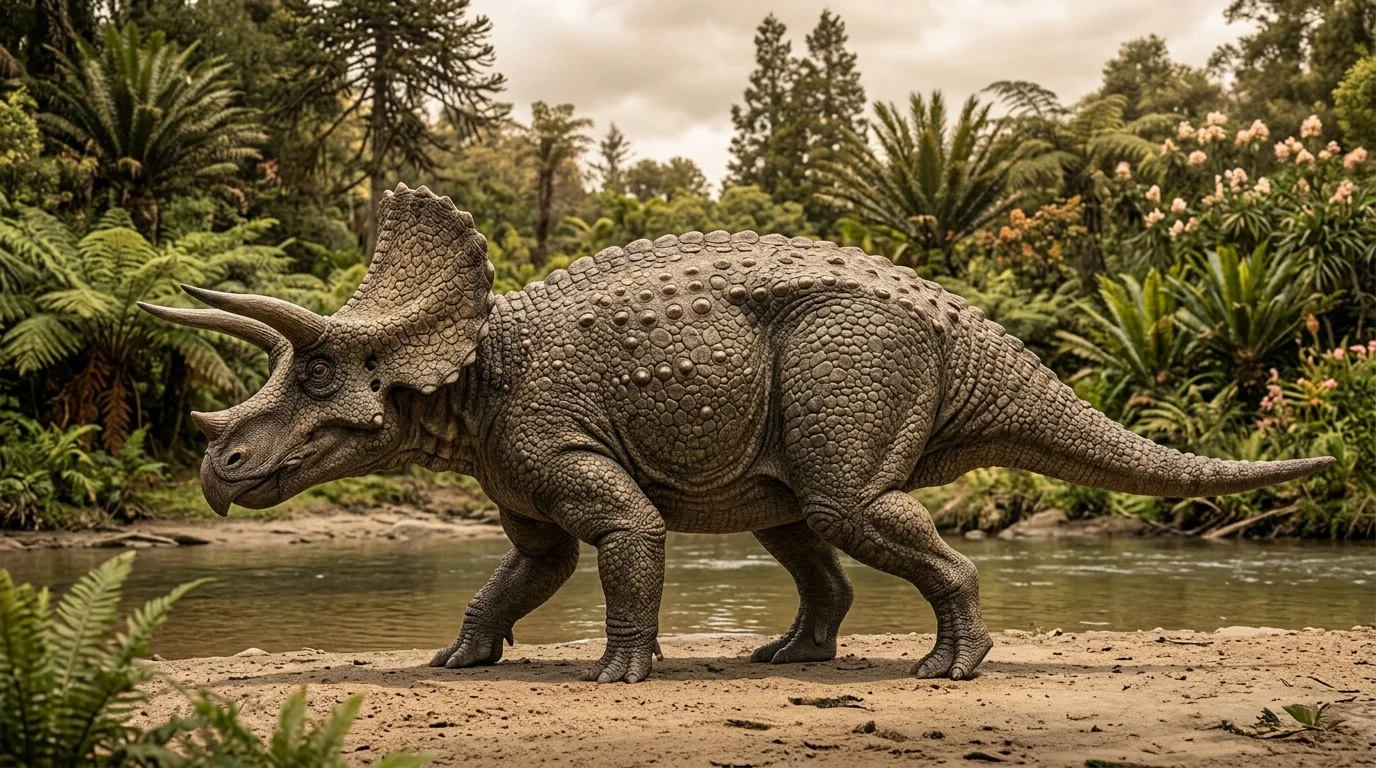
Featured SpecimenCeratopsiaTriceratops
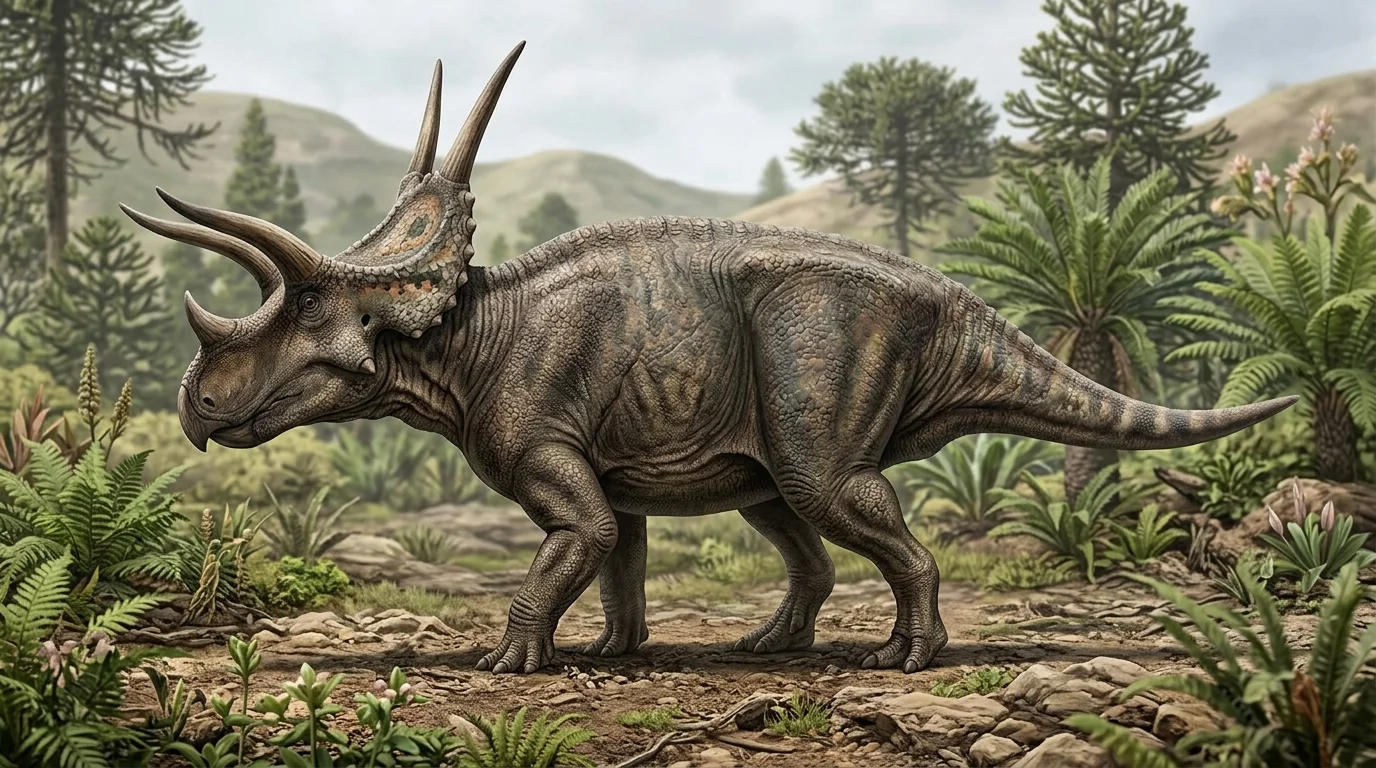
Triceratops horridus Marsh, 1889
A colossal three-horned ceratopsian dinosaur of the Late Cretaceous with a solid parietal-squamosal bone frill.
Rostral Beaks, Parietal Frills, and the Frontline Combat Evolution of Cretaceous Ceratopsids
Horned dinosaurs are scientifically classified as ceratopsians (suborder Ceratopsia). Dominating the Cretaceous Period, they are defined by a unique skull architecture featuring a parrot-like rostral beak bone at the tip of the upper jaw, broad flaring jugal cheek horns, a bony frill extending backward over the neck, and pointed facial horns made of bone cores encased in sharp keratin.

All ceratopsians share a rostral bone—an evolutionary novelty found in no other vertebrate group.
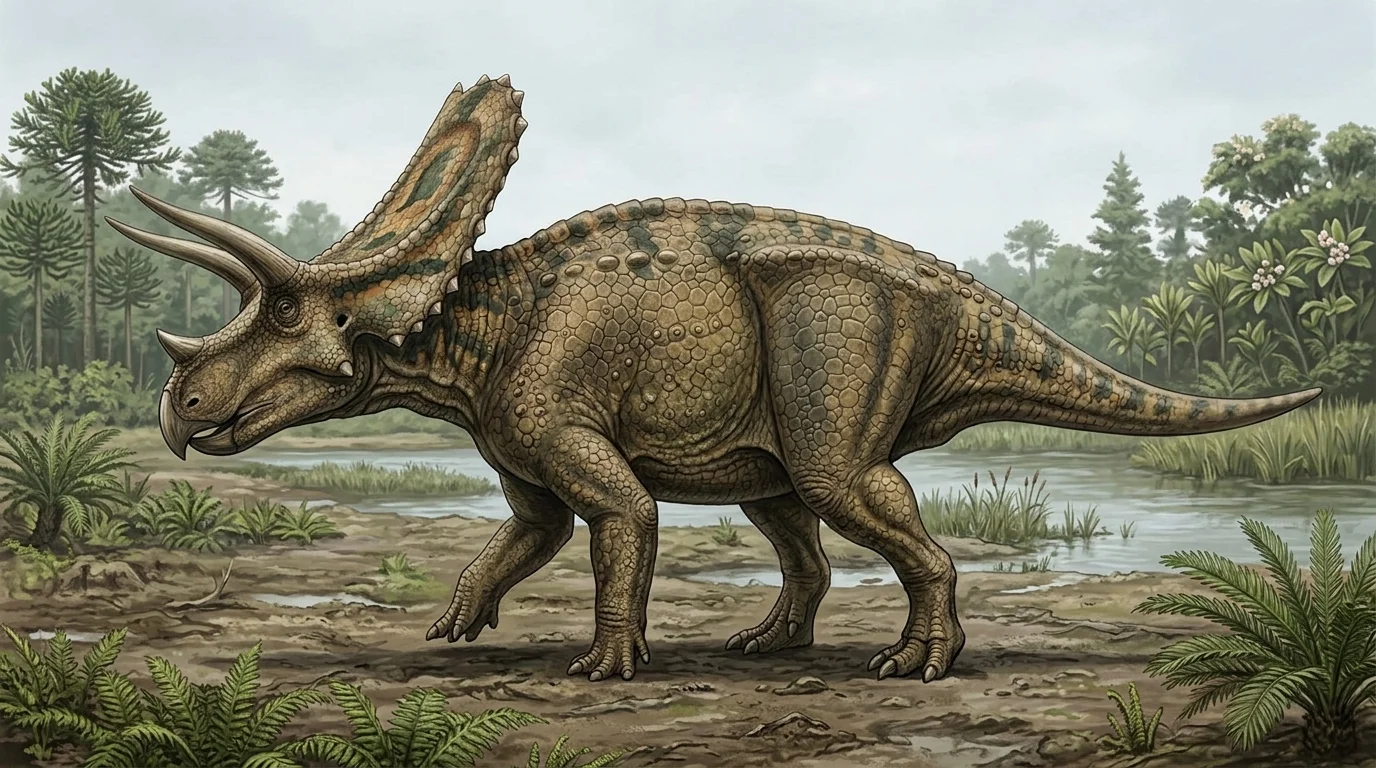
The clade split into two distinct families: long-frilled Chasmosaurinae (like Triceratops and Torosaurus) and short-frilled, spike-ornamented Centrosaurinae (like Styracosaurus).
While horns served as effective defense against tyrannosaurs, healed puncture wounds indicate they were primarily used in intra-species sparring for territory and mates.
Ceratopsian frills were richly vascularized, functioning in visual display, thermoregulation, and anchoring powerful jaw muscles.
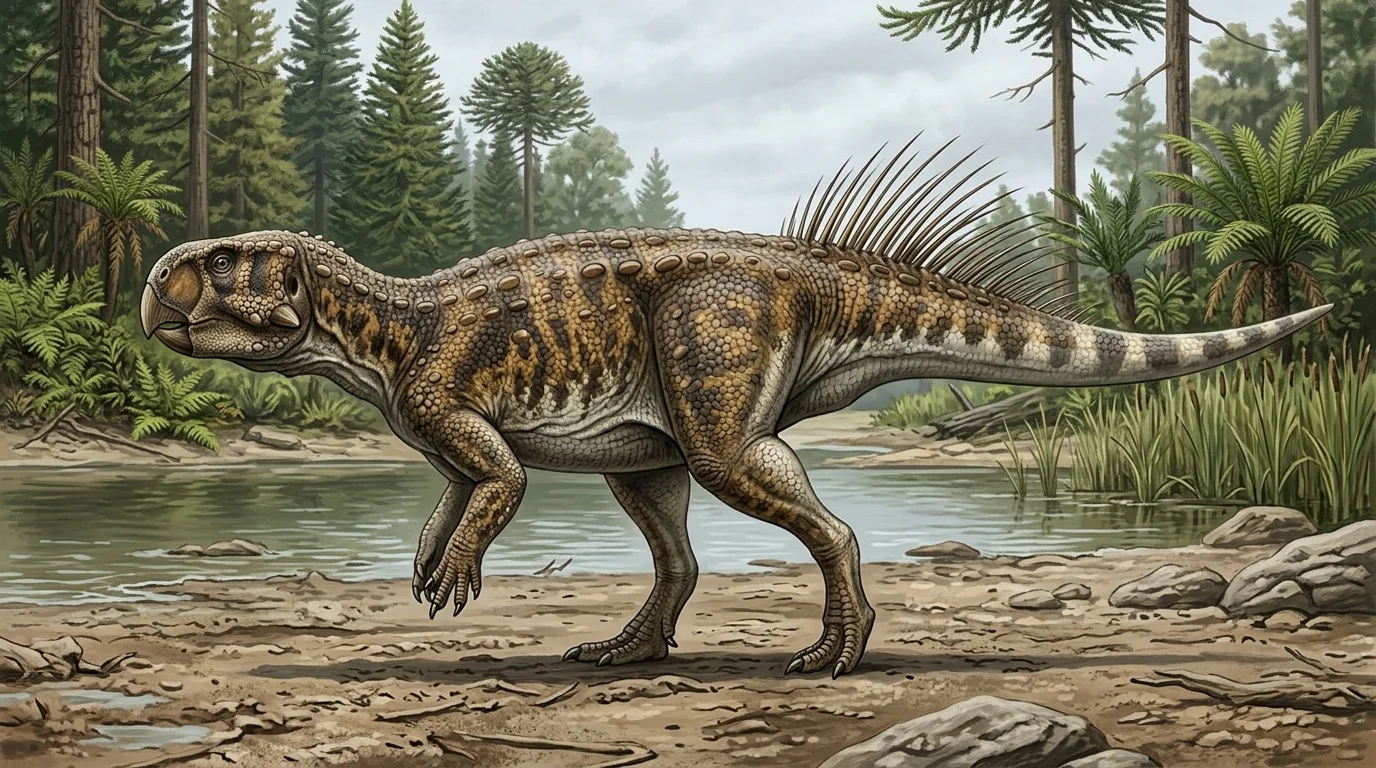
Originating in the Late Jurassic as small, agile bipedal animals like Psittacosaurus and Yinlong, ceratopsians underwent dramatic evolutionary radiation in the Late Cretaceous. They diversified into colossal, quadrupedal mega-herbivores that roamed in immense herds across the Western Interior Seaway of North America and eastern Asia.
Ceratopsian skulls were the largest of any terrestrial animals, measuring up to 2.5 meters in length. Their functional anatomy was optimized for defensive deterrence and intense social competition.
Fossil ceratopsian horns preserve only the inner bony core. In living animals, these cores were coated in thick, growing keratin sheaths (the same material as cattle horns and rhino horns). This keratinous layer extended the functional length of brow horns by up to 25–30%, resulting in lethal 1.2-meter spears.
Triceratops and Tyrannosaurus rex were direct ecological adversaries in the Hell Creek ecosystem. Several Triceratops fossils document survived predator encounters, including brow horns snapped clean off with healed bone regrowth and puncture bite marks on neck frills that match T. rex tooth geometry.
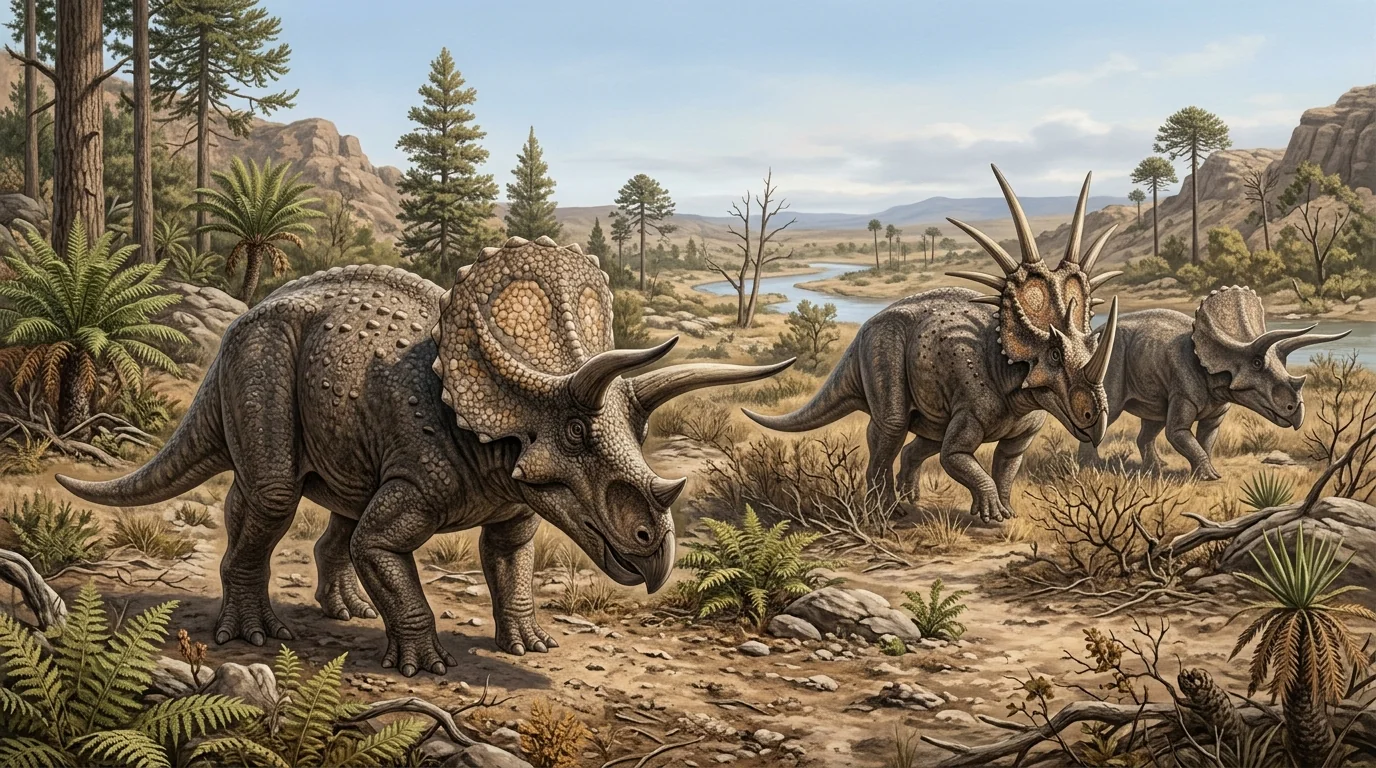
Centrosaurines lived in catastrophic numbers. Massive bonebed deposits in Alberta, Canada contain the fossilized remains of thousands of Centrosaurus and Pachyrhinosaurus individuals that drowned together attempting to cross flooded Cretaceous rivers, providing incontrovertible proof of massive gregarious herd structures.
Comparison of horn arrangements, frill phenotypes, and ecological adaptations across verified ceratopsians.
| Specimen | Subfamily | Period | Length | Estimated Mass | Horn Configuration | Primary Defense/Display |
|---|---|---|---|---|---|---|
| Triceratops | Ceratopsia (Chasmosaurinae) | Late Cretaceous | 9.0 m (30 ft) | 9,000–12,000 kg | Two massive 1m brow horns; solid bone neck frill | |
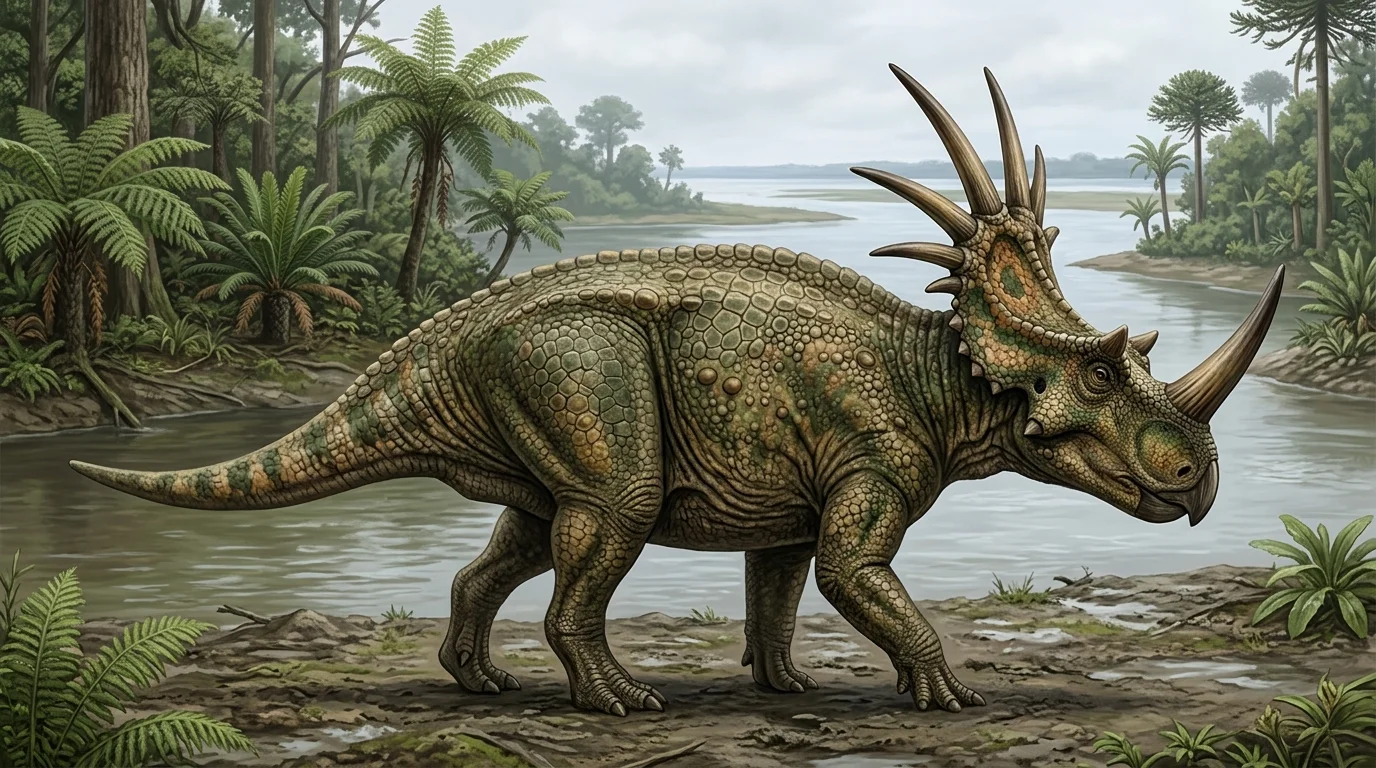
| Styracosaurus | Ceratopsia (Centrosaurinae) | Late Cretaceous | 5.5 m (18 ft) | 2,700 kg | Long 0.6m nasal horn; 6 elongated frill spikes | |
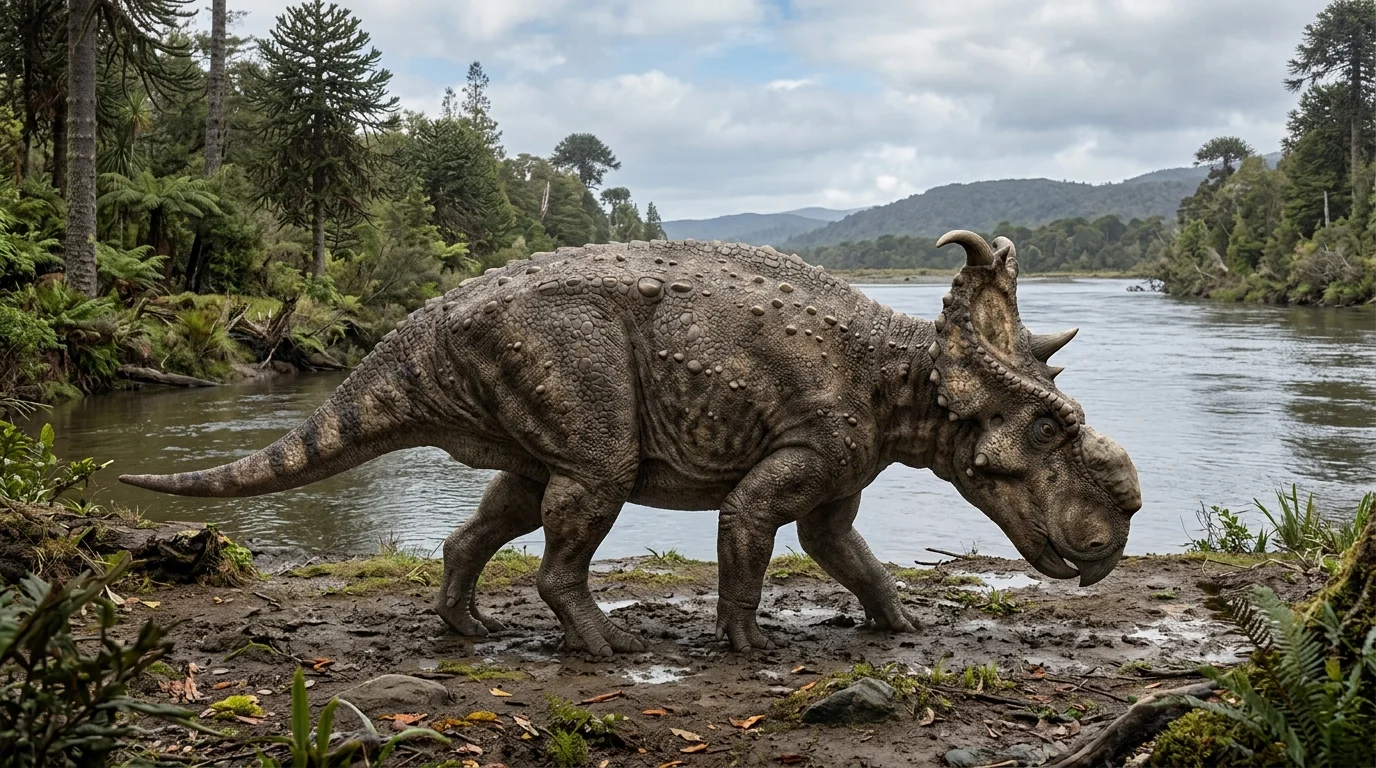
| Pachyrhinosaurus | Ceratopsia (Centrosaurinae) | Late Cretaceous | 6.0 m (20 ft) | 3,000 kg | Thick bony nasal boss instead of pointed horn | |
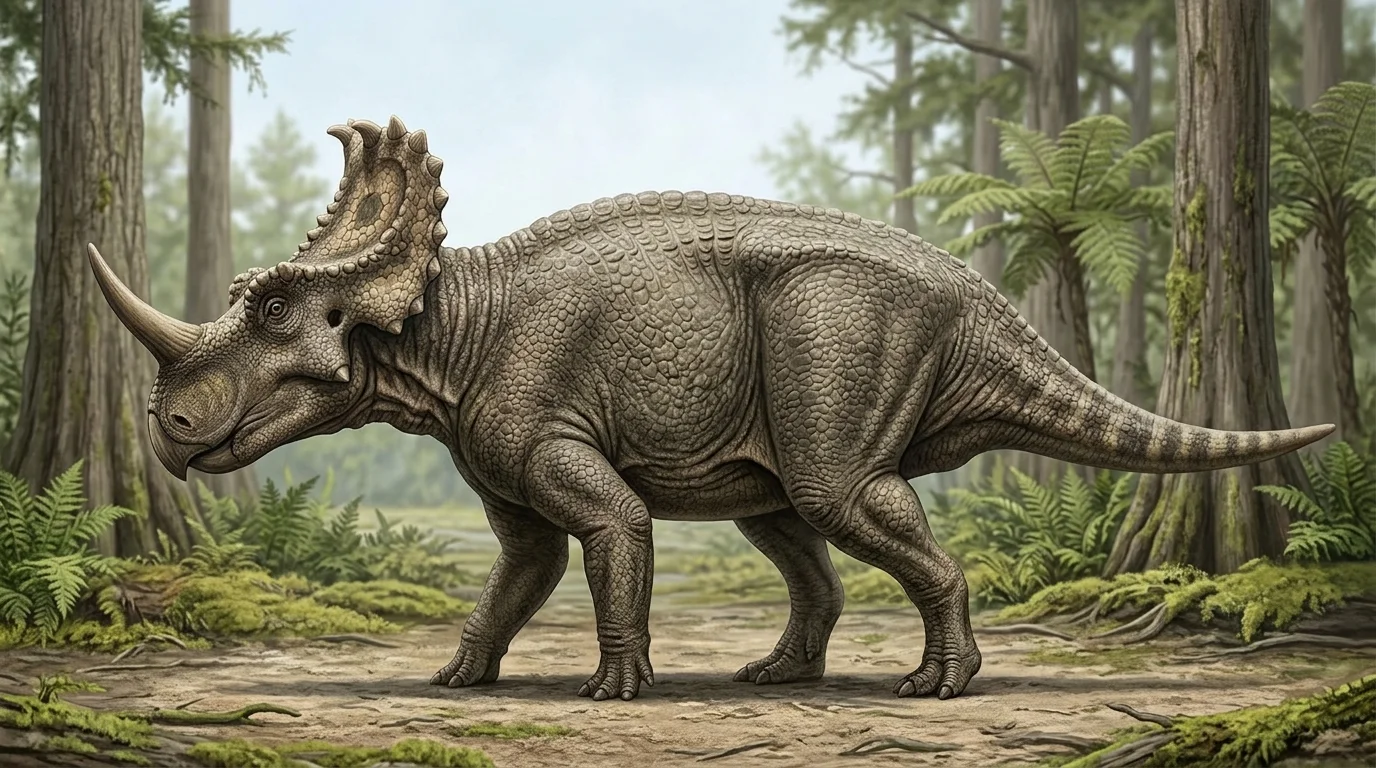
| Centrosaurus | Ceratopsia (Centrosaurinae) | Late Cretaceous | 5.5 m (18 ft) | 2,500 kg | Forward-curved nasal horn; hooked frill hornlets | |
| Diabloceratops | Ceratopsia (Centrosaurinae) | Late Cretaceous | 5.5 m (18 ft) | 2,000 kg | Upward-curved brow horns; curved parietal horns | |
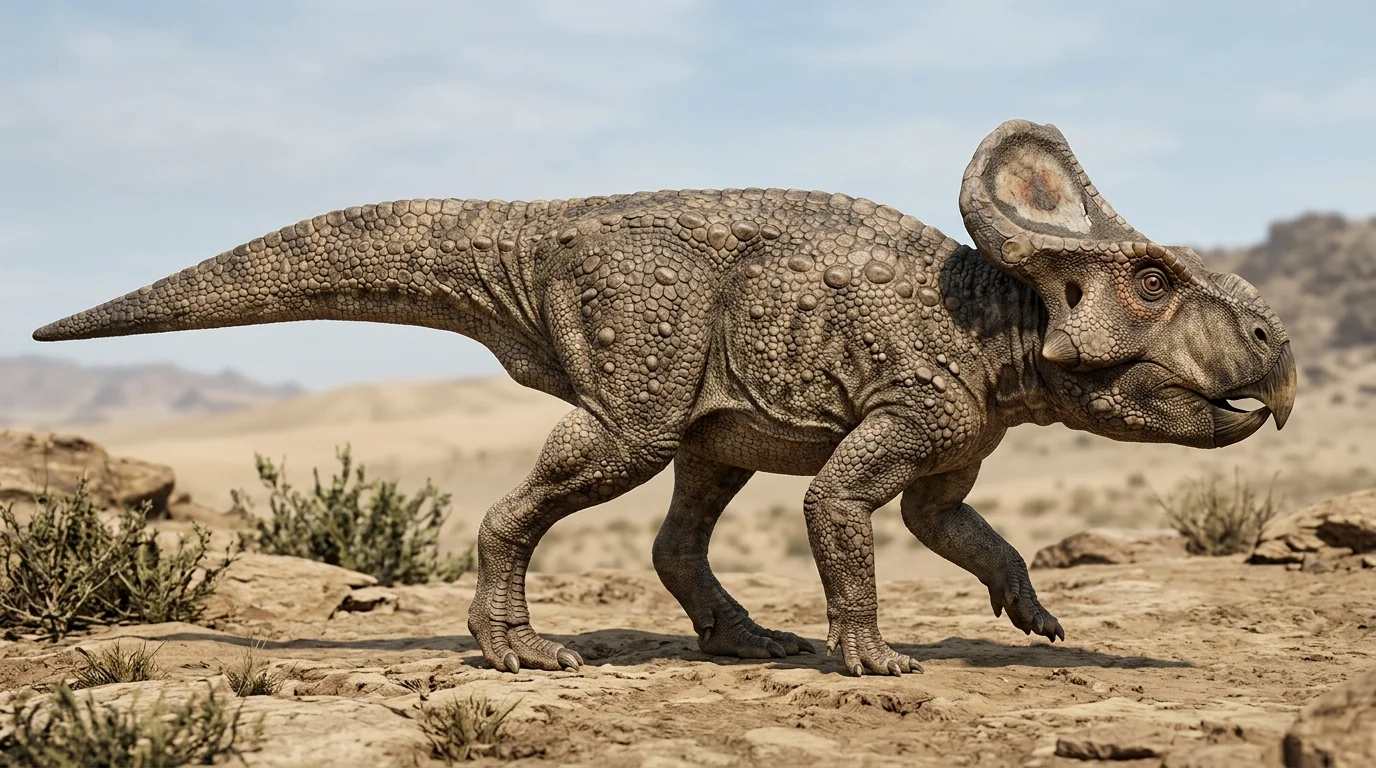
| Protoceratops | Ceratopsia (Protoceratopsidae) | Late Cretaceous | 1.8 m (6 ft) | 180 kg | Basal hornless sheep-sized ceratopsian; large frill | |
| Psittacosaurus | Ceratopsia (Psittacosauridae) | Early Cretaceous | 1.5 m (5 ft) | 20 kg | Bipedal basal parrot lizard with quills on tail |
In 2010, paleontologists John Scannella and Jack Horner proposed the controversial 'Toroceratops' hypothesis, arguing that Torosaurus was not a distinct genus, but simply the fully mature, elderly growth stage of Triceratops whose frill thinned and developed open fenestrae (holes) with age. While widely discussed, subsequent morphometric studies by Farke (2011) and Longrich (2012) identified juvenile Torosaurus specimens and distinct structural differences, leading the majority of researchers to maintain them as separate genera.
Peer-reviewed profiles from DinoOrigin's verified species database.
Featured SpecimenCeratopsiaTriceratops horridus Marsh, 1889
A colossal three-horned ceratopsian dinosaur of the Late Cretaceous with a solid parietal-squamosal bone frill.
CeratopsiaStyracosaurus albertensis Lambe, 1913
A dramatic centrosaurine ceratopsian of Late Cretaceous Canada bearing a single long nasal horn and six long frill spikes.
CeratopsiaPachyrhinosaurus canadensis Sternberg, 1950
The 'thick-nosed lizard', an Arctic-adapted ceratopsid that replaced horns with massive bony bosses.
CeratopsiaCentrosaurus apertus Lambe, 1904
A prominent centrosaurine ceratopsid from Alberta featuring a forward-curved nasal horn and hooked frill spikes.
CeratopsiaProtoceratops andrewsi Granger & Gregory, 1923
A sheep-sized, hornless horned dinosaur that roamed the sand dunes of the Late Cretaceous Gobi Desert.
CeratopsiaPsittacosaurus mongoliensis Osborn, 1923
The 'parrot lizard', a prolific basal ceratopsian known for its high-crowned beak and tail bristles.
CeratopsiaDiabloceratops eatoni Kirkland & DeBlieux, 2010
The 'devil-horned face', a basal centrosaurine featuring long curved brow horns and majestic frill spikes.
CeratopsiaTorosaurus latus Marsh, 1891
A Late Cretaceous ceratopsid that possessed one of the largest and longest skulls of any land animal in history.
Evidence-based answers addressing common questions and misconceptions.
Yes. Fossil evidence confirms violent physical combat. Multiple Triceratops specimens possess healed bite marks matching T. rex teeth on their frills and brow horns, proving they survived direct predatory attacks.
The frill was an outgrowth of the parietal and squamosal skull bones. In life, it was covered in living skin with large scales and lined with blood vessels. In some species, large openings called fenestrae lightened the bone.
Yes. Massive bonebed discoveries containing thousands of Centrosaurus and Pachyrhinosaurus specimens in Canada and Alaska prove they migrated in colossal social herds, similar to modern wildebeest.