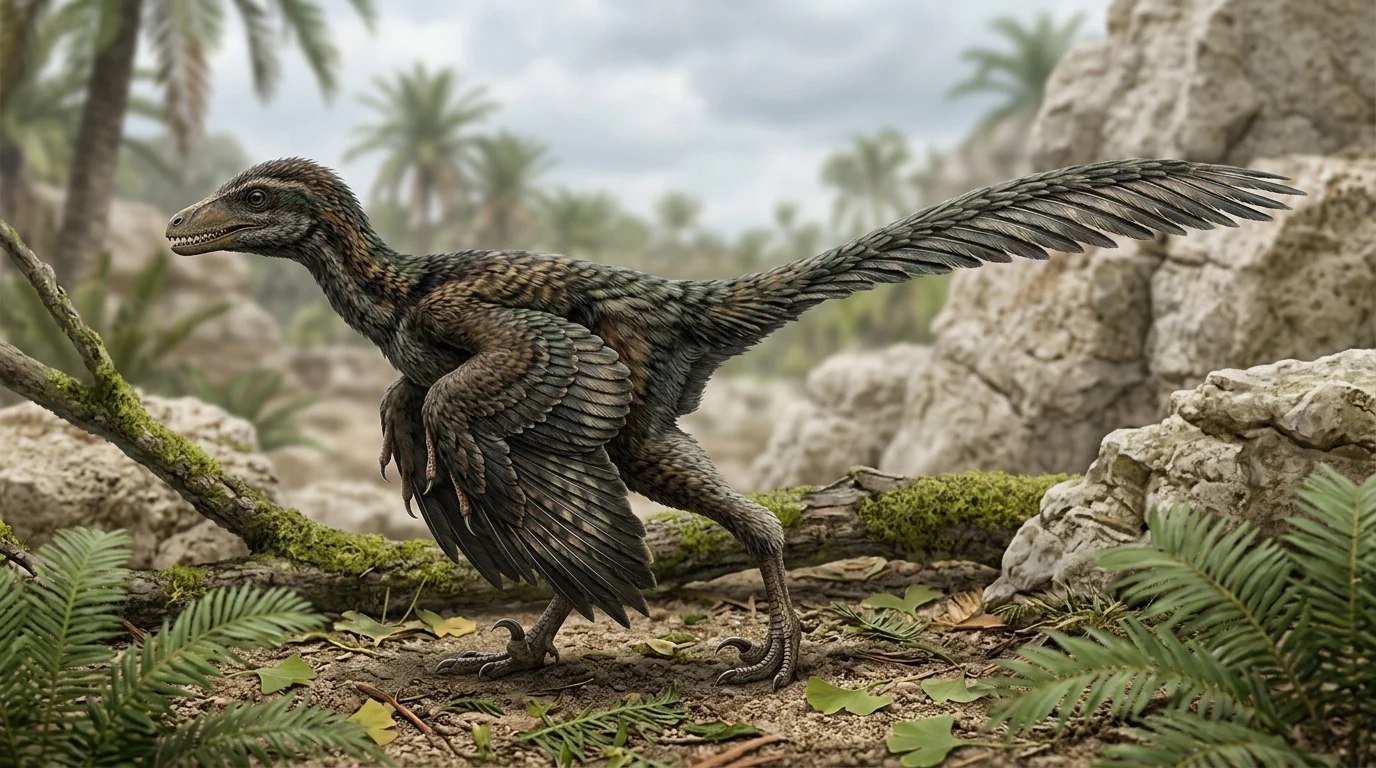
TheropodaArchaeopteryx
Archaeopteryx lithographica von Meyer, 1861
An iconic stem-avialan from the Late Jurassic Solnhofen limestone exhibiting transitional features bridging non-avian theropods and birds.
From Primitive Pycnofibres to Aerodynamic Pennaceous Plumage: The Origin of Modern Birds
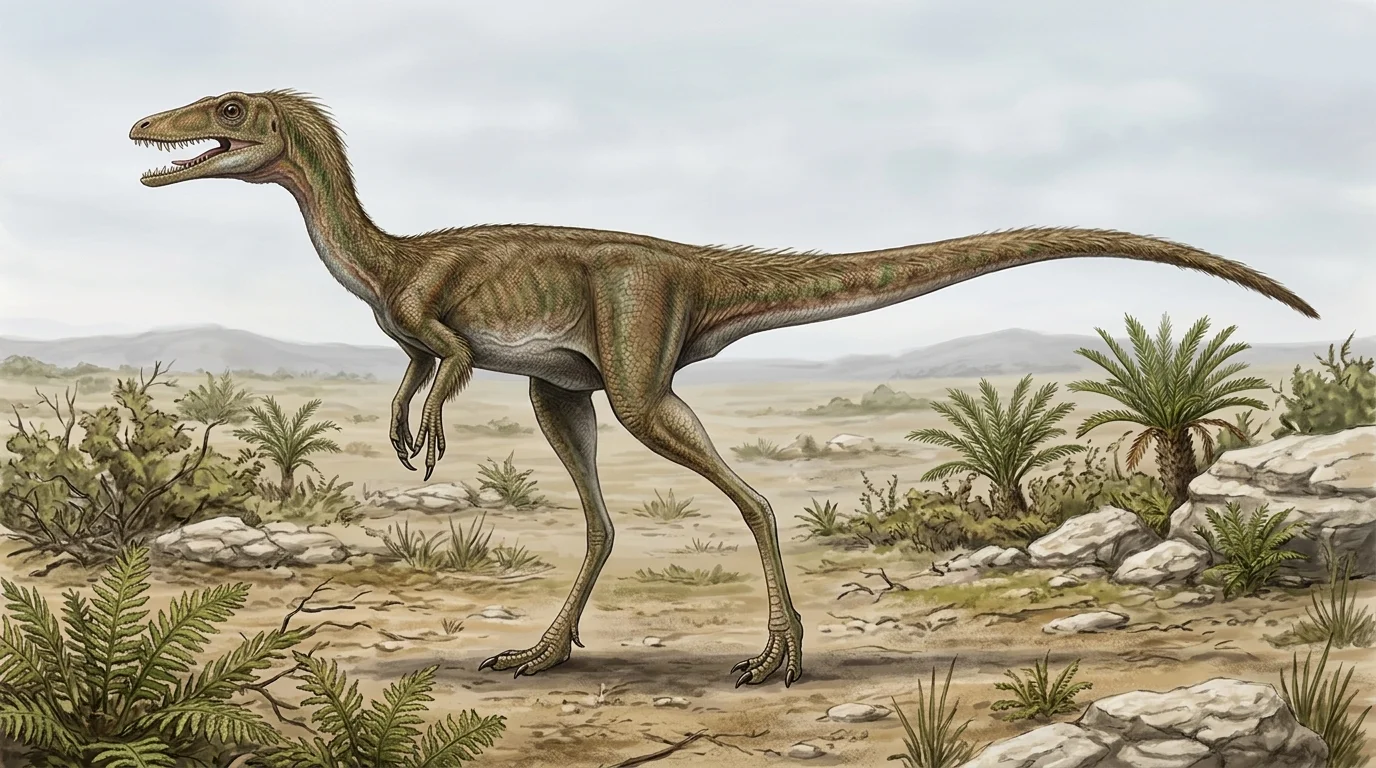
Feathered dinosaurs were theropod dinosaurs possessing integumentary structures ranging from simple downy filaments (proto-feathers) to complex, asymmetrical pennaceous flight feathers. Landmark fossil discoveries from Liaoning, China, Solnhofen, Germany, and Mongolia prove that feathers evolved tens of millions of years before flight, serving initially for thermoregulation and visual sexual display before being co-opted for gliding and powered flight.

Feathers did not evolve for flight: They originally evolved for thermal insulation, brooding eggs, and courtship coloration.
Complex pennaceous feathers with vaned shafts evolved across Paraves, including dromaeosaurs (raptors), troodontids, and oviraptorosaurs.
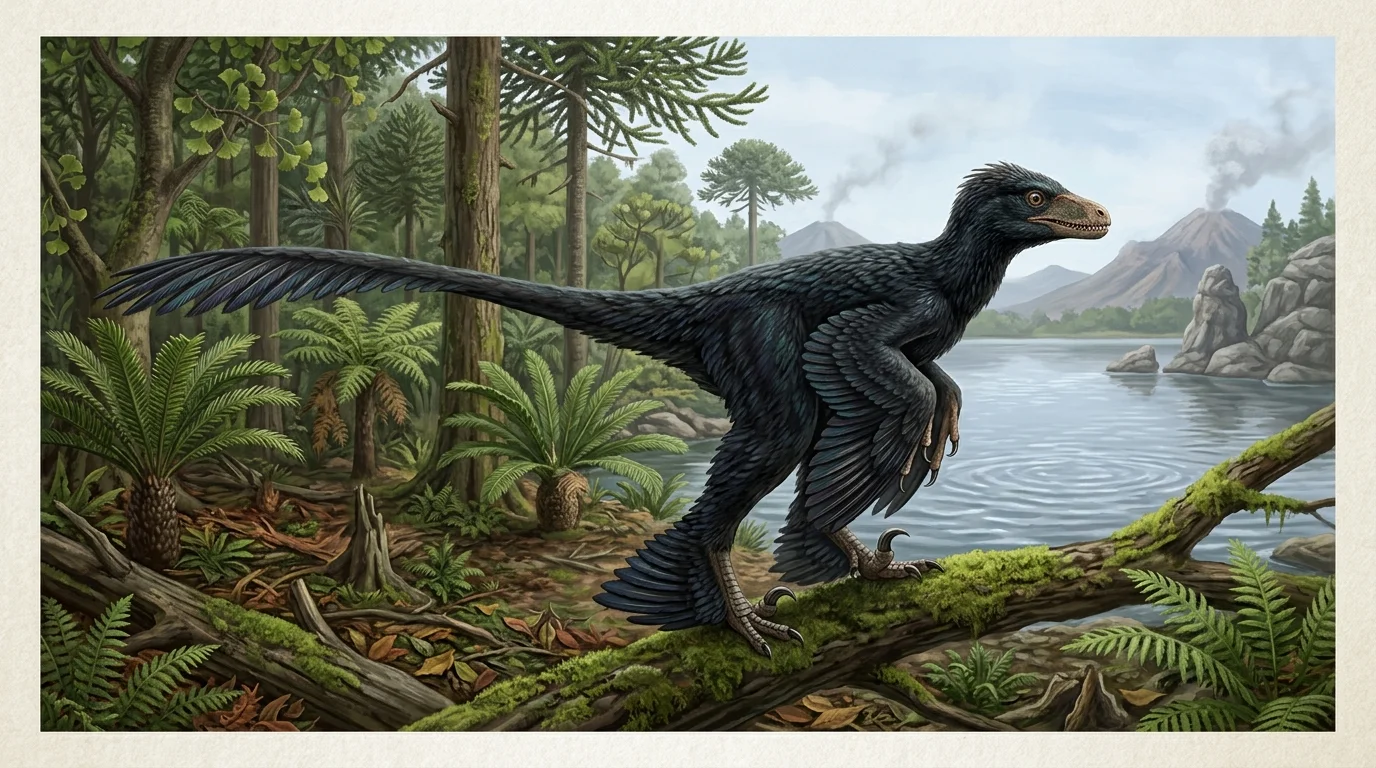
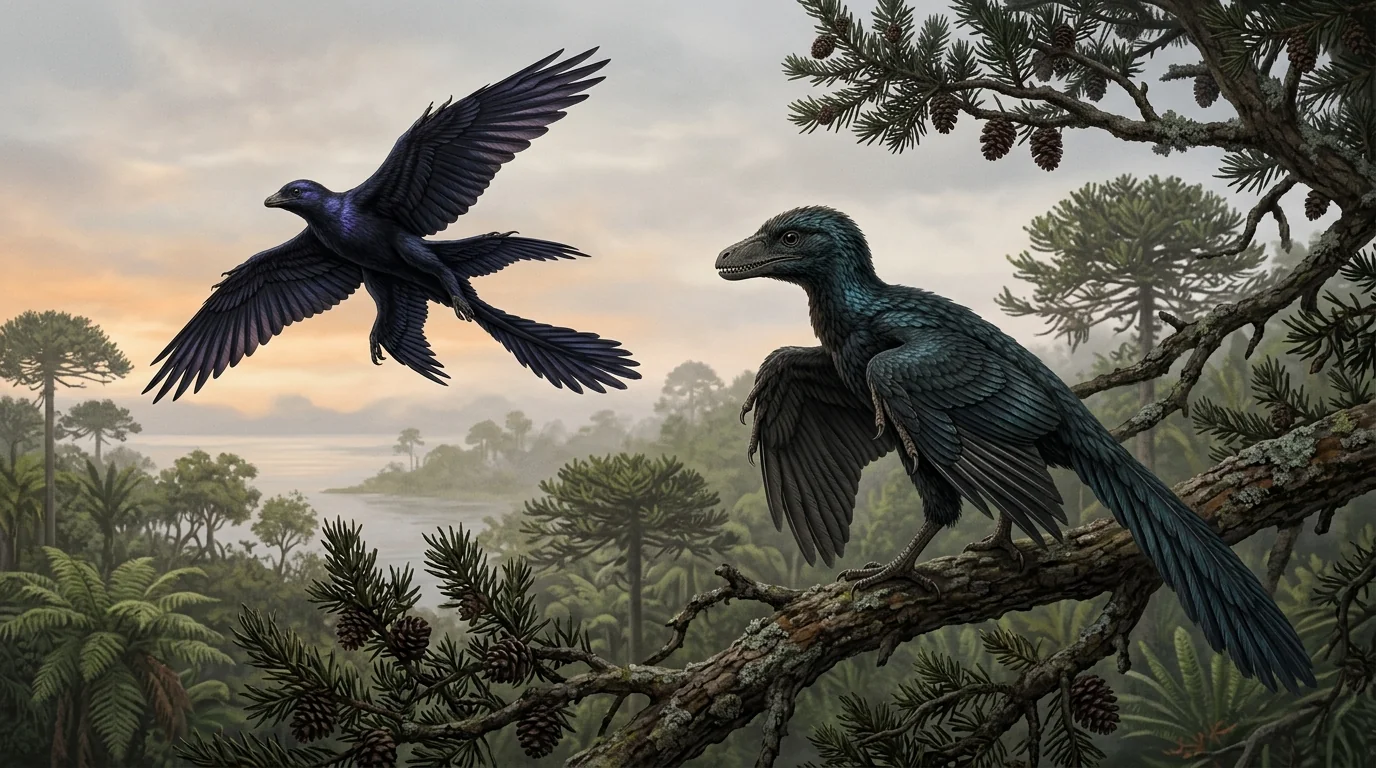
Melanosome analysis allows paleontologists to determine the actual colors of dinosaurs (e.g. Microraptor was iridescent black like a raven; Sinosauropteryx had a ginger-striped tail).
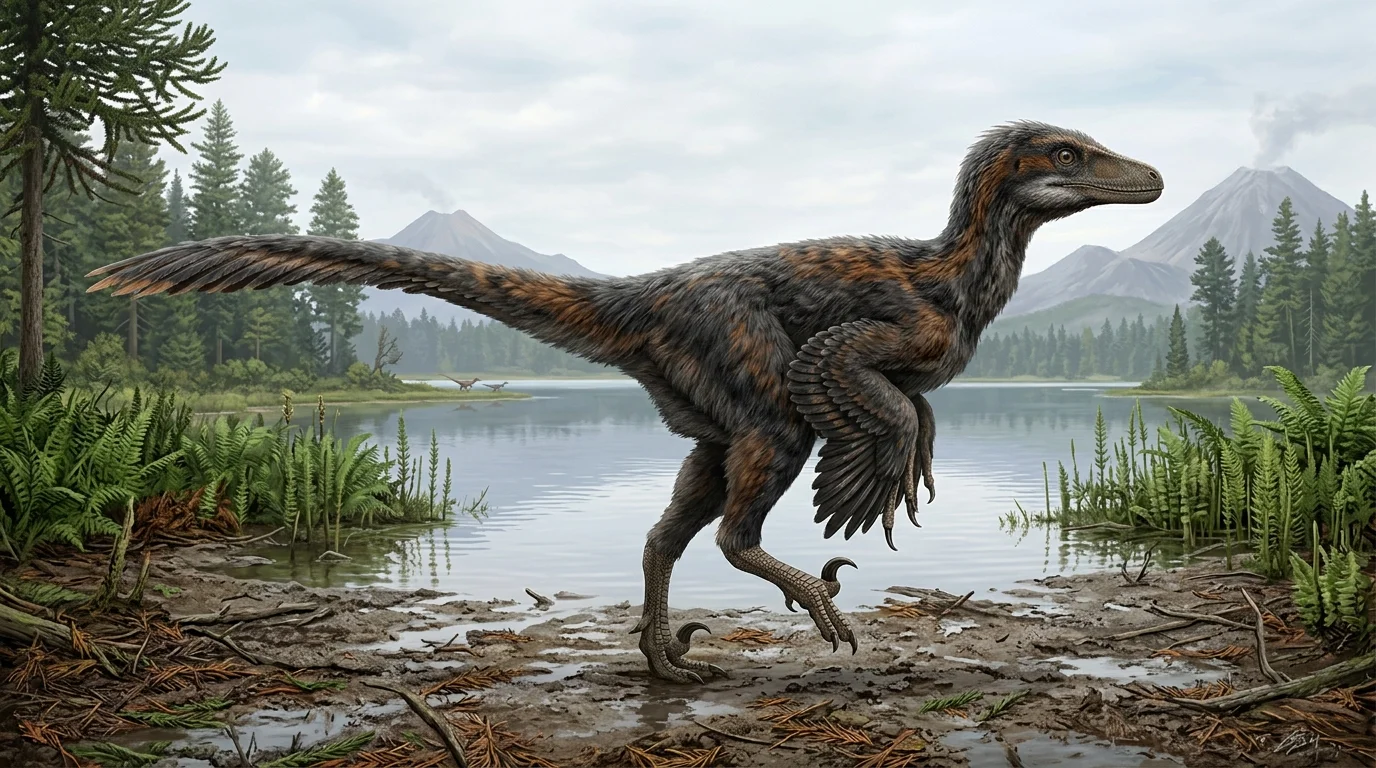
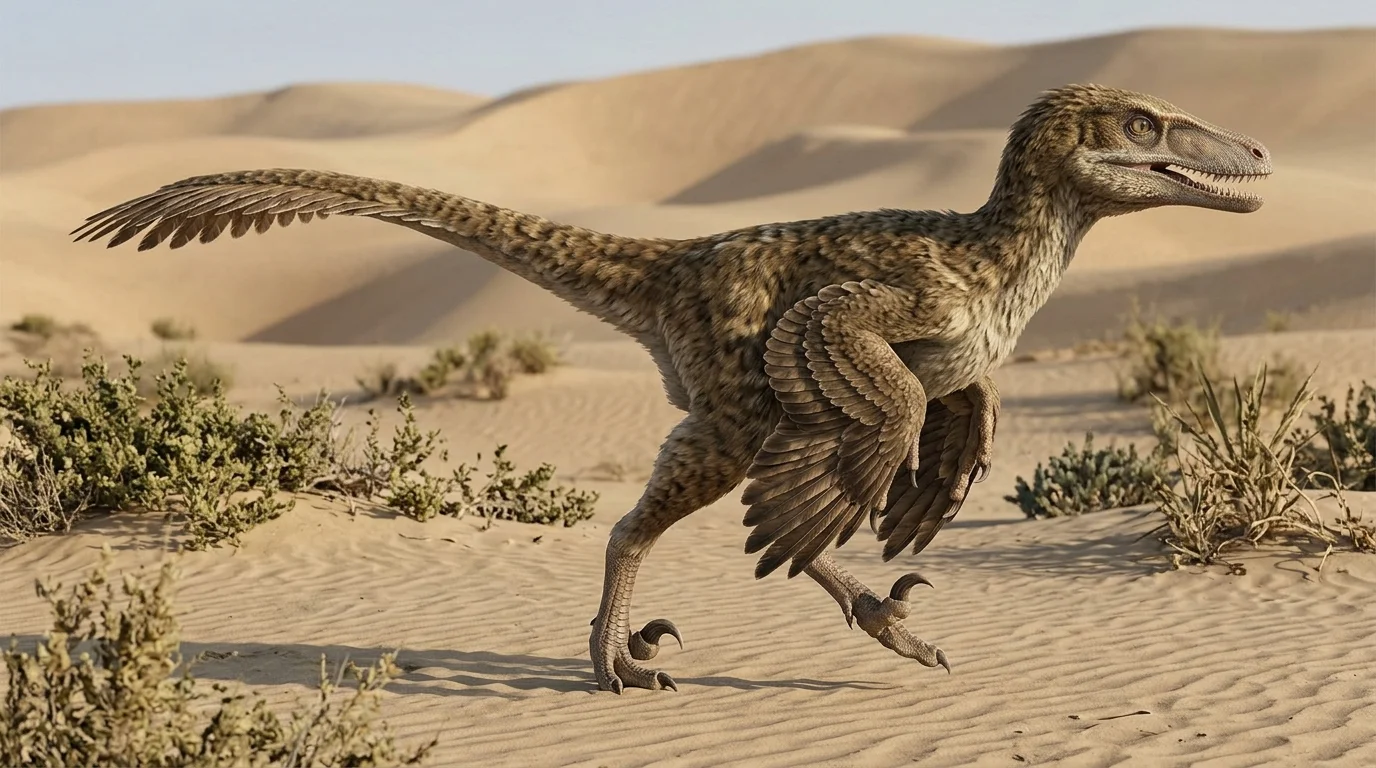
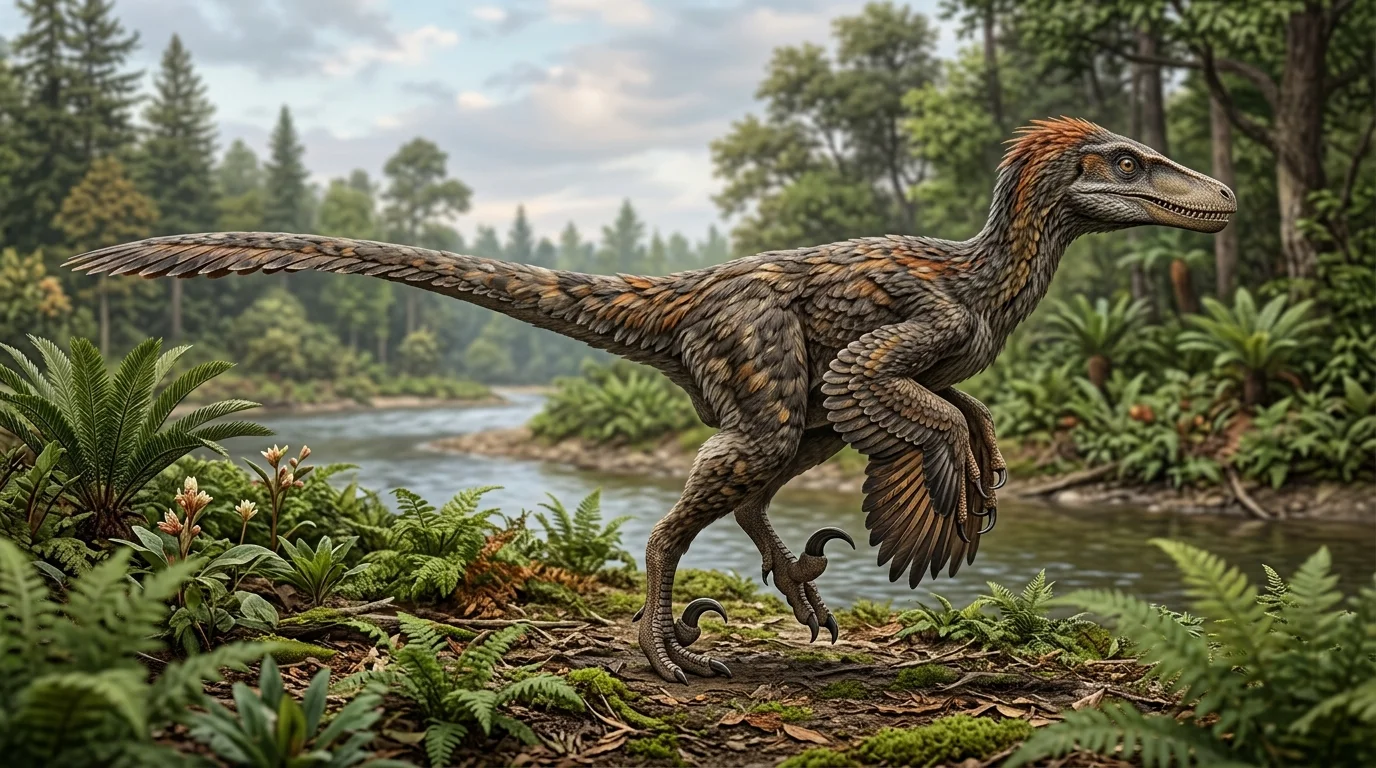
Even non-avian carnivores like Velociraptor had quill knobs on their forearm bones, confirming large feathered wings.
The realization that birds are living dinosaurs represents the greatest paradigm shift in modern vertebrate paleontology. Birds (Aves) are not merely descendants of dinosaurs—cladistically, they are living, surviving theropods nested firmly within the maniraptoran dinosaur family tree. Every modern sparrow, eagle, and penguin is an extant avian dinosaur.
Prum (1999) established the foundational developmental model for how feathers evolved from single hollow filaments to complex aerodynamic flight surfaces.
The earliest feathers were single hollow unbranched filaments (Stage I) and tufts of branched filaments (Stage II), often called pycnofibres. These functioned strictly for heat conservation, shielding warm-blooded active theropods from cold temperatures.
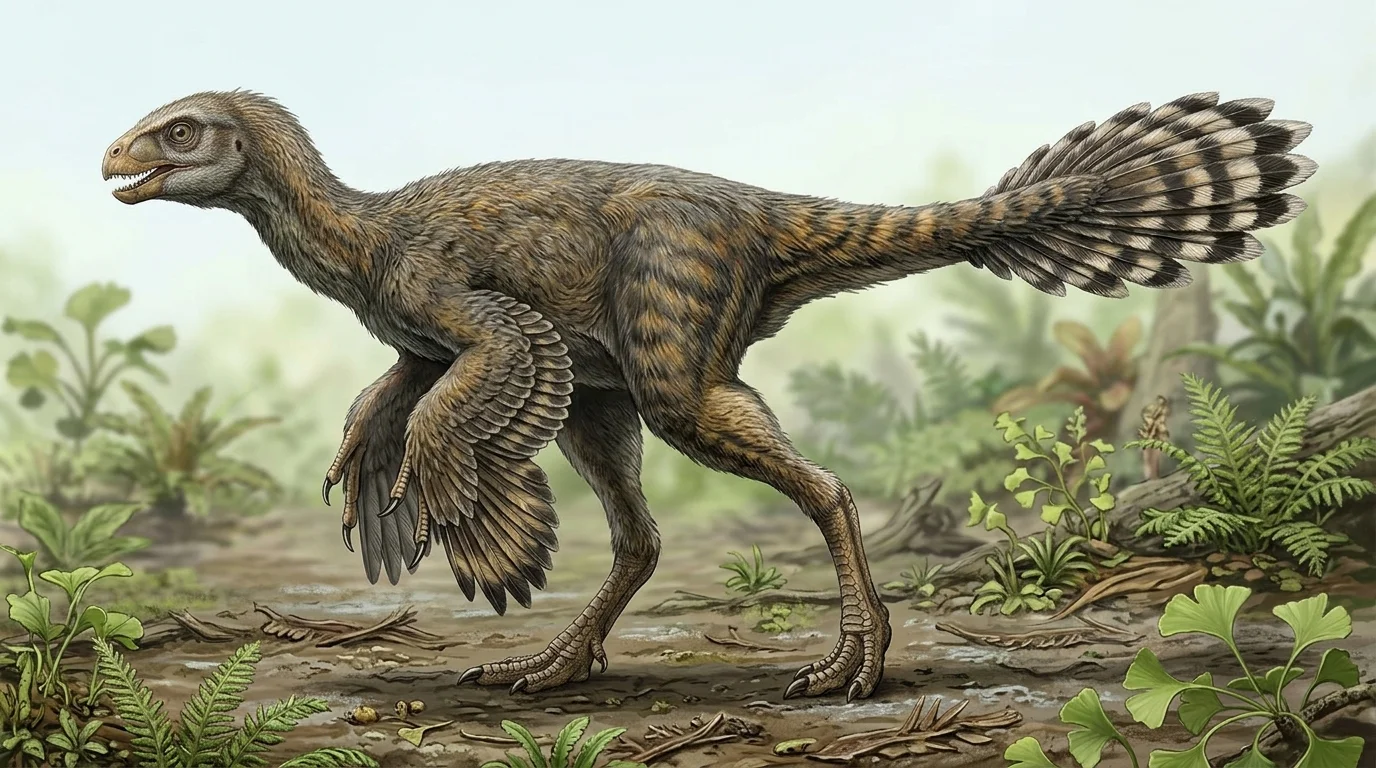
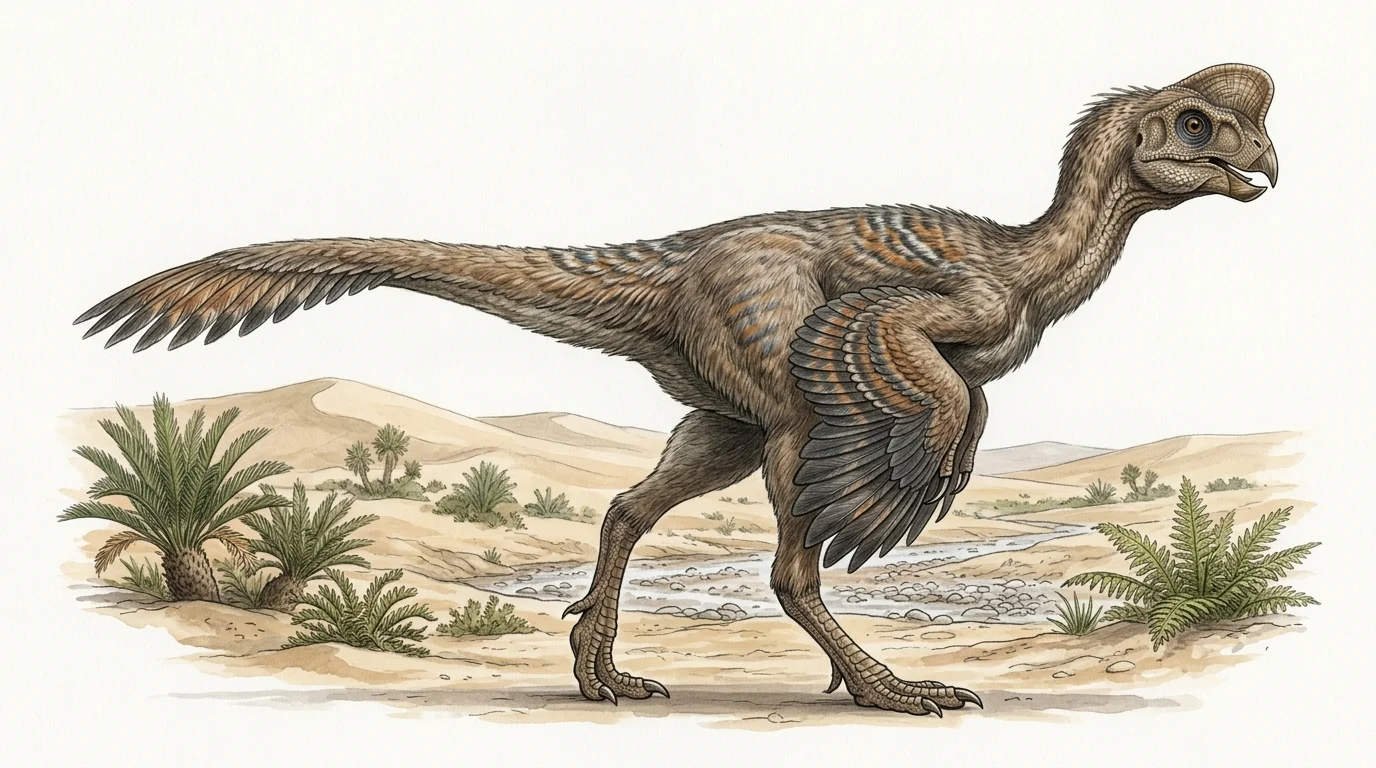
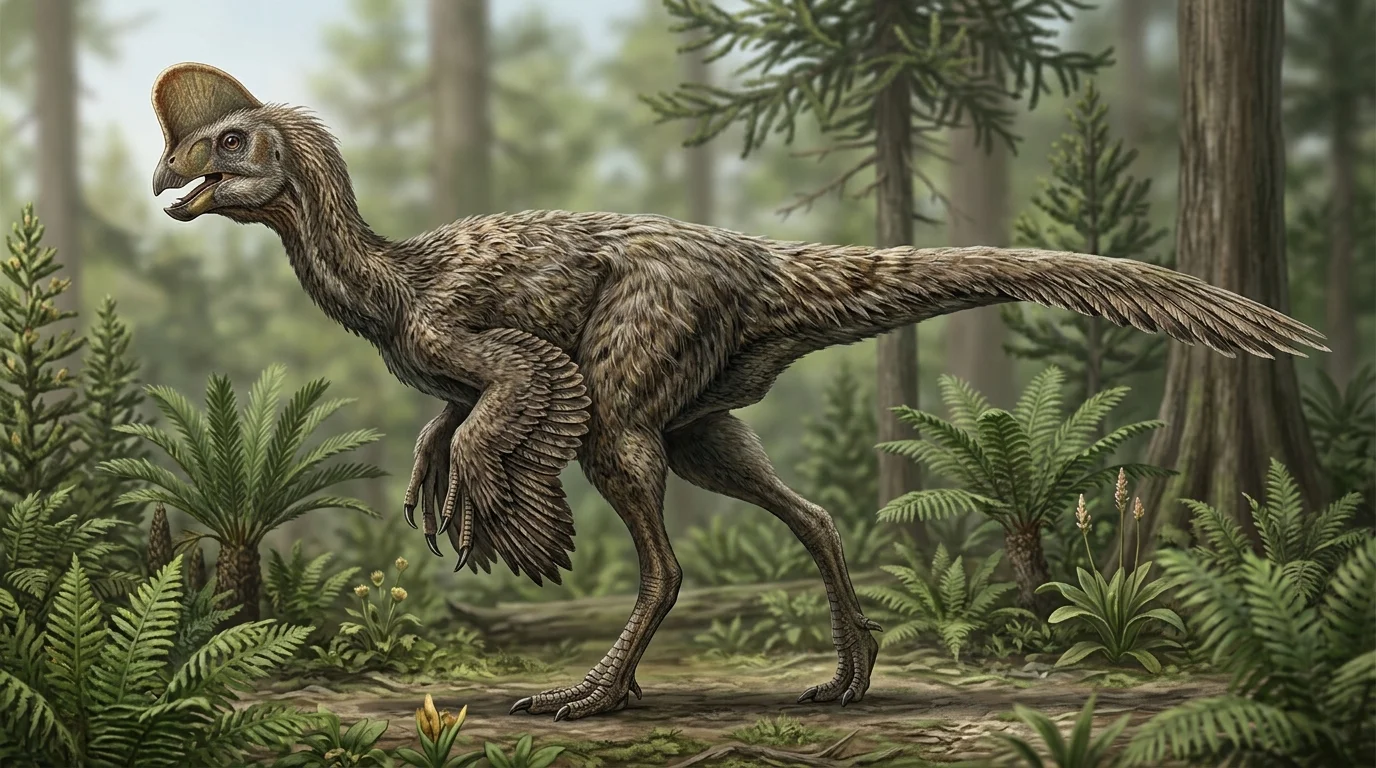
Central shafts (rachis) evolved with interlocking barbs and barbules (Stage IV), creating flat, cohesive aerodynamic surfaces. Symmetrical pennaceous feathers appear in Caudipteryx and Oviraptor, creating fan-like plumage used in mating displays.
In Archaeopteryx, Microraptor, and early avians, the leading edge of the feather became narrower than the trailing edge. This structural asymmetry prevents the feather from twisting under aerodynamic air pressure, producing aerodynamic lift.
Direct anatomical comparison of plumage types and aerodynamic capabilities across verified feathered taxa.
| Specimen | Clade | Period | Length | Body Mass | Feather Type | Primary Locomotion / Flight Status |
|---|---|---|---|---|---|---|
| Archaeopteryx | Avialae (Paraves) | Late Jurassic | 0.5 m (1.6 ft) | 0.8 kg | Asymmetrical pennaceous wing and tail feathers; powered flapping flight capability | |
| Microraptor | Dromaeosauridae (Microraptorinae) | Early Cretaceous | 0.8 m (2.6 ft) | 1.0 kg | Four-winged glider with long pennaceous flight feathers on arms and legs; iridescent black plumage | |
| Caudipteryx | Oviraptorosauria | Early Cretaceous | 0.9 m (3.0 ft) | 5.0 kg | Symmetrical pennaceous tail fan and wing tufts; flightless ground runner | |
| Sinornithosaurus | Dromaeosauridae | Early Cretaceous | 1.2 m (4.0 ft) | 3.0 kg | Filamentous down and proto-feathers; arboreal tree-dweller | |
| Velociraptor | Dromaeosauridae | Late Cretaceous | 2.0 m (6.5 ft) | 15 kg | Ulna possesses distinct quill knobs proving attachment of 14 secondary flight feathers | |
| Anzu | Oviraptorosauria (Caenagnathidae) | Late Cretaceous | 3.5 m (11.5 ft) | 300 kg | Large feathered wings and fan-tail on a 3-meter tall ostrich-like theropod |
The discovery of Yutyrannus huali in 2012 proved that giant 9-meter tyrannosauroids could possess 15-centimeter filamentous proto-feathers. However, in 2017, Bell et al. examined fossil skin impressions from Tyrannosaurus rex (including the 'Wyrex' specimen) and related late tyrannosaurids (Tarbosaurus, Gorgosaurus), finding only fine reticulated scales across the neck, hip, and tail. Paleontologists conclude that while basal tyrannosauroids had feathers, colossal adult T. rex individuals likely lost most plumage to avoid overheating in warm climates, though juveniles may have hatched with downy coats.
Peer-reviewed profiles from DinoOrigin's verified species database.
TheropodaArchaeopteryx lithographica von Meyer, 1861
An iconic stem-avialan from the Late Jurassic Solnhofen limestone exhibiting transitional features bridging non-avian theropods and birds.
TheropodaMicroraptor zhaoianus Xu et al., 2000
A four-winged, iridescent feathered dromaeosaurid that glided through Early Cretaceous Chinese forests.
TheropodaCaudipteryx zoui Ji et al., 1998
A ground-dwelling basal oviraptorosaur from Liaoning, China preserving true vaned feathers and gastroliths.
TheropodaSinornithosaurus millenii Xu et al., 1999
A feathered basal dromaeosaurid from China with remarkable cranial and dental specializations.
Featured SpecimenTheropodaVelociraptor mongoliensis Osborn, 1924
A turkey-sized, feathered dromaeosaurid predator of the Late Cretaceous Gobi Desert, armed with specialized sickle claws.
TheropodaDeinonychus antirrhopus Ostrom, 1969
The agile dromaeosaurid whose discovery catalyzed the modern Dinosaur Renaissance and established the dinosaur-bird evolutionary link.
TheropodaOviraptor philoceratops Osborn, 1924
The famously misnamed 'egg thief' from the Gobi Desert that was actually a devoted parent brooding its own nest.
TheropodaAnzu wyliei Lamanna et al., 2014
The 'Chicken from Hell', a gigantic, crested caenagnathid oviraptorosaur from the Hell Creek Formation.
TheropodaCompsognathus longipes Wagner, 1859
A petite, nimble Late Jurassic coelurosaur about the size of a chicken, historically famous as one of the smallest known dinosaurs.
Evidence-based answers addressing common questions and misconceptions.
Paleontologists use scanning electron microscopes to examine fossilized melanosomes (microscopic pigment structures preserved in feather impressions). By comparing the shape and density of spherical phaeomelanosomes and rod-shaped eumelanosomes to modern birds, scientists determined that Microraptor was iridescent black, while Anchiornis had black and white wings with a reddish-brown crest.
Yes, but real Velociraptors were heavily feathered, resembling large fierce ground birds like hawks or turkeys with toothed snouts and sickle claws. In 2007, paleontologists discovered quill knobs (papillae) on the arm bone of Velociraptor mongoliensis, proving it had large feathered wings.
Yes. In modern phylogenetic taxonomy, birds are classified as avian dinosaurs within the clade Theropoda. They share over 100 anatomical characteristics with theropods, including wishbones (furcula), hollow pneumatic bones, three-toed feet, brooding behavior, and feathers.