Dromaeosaurus albertensis Matthew & Brown, 1922
The namesake of the dromaeosaurid family, possessing a robust skull and crushing bite force for its size.

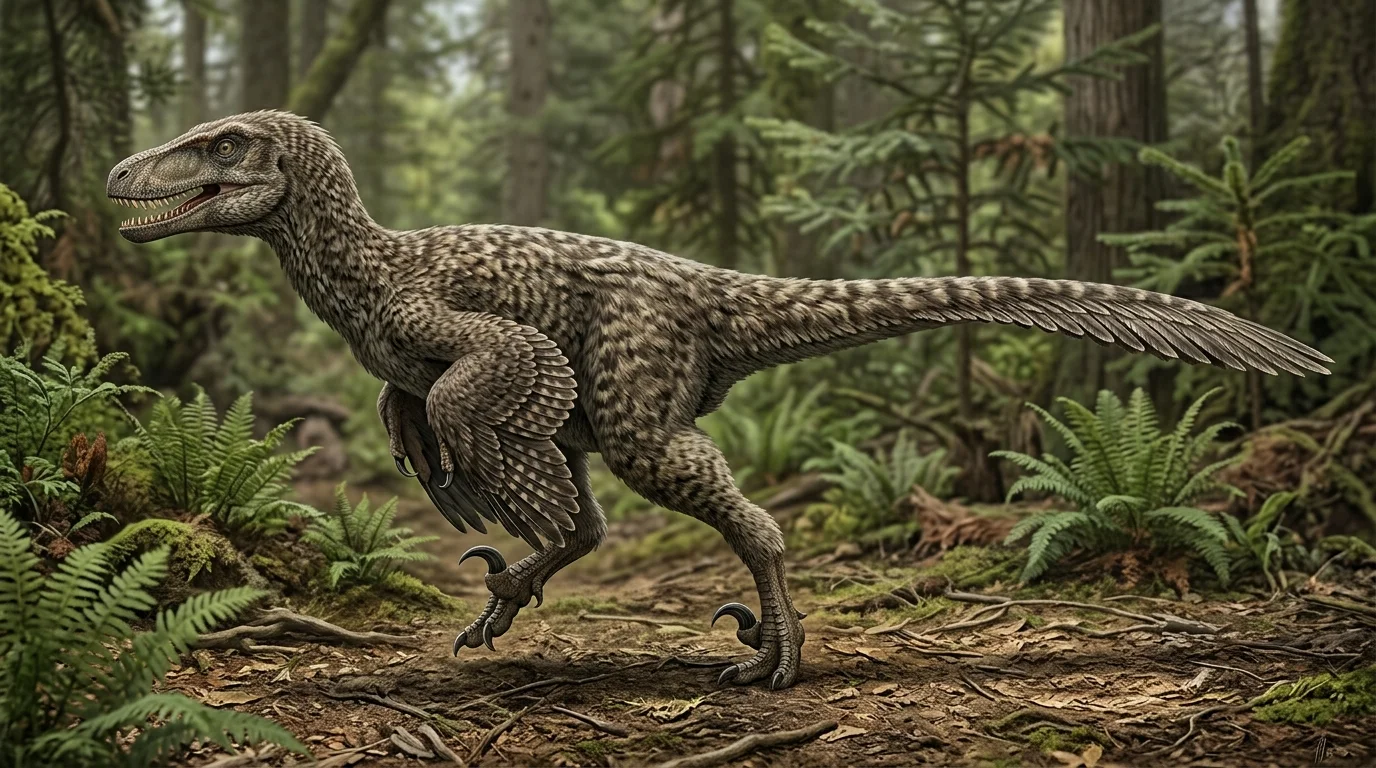
Scientific reconstruction of Dromaeosaurus (Dromaeosaurus albertensis Matthew & Brown, 1922) in its native Geological period: Cretaceous Period.
Image Credit: AI-generated scientific paleoart reconstruction synthesized from species-specific osteological profiles and peer-reviewed descriptions. (AI-Generated / Open Educational Media (DinoOrigin Spec))
Phylogenetic classification of Dromaeosaurus albertensis Matthew & Brown, 1922 based on peer-reviewed cladistic analyses of diagnostic skeletal synapomorphies.
| Taxonomic Rank | Taxon / Clade | Diagnostic Context |
|---|---|---|
| Kingdom | Animalia | Monophyletic prehistoric clade |
| Phylum | Chordata | Monophyletic prehistoric clade |
| Clade | Dinosauria | Monophyletic prehistoric clade |
| Order | Saurischia (Lizard-Hipped Dinosaurs) | Characterized ancestrally by a triradiate pelvis with an anteriorly pointing pubis. |
| Suborder | Theropoda | Bipedal saurischian dinosaurs, historically dominated by carnivores and including the avian lineage. |
| Genus | Dromaeosaurus | Monophyletic prehistoric clade |
| Species | Dromaeosaurus albertensis Matthew & Brown, 1922 | Specific authority designation |
Dromaeosaurus was the first recognized member of the famous dromaeosaurid family, described from the Dinosaur Park Formation of Alberta. Unlike the gracile, slender-snouted Velociraptor, Dromaeosaurus possessed an unusually deep, boxy skull with heavy jaw muscles.
Biomechanical bite force analyses indicate its jaws delivered crushing bite forces almost three times greater than that of Velociraptor, allowing it to shatter small bones rather than relying solely on slashing wounds.
Stocky dromaeosaurid with a deep, robust skull, large curved teeth, feathered coat, and sickle claw on the second toe.
Anatomical dimensions relative to an average adult human (1.8 m / 6 ft tall)
Juvenile hadrosaurs, ceratopsians, small mammals, and lizards.
Robustly built small predatory theropod with powerful crushing jaws rather than purely slashing teeth. Living in the Dinosaur Park Formation, Dromaeosaurus shared small-predator ecological niches with Asian cousins like Velociraptor while coexisting with large hadrosaurs like Corythosaurus.
Lush coastal plain floodplains, swamp forests, and lowland river valleys.
Partial skull and foot bones in the AMNH; isolated teeth common across Western Canadian formations.
Discovered by fossil hunter Barnum Brown; named by William Diller Matthew and Brown in 1922.
The longest and final period of the Mesozoic Era, characterized by the rise of flowering plants, ceratopsians, hadrosaurs, tyrannosaurids, and concluding with the Chicxulub asteroid impact.
During the Mesozoic Era, continental drift progressively reconfigured land bridges, atmospheric currents, and regional precipitation regimes. Fossils of Dromaeosaurus evidence its adaptation to the paleoenvironments of North America.
Home to the fossil-rich Morrison Formation of the Late Jurassic and the Hell Creek and Dinosaur Park Formations of the Late Cretaceous.
The anatomical architecture of Dromaeosaurus serves as a crucial benchmark in vertebrate paleontology, illustrating key adaptive radiations within Theropoda.
Scientifically verified answers based on peer-reviewed paleontological evidence.
Dromaeosaurus lived during the Cretaceous Period Period, approximately 76–74 Ma (million years ago). This places it within the Mesozoic Era.
Paleontological estimates place Dromaeosaurus at a length of 1.8–2 m (5.9–6.6 ft), a hip/standing height of 0.7–0.8 m (2.3–2.6 ft), and a body mass of 15–20 kg (33–44 lbs).
Classified as a carnivore, Dromaeosaurus specialized in consuming Juvenile hadrosaurs, ceratopsians, small mammals, and lizards..
Fossil specimens of Dromaeosaurus have been recovered from Dinosaur Park Formation, Alberta, Canada, with notable historic specimens documented in 1914. Discovered by fossil hunter Barnum Brown; named by William Diller Matthew and Brown in 1922.
Authoritative citations establishing the factual taxonomy, biometrics, and anatomy of Dromaeosaurus.
Currie, P. J. (1995). New information on the anatomy and relationships of Dromaeosaurus albertensis (Dinosauria: Theropoda). Journal of Vertebrate Paleontology, 15(3), 576-591. https://doi.org/10.1080/02724634.1995.10011250
Curated & Verified: 2026-09-24Deposited in Mesozoic sedimentary strata preserving skeletal remains, teeth, or trace trackways.
Dromaeosaurus provides critical insights into the evolutionary radiation of Theropoda. Holotypes and fossil evidence indicate: Partial skull and foot bones in the AMNH; isolated teeth common across Western Canadian formations.
Matthew, W. D., & Brown, B. (1922). The family Deinodontidae, with notice of a new genus from the Cretaceous of Alberta. Bulletin of the American Museum of Natural History, 46(6), 367-385.
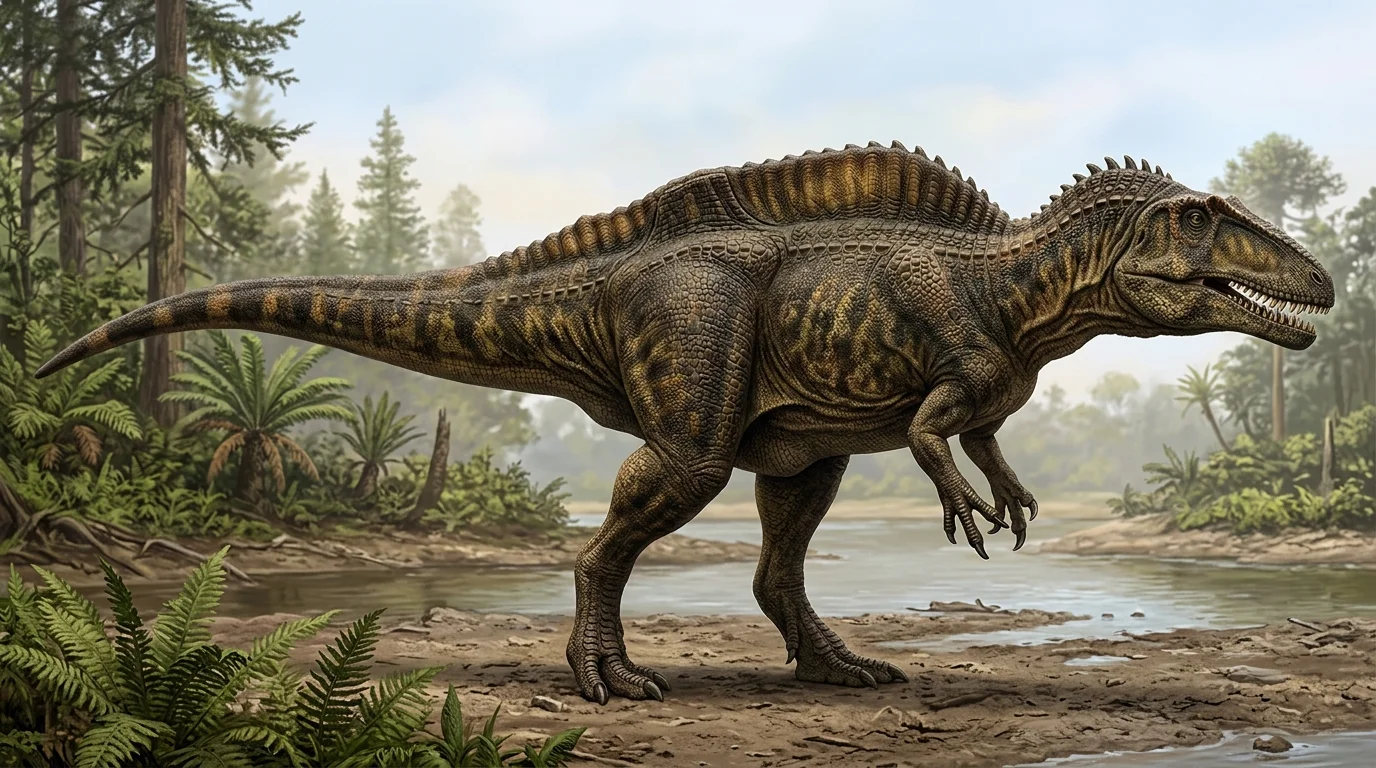
TheropodaAcrocanthosaurus atokensis Stovall & Langston, 1950
A high-spined North American apex predator famous for hunting sauropods across Early Cretaceous river valleys.
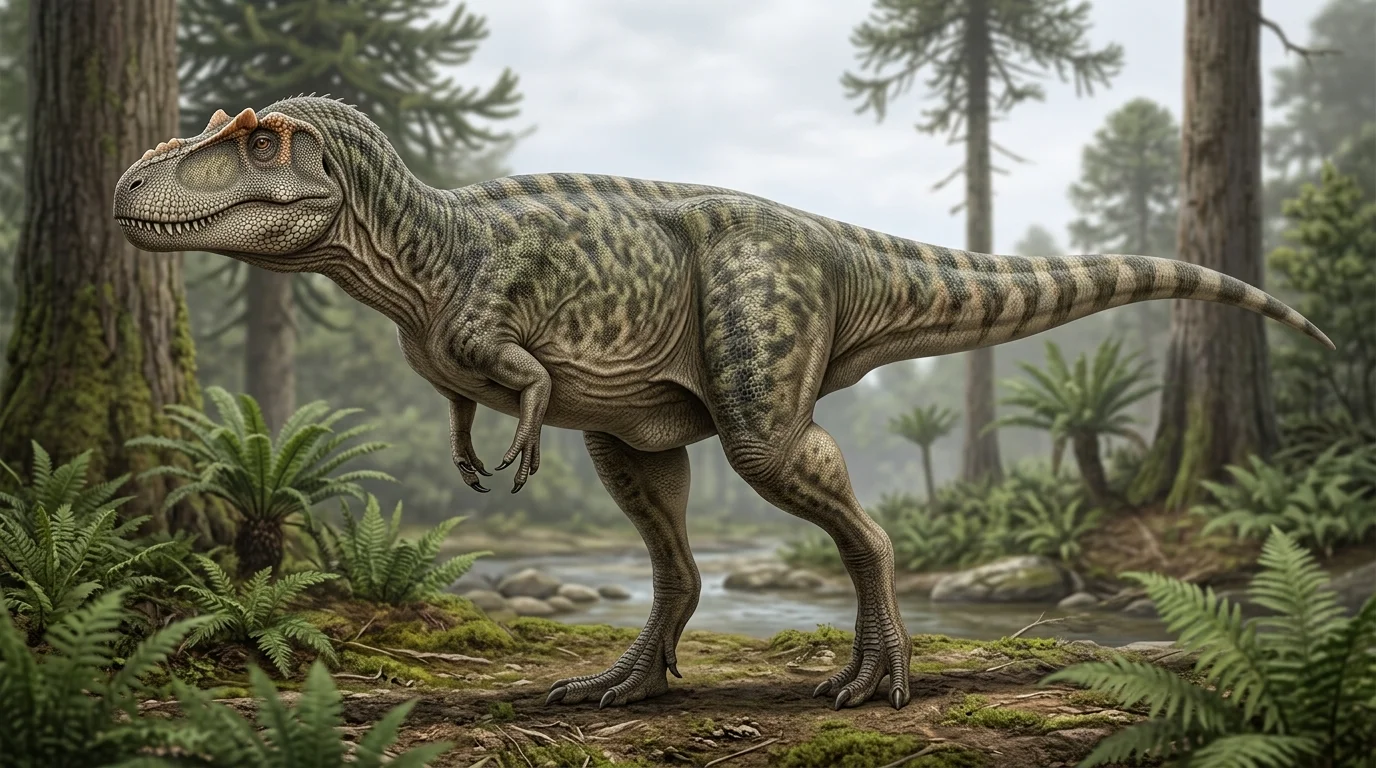
TheropodaAlbertosaurus sarcophagus Osborn, 1905
A fleet-footed, gracile tyrannosaurid from the Late Cretaceous of western Canada known from prominent multi-individual bonebed associations.
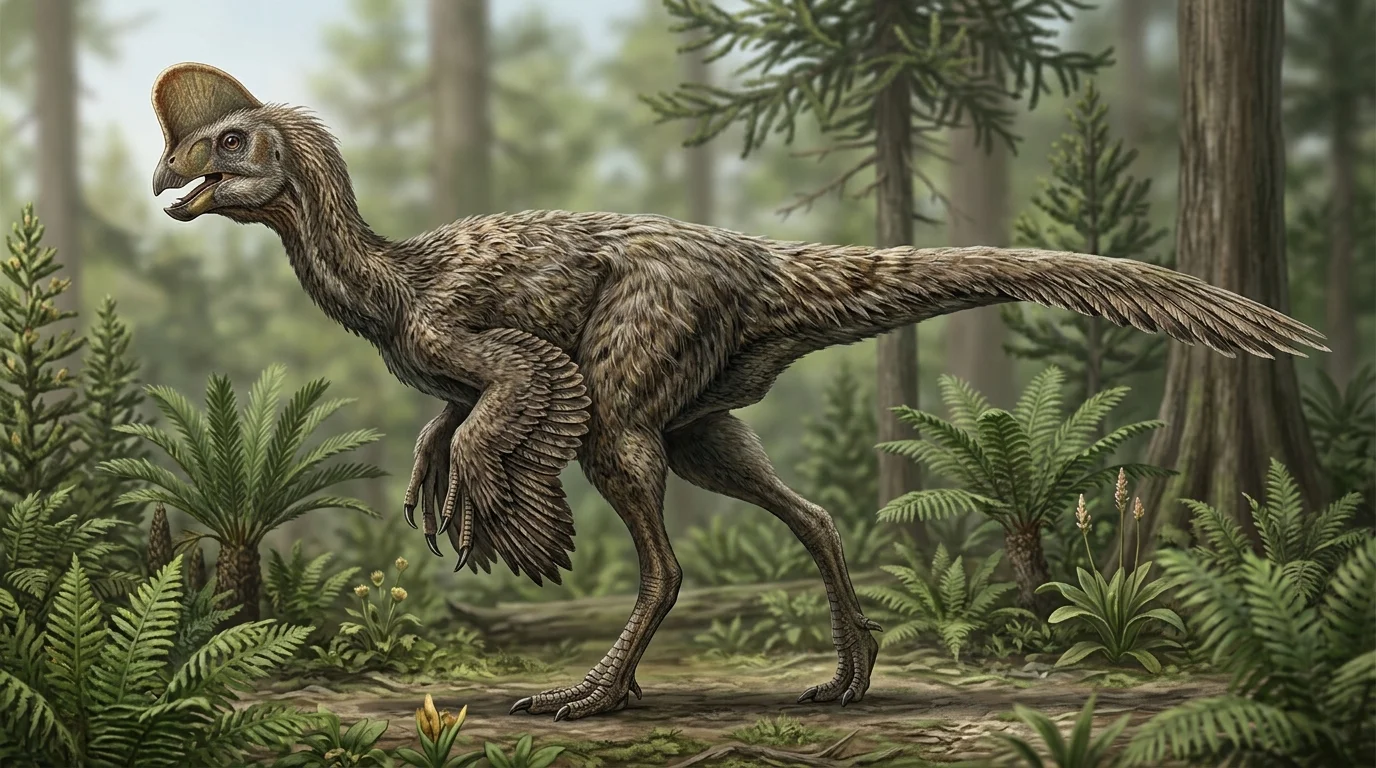
TheropodaAnzu wyliei Lamanna et al., 2014
The 'Chicken from Hell', a gigantic, crested caenagnathid oviraptorosaur from the Hell Creek Formation.